Novembers Doom: Tarot, Tenacity, and 36 Years of Shadows


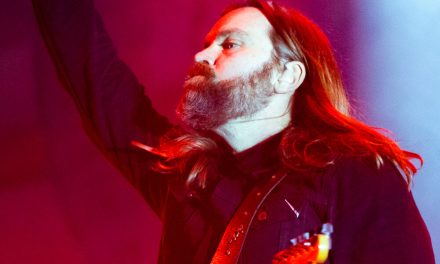
Photo Credit: Matthew Gregory Hollis
Novembers Doom: Tarot, Tenacity, and 36 Years of Shadows
For over three decades, Novembers Doom has carved its name into the darker folds of metal history—not with bombast, but with emotional gravity, lyrical depth, and a refusal to compromise. Now, with the release of Major Arcana on Prophecy Productions, vocalist and founding member Paul Kuhr channels six years of personal struggle into a concept that fuses mental health with the symbolism of tarot. In this candid conversation, Kuhr reflects on the band’s pandemic silence, the bittersweet anniversaries of The Pale Haunt Departure and The Knowing, and the enduring legacy of collaborators like Cathy Jo Hejna. From the Midwest’s metal cliques to European breakthroughs, Kuhr lays it all bare—with honesty, humor, and the kind of passion that doesn’t fade after 36 years.
First of all, is there an overarching story or concept behind the new album, Major Arcana?
Absolutely. Lyrically, the entire album centers on mental health and my personal struggles over the last six years. When I was explaining the concept to my wife—how I planned to break it all down—she kept saying, “That sounds like the Fool card,” or “That sounds like a tarot card.” And I had this moment of realization: she was right. She connected my experiences to the meanings behind tarot cards, and that sparked the concept.
So I ran with it. I merged those two worlds—mental health and tarot. Each card represents a different emotional state or psychological challenge. Some are personified as monsters: depression, anxiety, and so on. Each correlates with a specific tarot archetype. It evolved into something really unique. We ended up creating a full tarot deck, replacing the traditional characters with figures from our past album covers—like the Nephilim and the Scarecrow. If you look through the art, you’ll see familiar faces from our discography.
We even added a 22nd card to the Major Arcana—because traditionally, there are only 21. Ours is the Doom card, which also serves as the album cover. There’s no positive spin on that one. It’s the end of days.

Major Arcana by Novembers Doom
You mentioned it’s been six years. That stretch included a global pandemic. How did that historic event affect you and influence the music, if at all?
Nephilim Grove came out just two weeks before lockdown. We had just announced an Australia/New Zealand tour, and one week later, we had to cancel everything. It was brutal. We were ready to push that album hard—we felt it was something special—but we never got the chance. That crushed us.
The first two years of lockdown were just… depression. None of us wanted to write or do anything. It took a while to come back from that. People call Major Arcana our “comeback,” but we never went away. We just took a break—like the rest of the world. Once things started to settle, we began writing again. It took about the same amount of time as any album, just with a long, depressing pause in the middle.
What’s the current metal scene like in Chicago, and has it recovered since the pandemic?
This might sound strange coming from me, but I honestly don’t know. I’m not really a metalhead anymore. I know, I know—but I don’t listen to much metal these days. I’ll go to shows with friends occasionally, but I’m bored with the old stuff I used to love, and the new stuff just sounds like the old stuff. Nothing’s exciting me.
That said, Chicago still has solid bands—Jungle Rot, Macabre, Trouble. There are veteran acts reuniting after 25 years and playing local shows. So yeah, the scene’s active. But truthfully, Chicago’s metal scene has always struggled. Even in the ’90s, when death metal was rising, all eyes were on Florida and New York—or overseas. Chicago was overlooked.
The problem here has always been cliques. Bands form little groups, and if you’re not part of one, you’re out. It’s competitive in a way that’s counterproductive. Everyone’s trying to be “the best band in Chicago.” You know what? Take it. I’m focused on Europe. That’s where our audience is. Touring in America is tough unless you’re one of the big names—like Amon Amarth or someone on that level.
Has Novembers Doom ever played in Los Angeles? If so, how did the shows go?
Believe it or not, in 36 years, we’ve never played California. Not once. We’re trying to fix that now. Our management is working on it. We’re calling it the “Old Man Tour”—no buses, no 30-day runs. My voice can’t handle that anymore. After two shows, I need a break. I don’t heal like I used to.
So now we’re doing short runs. Atlanta next week, then a record release show in Chicago. Two weeks later, we hit New York for a couple shows. Then we come home, and we’re planning the same thing for California. Major cities, a few shows in each, then move on. It’s just easier for all of us.

Photo Credit: Matthew Gregory Hollis
I think the only time I saw Novembers Doom was at Milwaukee Metal Fest—early 2000s. What are your memories of playing that fest? I think you played it recently too, right?
Yeah, we played one of the first years after it came back—maybe the second. Milwaukee Metal Fest was always a staple in this area. Back when I was listening exclusively to metal, those fests were incredible. You got to see bands you never thought would tour the States. And for me, living just an hour away, it was perfect.
Metal Fest holds a special place in my heart. It was the first time Opeth played on American soil. Same for Katatonia and Anathema. They were pioneers in bringing those bands here. Jamie’s doing a hell of a job now—he took it over, and in three years, there’s barely been a repeat. That’s impressive.
Let’s talk anniversaries. We’ll get to the big one in a bit, but first—ten years ago, Subterranean Masquerade released The Great Bazaar. Looking back, how do you feel about your performance on that record?
Honestly? I think my performance on those records is garbage. I cringe when I hear it. That’s the brutal truth—I fucking cringe. Not because of the music or the band. Tomer and the guys are amazing people. But I was the wrong guy for that job. I was told what to do, how to sing, what they wanted. I didn’t feel any of it.
I had no emotional connection to the material. I just phoned it in. I couldn’t wrap my head around what I would’ve done with that music if I had full control. They gave me some freedom, but not nearly enough. Most of my ideas were shot down. “Sing it more like Jim Morrison,” they’d say. And I’d go, “But I’m not Jim Morrison. I’m Paul Kuhr from Novembers Doom. I do this—I don’t do that.”
So no, I’m not proud of my performance. If people like the record, great. I take nothing away from Subterranean Masquerade. But it wasn’t for me.
And I believe that was your last album with them?
Yeah, they’ve put out quite a few things since then with a whole new lineup. I was let go, let’s say, because I wasn’t comfortable traveling to that part of the world for one show in a bar. I was like, “Wait a minute… you realize where I’m from?” It wasn’t my band—it wasn’t my baby. It was a project I helped friends with. I never saw it as mine.
You caught me at a good time in life, because over the last six years I’ve learned to just tell the truth. If I offend someone, I apologize. But this is how I feel. It’s not about them—it’s about me.

The Pale Haunt Departure by Novembers Doom
Let’s shift to Novembers Doom. In 2005, The Pale Haunt Departure came out. That’s 20 years ago now. What are your thoughts on that album today?
That one’s special. It was the first album with Vito Marchese on guitar. Bringing him in added new energy and helped shape the record’s structure.
At the time, we were unsigned and shopping demos. We got offers from Century Media and others, but turned them all down. They wanted everything—publishing, merchandise, even ownership of our website and band name. I said absolutely not. I wasn’t handing over the rights to Novembers Doom.
Instead, we jumped on a tour opening for Agalloch and The Gathering. We supplied backline, and Andreas from The End Records was managing the other bands. After the tour, he reached out and said he wanted to work with us. That’s how we signed with The End.
Pale Haunt was also licensed to Candlelight and a few other labels for wider distribution. That album opened doors in Europe. It got people’s attention. I won’t say we “blew up”—we’re not that kind of band. We trickle in. But for us, it felt like blowing up. The attention and sales were incredible. To this day, I think Pale Haunt is still our best-selling record. It was a different time—streaming wasn’t a thing yet, so physical sales mattered.

The Knowing by Novembers Doom
That album led to our first European tour, and it was a smash. Then came The Novella Reservoir—the “water” album. That one became the top-selling record in a chain of music stores out there called Metal Zone. It outsold everything that year.
We filmed a live DVD in Vosselaar and called it The Novella Vosselaar. After those two albums, Europe welcomed us with open arms. I think we’ve been back 10 or 12 times since.
Let’s go back even further—to 2000’s The Knowing. That’s when I first discovered Novembers Doom. What do you think of that album now, 25 years later?
There are moments on our first three records I like—and a lot I don’t. Up until To Welcome the Fade, my lyrics were garbage. I just made stuff up, writing what I thought people wanted to hear. I had no clue what I was doing.
With The Knowing, I realized I needed to write a story—something real. I couldn’t keep churning out poetic crap I didn’t believe in. So, I wrote a fictional concept, but added personal elements from my life. It’s still our only concept album.
Sonically, I wish we could redo it. My performance suffered from a lack of confidence—especially my clean vocals. I don’t dislike The Knowing, but I’d love another shot at it. That said, it’s probably not worth revisiting at this point in our career.

Of Sculptured Ivy and Stone Flowers by Novembers Doom
Before we talk about 35 and 36, I want to ask about one of my favorite older tracks: “With Rue and Fire” from Of Sculptured Ivy and Stone Flowers. What are your thoughts on that song now—and whatever happened to Cathy Jo Hejna?
CJ had a tough life. She struggled with mental illness and was hospitalized long-term. Then one day, she woke up and couldn’t move her legs. She was paralyzed from the waist down. When I visited her, she was always in a wheelchair, heavily medicated—a shell of the person I knew. It’s heartbreaking.
I lost contact with her over the years. She used to call me from hospital payphones, and I’d keep in touch that way. But I haven’t heard from her in a long time. I hope she’s okay. I still love her—she was an amazing friend and her voice was outstanding. She brought such drama and beauty to that song, and everything she touched.
In the early days, I wanted that operatic female voice behind death metal. I thought it would be beautiful—and I wasn’t wrong. She was fantastic. After she couldn’t continue, we never replaced her. We had session vocalists for a song or two, but nothing like CJ’s contribution. Eventually, my daughter stepped in whenever we needed a female voice in the background.
“As for ‘With Rue and Fire,’ I’ve always loved that song. The drama in it still resonates. We don’t play it live anymore because replicating CJ’s vocals would require backing tracks—and I don’t have access to those old recordings. They’re probably on ADATs somewhere, and I have no idea where.
I try to honor her as best I can. I have a small stack of CDs she signed—the only things she ever autographed. One day, I might auction them off and donate the proceeds to charity. That would feel right.

Paul Kuhr of Novembers Doom via Zoom!
Novembers Doom recently celebrated its 35th anniversary—now you’re at 36. What goes through your mind knowing you’ve done anything for that long?
It’s more than half my life. I started playing bass at 13, and when the band first formed, I was both playing bass and singing. We were thrash back then. This band has defined me for most of my life—and honestly, I don’t love that. I don’t like that my music is my entire identity on this planet.
It’s tough. But I keep doing it because I have such a deep passion for it. It’s not a job. It’s not a hobby. It’s a passion. We love it, and we’re a family. So yeah—36 years—I’ve been very lucky. Very lucky. And I don’t take any of it for granted.
I love every minute of it. The fans have been incredible. They’re the only reason we can keep going. If people didn’t care about what we were doing, we’d just be making music for ourselves—and that would probably fade out pretty fast. But as long as fans want to hear us, see us, and hear new material, we’ll keep pushing forward.
Do you have a message for the fans who’ve followed you through this tremendous journey?
We can’t thank you enough. You truly fuel our passion. That’s absolutely the truth.
If anyone knows anything about Novembers Doom, they know we’ve had our battles—with promoters, with other bands—but one thing we’ve never done and never will do is a paid meet and greet. We don’t care if it takes 10 minutes or three hours—we’ll sit there, take pictures, sign everything fans bring us. Because they’re the reason we get to do this.
Some venues sell VIP packages to help sponsor the band and promote the show. That’s fine—people can come in early, watch soundcheck, hang out before the show. I’m okay with that, as long as there’s always a free meet and greet for everyone at the end of the night.
We love you guys. We’ll keep doing this for you as long as we possibly can.
And if you buy the edition of our new album that comes with the tarot deck, there’s a VIP tarot card included. That card gives you access to soundcheck and other perks. We’ll be announcing which shows that applies to soon—so yeah, we’ve got you covered!
(Interview by Ken Morton)
Novembers Doom on Instagram