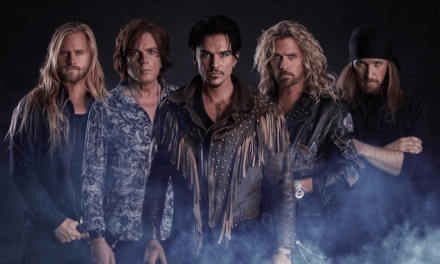
Under Dark Skies and Over the Sunset Strip: A Conversation with John Treanor of Tombstones In Their Eyes


photo by Karin Johansson
Under Dark Skies and Over the Sunset Strip: A Conversation with John Treanor of Tombstones In Their Eyes
On a cool afternoon on the Sunset Strip, tucked into a corner of the Coffee Bean with traffic humming outside and caffeine fueling the conversation, John Treanor of Tombstones in Their Eyes opened up about storms—both musical and personal. With the band’s new album Under Dark Skies, out now via Little Cloud Records in North America and Shore Dive Records in the UK and EU, Treanor reflects on the darkness that shaped the record, the decade that has passed since their debut Sleep Forever, and the creative resilience that keeps Tombstones pushing forward.
What followed was a candid, unfiltered conversation about songwriting, survival, loss, and the strange, shifting landscape of the Los Angeles music scene. Treanor’s honesty is as raw as the fuzz‑drenched sound his band is known for, and his reflections reveal an artist still evolving, still searching, and still finding strength in the noise.
Under Dark Skies is such a powerful title. What does it symbolize for you, and how does it set the tone for the album?
The album was written during a time of extreme mental duress—depression would be a fair word for it. The title felt appropriate, and it’s really rooted in the song “Under Dark Skies,” which deals with that same feeling of finding yourself in what seems like a hopeless situation.
 The record was recorded and engineered by Paul Roessler at Kitten Robot Studios and mastered by Alex DeYoung. How did working with such seasoned names shape the final sound?
Paul has been part of the L.A. scene since the late ’70s, starting with The Screamers. Since then, he’s been in dozens of bands. He has a ton of experience recording and producing, and he’s especially good at getting strong vocal performances and helping shape the structure of a song—everything a good producer should do. His experience really shows.
He’s also a fantastic musician. He plays keyboards on a lot of our records and sings background vocals. When we did our first record, Sleep Forever, about ten years ago, I recorded it at King Size Soundlabs near where I live in Glassell Park. But when it came time to mix it, I was looking for someone new and found Paul. Since then, he’s been the only person I’ve worked with.
Can you talk about the creative process behind the title track, “Under Dark Skies”?
I’m not the best musician, but I’m adequate enough to put together songs I like based on my own experience and taste. I’ve been around the music scene for a long time—as a fan, a musician, a road manager, and just a general scene‑ster. I started off as a young Elton John, KISS, and Aerosmith fan, then got into punk in the early ’80s. After that came all the underground stuff: goth, noise, the Butthole Surfers, Pussy Galore, Spacemen 3—the neo‑psychedelia happening in L.A. in the mid‑’80s. All of that shaped what I do.
I have much better musicians than me in the band, but I’ve turned into an okay songwriter, finally writing songs I actually like. “Under Dark Skies” came together the way most of my songs do: in my basement studio. I start with a simple drum track—just a metronomic beat—and then I play until I find a rhythm track I like. That’s how this one started.
Sometimes I’ll add bass next, sometimes I jump straight to vocals. And the vocals almost always happen the same way: I play the track and sing whatever comes out. About 80% of the time, I don’t change a thing. It’s pure stream of consciousness. I don’t think I changed much on “Under Dark Skies.” It’s repetitive, but I don’t worry about that. I love repetition—Spacemen 3, Brian Jonestown Massacre, and plenty of earlier influences all embrace that. So that’s how the song came about.
 How does Under Dark Skies build on or depart from the themes you explored on Asylum Harbour?
The themes of this band have always been pretty consistent. If you look at the record covers, there’s often a ship in a storm—that’s how I tend to view life, given my mental makeup. I’m sensitive. I struggle with self‑destructiveness, depression, anxiety. So the theme is always about finding hope and strength to live and enjoy life.
Asylum Harbour dealt with similar ideas, but Under Dark Skies came from a much darker place. I experienced real, destructive things in my life—mostly caused by me—and things weren’t looking good. Thanks to the kindness of people around me, and thanks to having music as an outlet, I was able to channel the desire to find strength into these songs.
The video for “Alive and Well” is a declaration of strength dedicated to your guitarist Paul Boutin. How did you approach honoring his memory through the song and the video?
The song was written long before Paul passed, but he plays on it, and he loved it—it was one of his favorites on the album. When the single was scheduled to come out, it was only about three weeks after he died, and I didn’t know what to do.
I had to look at the song differently. He’s on it, he loved it, and the song is about finding strength and coming out of a dark place—something Paul himself had gone through. He came out the other side and built a great life, as many of us are able to do, though sadly not everyone. That helped me decide to let the song and video come out as planned.
How have fans responded to the video, and what has it meant to you to see their reactions?
For me, it’s about art, expression, and connection. When people connect with a song, that’s the best thing that can happen. It’s the best feeling I can have as an artist. That’s what their reactions mean to me.
 Now we’re going to the 10‑year anniversary of Sleep Forever, released in 2015. Looking back, what does that album mean to you now that it’s been a decade?
Sleep Forever was our first record, and it came out of a chance reconnection with an old friend—James Cooper, who you’ve probably seen mentioned in the bio. We were friends back in the early punk rock days, around ’80 to ’83. Actually, even earlier—our moms are both from Finland, so we met through that connection. I’ve known him since I was about 13.
But after we were 18, we didn’t see each other for more than 25 years. One day I was having coffee with his sister here in L.A., and I asked about him. She said he was doing well and mentioned a few things he was into, and I thought, “Okay, maybe we should reconnect.”
Once we did, James helped me become a better songwriter. We started trading songs back and forth online—Dropbox, GarageBand, whatever worked. That’s where Sleep Forever came from. When we had enough songs that felt good, I decided it was time to record them properly. I brought in a couple of friends, and we put it together.
At the time, I didn’t feel like the album fully captured where I wanted to be. But looking back now, I have a lot of fondness for it. I don’t feel that same dissatisfaction anymore—it was a good first step.
What other projects have you done outside of Tombstones?
When I first got into music, James and I started a little band, but it didn’t last because I was heavily into punk rock—and heavily into drugs. Drugs took the front seat for a while. It wasn’t until I got clean at 27 that I started writing and playing again.
Before that, though, I did manage to road‑manage a friend’s band. We toured the U.S. and Europe, and that was a lot of fun. But I always felt like I’d missed out on creating my own music. I wanted to be a songwriter.
From 27 until starting Tombstones, I was in a bunch of bands: American Horror, The Sawdust Caesars, Satellyte, Spiral Arms, The Boxing Lesson, Violet Hex. I took a break for a while and then started this band. But in all those earlier bands—whether I was writing or playing guitar—I never felt like I wrote a song that was truly great. Fun, sure, but I knew it wasn’t quite there. It wasn’t until Tombstones that I finally wrote songs I felt were up to par with the music I love.
 We’re sitting here on the Sunset Strip—there’s a crazy music scene out here. How do you think Tombstones fits into the L.A. scene, if at all?
That’s a tough one because I don’t hang out at clubs as much as I used to when I was younger. But I do meet other bands, and there’s definitely a psych‑rock scene in L.A. that I’d like to be more involved in.
At this point, though, I don’t feel like I’ve reached where I want to be as a live performer, so I haven’t pushed that side of things. That’s my next goal. Once I feel stronger in that area, I think we’ll make a bigger effort to be part of that scene.
If you could give one piece of advice to a younger artist trying to find their voice in alternative rock, what would it be?
Learn how to record yourself—multi‑track, make good demos. That was the best thing that ever happened to me. Once technology got to the point where I could do that easily at home and bring songs to life before going into the studio, it opened up everything.
So my advice is: get some basic multi‑track recording gear. It’s not expensive. Logic Pro is 200 bucks. Get an analog‑to‑digital converter and you’re good to go.
If Tombstones could open for any band or artist—now or from the past—who would it be and why?
Right now, I’d say The Brian Jonestown Massacre. They’ve influenced a lot of bands in our scene, especially in psych rock. That would be fun.
Or My Bloody Valentine, although we’re nowhere near as weird as they are. I’m not Kevin Shields—I write fairly standard songs with mostly standard structures. I aspire to move in that direction, but we’re not there yet.
Do you have any messages for Tombstones fans who are reading this?
Support music however you can. Go to shows. Buy a shirt. Buy something on Bandcamp. Even a little bit helps a lot. There’s no money in music these days, and we spend a lot to make these records. I’m in debt because I want to get this music out there and record it well. All of that costs money.
So my message is: make your own music if you can, but also support the musicians you love.
 Outro
Outro
 Outro
OutroAs the afternoon light faded over the Sunset Strip and the steady hum of traffic blended with the low murmur on the Coffee Bean patio, John Treanor gathered his things with the same quiet humility that runs through his music. There’s no rock‑star posturing, no mystique for mystique’s sake—just an artist who has weathered storms, learned from them, and continues to carve out something honest in a world that rarely rewards honesty.
With Under Dark Skies now out via Little Cloud Records (North America) and Shore Dive Records (UK/EU), Tombstones in Their Eyes stand at a new chapter—one shaped by loss, resilience, and a renewed sense of purpose. Whether you’ve been following the band since Sleep Forever or you’re discovering them for the first time, this record is a testament to survival, to expression, and to the strange, stubborn hope that keeps artists creating even when the skies are darkest.
And if Treanor’s message to fans lingers after the last sip of coffee, it’s this: support the music you love, because behind every song is someone fighting to keep the art alive.
(Interview by Ken Morton – Photos by Karyn Burleigh of Rock Edge Photography)
Tombstones In Their Eyes on Instagram