Riding the Mood Elevator: A Conversation with The Gold Needles


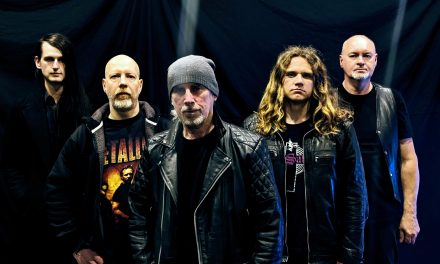
The Gold Needles – Press Photo 1
Riding the Mood Elevator: A Conversation with The Gold Needles
For a decade now, The Gold Needles have been quietly—yet insistently—carving out their own corner of the power‑pop universe. Born out of long‑standing friendships in Kingston‑upon‑Hull and fueled by a shared love of hooks, harmonies, and vintage sparkle, the band has evolved into one of the UK’s most consistently creative underground treasures. With their new album Mood Elevator arriving on Big Stir Records, I sat down with keyboardist and songwriter Mark English to talk about the band’s origins, their unstoppable productivity, and the stories behind some of their most infectious new tracks.
Mark, to start off, where are you all based, and what’s the local music scene like there?
We’re based in and around Kingston‑upon‑Hull in the north of England. The music scene here is a bit up and down, which I think is true in a lot of places. I do some promoting as well, and it’s tough at the grassroots level to get people out regularly to support local music and venues. There’s a bit of a malaise, and I think part of it comes from the big national tours. Ticket prices have gone up so much that people treat those shows as “events,” spend their budget there, and then forget about the local scene.
It’s unpredictable. We put on a gig last Friday and it was really well attended. If we did the same thing next Friday, we might get two dozen people. Very hit‑and‑miss at the moment. That said, there are loads of great bands, tons of creativity, and a lot of good music being made—you just have to scratch the surface to find it.
How did The Gold Needles end up signing with Big Stir Records, home to bands like 20/20 and Splitsville?
We’d had an informal friendship with Big Stir for years. There’s a UK band called Spygenius, based down in Salisbury, and we became friendly with them through David Bash’s IPO event at the Cavern in Liverpool. We hit it off, and since they were on Big Stir, that connection naturally grew.
Spygenius came up to Hull to play with us, and we later went down to Croydon to play with them. We stayed in touch. Before COVID, Rex from Big Stir also ran Big Stir Magazine, which came out quarterly, and I used to write short stories for it. So, we had a good relationship with the label even before we were officially part of it.
When our five‑year contract with Jem Records ended, it just felt right to approach Rex. We sent him the new material and asked if he liked it. He came back immediately with, “Yeah, I love it.” That’s when things became more formal. We’ve been on the label for about a year now, and we’ve never looked back—they’ve been fabulous and incredibly supportive.
What inspired the album title and the song “Mood Elevator”?
The song actually started with me. I had an eight‑track digital recorder at home and was messing around on bass. I came up with this riff I really liked. Dave, our lead guitarist, lives around the corner, so I rang him and said, “Come over—I’ve got an idea and I want to get it down while it’s fresh.” He came by, and we laid down the bass and rhythm guitar really quickly.
It sat for a while, and then we started developing it into what became a semi‑instrumental. Originally it was just an instrumental. We sent it to Simon, our rhythm guitarist and lead singer, and he said, “I really like this, but I think we could add just one line and harmonize it.” He had the idea to call it “Mood Elevator”—no idea where he got that from—and he wanted to sing that phrase at certain points in the track.
I think it’s a great album closer. It’s a bit different from the rest of the record—quite edgy. If you know UK post‑punk bands like Delta 5 or Gang of Four, it’s got that scratchy guitar feel. I really like how it turned out.

The Gold Needles – Mood Elevator – Artwork
Jumping from the end of the album to the beginning—tell me about “I Don’t Know About That,” the opening track.
That one was Simon’s. We collaborate a lot, but he brought that song in pretty much fully formed. He said outright that he was trying to write a really catchy pop song with a strong chorus and hook, and that’s exactly what it became.
We had a lot of fun with it—especially the video. I don’t know if you’ve seen it, but there’s a bit where Carl, our bass player, and I are sitting on a bench like two old women gossiping. One of us says something, and the other replies, “I don’t know about that,” which is a very English phrase. Simon wrote the song specifically to be catchy, radio‑friendly, and single‑ready.
One of my favorite tracks on the album—the one I can’t get out of my head—is “Eleven Eleven.” Tell me about that one.
The inspiration for that one came from Simon. I asked him what it was about, and he just said, “It’s about lots of things,” and got very cagey. Simon can be like that. The stuff I write tends to be fairly obvious and descriptive—you can usually work out what I’m talking about. But with “Eleven Eleven,” he said, “No, it’s about lots of things, and things we don’t know about,” and he got quite deep. So I thought, alright, I’ll leave it there.
Musically, we produced it as a proper rocker—turn up the amps, turn up the volume, pile on the harmonies. It’s got a great chorus and it works really well as a song.
Another standout track is “Keep On Telling Me Why.”
That’s going to be the new single, released the same day as the album. We actually struggled choosing singles because we set out to make an album where every track could be a single, and we feel like we achieved that.
Originally, when we first recorded it, it had a bit of a country feel. We listened back and thought it was missing something. So we re‑recorded it, toughened up the guitars, and it came alive. Will Jones, our drummer, is fantastic on it. We especially love the intro—he taps the hi‑hat a couple of times, says “three, four,” and brings us in.
Again, loads of harmonies, a great chorus, strong hooks. We’re all big Tom Petty and the Heartbreakers fans, and Tom used to say, “Don’t bore us, get to the chorus.” We love that philosophy. In fact, some of our songs even start with the hook—an old Beatles trick. “She Loves You,” for example, kicks off with the chorus. We like grabbing people right away. So yeah, another great pop song, even if I do say so myself.
You’ve opened for some pretty interesting bands—The Monochrome Set and The Darling Buds. What were those experiences like?
Both were awesome, really great nights. The Darling Buds are an ’80s female‑fronted power‑pop band from South Wales. Through my work as a promoter—this was one of our early gigs—I contacted them on the off chance. They replied saying they were doing a few dates and fancied it. They came up to Hull, played a brilliant gig, and it was fantastic for us to perform to a full room of power‑pop fans. They were lovely people too—really easy to get on with.
The Monochrome Set show was at the New Adelphi Club in Hull. The Adelphi has been a grassroots venue for 40 years. Everyone’s played there on the way up—Oasis, Green Day—you name it. It’s a small place and a bit of a dump, but it’s our dump, if that makes sense.
The Monochrome Set hadn’t played Hull in 40 years, and I’m a fan, so I took a chance and contacted them. They said yes. They came up, were incredibly nice, and we had another full house. Two cracking gigs.

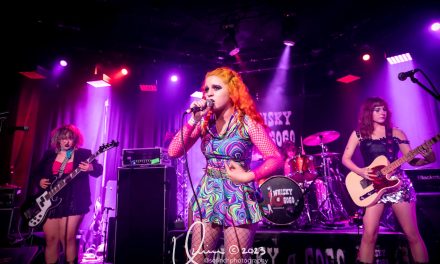
The Gold Needles – Press Photo 2
I also wanted to ask about EXTC featuring Terry Chambers of XTC. What was that like, and did you get to meet Terry?
It was fantastic, and Terry is the nicest guy in the world. After the gig, I was chatting with him. He’s from Swindon, and sometimes you discover a mutual interest you’d never expect. Hull is a big rugby league city—we’ve got two major teams here. Terry started talking to me about rugby league, which surprised me because Swindon isn’t a rugby league town; it’s more of a northern thing.
He told me he used to live in Australia, where rugby league is the national sport, and he got really into it. He still follows it in the UK. So we ended up having this long chat about rugby league.
I’d brought my copy of Black Sea, the XTC album from around 1980. I asked if he’d mind signing it. He said, “Yeah, no problem,” signed over his face, and then said, “I’ve left space for the other three guys in case you ever meet them.” That would be amazing, though I think they’ve all retired now.
Terry still hits the drums hard—his playing was impeccable. And it was just brilliant hearing all those amazing songs again at the Adelphi, with a room full of people smiling and singing along.
Have The Gold Needles ever played in the States, or is that something you’d like to do?
No, we’ve never been to the States. We’d absolutely love to. It’s on our bucket list, and it’s something we talk about regularly. We just need to get our act together and make it happen, because we’d really love to do it.
If the band were invited to appear on a Tom Petty tribute album and you got to choose the song, what would you pick and why?
For me, I can answer that instantly—even though there are tons of fabulous Tom Petty songs. I’d choose “You and I Will Meet Again” from Into the Great Wide Open. Why? I just think it’s a great song with a great story. It’s one of those unrequited‑love‑type songs. The first time I heard it, I thought, “I love this,” and I’ve played it loads over the years.
Ask me tomorrow and I might pick a dozen different songs, but that one is probably my favorite. And speaking of Petty, I’m a big Jesse Malin fan—on his last album he does a fantastic version of “Crawling Back to You.”
Who are some of your keyboard influences?
I’m a huge fan of The Stranglers, so occasionally I’ll do little runs that are a bit like Dave Greenfield. I could never be as good as him, so I don’t try to play like him, but he definitely influences me.
Ray Manzarek from The Doors is another one—I love his chord work. I’m also a big fan of The Damned, especially the Machine Gun Etiquette and Black Album era, where they used keys and synths. I like bands with Buzzcocks‑style guitars but with keyboards woven in, and that era of The Damned did that brilliantly.
I love Absolute Game by The Skids—lots of synths. Early DEVO, especially Are We Not Men. Bill Nelson and Be‑Bop Deluxe too. Basically, I like music where the keyboards aren’t front‑and‑center, but they’re an integral part of the sound.

Keep On Telling Me Why by The Gold Needles
I’m going to throw a few band names at you—just give me your quick thoughts. First up: Aztec Camera.
Absolutely love them. I remember being in sixth form—what you’d probably call college in the States—and buying their first album. I took it home on the train, and Roddy Frame’s acoustic guitar work on it really struck me. The drummer on that album, Dave Ruffy, had been in The Ruts, so he’d gone from a heavy punk band to something very different.
I think Aztec Camera are great. Roddy Frame writes really good pop songs. They’re underrated. I love them.
Another band: The Church.
Funny one, that. We’ve been compared to them before, and I’d never really heard it. Only recently did I listen to a track and think, “Blimey, that really sounds like one of ours.” So maybe, unconsciously, something filtered through at some point. But honestly, none of us in the band really listen to them, so any similarity is completely unintentional.
Since you’re a keyboard player, I have to ask about one of the greats: Elton John.
I’m a fan of Elton John—especially his early ’70s work, which I think is wonderful. I wouldn’t say he’s an influence on us, though. And I’ve never thought we sounded anything like him.
It’s interesting how people hear different things. We’ve had a few people say we sound like the Moody Blues. I don’t hear that at all, but some people do.
The Gold Needles are celebrating your 10‑year anniversary this year. What goes through your mind knowing you’ve been doing this for a decade? And you’ve known some of the guys even longer than that.
That’s right—Simon, our singer, and I go back 40 years. We were in a band together as teenagers. Over the years our paths always crossed; we stayed friends, bumped into each other, kept in touch. Around 2012 we decided we hadn’t worked together in ages and thought, “Should we put something together?” So we formed a project with a female singer and a full band. We did that for a couple of years, but it wasn’t going where we wanted.
We decided to continue, but on our own terms—new direction, new name, and Simon stepping in as the singer. That was 2015, and that’s when The Gold Needles officially began.
Dave, our lead guitarist, and I have been friends for 30 years. Carl, our bass player, we’ve known for ages too. We’ve all been in each other’s bands over the years, and we share similar musical tastes. So when we started The Gold Needles, the chemistry was already there.
“Supernature,” which is on the new album, was one of the first songs we ever wrote together. It took almost 10 years to get a recording of it that we were truly happy with. I honestly can’t believe it’s been a decade. Sometimes it feels like five minutes, and other times I look back at everything we’ve achieved and think, “Wow, we’ve done a lot.”
We’re always creative, but sometimes we hit these incredibly productive periods where we record a lot very quickly. When we get an idea, we tend to bring it to fruition fast. And even though the new album comes out next Friday, December 12th, we already have enough material recorded that if Big Stir said, “We need another album in six months,” we’d say, “We’ve got it.” We’re already working on the one after that. We spark off each other really well.

Mark English of The Gold Needles via Zoom!
With the new album coming out in a week, what’s next for you in the new year?
We’ve got about eight tracks already mixed and mastered, and another six that just need tidying up. We’ll finish those in the new year, and by around March we should have a complete set of songs ready for the next album.
Because of various circumstances—including some illness in the band—we haven’t been able to play live for a while. It’s been over two years since our last show. Thankfully that’s all behind us now, so one of our big goals is to put a live set together and start gigging again. We’re really looking forward to that.
Hopefully you can make it to the States. I’m in Los Angeles—we’d love to have you here.
That would be fantastic. We’d love to come over. And with Rex and the Big Stir crew being over there, I’m sure he’d rally the troops and get plenty of people out.
Before we wrap up, plug your radio show.
Sure—Mark English from The Gold Needles here. Our radio show is called Mark and Ted’s Excellent Adventure. It airs Saturdays at 6 p.m. in the UK on Beverley FM, 107.8 FM. You can also find us on Mixcloud.
In Conclusion
There’s a certain electricity that runs through The Gold Needles’ music—part nostalgia, part forward motion, all heart. Mood Elevator captures that feeling perfectly, a snapshot of a band that knows exactly who they are and where they’re headed. As they look toward new recordings, new stages, and hopefully new shores, one thing is clear: the harmony between these longtime friends isn’t fading anytime soon.
The Gold Needles: Simon Dowson – lead vocals, guitar; Dave Burbage – lead guitar; Mark English – keyboards; Carl Slaughter – bass; Will Jones – drums
(Interview by Ken Morton)
The Gold Needles on Facebook
Mark and Ted’s Excellent Adventure on Mixcloud