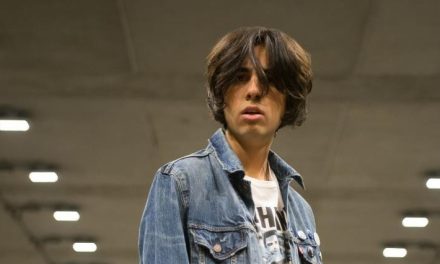
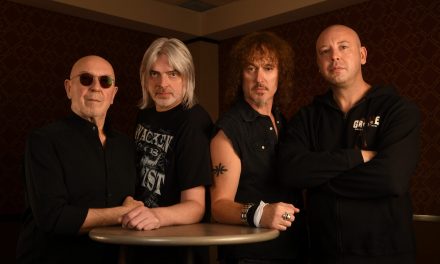
Metal Torchbearers: Gus G & Ronnie Romero Ignite The Whisky During NAMM Week

 Metal Torchbearers: Gus G & Ronnie Romero Ignite The Whisky During NAMM Week
 Metal Torchbearers: Gus G & Ronnie Romero Ignite The Whisky During NAMM Week
NAMM week always turns Los Angeles into a magnet for the world’s most devoted musicians, gearheads, and rock loyalists — but this year, one of the hottest moments didn’t happen on the convention floor. Just a few miles away on the Sunset Strip, two of modern hard rock and metal’s most recognizable forces, Gus G and Ronnie Romero, brought their special collaborative tour to the legendary Whisky a Go Go for a packed, high‑voltage performance.
Both artists carry serious pedigree: Gus G, known for his blistering work with Ozzy Osbourne and Firewind, and Ronnie Romero, the powerhouse vocalist who has fronted Rainbow, Michael Schenker, and Elegant Weapons. Together, they’ve built a show that blends their catalogs, their influences, and their shared love of the classic heavy‑rock lineage they’ve each helped keep alive.
The Whisky crowd got something rare — not just two elite musicians sharing a stage, but a genuine musical chemistry that feels organic, unforced, and rooted in mutual respect. Their set moves like a living jukebox of metal history: Ozzy, Sabbath, Rainbow, Dio, plus their own material and brand‑new collaborations. It’s a celebration of where they’ve been, where they’re going, and the music that shaped them.
Between soundcheck and showtime, both Gus and Ronnie sat down to talk about the tour, their creative partnership, their individual journeys, and the legacy they’re carrying forward. What follows is a candid look at two artists who refuse to coast on reputation — they’re still pushing, still evolving, and still hungry.
 PART ONE – GUS G
 PART ONE – GUS G
Tonight’s show at The Whisky—what made you want to put this particular performance together, and why was Ronnie the right vocalist for it?
Ronnie and I started working together a couple of years ago, but we’ve known each other for about ten years. We’d been in touch on and off, and we did some gigs together in Sweden a few years back. Then in the summer of 2024, he reached out. He lives pretty close to me—I’m in Greece and he’s in Romania, which is a neighboring country.
He was planning an acoustic tour and asked if I wanted to join him. So we did a few acoustic shows, and after that I said, “Hey, I’ve got a couple of full‑band shows coming up in Greece—want to come sing for those?” One thing led to another, and it all snowballed from there.
My agent saw what we were doing and said, “Why don’t we put this together and pitch it to some European festivals?” Suddenly we were getting a lot of offers. Last year became a bit of an experiment—we toured Europe, played a bunch of festivals, and the vibe was great.
We started this whole thing without any pressure. We just wanted to have fun, play songs we love—our own material plus covers from bands we’re connected with. It really grew naturally, gig by gig, and now it’s become a real project. We’ve been getting offers everywhere. Last month we were in Argentina, and now we’re here in the States. We just go wherever the music takes us and wherever people want to see us.
It’s a good vibe—a fun show. It’s a bit like a rock jukebox. We play our newer material, songs from our catalogs, and a lot of classics that fans love.
You’ve played a lot of places. What does it mean to play somewhere like The Whisky?
It’s legendary ground. Everybody has played here. So when you come to The Whisky, it’s not just another gig—you can feel the history. I’ve played here quite a few times over the years, both solo and with Firewind, and it’s always an honor. Just being welcomed here and playing in this town means a lot. The whole Sunset Strip is such an important part of rock and roll history.
 How did you and Ronnie approach the setlist? Was it about your catalogs, experimenting, giving fans something specific—how did you put it together?
From the start, we said, “Let’s play some of our own music and some of the stuff we love.” That was the foundation. We each picked songs from our records, compared notes, and found common ground.
We already had a bunch of covers from the acoustic shows, so we scaled that down and focused on what made sense for a full‑band set. Ronnie is associated with Ritchie Blackmore, so of course we added some Rainbow and Deep Purple. I’m associated with Ozzy, so we included some Ozzy and Sabbath—both the Ozzy and Dio eras.
In the end, it turned into almost a two‑hour show, which is a lot of fun.
You’ve collaborated with many singers over the years. What stands out about Ronnie’s voice and presence, and what’s it like sharing the stage with him?
Well, he’s ultra‑sexy for one—especially because he’s in the room right now. But seriously, from the moment we met, there was chemistry. We were doing some cover gigs with a Swedish band called Legion of Rock about ten years ago, and we clicked right away.
I think we also have things in common culturally. He’s from Chile, I’m from Greece—there’s a similar southern mentality in how we approach life and music.
And honestly, he’s one of the best singers of our generation. It’s amazing to play with someone like that. We’ve even started writing together, which has been really inspiring.
This collaboration works on a lot of levels. First, you have to get along personally. We travel everywhere together—planes, vans, hotels—so if you don’t vibe with the person you’re working with, it’s not going to work. But we do. We share a similar mindset and the same work ethic.
We’re both very focused. I didn’t fully realize that until we started working closely, but when we say we’re going to do something, we actually do it. We’re not the type of guys who are just looking for free booze and getting wasted. We take what we do seriously. We respect our audience. And those are important values to have in the people you make music with.
 Let’s talk about “My Premonition.” It’s been getting a lot of attention. What sparked the idea behind the song, and what does it represent for you?
I hadn’t released any solo music in four or five years. After the pandemic, I was really busy with Firewind—lots of shows, a new album—and then this project with Ronnie came along. Once we started booking all these shows together last year, I thought, “Maybe we should do a song of our own.”
We were already playing some of Ronnie’s songs and some of mine, so I said, “Why don’t we write something together to solidify the synergy?” That’s how “My Premonition” happened. I had an idea, sent it to him, he wrote the lyrics, and we recorded it. We released it as a single. It’ll be on my next album coming out later this year, and we’ve already done another song as well.
The idea was to have something new to present to fans when we go out on tour.
Is that important to you—to bring something new whenever you can?
Yeah, absolutely. I can’t speak for Ronnie, but I know he feels the same. We’re not guys who rely on our past. We live in the present. We’re creating now. We’re building our own catalogs.
Playing the classic songs will always be great, and fans love them, but I have my own history too—my own catalog with Firewind and my solo work. It’s important to keep moving forward, keep creating, keep putting out new music.
Back to “My Premonition”—it’s melodic and intense. Was there a particular sound or emotion you were chasing?
Yeah. The whole vibe of that song is very Sabbath—specifically the Dio or Tony Martin eras, which I really love. I had that sound in mind, and I thought, “This would be perfect for Ronnie.” And it was. It fits him great.
Is “My Premonition” a hint at a larger musical direction? You mentioned it’s on the next album.
Yeah, it’s going to be part of the tracklist on my new album.
So it’s not just a standalone single.
Right. It’s already released as a single, but it will also be included on the album.
A couple of quick questions about Ozzy. Obviously those were legendary years. When you look back now, is there a memory that hits the hardest—something that made you think, “Wow, this is part of my life now”? Any moment that stands out?
I’ve thought about that a lot, especially after his passing. As a fan, it was shocking. But then I started thinking deeper—like, it’s wild that I actually knew the guy. I worked with him for years. I knew his family. I spent time with them. We traveled together, played together, made a record together.
There are so many great memories. Honestly, it was all good times—on stage and off. It was such a big part of my life. Looking back now, I can clearly see my career in two phases: pre‑Ozzy and post‑Ozzy. Everything changed for me after that. I was still making records and touring before, but after joining him, everything was magnified to a whole different level. My life changed forever. That realization is probably what hits the hardest.
 I’m sure there’s been a lot of reflection, especially now.
Yeah, absolutely.
One more Ozzy question. With so many legendary guitarists in that lineage—including yourself—what did you learn from him, musically or personally, that shaped the work you’re doing today?
A lot, actually. Working with him made me a better professional and a better performer. The scale of everything was so big—the pressure was different—so you had to step up your game.
I have to admit, I didn’t really believe in myself as a guitar player before that. People would say things like “young guitar hero,” especially in Japan when I was in my early twenties, but I never saw myself that way. Even now, I don’t really think like that.
But after joining Ozzy, I had to grow into that role. I remember thinking, “If he sees me as that guy—his guy—then I need to rise to it.” I wasn’t just some guitarist standing off to the side anymore.
He’d ask me, “Do you have a guitar solo?” And I’d say, “Man, I hate doing solos by myself.” I still do. I never had the confidence to just walk out there alone and do that. But that gig forced me to bring out a bigger stage persona—one I didn’t know I had. It pushed me to believe in myself more.
Thanks for sharing that—especially now. Just a couple more questions. Mystic Prophecy and Nightrage… your early work with Mystic Prophecy helped define a certain area of European power metal. What do you remember most vividly about that period?
It was early in my career. I was playing with a lot of bands at the time—projects we were working on without really expecting record deals. Then suddenly, all these projects—Dream Evil, Mystic Prophecy—got signed around the same time. It became really hard to keep up with everything.
I stuck around as long as I could. I co‑wrote and played on a couple of records with them. We were working fast back then, and eventually I hit a point where I just couldn’t continue. I felt burned out. I realized I needed to focus more on my own thing, even though I was still writing and co‑producing.
But those were good times. I was learning a lot—absorbing everything like a sponge. I was in my early twenties, doing my first tours, spending time in studios, figuring out how bands really operate. All those bands were important steps for me. Great learning experiences.
 Nightrage had a different sound and attitude. How did that band challenge you compared to your other projects?
Yeah, that was a death metal band. I was basically helping my friend Marios get his project off the ground. I did all the demos, programmed the drums, even sang on some of the early demos because we couldn’t find a singer.
By the time we got to the second record, I realized I had grown out of the extreme metal thing. I still enjoy death metal and black metal, but I knew it wasn’t where I wanted to build my career. I felt like I belonged somewhere else musically. But I’m proud of the two albums we made.
Last question. When you look at your journey—Mystic Prophecy, Nightrage, Firewind, your solo work—what ties all of this together?
What ties it all together? I guess my guitar playing. That’s the common thread. I can’t speak for every part of those bands’ histories, but I was part of them, especially in that earlier decade. My writing and my playing run through all of it. It’s all under the same family tree—the family tree of heavy metal, power metal, whatever you want to call it.
I’m proud of all those albums. People still come up to me and say they love the first Dream Evil records. There are still fans listening to that stuff today. It’s part of my history.
Pretty diverse.
Yeah, within the metal spectrum. I like trying different things, of course.
Appreciate your time.
Thank you, man.
PART 2 – RONNIE ROMERO
 PART 2 – RONNIE ROMERO
Tonight at The Whisky—what could fans expect when you and Gus hit the stage together?
Basically what we’ve been doing since last year when we started playing together: his songs, my songs from my solo records, and of course some covers from the bands we love and represent in a way. We both come from that world—you know, I’ve played with Ritchie Blackmore and Michael Schenker, he’s played with Ozzy—so we’re carrying the torch for a new generation.
We’re not only playing for the longtime fans but also trying to bring this music to younger fans. So it’s a mix of the music we grew up with, the songs we’ve written individually, and the songs we’ve written together. It’s a very dynamic show, and I think people really enjoy that.
It’s a collaboration some fans have never seen before.
Exactly. And honestly, we were surprised by the reaction when we first started working together. Before this, we did an acoustic tour in Romania, and people kept telling us, “You two should do something together.” They saw that we had similar backgrounds—playing for big artists while also building our own careers.
People liked seeing us together, so we thought, why not? We get to make fans happy and also play the songs we love. And really, there aren’t many artists today who can mix Rainbow, Sabbath, Ozzy—those worlds—in a way that feels authentic. So it becomes this blend of different things, and people really respond to it.
Your chemistry together—what makes it feel so natural?
I think it looks natural because it is natural. Like I said, we have similar backgrounds. We’re around the same age, we like the same music, and professionally we approach the industry in the same way. People pick up on that.
There’s a real chemistry. It’s fun to play together, and the audience can see that it’s not forced or just a business move. We’re not here just to make money—we genuinely enjoy doing this. There’s a connection with the audience, and it feels natural for us and for them.
Especially now, when the industry pushes new artists that people don’t always relate to, there’s something refreshing about seeing musicians who have real ties to the old generation. Gus played with Ozzy. I played with Ritchie. So fans feel like, “Yeah, these guys are meant to do this.”
It’s not just, “Oh, Ozzy passed away, so let’s play Ozzy songs because it’s trendy.” Or, “Let’s do Dio songs because everyone does them now.” We’re not a tribute act. We’re part of that lineage. Fans recognize that, and it creates a real synergy between us and the audience.
 You’re right—it’s not a title. It makes sense.
Exactly. It’s not something fashionable. Gus actually played with Ozzy. I actually played with Ritchie in Rainbow. So when we play that material, people feel like, “This is how it’s supposed to be.” They allow us to do it, in a way. And because we also play our own catalogs, it becomes a mix of everything.
Backbone — powerful title. What’s the story behind choosing that name, and what does it represent for you personally and artistically?
It was actually the first song I wrote for the record. The word “backbone” came to me while I was writing the lyrics, and it felt like the perfect representation of what my career has been over the last few years.
For me, it symbolizes the will to keep going, to never surrender, to keep trying — especially in the rock and metal world, where things can get really tough. Financially, it’s not easy. Rock and metal aren’t the “mainstream” genres anymore, so it’s hard for musicians to reach a place where they can make a living doing what they love.
So the word “backbone” felt powerful. It represents resilience. And that’s what rock and metal musicians do — even when it’s hard, we keep going because we love it. That’s the meaning behind the song and the title. It became a statement for the whole album.
The album blends classic rock with your own signature style. What was your creative vision going into it? Did it evolve during the process?
No, I had a very clear idea of what I wanted to do. I learned from my mistakes on the previous album — I tried to do too many things at once. Too many layers, too many directions. I was mixing heavy metal with softer songs, then hard rock, and the record didn’t have a solid identity. It felt like I was showing up with different faces instead of one cohesive vision.
For Backbone, I focused on my real influences — Black Sabbath, Rainbow, that whole world. And I think it fits much better. All the songs feel connected. It sounds like an album, not a compilation of different styles. It feels like a proper, unified record.
Were there any songs on Backbone that challenged you in an unexpected way, especially vocally?
Yeah, definitely. Especially the songs I wrote with other songwriters — like Russ Ballard. That was very challenging. I mean, it’s Russ Ballard. This is the guy who wrote “I Surrender,” “Since You’ve Been Gone,” and so many iconic tracks. When he agreed to write a song with me, I thought, “Okay, I need to deliver something worthy of his name.” I didn’t want to screw up a Russ Ballard song.
The song I wrote with Roy Z was also challenging. The original demo was different, and I wanted something that had the heaviness and the metal vibe but could still work on the radio. That’s not something I’m used to — most of the songs I record never end up on the radio. So it pushed me creatively, but in a good way. It helped me grow as a musician.
 A couple of questions about Michael Schenker. You’ve worked closely with him — an iconic guitarist. What have you learned from that experience that has stayed with you?
With Michael, the biggest thing I took away was discipline. He’s had hard times in the past, but now he’s incredibly focused. On the last tour I did with him — his 50th anniversary tour — just thinking about him celebrating fifty years of career and still playing perfectly every night… that’s something you learn from. It’s inspiring.
He was probably the hardest‑working musician I’ve ever worked with. Totally different from Blackmore. Ritchie is more free — we rehearse, but we jam a lot, improvise, change things on stage. With Michael, it’s strict. We rehearsed every day from noon to 4 p.m., straight through. Then we’d go to the show and play everything exactly as rehearsed. It’s hard work. You have to stay focused.
And in the three years I played with him, I never saw him miss a single note. Not one. Even when he was sick or tired, he delivered. Watching that level of consistency from someone who has already done everything in rock music — it’s amazing.
Is there a particular moment or performance with him that stands out as especially meaningful?
Honestly, just playing with him was enjoyable. You’re watching a legend perform perfectly every night, and you think, “I hope I can do that when I’m his age.”
But if I had to pick one thing — and this is funny coming from a singer — my favorite moments were the solo sections. When we played “Rock Bottom,” he’d do this ten‑minute solo. I’d walk offstage, but I’d stay nearby just to watch. Every night, ten minutes of perfection, landing in the exact same place to cue me back in.
Sometimes he was sick, sometimes the sound on stage wasn’t great — it didn’t matter. He delivered every single night. It was unbelievable to watch.
CoreLeoni taps into very classic hard‑rock territory. How does your approach differ when you’re fronting that band compared to your other projects?
Not much changes in terms of my overall approach — I try to give my best in everything I do. But with CoreLeoni, there was something unique. We were playing Gotthard songs, and that was the most challenging part for me, because people compare you to Steve Lee a lot more than in other situations.
If I sing Rainbow, people compare me to Dio — but that’s different. With CoreLeoni, the comparisons to Steve Lee were much stronger, and honestly, he was such a unique and special singer with a very distinct voice. So fans were basically thinking, “Let’s see if this kid can do it at the same level.” That was tough.
And the songs themselves are hard to sing — not just the melodies or the range, but the soul behind them. Steve Lee wasn’t just a great singer; he was a performer, very much like Freddie Mercury in that sense. So stepping into that space came with a lot of pressure.
 What did you enjoy most about bringing those classic songs to life with your own voice?
RONNIE: I enjoyed being able to interpret the songs in my own way — but without straying too far from the originals. When you’re doing covers, there’s a small space where you can move. Fans want your interpretation, but they don’t want something completely different.
It was the same with Rainbow. People would say, “Yeah, it sounds a bit like the original voice,” but if you go too far in your own direction, they won’t like it. So you have to stay in that narrow lane.
But what I really loved was bringing these songs — especially the less obvious ones — to younger generations. Sure, we play “Stargazer” and “Kill the King,” but we also play “The Mob Rules” from Black Sabbath, which isn’t as common. Sharing that catalog with new fans feels important.
The new Ferryman album pushes the sound even further. What themes or ideas were most important for you to express on that record?
When we recorded the last album — it was last year — The Ferryman was still technically a studio project created by the label. It wasn’t meant to be a live band. The label would call Magnus and me and say, “We want another album every two years.” It felt like a regular job.
But this time, it felt different. We really found our sound — The Ferryman sound. There was a chemistry that made it feel more like a real band, not just a studio project where you show up for five days, record, and leave. We worked on songwriting, pre‑production, arrangements — all the things a real band does.
For me, that makes this latest album the most “Ferryman” album of the whole catalog. It has a proper identity.
Sounds like it took a few records to get there.
Yeah, but working with Magnus is always easy. He sends me the songs with him singing on the demos — and honestly, he’s a pretty good singer. But he’s also a producer, so he pushes me. He gives me freedom to do my thing, but he also knows how to push me into new territory.
He’ll say, “Can you hit this high note?” and I’ll say, “I can try.” Then on the next album, he’ll say, “You did that last time, so now go higher.” He knows exactly what I can do and how to get the best out of me. It’s always a great experience working with him.
 With Magnus and Mike Terrana, how has that dynamic evolved over the course of The Ferryman albums? You touched on it a bit earlier.
Yeah, like I said before, when we did the first record, it was really just an idea from the label. They said, “Do you want to make an album with Magnus Karlsson?” And of course I said yes. I grew up listening to his work — I didn’t know him personally back then, but his albums were some of my favorites when I was in college.
At first, it was a colder process. He wrote the songs, sent them to me, I went into the studio, recorded my parts, and that was it. None of us expected it to be as successful for the label as it was. Then we did a second album, and we worked a bit more closely on the songwriting. We honestly thought that would be the end — two albums for a studio project.
But the label came back and said, “Do you want to do another one?” Magnus and I talked and said, “Well… maybe we should.” And the label told us it was one of their best‑selling releases, so clearly people liked it. That led to the third and then the fourth album.
By the time we reached the fourth one, it finally felt like a band. We weren’t just manufacturing another standard record. We sat down and talked about what kind of songs we wanted, worked on the songwriting together, and really shaped the album. It evolved because of the fans too — they supported it from the beginning, and we never expected to make four albums. That was never the plan.
And it’s funny — people know I’ve done a lot of different things: Rainbow, Schenker, CoreLeoni… but everyone keeps mentioning The Ferryman. So I guess that means something.
So the next step would be taking it live?
Yeah, that’s the natural next step. It’s been on the table. But because of everyone’s schedules — Magnus is back with Primal Fear, Mike is always busy — it’s complicated. Still, it’s possible. Maybe at some point we’ll make it happen.
Final question — you’re one of the busiest vocalists in rock and metal. Is there anything on the horizon outside of what we’ve talked about? New music, collaborations, live plans?
Right now I’m focused on my solo album. We released it in October, and I’ll be doing shows throughout the year — supporting Primal Fear in March, summer festivals, and of course performing with Gus on this tour. Last year went really well, so we’re expanding the concept.
This time it won’t just be one band playing everything. We’re calling it the Convergence Fest. His solo band will play his set, my solo band will play mine, and then both bands will join together for a third set — covers, classics, everything. It’s a different concept, and we’re excited about it.
I also have the new Elegant Weapons album coming. Richie told me it should be released around June or July. We’ll see if we can do some shows around that.
But honestly, I’m learning from my mistakes. I’m trying to focus on just two or three things instead of doing everything. I’ve already done too much.
I’d say you’re one of the busiest guys on the planet.
I’ll definitely stay busy — even if it’s just with my own band. I want to play a lot. Live shows and touring… that’s the life for us. But I’m focusing more on the things that matter most to me now — the things that make me happiest. My band, Elegant Weapons, and the projects that feel meaningful.
Really appreciate your time.
My pleasure. Thank you, man.
In Conclusion
 In Conclusion
As the lights faded at the Whisky and NAMM week roared on outside, it was clear that Gus G and Ronnie Romero weren’t just revisiting the past — they were actively shaping the next chapter of heavy rock. Their partnership bridges eras, generations, and genres with a sincerity that’s increasingly rare in today’s industry. Whether they’re honoring the giants whose legacies they’ve been entrusted with or carving out new territory through their own music, both artists carry a fire that feels unmistakably alive. If this tour is any indication, the convergence of their talents is only just beginning, and fans lucky enough to witness it are watching two modern torchbearers push the tradition forward with grit, heart, and unmistakable chemistry.
(Interview by Scott Waters and Ken Morton – Photos by Scott Waters)