





Pure to a Fault: My Ticket Home Returns After Eight Years
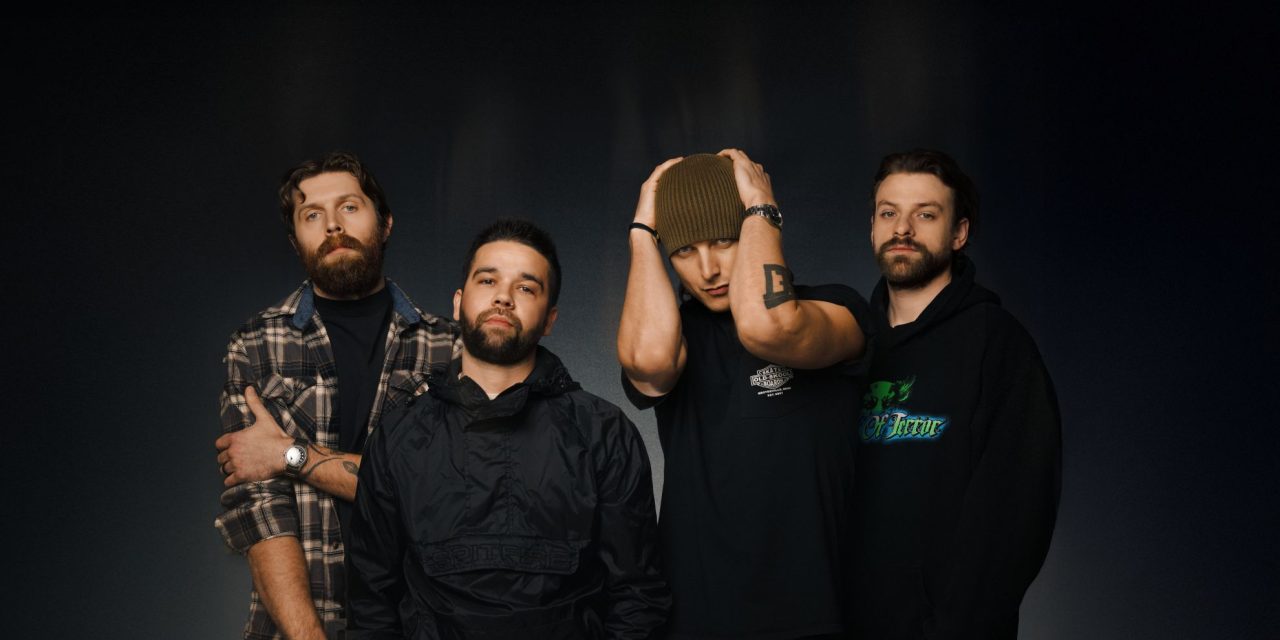
My Ticket Home 2026
Pure to a Fault: My Ticket Home Returns After Eight Years
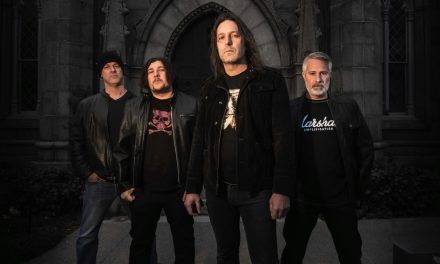
After eight years of near‑silence, My Ticket Home has resurfaced with Pure to a Fault—a comeback that feels less like a reunion and more like a long‑delayed exhale. The band never officially broke up; life simply pulled them in different directions. Careers, families, and the realities of adulthood took the wheel while the creative spark simmered quietly in the background. But that spark never went out.
Now older, sharper, and more self‑aware, My Ticket Home returns with a record that captures everything fans loved about them in the first place—raw emotion, genre‑bending heaviness, and the spirit of the “puke rock” sound they accidentally helped pioneer. It’s a continuation of their evolution and a reflection of the years spent growing up outside the spotlight.
We sat down with vocalist Nick Giumenti to talk about the band’s long road back, the freedom of making music on their own terms, and why Pure to a Fault might be their most honest work yet.
We’re here with Nick Giumenti from My Ticket Home. First of all, what made you all decide that now was the time to release a new My Ticket Home album after an eight‑year hiatus?
We’ve actually been working on it for a few years. I’d say we really started taking the writing process seriously about two years ago. But honestly, I always had it in the back of my mind that we’d come back to it eventually.
We all had our own reasons for taking a break. You hit your late twenties, you’re not touring full‑time anymore, and suddenly you’re back in the “real world” realizing you’ve got some growing up to do. So we each took time to figure out our lives, but we always knew we’d return to music.
During that break, I worked on projects with other bands, and that helped me realize it was possible to make our own record independently. I did a project with my friend Nick called Headcave, and we handled all the music ourselves. Once I saw that was doable, it felt like only a matter of time before we came back to My Ticket Home.
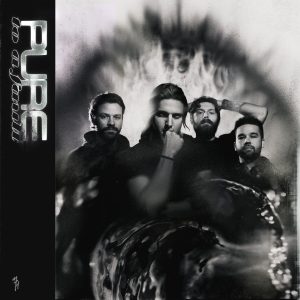
Pure To A Fault by My Ticket Home
When you released Unreal, did you think that was going to be the last My Ticket Home album?
No, not at all. We actually wrote most of another record right after Unreal. We were still writing and touring through 2017 and 2018. We’ve got almost a full album’s worth of material from around 2018.
It wasn’t until 2019 that we took a break and went our separate ways. I moved to Nashville. But there was never a “let’s break up” conversation. It was more that we each had personal growth we needed to focus on. So no—there was never a thought that Unreal would be the last record.
Your new album is titled Pure to a Fault—that’s quite a name. Is there a story or concept behind it? What does it mean to you?
It’s a lyric from one of the songs. We were tossing around ideas for the album title, and I originally suggested it as a song title. The guys liked it enough that we ended up using it for the whole record.
In the context of the song, the lyric is about how a person’s own nature can get the better of them—being too trusting, too kind, too naive. But for the band, I see it in a more tongue‑in‑cheek way. Our biggest strength is also our biggest weakness. Our desire to be as artistic as possible—or sometimes thinking we’re “too cool for school”—can make us stubborn. We end up making things harder for ourselves or not doing things in the smartest way.
So the title is a mix of self‑awareness and not taking ourselves too seriously, while still having a deeper, poetic meaning.
The album kicks off with “Tearjoint.” What inspired that track?
That was one of the earlier songs we wrote. Each of us had our own home studio—and we were all writing separately, sending ideas back and forth. I think “Tearjoint” was the first song Matt sent over.
It ended up being the opener because of how it starts. When you’re figuring out an intro track, you can go with a slow build or something dramatic, but we felt like, after eight years, we needed to just hit people right away. We wanted the first song to drop as a surprise—no teasing, no promo, just “here’s a song.”
“Tearjoint” made the most sense because it kicks in immediately. You get a feel for the record within seconds, which is exactly what we wanted.
What’s “The Weakest Wound”?
That line is part of a bigger lyric: “Even the weakest wound can still bring up the pain.” I wrote it about someone I know. The idea is that when you have a problem in your life that you haven’t properly addressed—something buried under the surface—the smallest thing can trigger it. Even the tiniest reminder brings up all those unresolved feelings.
So “The Weakest Wound” is basically the idea of having paper‑thin skin. Even the smallest cut can make everything spill out.

Nick Giumenti of My Ticket Home – Photos by Karyn Burleigh of Rock Edge Photography
Tell me about “Nothing Lost”.
That one came pretty early in the process. I think Derek had written four or five songs before it, but it was still one of the earlier ideas. Choosing singles is always tough—you never really know what people want or what they’ll connect with. I always think I know, and I’m always wrong. Every time I try to guess what fans will be excited about, I miss the mark.
We don’t think about that stuff while we’re writing. We write because we have something we want to express, and that keeps it honest. Any time we’ve tried to write with a specific goal in mind, the music suffers. But when it comes time to pick singles, those thoughts creep in: What represents the record well? What’s a good first impression? What will make people want to hear more?
For this record, the singles were basically chosen by which songs were closest to being finished. We were laying the tracks in front of the train. I was literally mixing “Nothing Lost” the night before we uploaded it. We’re all doing this between full‑time jobs, so we’d have stretches where everyone was grinding, and then weeks where the group chat went silent because life got busy.
I’m glad we picked it, though. It’s probably my favorite song on the record. It felt strong, and it came together naturally. But the reality is we were finishing things at the last minute and hoping the uploads went through. We use DistroKid, and they tell you to give them a month to guarantee your release date. We were uploading stuff a week out, like, “Well… hope it’s out Friday.”
Luckily, everything worked out. But that’s classic us—tweaking things until the last possible second when we should’ve had it done weeks earlier. That’s “pure to a fault” in action.
Let’s jump to the closing track, “One for the Garden.” Tell me about that one.
Funny enough, that was basically the fourth single. When you release a record, there’s something called a “focus track”—a song that wasn’t already a single but is the one you want people to pay attention to when the album drops. It’s the track you pitch to outlets, playlists, all that. We all picked “One for the Garden” because it was one of our favorites.
We liked the idea of ending the record with a heavy song. In metalcore, there’s kind of a cliché where the last track is the ballad or the soft, delicate closer. Nothing wrong with that—we’ve done it before—but we wanted to flip that expectation. Even the title sounds like it could be a ballad, which made it even better.
Once I came up with the outro—the spoken‑word, poem‑style section that pulls lyrics from the verse—we knew it was the closer. It ends with a little drama, a little gravitas, instead of just cutting off harshly.
We knew pretty early that “Tearjoint” would open the record and “One for the Garden” would close it. Everything in between took a lot more fine‑tuning.

Nick Giumenti of My Ticket Home – Photos by Karyn Burleigh of Rock Edge Photography
Would you like to tour or play any shows in support of the new album?
Absolutely. I don’t know if a full tour is realistic—I’d never say it’s impossible, but with guys having kids, careers, wives… it’s a lot harder to sort out logistically. But playing shows? Definitely.
We played a handful of shows last year before the record came out, and you don’t realize how much you miss it until you’re back on stage. It was great. I’ve always felt like the shows are the reward for all the hard work.
If we can keep things interesting with content—videos, social media, all the modern ways to connect—and then play a handful of shows throughout the year as a sort of celebration, that’s the goal. We’ll definitely play some shows; it’s just a matter of where and when.
I’d love to hit as many different markets as possible—West Coast, East Coast, Midwest, Southwest—so fans who want to come out get the chance. But honestly, we’re at the mercy of logistics. That doesn’t bum me out, though, because we can keep making music. We already have a bunch of songs for another record and some other cool ideas. Just because we can’t hit the pavement like we used to doesn’t mean we can’t keep creating and giving people something to connect with.
So we won’t have to wait eight years for the next one…?
Nick: Definitely not. I mean, dude, I’ve said this before—we said the same thing after Unreal, because there was a gap between Unreal and Strangers Only too. But the difference now is that we’ve finally turned the corner on being able to make records ourselves. That removes all the barriers. Now we have no excuses.
As long as we stay on top of our game, there’s no reason we can’t release music consistently. The world we want to live in is: Derek or Matt writes a riff, sends it to me, I put vocals on it, Marshall does drums, everyone adds their parts, we mix it, and a month later it’s out. Just direct to the audience.
When you make a traditional record, it can take a year or two before it comes out. By the time it drops, you’ve mentally moved on to whatever you’re writing next. I love the idea of saying, “Yo, check out this thing we just made. This is us right now.” That’s how it should be.
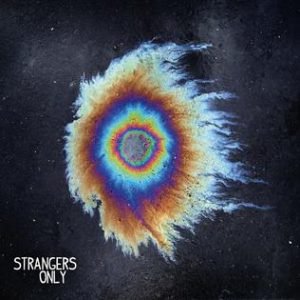
Strangers Only by My Ticket Home
Looking back on fan‑favorite Strangers Only from 2013 and the emergence of “puke rock,” what do you think of it now in retrospect?
It’s pretty humbling—and honestly an honor—that people have given that record a bit of a cult status. I’m hesitant to drink the Kool‑Aid and think of it that way, but it really does seem like its popularity has grown over time, or at least people’s perception of it has.
When we released it, it didn’t seem like it mattered much, which was fine. We were a small band. Tons of amazing records come out and go unnoticed. Nobody owes you attention. I’m not even saying that record is some masterpiece. But it is cool that people still care about it this many years later. That’s kind of the ultimate goal when you release music—you want it to stand the test of time.
I’m still proud of it. It’s easy for me to focus on the flaws—especially vocally. I can hear the growing pains. I was 20 years old when we made that record. I listen back and think, “I’d do that differently now.” But that’s the beauty of music. That’s who you were at the time. Even if the perfectionist in me hears the flaws, I wouldn’t change anything.
What’s currently going on with your other band, Headcave?
We’re writing. We’re planning to do a full‑length this year. It’s funny—it’s falling into the same pattern where Nick and I have written a ton of songs, probably 12 or 13 that could make a full record, but some of them are a year old now.
Nick is one of the most dedicated and consistent musicians I know. Because of that, he’s always mentally moving forward. If he wrote something a year ago—even if it’s sick—he’s already thinking about what he wrote today. So we’ve got songs that, in my mind, are ready to release, and he’s like, “Nah, I think it should be more like this new thing I’m working on.”
The challenge for me is keeping up with how fast he writes. I don’t want future songs to fall into that middle ground where we write a bunch but never actually release them, and they just get pushed further down the track. But yes—we definitely want to do another record. It’s been too long since we’ve put anything out.
So my big goals this year are: another My Ticket Home record, another Headcave record, and shows for both bands. That’s what I want to do.
So it won’t be eight years before the next Headcave release.
Exactly. I talk about this all the time with friends—musicians or not. Everyone has goals, dreams, things they want to do, and the day‑to‑day of life gets in the way. But I’ve realized it’s not “getting in the way”—I’m letting it get in the way.
If I truly want this the way I say I do, there’s no reason I can’t make the time. That’s one of my big New Year’s resolutions: get my shit together and actually follow through on the things I say I’m going to do. That’s the plan.

Headcave
Last question—do you have any message for My Ticket Home fans who are reading this?
Man, first of all, thank you. Thank you to everyone who kept the flame alive while we weren’t releasing music. And if you’ve listened to the new stuff and enjoyed it, thank you again.
I’ve been trying to think more about gratitude. I have a lot of friends in very successful bands—much more successful than mine—and it’s easy to compare myself to them and feel like what I’ve done is nothing by comparison. But at the same time, I try to remind myself that there are probably people who look at me the way I look at them. Success is relative.
I’m trying to be genuinely grateful for what we do have, because none of it is guaranteed. There’s a world where we release a new record and nobody cares. The fact that people are still excited, still supportive, still saying positive things—that’s something I don’t want to take for granted.
So my message is: we couldn’t do this without you. Thank you.
IN CONCLUSION
My Ticket Home’s return isn’t framed as a grand comeback or a triumphant victory lap—it’s something far more human. It’s a group of musicians who grew up, lived life, and found their way back to the thing that made them feel most alive. Pure to a Fault captures that honesty: the stubbornness, the self‑awareness, the creative spark that refuses to die even when life gets complicated.
Talking with Nick Giumenti makes one thing clear: this band still cares deeply about the art they make and the people who’ve stuck with them. Whether it’s a handful of shows, a steady stream of new music, or the long‑awaited revival of Headcave, the future feels wide open—and refreshingly unforced.
If Strangers Only was the sound of a band breaking rules, Pure to a Fault is the sound of a band breaking through themselves. And if Nick’s determination is any indication, fans won’t be waiting eight years for the next chapter.
(Interview by Ken Morton)