Forged in Shadows: Mjolne Reflects on Mactätus and Beyond

 Forged in Shadows: Mjolne Reflects on Mactätus and Beyond
 Forged in Shadows: Mjolne Reflects on Mactätus and Beyond
From the frostbitten rehearsal rooms of the late ’90s Norwegian underground to the solitary fires of pandemic-era creation, Mjolne has carved a path through black metal’s shifting veils. As the founding drummer of Mactätus, he helped shape two of the genre’s most revered cult releases — Provenance of Cruelty and Complex Bewitchment — before the band’s final chapter, Suicide, closed in 2002.
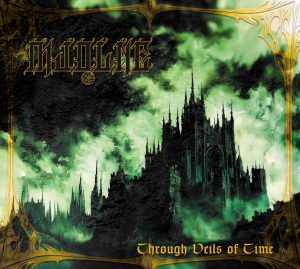
Now, more than two decades later, Mjolne returns with Through Veils of Time, a solo album steeped in Norse mythology, personal reflection, and the raw spirit of isolation. Written and recorded entirely by Mjolne himself, the album channels ancient echoes through modern struggle, with standout tracks like “Where I Once Was” and the three-part “Til Helheim” trilogy offering both tribute and transformation.
In this exclusive interview, Mjolne reflects on the new album’s origins, the legacy of Mactätus, and the quiet fires still burning beneath the surface.
First of all, is there any overall story or concept behind the album title Through Veils of Time?
It’s not a concept album in the traditional sense. The lyrics lean heavily into Norse mythology — it’s more of a tribute to our forefathers, to who they were and how they lived in ancient times. That’s the overarching inspiration. The songs aren’t connected narratively, except for the Til Helheim trilogy, which does have a lyrical throughline. But overall, the album is rooted in honoring old Norse traditions and history.
Let’s talk about a few of the songs. Where I Once Was kicks off the album. What inspired that one?
When I started writing the music that ended up on this album, I didn’t actually have a project in mind — not an album, not even Mjolne. It was just me picking up the guitar again during the COVID lockdown, after a long break following the breakup of Mactätus. I needed something to do besides work, so I started writing. Where I Once Was was the second song I wrote.
It came naturally. I wasn’t aiming for a release — I was just writing what felt right. Lyrically, it’s about reflection. Over the course of life, you reach points where you look back at who you used to be, how you’ve evolved, how time has shaped you. It’s about personal development — for better or worse. And it’s also a nod to our ancestors, to Norway’s ancient history. The line “a shadow of what I once was” speaks to that — a sense that things were better in the old days. So it’s both personal and mythological, a tribute to the past.
 You have a song in three parts — Til Helheim. Tell me about that one.
Yes, that trilogy is deeply rooted in Norse mythology. Helheim is the realm of the dead — not hell in the Christian sense, but the place where those who died of sickness or old age would go. Warriors who fell in battle went to Valhalla, but Helheim was the point of no return.
The trilogy uses that mythology as a metaphor for personal struggle. Everyone faces difficulties — whether it’s physical health, mental health, work, or relationships. Sometimes those struggles feel like a descent into a black hole, and that’s the journey to Helheim.
Part one is Reisen — “The Journey.” It represents the descent, when you’re overwhelmed and sinking into that darkness. Part two is Forvandlingen — “The Transformation.” That’s when you begin to confront your struggles. Sometimes you do it alone, sometimes with help. Sometimes you don’t manage at all and remain stuck. Part three is Gjenreiselsen — “The Return.” It’s about emerging from Helheim, overcoming those challenges, and returning to life — maybe even stronger than before.
So while it’s written in a mythological style, it’s really about resilience and personal rebirth.
Would you like to put a band together and tour behind this project?
I don’t have plans to take Mjolne on stage right now. There are a few reasons. First, I did everything myself on this album — all the instruments, all the recording. I had to choose what I’d play live, and I’m originally a drummer. But I’ve had wrist issues — tendonitis — from rehearsing too much when I started making music again. It hurts if I play for long periods.
Also, I broke my elbow a few years ago, so my mobility is limited. Playing guitar is easier sitting down, but that’s not ideal for live shows. So performing drums or guitar on stage would be tough. I’ve joked in interviews that maybe I should just hire a full band and stay home.
Vocals are probably the one thing I could do live, though I see myself more as a drummer than a frontman. If I did put a band together, it would likely include some members from Mactätus — and at that point, maybe we should just do a Mactätus reunion instead. But for now, there are no plans to bring Mjolne to the stage.
 Okay, here come the Mactätus questions. Provenance of Cruelty is considered an underground black metal classic. Looking back on that 1998 album — your second — what do you think of it now in retrospect?
I’d probably rate Provenance of Cruelty as Mactätus’ best album, personally. I’m quite satisfied with it. At that time, we were very active — rehearsing several days a week, and spending just as much time together outside the rehearsal room. We were a tight-knit group of friends, partying together, hanging out, doing life as a unit. That bond really shaped the music.
We wrote the album together in the rehearsal space — everyone contributed. I look back on that period with great memories. We’re still good friends today. And I think most fans would agree it’s our strongest release — it’s the one they mention most often as their favorite.
Musically, Provenance of Cruelty isn’t far from what I’m doing now with Mjolne. Of all the Mactätus albums, it’s the closest in style and spirit to this project. That era of Mactätus still resonates with me.
The Complex Bewitchment is celebrating its 25th anniversary this year. When you look back on that album and the fact that it’s been 25 years, what are your thoughts?
I really like that album too. We had evolved a bit since Provenance of Cruelty — moved slightly away from the traditional symphonic black metal sound that defined that earlier record. All of us in Mactätus had black metal as our common ground, but we also brought in other influences. Some of us were into more progressive styles, and I think that comes through on Complex Bewitchment. It’s a bit more progressive, musically speaking.
It also features one of our best songs, in my opinion — the opening track, “Ornament of Pettiness.” I think that’s one of the strongest pieces Mactätus ever wrote.
That said, we’ve talked recently about the album cover — and how it didn’t turn out the way we intended. We had a different concept originally, but it didn’t come together as planned. Somehow, we ended up with a cover none of us liked. Even now, we’re not sure how it happened. It’s strange — maybe even a little funny — that we ended up with artwork that didn’t reflect the band at all.
I think Napalm Records, our label at the time, took over the development of the artwork after our initial idea fell through. We were left without a proper cover, and that one just got used. Honestly, I think it may have hurt the album a bit. The music was strong, but the cover might have turned people off — maybe even kept some from listening. It’s not a good cover, and we all know it.
 Well, it was like the typical Napalm Records cover art of that era. Of course, we’re going to go to Suicide. What are your thoughts on the final Mactätus album to date?
That album was a bit rushed. We had booked time at Abyss Studio in Sweden — a well-known, busy place run by Peter Tägtgren from Hypocrisy and Pain. But when our studio dates came up, the album wasn’t fully written yet. So we had to scramble to finish the songs in time, and I think you can hear that in the final result.
Of course, I like the album — it’s part of our history — but I wouldn’t call it our best. It does have some strong tracks, though. One of them, “Language of Disloyalty,” was actually written while we were already in the studio. We hadn’t even started that song before arriving. I remember one night in the house we rented next to the studio — the guitarists were playing unplugged electric guitars, and I was tapping out drum parts on my knees. We wrote the song that way, and recorded it the next morning. Ironically, it’s probably my favorite track on the album.
But overall, we didn’t have enough time to rehearse properly before recording. We weren’t tight enough, and I think that shows.
Suicide is actually a concept album. The title stirred some controversy — people wondered if we were promoting suicide, which we absolutely weren’t. The album deals with mental illness. It tells the story of a man struggling with suicidal thoughts, hearing voices urging him to end his life. He’s afraid of the pain of dying, so before he takes his own life, he kills someone else — just to witness death firsthand. It’s dark, yes, but it’s also a necessary theme to explore. Suicide is a real issue, and we don’t talk about it enough.
Two members of Mactätus — Forn and Istar — left early and formed Svartahrid. What did you think of their albums, and do you still keep in touch?
I don’t have much contact with them these days, though we live in the same city and cross paths occasionally. After I released the Mjolne project, they reached out and said it was great to see me making music again.
Their departure wasn’t dramatic. They joined Mactätus just after Blot, and played on the Dark Journey demo — which led to our signing with Napalm Records. Istar played bass, and Forn handled keys, though Forn is actually a drummer and Istar is a guitarist and vocalist in Svartahrid.
They were playing in both bands at the time, but Istar eventually left to focus on Svartahrid. We replaced him with Mefistofeles, who stayed with us through Complex Bewitchment and Suicide. Forn remained with Mactätus until the end.
I really like the Svartahrid albums. I still listen to them now and then. They captured that classic ’90s black metal vibe, though their lyrics lean more toward Viking metal. Musically, they share a lot with traditional black metal.
 I’ve interviewed Mactätus twice before, and Gaut was the one I spoke with both times. How’s everyone these days?
We’re doing fine. Gaut and I are actually working on a new project together — we’ve written and recorded two or three songs, so we’re in regular contact and still making music.
Ty isn’t musically active these days, but he did vocals for a progressive metal band in the 2000s. He became quite a good vocalist — it runs in the family. His older brother is an amazing progressive metal singer. Ty moved to a nearby town, so we still talk occasionally.
Forn and Istar are the ones I see less often. Mefistofeles, who played bass on Complex Bewitchment and Suicide, is still active — he’s playing in a band now that leans more toward thrash metal.
We’re all pushing 50 now, but we’re doing well.
Have you seriously talked about doing a Mactätus reunion — a show, an album, anything?
We’ve talked about it several times over the past decade. I recently found some old rehearsal tapes from 2005 and 2009 — we tried to get something going back then, wrote a few songs, but nothing came of it.
Between 2010 and 2020, we discussed it a few more times. We even had an opportunity to play a local festival. Some of us were eager, others less so. In 2019, we had another serious talk and decided to give it a try. I started rehearsing drums again — I hadn’t played in about 10 years — and Gaut did the same. We met up and played some Mactätus songs, but like before, it didn’t lead to anything concrete.
So, I wouldn’t hold my breath for a reunion album or concert. But you never know. There’s still a lot of interest in Mactätus. Earlier this year, we re-released the Sorgvinter demo from 1996, and we’re working on re-releasing more old material later this year. We’ll announce those when they’re ready.

Mjolne on Zoom!
Will there be a second Mjolne album? Is that something you’re thinking about?
Yes, I’ve already started writing for the next album. The plan is to continue with the Mjolne project. My deal with ATMF, the Italian label, includes the possibility of a second release — so there’s a good chance another album will happen.
Any message for Mactätus fans reading this?
First of all, thank you for staying loyal to Mactätus all these years. We haven’t released anything since 2002 — nearly 25 years — but when I put out the Mjolne project, many old fans reached out. I realized there were far more Mactätus fans out there than I knew, some of whom have been with us since our first demo in ’96.
It’s humbling to know that music we made 25 or 30 years ago still means something to people today. I’m grateful for the respect and support, and I hope we can give something back with the upcoming re-releases. I think fans will enjoy what’s coming.
(Interview by Ken Morton)
Mjolne on Instagram