Bones, Bloodlines, and Beheaded: Frank Calleja on Malta’s Death Metal Legacy and the Rise of Għadam


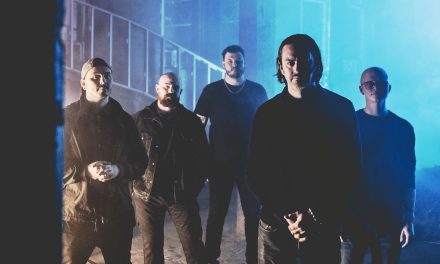
Beheaded Photo by Nicolò Brambilla
Bones, Bloodlines, and Beheaded: Frank Calleja on Malta’s Death Metal Legacy and the Rise of Għadam
For over three decades, Beheaded has carved its name into the brutal bedrock of death metal—emerging from the Mediterranean shadows of Malta with a sound as ferocious as it is uncompromising. In this exclusive interview, vocalist and lyricist Frank Calleja reflects on his 17-year tenure with the band, revisits landmark albums like Never to Dawn, Beast Incarnate, and Only Death Can Save You, and unveils the haunting inspiration behind their latest release, Għadam (out now on Agonia Records)—a conceptually rich, sonically savage album sung entirely in Maltese.
From cult horror author Anton Grasso to the challenges of remote collaboration and the thrill of finally touring the U.S., Frank offers a candid look at Beheaded’s journey, their evolving sound, and the eerie folklore that fuels their creative fire. Whether you’re a longtime fan or new to Malta’s underground metal scene, this conversation is a deep dive into the bones of Beheaded.
Introduce yourself, tell me what you do in Beheaded, and how long the band has been together?
Hi, I’m Frank, vocalist for Beheaded and part of the songwriting process, especially when it comes to lyrics. I’ve been in the band since 2008—so going on 16 or 17 years now.
The new album is titled Għadam. What inspired the name?
Għadam translates directly to “bones” in Maltese. The inspiration came from Maltese horror writer Anton Grasso—he’s a cult figure locally, kind of like the Stephen King of Malta. His books are only available in Maltese, and I’ve been friends with his son Sergio for years. I’d been toying with the idea of incorporating more local elements into Beheaded’s music, and one day I was back at my old place, flipping through a stack of Maltese horror books. Grasso’s work caught my eye, and I thought, “There’s something here.”
The album title comes from one of Grasso’s books—a collection of short horror stories also called Għadam. Each track on the album is named after one of those stories. We didn’t retell the original plots, but instead reinterpreted the titles into new narratives of our own. That was the starting point.
We also decided to write and perform the entire album in Maltese. It’s the first death metal album fully sung in the language. That opened the door to exploring sonorities tied to our heritage—religious themes, folklore, and more. It felt deeply personal and creatively invigorating.
 Beheaded’s been around nearly 35 years. What’s the metal scene like in Malta today?
It’s active—both the metal scene and the broader music scene. Malta’s changed a lot in the past decade due to a high influx of immigrants, so it’s got more of a metropolitan vibe now. Whether that’s good or bad is subjective, but it’s definitely different.
Younger bands today have more opportunities to tour and play abroad. Back in the day, there was no internet, no social media—we were pretty isolated. But even then, the scene was vibrant. I remember the ’90s being full of musicians across genres: death metal, black metal, doom, heavy metal. That diversity has carried through the years.
Today, there’s a mix of old guard and younger kids bringing fresh energy and sounds. Sure, there are limitations—Malta’s small, and that poses challenges—but the scene is solid. We even get international acts. Just this weekend, there’s a three-day festival with Dream Theater, Opeth, Apocalyptica, and more. It’s not perfect, but it’s alive and kicking.
Before joining Beheaded, did you ever see them live in the ’90s or early 2000s?
Yeah, I first saw Beheaded during their demo days—Souldead era. Around ’94 or ’95, there was a compilation released by a small shop in Valletta called The Rock Shop. They had all the underground stuff: death metal, black metal—you name it. The label was called Storm Records, and they put out a comp called The Storm Has Begun, which featured Beheaded’s “Vae Victus.” That track later appeared on Perpetual Mockery.
I saw them live in ’95 at a local fest called Live Buzz. I went to the Perpetual Mockery launch, saw Marcel Scalpello—the original vocalist, who sadly passed away not long ago—and followed the band through lineup changes and releases like Recounts of Disembodiment and Resurgence of Oblivion.
I was younger than the rest of the members back then, just a fan. My previous band, Slit, actually supported Beheaded at our first live show. David Cachia, Beheaded’s bassist and one of the OGs, also played bass in Slit. We had a tight friendship across bands. So, when the vocalist spot opened up, I stepped in—and here we are.
You’ve got some U.S. dates coming up in October. What are you most looking forward to?
Man, the food! We’re hitting New York, so I need to try that legendary New York pizza. But seriously, I’ve never played in the U.S. Last year, Beheaded was invited to Maryland Deathfest, but I fractured my ankle and had to miss it. So, I’m really looking forward to finally setting foot on U.S. soil, meeting fans, and playing live. Can’t wait.

Frank Calleja of Beheaded
That’s exciting. I’m based in Los Angeles—hopefully Beheaded can make it out west sometime.
That’d be amazing. It’s tricky, though. Being EU citizens, there are hurdles—visas, paperwork, all that. But hopefully this time it works out. I visited the U.S. back in 2005—Chicago, St. Louis, Indiana. Loved it. I even went to Ozzfest that year. The lineup was insane: Black Sabbath, Superjoint Ritual, Slayer, Black Label Society, Slipknot, Hatebreed, DevilDriver… just killer. Great memories.
Let’s go back to 2012. When you look back on your first Beheaded album, Never to Dawn, what do you think of it now?
I look back at Never to Dawn as the album where I stepped in during a transitional phase. Beheaded hadn’t released anything since 2005’s Ominous Bloodline, and there had been some lineup changes. So, we were asking ourselves: where do we stand as a band now—with a new vocalist and a legacy to honor?
As a musician, you want to write the album that feels right for the moment, based on your current inspiration. I think Never to Dawn was a solid record. It had strong ideas, memorable melodies, and opened new sonic doors for Beheaded. It’s still intense and brutal—tracks like the title song and “Elapsed into the Vortex of Extinction” are ones I still love.
Of course, hindsight is 20/20. Any musician might say, “I’d tweak this or change that.” But for that time, it was the best album we could have made, and I’m proud of it.
In 2017, you released Beast Incarnate. What are your thoughts on that album now?
Beast Incarnate was the next step. We started focusing more on songwriting structure—how each track complements the others within the album’s scope. That’s when Davide Billia joined as our drummer, and his presence brought a new level of professionalism. He’s based in Italy, so we began working remotely, which is still how Beheaded operates today.
A new drummer means new energy and flair, and I think we really stepped it up. The songwriting became more refined, more deliberate. Compared to Never to Dawn, which was raw both in sound and process, Beast Incarnate felt more polished. It was the bridge between Ominous Bloodline and where we were heading.
Songs like the title track, “The Horror Breathes,” and “Crossing the House of Knives” still stand out to me. They nailed the structure and formula we were aiming for. The production was solid, and it remains a fan favorite from our more recent era.
 Then came Only Death Can Save You in 2019. How do you feel about that one?
That album was another leap forward in songwriting. I can listen to it start to finish and say, “Yeah, these songs are well-crafted.” We explored different tempos and textures—“Embrace Your Messiah,” for example, is heavier and mid-paced, with a chuggy groove.
If I had to point out a flaw, it’s that the album felt a bit rushed. We were dealing with remote collaboration—Omar, our former guitarist, had moved to Belgium, and Simone was in Italy. So the writing came from two separate camps, and you can hear that divide in the album. It lacks the cohesion we’ve achieved with Għadam.
Production-wise, if we remixed and remastered it today, it would sound very different. But it has a ferocious, raw energy that gives it a unique identity. It’s one of our most extreme records, and kind of a happy accident. Tracks like “A Greater Terror,” “The Charlatan’s Annunciation,” and “Embrace Your Messiah” are staples in our live set. The artwork is killer too—I’ve got it right here. I’m proud of that album, but I truly believe Għadam is where Beheaded has found its true sound and style.
Are you still involved with Coffin Birth? I saw you had an album in 2018.
Technically, yes—I never left. But we haven’t been very active. I still keep in touch with Giulio Moschini from Hour of Penance. We’re good friends and check in now and then, like, “Hey, what’s going on with Coffin Birth?” We always say we’ll get it moving again.
It was never meant to be a main project. Everyone’s got their own thing—Giulio with Hour of Penance, Francesco Paoli with Fleshgod Apocalypse, and me with Beheaded. But I do think Coffin Birth will return.
For those unfamiliar, check out the video for “The 13th Apostle” and the album The Serpent Insignia. It was a wild ride. Giulio messaged me out of the blue: “Want to be part of this?” He sent a few songs, I wrote some lyrics, recorded demo vocals, and they loved it. Next thing I knew, I was in the band—and we had to record ten songs in a couple of months.
It was a scramble, but creatively freeing. I had carte blanche—no concept constraints, just pure inspiration. I’d love to play more gigs and write more music with Coffin Birth. It’s been a blast so far.

Frank Calleja of Beheaded via Zoom!
Any message for Beheaded fans reading this?
Yes—give the new album a chance. We know it’s a shift in direction. The first single we released is probably the most eccentric track on the record, and it raised some eyebrows. For me, it’s the best song on the album, but I get that it might not be everyone’s cup of tea.
We’re following our hearts and creative instincts. This album is about finding our own sound—something rooted in our Maltese heritage, our local folklore, and the eerie, macabre atmosphere that surrounds us. That’s what we’re channeling.
As much as I love our U.S. fans, one thing that’s always bugged me is when Beheaded gets lumped in as “New York death metal.” I mean, we couldn’t be farther from New York—geographically and culturally. Sure, we’ve been inspired by U.S. bands, but we’re carving out our own identity now.
Għadam is still a death metal album, but it’s infused with other influences and a lot of passion. It’s 100% Beheaded. That’s my message to you, my friends.
(Interview by Ken Morton)
Beheaded on Instagram