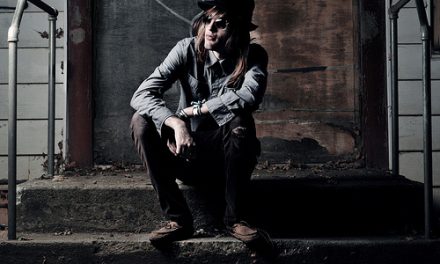
Echoes in Indigo: A Conversation with Carmelo Orlando of Novembre


Novembre 2025
Echoes in Indigo: A Conversation with Carmelo Orlando of Novembre
For over three decades, Carmelo Orlando has been crafting sonic landscapes that blur the lines between metal, melancholy, and the metaphysical. As the founding member of Italy’s genre-defying band Novembre, his journey spans from the frostbitten studios of Sweden to the sun-drenched solitude of home recording. With the upcoming release of Words of Indigo on Peaceville Records, Novembre enters a new chapter—one steeped in emotion, introspection, and a bold reimagining of their sound.
In this candid interview, Carmelo reflects on the band’s evolution, the challenges of creating music in uncertain times, and the enduring spirit that’s carried Novembre through 35 years of artistic exploration. From the haunting beauty of Your Holocene to the icy depths of Neptunian Hearts, we dive deep into the stories behind the songs—and the soul behind the band.
We’re here with Carmelo Orlando from Novembre. First off, let’s dive into the new album. Is there an overarching story or concept behind the title, Words of Indigo?
Well, not in a rational sense. This time, I didn’t approach it with a clear concept. These are such surreal, turbulent times—there are no words to truly capture what’s going on. So, I focused on the music itself. The title Words of Indigo is about replacing words and concepts with feelings. Indigo is a shade of blue, but more than that, it represents a state of being. The idea is to let music express what words can’t.
Let’s talk about the first single, Your Holocene. What inspired that one?
Your Holocene is about someone whose soul feels like it comes from another age—a distant past. There are people like that, who seem pure but carry a kind of quiet danger they’re not even aware of. That’s what the song tries to capture. Musically, it stands out on the album. It’s catchy and has a strong 80s pop-rock vibe—think bands like Mr. Mister, The Cult, or U2—but reinterpreted through our own style. I’m really proud of it.

Words of Indigo by Novembre
Let’s move to the opener, Sun Magenta. What can you tell us about that track?
Sun Magenta was the hardest song to put together. If you listen closely, it’s built in two distinct blocks—there’s a pause in the middle, and then it shifts. For a long time, it felt like two separate songs stitched together, and I couldn’t make sense of it. I almost scrapped it entirely. But I didn’t give up—it became a personal battle. It took me two years to get it right. Now, I love it. It’s a unique piece, and I hope people give it a chance.
Let’s talk about one more track: Neptunian Hearts. What’s the story there?
That one’s rich and varied. It has clean, catchy vocal refrains, but also dives into death metal territory—very Northern European in style, like early Opeth. The title refers to Neptune, the distant, cold, blue planet. It’s a metaphor for hearts like that—people who feel far away, emotionally cold, yet beautiful in their own way.
How challenging has it been to find new band members who share your vision for Novembre?
It’s been tough—especially in my area. There are plenty of musicians, but few who are truly committed. In the past, we played with great people, but they lived so far away they had to fly in for rehearsals. That wasn’t sustainable. It took time, but I finally found the right people nearby. It was hard, but absolutely worth it.
Has Novembre ever played in the U.S., or is that something you’d like to do with this new album?
We’re trying—really trying. We did play on the 70,000 Tons of Metal cruise, which kind of counts as America, right? There were lots of Americans on board. It was in international waters, but we flew to Miami for it. It was incredible—my first time in the States—and I can’t wait to come back.
What’s it been like working with the legendary Peaceville Records?
It’s fantastic. They’re prestigious and professional. I mean, they’re the label behind Paradise Lost, My Dying Bride, and so many others. It’s an honor to be part of that legacy.

Materia by Novembre
Let’s revisit some anniversaries in the band’s history—there are quite a few worth celebrating. Let’s start with Ursa, which came out in 2016 and will hit its 10-year anniversary next year. When you look back on that album, what comes to mind?
I still love that album. It was my first attempt at making a record entirely on my own, using home recording. I’d never done that before. It gave me the freedom to experiment with layers of guitars and textures without needing help from the other guys. I think the result turned out really well. That said, the experience I’ve gained over the past 10 years has taken me to new levels. But Ursa still holds a special place for me.
Let’s go back 20 years now—Materia is celebrating its 20th anniversary. What are your thoughts on that one in retrospect?
Materia… that was a different time. It was before home recording, so I didn’t have full control over the process. I had to rely on others—bandmates, sound engineers—and it was tough to put together something so complex without being able to shape every detail myself. Listening to it now, it sounds a bit confusing to my ears. But I still love its soul, the essence of it. I just wish I could’ve worked on it more.
Let’s go even further back—to 1996 and the nearly 30-year anniversary of Arte Novecento.
Imagine that—unbelievable.
What do you think of that album now, nearly three decades later?
I love that one. It was our second album, recorded in Sweden at Dan Swanö’s Unisound Studios in Örebro. It was winter—real winter, the kind we don’t get in Italy. Minus 20 Celsius or something like that. You can feel that cold atmosphere in the music—it seeped into the album. It was a very experimental record for Dan, too. The sound isn’t strictly metal; it’s more progressive, more avant-garde. At first, I wasn’t sure about it, but over time I grew to love it. It was also our first album without growling vocals. I had damaged my throat and thought I couldn’t scream anymore, so I sang clean. That made it stand apart from our other records, but I still love it.

Arte Novecento by Novembre
That album also features your cover of Depeche Mode’s “Stripped”—a favorite of mine growing up. What inspired you to cover that song? And do you know if Depeche Mode ever heard it?
I have no idea if they’ve heard it—I hope so, but I doubt it. As for why we covered it: when I was a kid, maybe 10 years old, I saw them perform that song on Italian TV. It hit me like a bolt of lightning. The melody was just incredible. At the time, it felt like a good idea to revive some of the lost 80s for our audience. Back then, that era seemed to have vanished. Not like today—now the 80s are celebrated again, which is great. It was also a challenge to reinterpret that song in our own style, but I think we pulled it off. I’m still proud of it.
If you count your early days with Catacomb, this year marks the 35th anniversary of Novembre. What goes through your mind knowing you’ve been doing this for 35 years and counting?
I don’t think about it too much, honestly. I’m not a time freak in that sense. But yeah—it’s unbelievable. Sometimes I have a hard time keeping track of the years myself. Thirty-five years… wow. Amazing. What can I say? Things have changed so much—no more paper magazines, no more stamps and envelopes. But I have good memories of those times.
You’ve got a new album, Words of Indigo, about to drop. What’s next after the release?
Promotion, of course. I’m sure there will be concerts and tours—we’re working on lining up a few shows. At this point, it’s not entirely in my hands. There are people handling that side of things, so we’ll see where it goes.
Any message for your fans in the U.S. who’ve been following Novembre all these years?
We love you guys. You’re the most loyal fans—truly. I really hope to meet you again someday. Even though I don’t know each of you personally, it feels like we’re friends. You’re amazing.
(Interview by Ken Morton)
Novembre on Instagram