
Midnight Transmission: The Rise of Transatlantic Radio
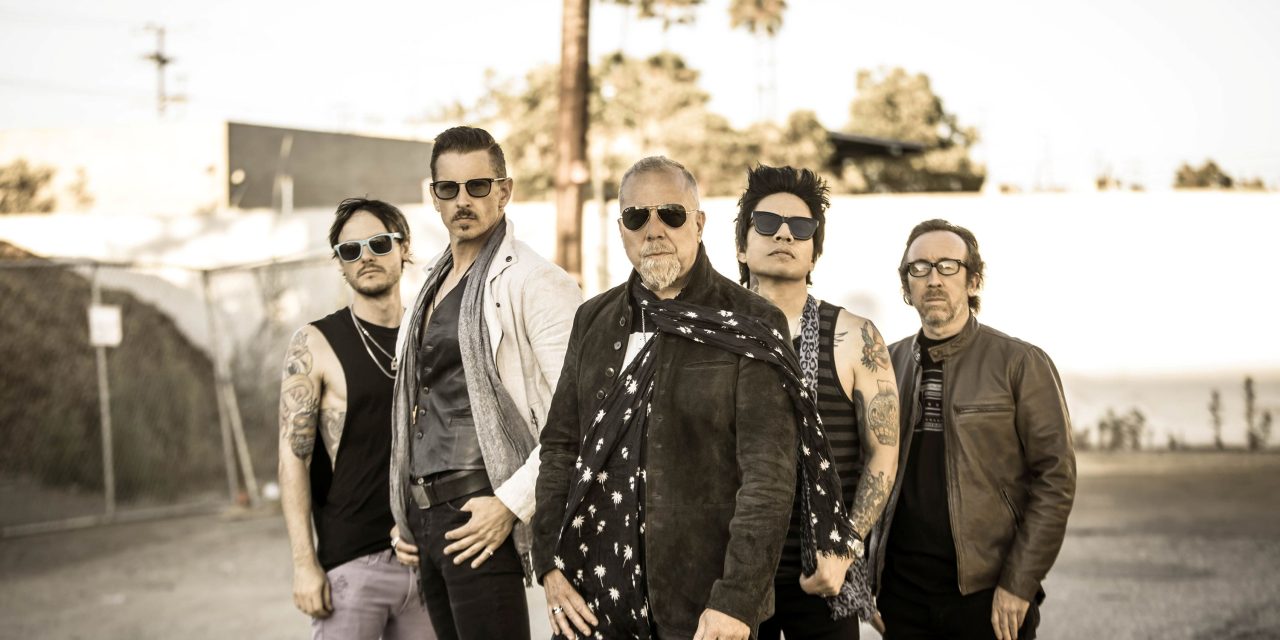
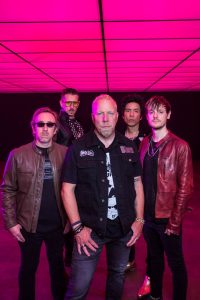
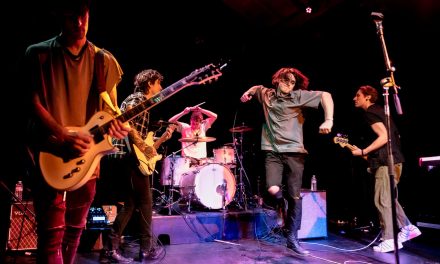
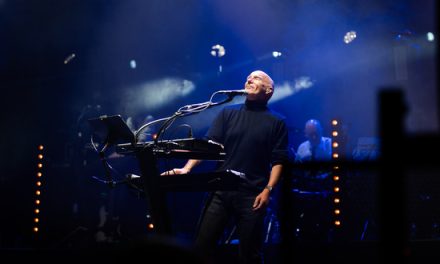
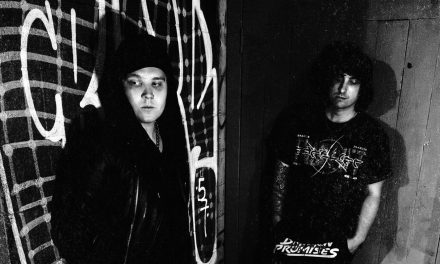
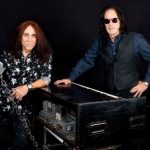
Photo by Enzo Mazzeo
Midnight Transmission: The Rise of Transatlantic Radio
Fresh off a breakout appearance at the Frontiers Rock Festival, Transatlantic Radio is proving that AOR isn’t just alive—it’s roaring back with glossy hooks, stacked harmonies, and a whole lot of heart. At the center of it all is bassist, songwriter, and accidental bandleader Victor Brodén, whose pandemic‑era hobby project has evolved into one of the most exciting new acts in the melodic rock revival. With their debut album Midnight Transmission out now on Frontiers Music Srl, Brodén and company are ready to bring their epic neon‑lit sound to fans across the globe.
Introduce yourself and tell me what you do in Transatlantic Radio, and how long the band has been together.
My name is Victor Brodén, and Transatlantic Radio is actually my first-ever hobby project. Back in March of 2020—literally just a few weeks after the world shut down—I suddenly found myself at home like every other musician. I’d been touring consistently for almost thirty years and was lucky enough to make a living doing it, but I realized there were still things I wasn’t great at.
Normally when I make records, I hire people to run the computer—engineers, producers, whoever. I wasn’t nearly as fluent in home recording as I should’ve been. So in those first weeks of lockdown, I decided to finally learn my recording software. And just over six years ago now, I wrote a song purely as an exercise.
Because I didn’t have to worry about work, or whether it was commercial, or whether anyone would ever hear it, I wrote something just for fun—in the style I love most: overproduced, super‑slick ’80s AOR. I figured maybe two or three friends might hear it someday. I certainly didn’t expect anything to come of it.
That first song, “That’s What You Get for Falling in Love,” didn’t exactly become a hit, but it did get noticed—by Frontiers Records and a few other people in the melodic rock/AOR world. I kept writing, and the hired‑gun pros who were kind enough to play on the tracks eventually volunteered to turn this into a real band. And now we very much are one. None of this was planned. It all feels like a lucky coincidence.
As for my role, I play bass and write about 80–90% of the material. That’s my corner of Transatlantic Radio.
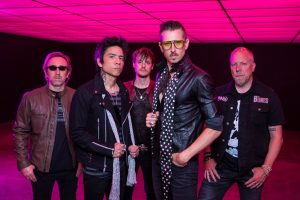
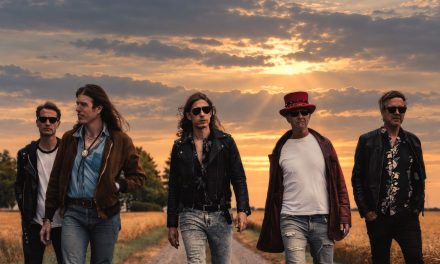
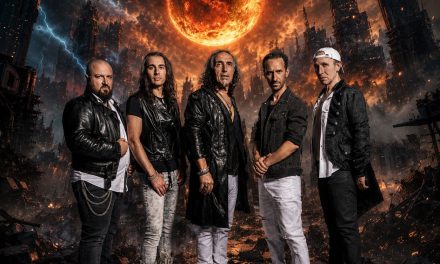
Photo by Enzo Mazzeo
How did your show at the Frontiers Rock Festival go? What were some of the highlights?
I’m actually sitting in a hotel in Orlando right now—it’s 9 PM here—and this time last night I was just landing from Italy. The whole thing was a whirlwind.
A lot of us in the band are professional hired guns. We’re used to touring with headlining acts. But with Transatlantic Radio, we’re what the industry calls a “baby act.” We were on early in the day—the opener for the opener for the opener. Even so, Frontiers treated us incredibly well.
We had to play a major festival with no soundcheck and no setup time. On stage, it sounded pretty rough and we had no idea what the audience was hearing. But from the videos I’ve seen in the last 48 hours, it came out far beyond our expectations. We spent months preparing for those 35 minutes in Italy, and thankfully it paid off.
And of course, we’re fans of the genre. It was amazing seeing Starship, Giant, and the other headliners. We’re all side players for bigger artists, so having our own meet‑and‑greet—and meeting fans from all over the world who love our music—was a thrill.
There’s such a kind, loving energy around this genre. It’s not the most popular style, and it’s not exactly “cool” to admit you love sappy ’80s melodic rock. So when you meet fans who are proud of it, it’s overwhelmingly positive. Honestly, that part of the trip was even more rewarding than the performance itself.
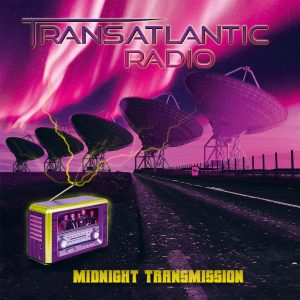
Midnight Transmission by Transatlantic Radio
You’ve got some pretty cool members in your band. Your vocalist, Mattias Osbäck, is phenomenal. Give me a little background on him and how he became involved.
It’s a really interesting story. The four of us players have long résumés from all the artists we’ve worked with, but Mattias—who’s Swedish, so it’s actually pronounced Mat‑TEE‑as—comes from a different background.
When I was growing up in my hometown in Sweden, Mattias was a few years younger than me and sang for a lot of local bands. Everyone knew he had this big, powerhouse metal voice. But at a young age he joined the Swedish Navy and ended up sailing all over the world, which pulled him out of the local music scene. He also became a father early on, so he focused on being a parent and a Navy officer. He always kept singing, but mostly locally in southeastern Sweden—nothing that reached outside the country.
When I started this project, I called one of my oldest friends, an engineer at a great studio in Sweden—the same guy who introduced me to a lot of AOR records when I was a teenager. I told him I’d written some AOR songs and needed a singer. I couldn’t think of anyone in L.A. who fit the vibe. Without hesitation he said, “You need Mattias.” I said, “The Navy guy?” And he said, “Yes. You need Mattias.”
So I owe Mattias’ involvement to that recommendation. We were loosely connected acquaintances back in my early twenties, but this brought us back together.
Our music leans toward pretty melodies and heavy keyboards, but Mattias is really a metal singer. His vocals in this band are a mix of his aggressive style and a softer voice he hadn’t explored before. AOR is all about great vocals, and when someone like you notices him first, that tells me we hit the mark.
I’m just the bass player, obviously, so I appreciate the kind words about him. And I think it’s pretty cool that in a band full of seasoned pros, our lead singer is a high‑ranking Navy officer. It makes for a great story.
You briefly touched on “That’s What You Get for Falling in Love.” When you were writing this song in the middle of the pandemic, what were you inspired by?
I think you don’t have to be a professional musician to hear what’s going on in that song. I’m proud of it—it’s not a rip‑off of anything—but you can definitely hear Def Leppard in there. My main influence when writing isn’t one specific band; it’s producer Mutt Lange. His work on Hysteria, Bryan Adams’ Waking Up the Neighbours, Foreigner, and even AC/DC’s Highway to Hell and Back in Black—those records shaped me.
He produces this incredibly slick, almost machine‑tight rock with massive stacks of background vocals. When I wrote “That’s What You Get for Falling in Love,” I wanted to see how close we could get to that Mutt Lange sound with basically no budget.
You can hear a lot of influences in that track. The verses have a little Queensrÿche in them. The pre‑chorus leans very Def Leppard. The chorus is more Bon Jovi meets Harem Scarem—or maybe even Journey. That’s the palette I was drawing from.
I also had help writing it from the great Swedish producer and songwriter Erik Mårtensson, the lead singer of Eclipse. Without Erik’s melody—the hook on “that’s what you get for falling in love”—the song wouldn’t be what it is. I can’t take full credit for that one.
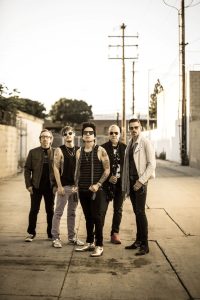
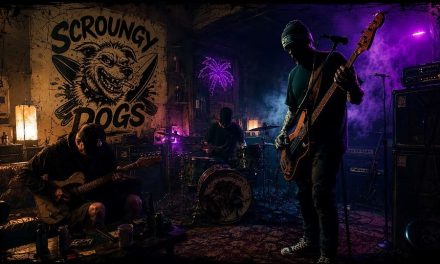
Photo by Enzo Mazzeo
That’s so cool. Eclipse actually played out here last year at the Whisky. Did you go to that show?
I was there. After the show, Erik and I ended up talking for two hours over a few beers at the Whisky. I’d known him a little before, but I’ve been a huge fan of his production and songwriting for years.
He has that same instinct that made Bryan Adams a household name for decades: keep it simple, keep it strong, and make the song a banger. No unnecessary drum fills, no overly complicated guitar solos—just hooks and power. I think Erik carries that torch better than anyone right now.
And he’s a powerhouse performer. Guys who write and produce at his level aren’t usually big hams on stage, but Erik is a true quadruple threat. And in classic Swedish fashion, he has zero ego. Completely humble, and it’s not an act.
He’s got his side project W.E.T. with Jeff Scott Soto, he’s got Eclipse, he’s produced a ton of great AOR music… Even though my writing is mostly influenced by Mutt Lange, I’ll gladly admit that Erik’s output over the last decade has influenced me too.
Let’s move on to your song “City of Angels.” A lot of AOR bands from Europe write about L.A. without ever having been here. You live here. Tell me about that song and how the city inspired it.
I love how you framed that, because it’s true—so many European bands have this version of America, and especially L.A., that comes from movies and Sunset Strip mythology.
“City of Angels” was actually the last song I wrote for the record. I had everything else done, and I asked myself, What does this album still need? I decided it needed a super simple, almost nursery‑rhyme‑level song—something that makes you want to roll down your windows and drive. We have that energy in other songs, but some of them are more intricate. I wanted something straightforward.
And I genuinely love my hometown. The palm trees, the beaches, the mountains, the boulevards at night when traffic finally eases up. But L.A. is also still the place—maybe not as much as in the ’80s—but still the place where, if you want to compete at the highest level in photography, music, fashion… you come here. And you might get your ass kicked, but you come anyway.
So the song is partly my love letter to L.A., and partly me leaning into every stereotype European AOR fans expect. It’s playful, but sincere.
There’s another song on the record, “The Good Times,” that’s written with a lot of humor—playing into all the cheesy American movie tropes about spring break and high‑school buddies trying to lose their virginity before college. “City of Angels” is the West Coast version of that idea.
When I wrote the riff, it immediately felt like driving down the highway at night with the windows down. So the song is for Europeans who want to hear every cliché about L.A., and it’s also for me—a fun little love letter to my hometown.
Some of the lyrics are trite on purpose, but there are lines I really like. I refer to L.A. as “she,” like a woman who pulls you in and won’t let you go. It’s a lighthearted version of that Hotel California idea—”you can check out anytime you want, but you can never leave.” It’s humor mixed with genuine affection.
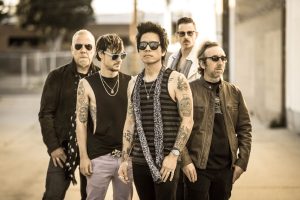
Photo by Enzo Mazzeo
Let’s go to the end of the album. I always like to see what’s at the end. “Born to Rise.” Tell me about that song and the inspiration behind it.
“Born to Rise” is interesting. It’s not the most commercial song on the record, but it might be my favorite.
As a sideman, I’ve played a lot of corporate conventions—Microsoft, huge multi‑billion‑dollar companies—and they always play this kind of rock music critics love to hate. Songs like Bon Jovi’s “It’s My Life.” Songs that say, “Go team, we’re all in this together, we can rise up after they beat us down.”
I wanted to write a motivational anthem that could live in that world.
The first verse talks about growing up in a small town where your options are limited—you either become a factory worker or you’re unemployed. “Born to Rise” is a love letter to everyone who left their hometown to chase something bigger, whether they made it or not. It’s about grabbing life by the balls and trying to win.
If someone listens to it when they’re feeling down and it lifts them up even a little, then I’ve done my job.
Musically, it’s more involved than some of the other tracks. If “City of Angels” and “The Good Times” are the trite, fun songs, then “Born to Rise” and “Against All the Odds” are the more symphonic ones. They change keys multiple times, they flex a little more musical muscle—they’re clever, in a way.
It had to be the last track. I wanted to end the record on something more serious. That big sweeping chorus, and then everything dies out to a lonely little piano—that’s the only place it could go. It was obvious from the moment I wrote it.
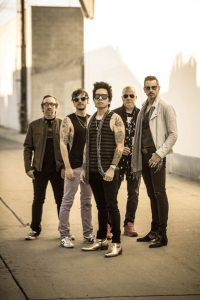
Photo by Enzo Mazzeo
You just played the Frontiers Rock Festival with the full band. Would you like to do more shows in support of the new album? Maybe a Whisky show or a European tour? Is that something that interests you?
Absolutely. If you know melodic rock—basically American ’80s arena rock, or “West Coast” as we used to call it—it’s no longer an American thing. Hair metal still has a foothold here, but AOR is hair metal’s more romantic, less sexual cousin. And the real hotbeds for this music now are Scandinavia, Germany, Spain, and Italy.
Outside of Europe, South America is huge for AOR—especially Brazil and Chile, with a little bit of Colombia too. So for 2027, even though everyone in this band is busy with the gigs that actually pay the bills, I’m hoping we can carve out two weeks: one week in Europe and one week in South America. I think it would be incredible.
We already have so many fans in Brazil. Journalists like yourself, fans writing the sweetest messages—even though we’re a small band. Whether it’s financially viable or not, I want to go to Brazil and play for those people. It feels like a mission bigger than business.
And since most of us live on the American West Coast, doing a show here would be logistically easy and super fun. It just has to make sense.
You’ve been involved with other bands and projects. I wanted to bring up Jelly Roll since he’s so popular right now. What did you do with him?
I’ve played for Jelly Roll twice. He’s signed to Broken Bow Records in Nashville—a label whose biggest artist for years has been Jason Aldean. As a hired gun, I go to Nashville every year to play their label party, where every artist performs for a select group of radio DJs from across the country.
Because I’m in the house band for most of their artists, I’ve played Jelly’s industry showcases. The first time I worked with him, each artist only had 15 minutes to soundcheck. He was supposed to check at five, but he walked in at 5:07—so he had maybe seven or eight minutes left. Instead of brushing it off, he said, “I’m so sorry, y’all, for being late. I’m just real high.” He admitted it immediately. No ego, no excuses.
I liked him right away. If you can admit your imperfections to strangers, you’re good with me.
I’m genuinely happy for his success. He’s gone back to jails to play for people who are in the same situation he once was. Even though I don’t love all of his music, I respect his artistic choices. And that’s how my career usually goes—I don’t do long tours. I work with a lot of artists for one or two events.
That’s my Jelly Roll story.
Do you have any other current bands or projects you’re working on?
I’m on a two‑and‑a‑half‑month tour right now with the world’s biggest Queen tribute. There are many Queen tributes out there, but this one is the biggest, and they’re all from Glasgow, Scotland. We’re doing a 37‑city U.S. tour, and the entire production—outfits, lighting, staging—replicates Queen’s 1986 Wembley Stadium show.
I’ve had the good fortune to work for a lot of multi‑million‑selling artists with original music, but playing Queen’s catalog with musicians of this caliber—even in a tribute setting—has been one of the most satisfying jobs I’ve ever had.
I’m doing that for another three weeks. After that, I have a bunch of smaller things in L.A., and I’m hoping to stay off long tours for a bit so I can write for Transatlantic Radio. It’s hard to find the time. I’m hoping to be “unemployed” enough by late summer or early fall to start writing again.

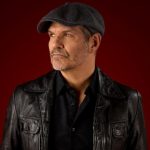
Victor Brodén of Transatlantic Radio via Zoom!
So we can expect a Transatlantic Radio II record?
Yes, you can. There’s no timeline yet—the first one took six years. Not six years of work, but six years of finding time. Every song has hundreds of hours in it because this music is heavily overproduced. Nothing is organic or loose. It’s very much in the Mutt Lange vein—a fantasy sound. Back in the day, that would’ve been Phil Spector.
After the song is demoed and recorded, the time it takes to tweak all the background vocals and mix everything is… longer than it should be. I’ll admit that.
We’re trying to find a more efficient workflow for the second record—maybe two years instead of six. Maybe a year and a half. We’re talking about it now. I’m more proud of this record than anything I’ve ever done in my life, even though it’s just a little AOR hobby band album. It has all the ingredients I hoped for.
But making a second record that’s as good or better will take planning. It’s a nice challenge. We just released the first one in February, and I’m already thinking about the next one. It’s daunting, but exciting.
Do you have any messages for melodic rock fans here in the States who are reading this?
Absolutely. First of all, props for being an AOR fan. I call it “romance‑novel rock.” A lot of men in their fifties listen to it, and it’s one of the least cool genres to admit you like. It’s cooler to say you like hair bands like Mötley Crüe or Warrant. But if you say you listen to Starship, Romeo’s Daughter, or Giant—that’s not considered cool.
So I admire and encourage all the AOR fans in the U.S. Because here, it’s not the hip thing to do. But there’s no better community to be part of. I’ve seen it firsthand at AOR festivals in Europe—the friendship, the love, the support. It’s beautiful.
And to all the AOR fans in America: please tell your local venues that even though it’s not a huge genre, if you put two or three of the bigger bands together, the venue can make money. We need that in the States. If you can do some grassroots work on behalf of all of us, that would be amazing.
In Conclusion
For Victor Brodén, Transatlantic Radio isn’t just about glossy production or ’80s nostalgia—it’s about the people who still believe in this music. The fans who show up early. The ones who proudly admit they love AOR even when it’s not the cool thing to say. As he looks ahead to future tours and a second album, Brodén’s message is simple: keep supporting the bands you love, keep telling your local venues you want melodic rock, and keep the flame burning.
(Interview by Ken Morton)
Transatlantic Radio on Instagram