






Hello Beautiful: Dodgy Return With Heart, Humor, and Hope
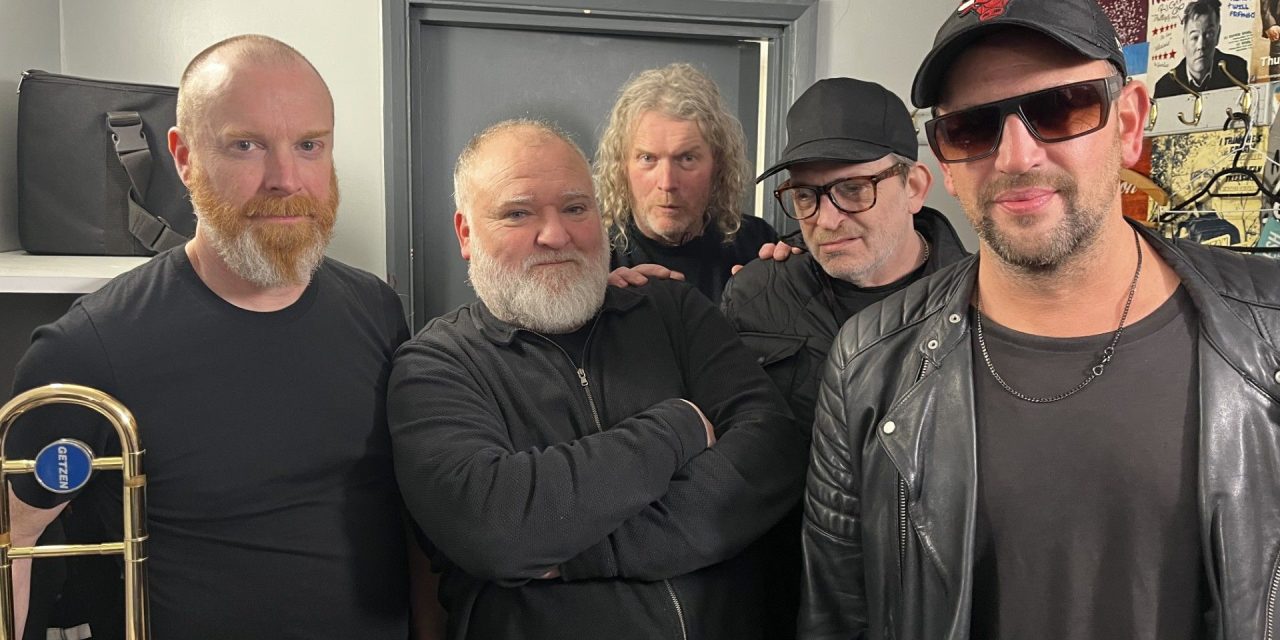
Dodgy 2026
Hello Beautiful: Dodgy Return With Heart, Humor, and Hope
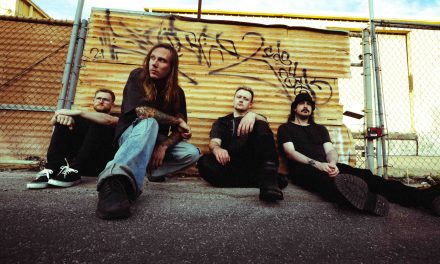
Dodgy have always been one of those rare bands whose music feels like a conversation — honest, melodic, and unafraid to stare down the world with both humor and heart. Now, a full decade after their last studio release, Nigel Clark and Mathew Priest return with Hello Beautiful, an album that radiates hope, resilience, and a fiercely human spirit. From anti‑fascist undertones to deeply personal reflections, the record captures a band still evolving, still questioning, and still chasing the light. In this candid conversation, Nigel and Mathew open up about the long road to the new album, the emotional weight of revisiting Free Peace Sweet thirty years later, and the dream of finally bringing Dodgy’s music across the Atlantic.
We’re here with two members of Dodgy to talk about their brand‑new album. The last Dodgy record arrived in 2016. What made you decide that 2026 was finally the time for a new one?
Mathew: Yeah — every ten years.
Nigel: The last album was quite a difficult process, and I don’t think it gave us the rewards we hoped for. It put us off the whole thing for a while. And when you make an album, you want to put forward your best songs. We’ve been busy gigging, so… yeah, ten years. It’s taken that long to get these nine songs together, but we’ve been active in between. This time around, though, we’ve completely turned it around. We’re 100% happy with the record, and everyone working with us has been fantastic.
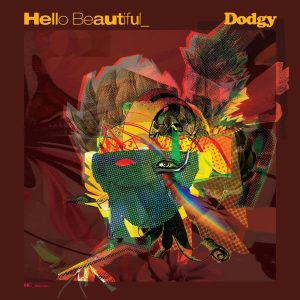
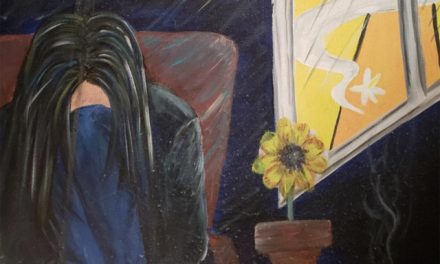
Hello Beautiful by Dodgy
The new album is called Hello Beautiful. Is there an overall story or concept behind the album and that title track?
Mathew: Well, you’ve got your problems with the right wing in America, and we’ve got ours here in the UK. We’re probably a few years behind you. We have a great hatred of Nigel Farage and the right‑wing parties here, just as we do of Trump and Elon Musk. The song “Bella Ciao” was resonating with us — it’s been an anti‑oppression, anti‑fascist song since the late 19th century. Women working in the fields in Italy would sing it about their oppressive masters. It’s been sung in the Spanish Civil War, in Ukraine… everywhere. There are different translations, but one English interpretation is “Hello Beautiful,” and that rang true. The first song we decided on for the album was “Hello Beautiful,” which was written about moving on from trauma. It was originally called “Scars,” which felt negative. I said, “Let’s switch it to the positive.” So yes, there’s an anti‑fascist drive in there, but as the album developed, other themes emerged too.
Nigel: I think it’s anti‑something, but it’s also pro something. We’re progressive people and a progressive band. We look to the future and look for solutions rather than blame. As songwriters, it’s our duty to look deeper into life’s problems and shift from blame to progress — let’s get through this together.
Let’s talk about a few of the other songs. “The Likes of You and Me” — tell me about the inspiration behind that one.
Nigel: That was one of the last lyrics I finished. In the last four years, I moved to Wales — very west of England, right by the sea on Cardigan Bay, looking out toward Ireland. My wife and I just felt like we’d run out of time in England and needed a change. We took this drive into the unknown, moved to a house where we didn’t know anyone, and it’s been the most amazing thing we’ve ever done. Sometimes you have to take those risks. On paper it made sense, but we didn’t know how it would turn out. So far — touch wood — it’s been brilliant. The song is about that leap, and also about turning around and telling others that it is possible to follow your dreams, follow your heart, and be like the sun — shine on everybody. The sun gets mentioned a lot on this album.
Mathew: What I love about that song is that while it’s personal to Nigel, it also speaks to refugees — leaving, finding somewhere new, trying to build a new life. You can hear that in the lyrics. And we’ve always loved the West Coast of America, so the idea of going over the mountains to the West Coast is always in the back of our minds. It’s become the most‑played track from the new album, which is great. People are really resonating with that sense of moving somewhere for a better life.

It’s Not The End by Dodgy
Let’s go to one of the other singles — “It’s Not the End.” Tell me about that one.
Nigel: “It’s Not the End” is about a conversation — about the idea that if you’re still talking, then things aren’t over. If you look at the world today, things fall apart because of a lack of communication or clear communication. Someone ends up bullying someone else. The chorus asks, “Is there a possibility that you might be able to change, or we could change?” So again, it’s looking for positivity. If we’re still talking, it’s not the end.
Mathew: It contains one of my favorite lyrics Nigel’s ever written: “Is your mind made up, or is it up for change?” The way it fits the melody is perfect. It feels different when we play it live — there’s an ’80s vibe to it. Me and Nigel grew up in the ’80s, and we’ve always loved that early ’80s sound. It wasn’t intentional, but the song has something special. When we finished it, we all thought, “Yeah, we’ve hit something good here.”
Nigel: And I love synths. Synths are fun — like Paddy synths. I love them.
Let’s go to the end of the album — “Fall Into Me.” Tell me about that one, and why you chose it to close the record.
Nigel: The story behind “Fall Into Me” came from an interview I read about Jerry Garcia. I love him as a guitar player and as a person. He’d just come out of prison for drugs, and the journalist had been told not to mention drugs. They sit down, and the first thing he says is, “Let me tell you about an LSD trip I took where I thought I was a field.” I thought, Wow — imagine having a voice for a field. Later on, I had two black Labradors, and I’d take them to this field with a river, a path, and trees. I imagined the field talking — not literally, but as if it had seen everything. It gave a voice to nature. So the song became a message from nature to mankind: sort your shit out.
Mathew: Sort your shit out.
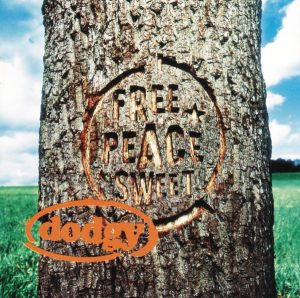
Free Peace Sweet by Dodgy
You’re currently on the Hello Beautiful tour. How has it been going so far, and what have been some of the highlights?
Mathew: It’s amazing, Ken. When you’re playing these songs, the last bit of recording we did was at the end of last year, and we hadn’t really done much with them since. We had a little rehearsal, but any band our age doesn’t like to rehearse much. As our friend Ian McNabb says, “If you rehearse a lot, you get good at rehearsing.” We’ve just had our third weekend, up in the Highlands of Scotland, and it’s such fun to play these new songs and slot them in with the older ones people want to hear. The cheers are just as loud for the new ones. When you road‑test songs and they come out shining, you know you’ve got something good.
Free Peace Sweet is celebrating its 30th anniversary. When you look back on that album now, what comes to mind?
Nigel: I love it. We toured it a bit about three years ago, and I remember thinking — before we chose to do the new album — “I could happily run this album for the rest of my life.” It encapsulates everything. But since then, and since making the new album, I’ve changed my mind. I love Free Peace Sweet. One of the hardships was that it never got a release in North America, and I always thought it would’ve done really well there. Still hope we get back someday.
Mathew: We didn’t play it in full when it first came out — it was long, and some songs were slow and acoustic. When we finally performed the whole thing, it was emotional. The exchange of feeling between the band and the audience was beautiful. A promoter suggested we do it again this autumn — or “the fall,” as you say — and we jumped at it. “One of Those Rivers” especially has become a fan favorite live, and we didn’t even know that until we played it.
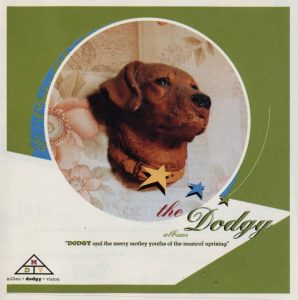
The Dodgy Album
I remember the dog on the cover of the first album in 1993. Whose dog was that?
Mathew: My brother was the designer. It comes from his warped mind.
Nigel: Or his graphic‑design mind. We didn’t really know what we should look like back then. We were just interested in the music, and suddenly we had to come up with an album sleeve and clothes that made us look like a band. The imagery came from a mining town in the north of England — a past industrial world we once had. There wasn’t a deep meaning behind the dog; it just felt right. Not many people put dogs on album covers. All that happened was people started calling us “Doggy.” (Laughter)
Has Dodgy ever played in the States, or is that something you’d like to do?
Mathew: We played two gigs — one electric and one acoustic — both in New York. That was it. We played Canada extensively on Edgefest, which runs through major cities from Toronto to Vancouver. We realized there was an appetite for our music in North America, but the albums never got released there. A real pain. But it may still happen. Fingers crossed — we’re all still alive.
I live in Los Angeles — Van Nuys — and it would be amazing to see you at the Whisky or even the Fonda.
Mathew: Oh God, yeah — we’d love to.
Nigel: Our second‑biggest market is America. Spotify shows most listeners outside the UK are from the U.S. There’s obviously something there — it’s just getting someone to put it together for us. We’ll go and play — we love doing that — but it’s hard to make it happen from over here.
Are you involved with any other projects outside of Dodgy?
Mathew: I am. I work with a group of musicians performing The Last Waltz by The Band for its 50th anniversary. I do a few songs with them and help bring in other singers. It’s amazing — The Last Waltz is one of my favorite records.
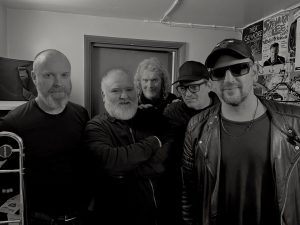
Dodgy in Black and White!
Dodgy is celebrating 35 years. When you think about doing anything for 35 years, what comes to mind?
Mathew: There’s that Charlie Watts quote — “Five years playing, twenty years waiting around.” Life goes on. We’re not frozen like Han Solo between gigs. We always said we wouldn’t keep doing this unless we all got on and enjoyed it. There’s a level of respect now that comes with age — respect and appreciation for each other. That’s what’s lovely.
It’s been ten years since the last Dodgy record. Will we have to wait another ten?
Nigel: I don’t think so. We worked with great people in the studio this time, and I even said while recording that we should just keep going. We can’t — we’ve got gigs — but we’ve got a good team around us now. I think we could be doing another record in the next two years.
Mathew: There we go — you heard it here first, Ken.
Any messages for Dodgy fans in the States — longtime followers or new listeners?
Nigel: We’ve got quite a few American fans who reach out, and I’m always amazed because we’ve never been there. It’s like fans contacting you from Mars. It shows a level of commitment we’re not used to. So a big thank you to those who’ve pushed us out there and made America our second‑biggest market even though we’ve never set foot there. If we go, how big could it get? It’s amazing.
In Conclusion
Thirty‑five years in, Dodgy remain a band driven by curiosity, compassion, and a genuine love for the craft. Hello Beautiful isn’t just a return — it’s a reminder of why their music has endured: songs built on connection, honesty, and a belief that communication can still save us. Whether they’re revisiting the emotional landscapes of Free Peace Sweet, dreaming of a long‑overdue American tour, or already plotting the next album, Nigel and Mathew carry the same spark that first set Dodgy in motion. And if the cheers for the new songs are any indication, the world is more than ready to meet them again — maybe even on a stage in Los Angeles.
(Interview by Ken Morton)
Dodgy on Instagram