



Hammer of Resolve: A Conversation with Horst Tessmann of StormHammer
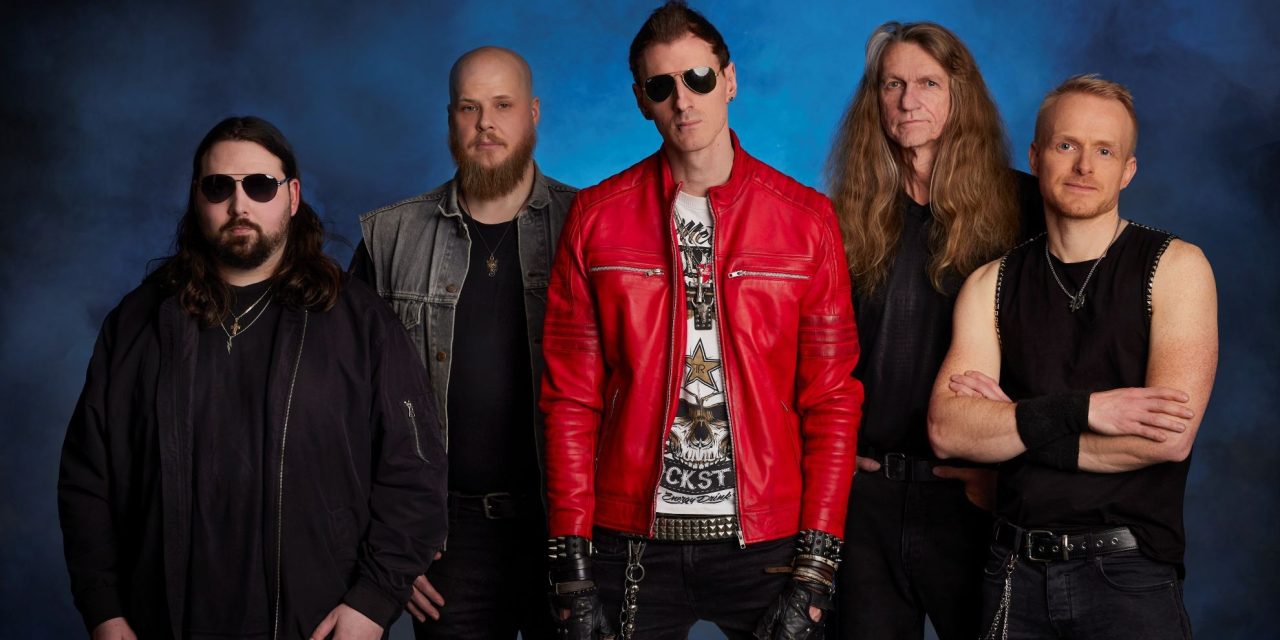
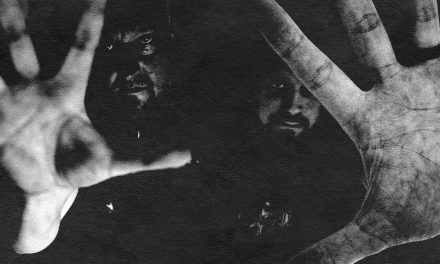
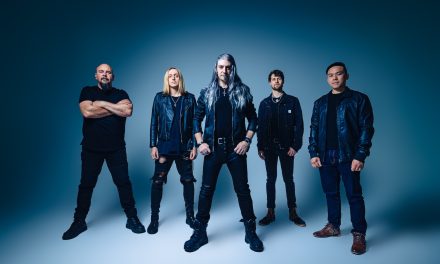
Photo Credit: Markus Konetzka
Hammer of Resolve: A Conversation with Horst Tessmann of StormHammer
For more than three decades, StormHammer has stood as one of Germany’s most steadfast power‑metal forces — a band forged in shifting lineups, evolving styles, and the relentless determination of founding bassist Horst Tessmann. With the release of their latest album, Wrath of the Hammer, StormHammer enters a new era marked by sharpened songwriting, renewed energy, and a vocalist whose operatic background brings unexpected color to the band’s sound.
I caught up with Horst to talk about the making of the new record, the band’s long history, the challenges of keeping StormHammer alive through constant change, and the passion that still drives him after 33 years. What follows is a candid, thoughtful conversation with a musician who refuses to let the hammer fall.
Introduce yourself and tell me what you do in StormHammer, and how long you’ve been in the band.
Hi, my name is Horst. I’m the bass player, and I’ve been in the band for 33 years now.
Yes, you are an original member. Very cool. Let’s talk about Wrath of the Hammer. Is there any overall story or concept behind the album title or the songs?
Frankly speaking, no — there’s no concept behind the album. We just collected different songs, and each one has its own story. So there’s no real overarching concept.
Okay, well tell me about the title song then. What’s the story behind “Wrath of the Hammer”?
We had the idea of a very mighty weapon returning — someone finds this tool and uses it to clear away problems. That was the basic idea behind the song.
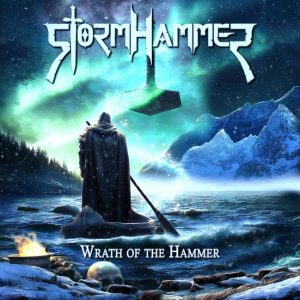
Wrath of the Hammer by StormHammer
Scars of the Abyss — tell me about that one and the idea behind it.
I have to think a little bit about it… I believe it’s more of a fantasy‑based title. We have a lot of songs that take place in a fantasy world rather than the real world. I guess it’s about a kingdom that’s falling apart — a bitter story about a person reflecting on himself, always running into trouble, and now trying to get rid of those problems and move forward.
What made you decide to remake “Light and the Dark” for this album?
We first recorded it in 2022 with Chris Boltendahl from Grave Digger and Ralf Scheepers from Primal Fear. That recording was done shortly after the COVID time. We weren’t really satisfied with the sound of that first version, and we had some different guys in the lineup. So, we decided to do it again — re‑record all the instruments and M.Nox’s vocals. We kept and remixed the guest vocals from Chris and Ralf.
Let’s go to the final track, “The Dune.” Tell me a little about that one.
That was obviously the most complicated song we did. All the first ideas came from Christos — he has more of a prog‑metal background. When he brought the first ideas, I said, “Okay, this is clearly prog metal, and it’s a bit too complicated.” We had a lot of discussion about how to play it, how to sing it, everything. But in the end, I think the result is quite good. It was a difficult and hard road to get there.
It sounds really cool. The whole album sounds amazing — you all did phenomenal work on it. Let’s talk about the technical side. It was recorded at Master Sound Studio with producer Alexander Krull, who’s done all kinds of stuff. What was it like working with him?
It was really cool, and we started a friendship with him. He does a lot of different things, but from the first moment he had a really good feeling for how our album should sound in the end. He also brought in Jonah Weingarten for the keyboard parts — Jonah did a very good job with the keyboard sounds. And of course Alex is a singer, so he worked very hard with M.Nox on the vocal lines. I wasn’t in the studio all the time, but I think they had a good time, even though they worked very hard. In the end, the sound is really good and the tracks turned out great.
Playing live — you just performed at Tombstone Rockfest. What were some of the highlights of that show?
The difficult part was that our singer wasn’t in the best condition — he caught a cold. So he had a hard time at the festival. But we played seven or eight songs from the new Wrath of the Hammer album. For the fans, that’s always a bit difficult because the album was released only one day before the festival. But the response and feedback were very good. It was a nice festival and a nice gig.
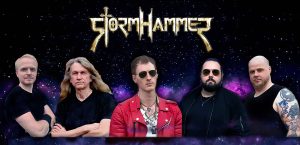
StormHammer with Logo
Do you have any other shows or tours on the horizon now that the new album is out?
Sadly, no — not at the moment. We’re looking to get a support slot for autumn or spring, but nothing is confirmed yet. I hope we’ll have more gigs at the end of the year or in spring, but right now nothing is set.
Has StormHammer ever played here in the States, or is that something you’d like to do in the future?
No, we haven’t played in the States. And of course yes — we’re eager to play everywhere we get the chance. During the pre‑release phase of Wrath of the Hammer, we had several interviews with Australia and New Zealand, and they also asked, “When do you come over?” The problem is always the cost of getting there — same for the US. But if we get the chance, we will do it.
Your vocalist M.Nox is also in other bands — Living Dead Stars and Black Sand. How did M.Nox end up joining StormHammer?
It was really just by accident. I think it was in 2021 — he realized we were looking for a singer, and somehow he got my phone number. We had a phone call and agreed to give it a try. It sounded interesting.
It’s his first power‑metal band ever. He’s an educated opera singer, and he does a lot of background jobs and other projects. He’s a professional; he tries to make his living from singing, so of course he’s involved in several bands.
I have no problem with that as long as StormHammer is one of the bands he prioritizes. And he told me he was really happy during the Wrath of the Hammer recordings because I didn’t tell him, “Sing it this way, sing it that way.” He had complete freedom. With so many singers in our history, you can’t tell someone to imitate the old ones — that never works.
I’m quite happy to have him in the band now.
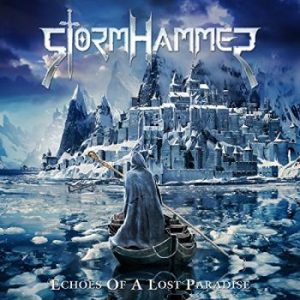
Echoes Of A Lost Paradise by StormHammer
In 2015 you released Echoes of a Lost Paradise, which celebrated its ten‑year anniversary last year. Looking back at that album now, what do you think of it in retrospect?
That’s more or less the style that fits StormHammer best. I told our two new guitar players, “Let’s do an album more in the style of Welcome to the End,” because I like that style very much.
Looking back, I’m not very happy with the Seven Seals album. We tried to be really modern there, and I don’t think that style fits StormHammer very well. Echoes of a Lost Paradise was a good turning point — a switch in the direction the band should go.
Let’s go back twenty‑five years to 2001 and Cold Desert Moon. When you look at that album now, what do you think of it in retrospect?
I don’t listen very much to the really old songs, but sometimes when I do, I think Cold Desert Moon was a step forward compared to the Fireball album. There were some really good songs on it.
Of course, now we would do things differently, but it was definitely progress. We developed quite well in those years. It was a shame we couldn’t continue with Century Media — that was sad. But it was the second big step in the band’s history, and I’m quite happy with it.
You’ve been doing this since 1993. What has kept you so passionate about StormHammer through all these years, albums, and lineup changes?
Around 2019, StormHammer was basically a one‑man show. I really thought about whether it was worth keeping it going.
In the end, I decided: I’ve put so much time and money into this band, it would be a shame to let it die. So I started looking for new members. In 2022 we got the chance to support Doro here in Europe, and that was a good moment — you think, “Okay, this isn’t bad. Let’s keep going.”
But all the lineup changes are difficult. You lose a lot of time. New members have to learn the old songs. Some join and say, “This is the great band I always wanted to play in,” and then they realize they have to work hard — and they quit. Then you start again.
It’s time‑consuming and not always easy. But I have fun playing. As long as I have fun, I’ll keep the band alive.
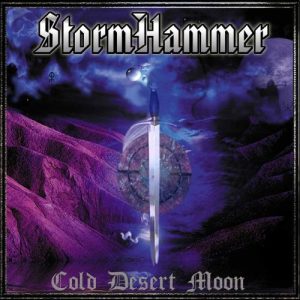
Cold Desert Moon by StormHammer
Do you have any messages for StormHammer fans here in the States — those who’ve followed you all this time, or people discovering you for the first time?
For the hardcore StormHammer fans — thank you very much for keeping track of us all this time. And for new fans, I hope they enjoy the new album and become part of the StormHammer fan club.
In Conclusion
StormHammer’s journey has been long, winding, and marked by resilience — a band that has weathered lineup changes, industry shifts, and the challenges of staying true to its identity. Through it all, Horst Tessmann remains the anchor, carrying the hammer forward with unwavering dedication.
With Wrath of the Hammer, StormHammer stands revitalized, energized, and ready for whatever comes next. Whether you’ve followed them since Cold Desert Moon or you’re discovering them for the first time, this new chapter proves the band still has plenty of fire left to forge.
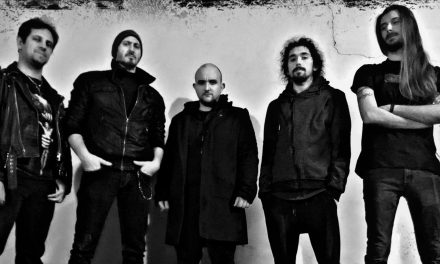
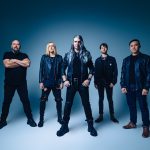
StormHammer is:
M.Nox – Vocals
Phil Meyer – Guitar, Backing Vocals
Christos Efstathiou – Guitar
Ashley Guest – Drums
Horst Tessmann – Bass, Backing Vocals
(Interview by Ken Morton)
StormHammer on Instagram