code blue: RECHARGED: Dean Chamberlain on Revival, Reinvention, and the Long Road Back
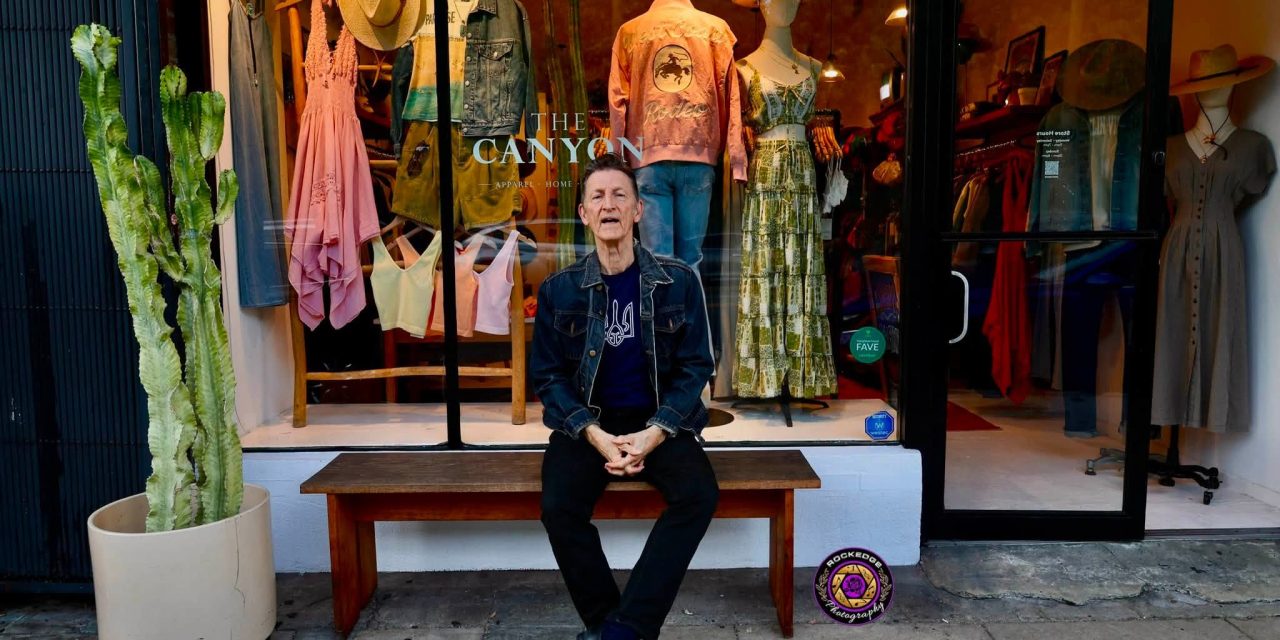
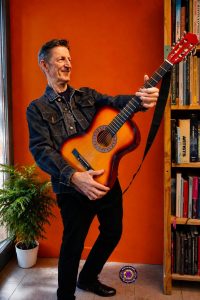 code blue: RECHARGED: Dean Chamberlain on Revival, Reinvention, and the Long Road Back
Some stories don’t fade — they deepen. With the long‑awaited release of code blue: RECHARGED, Dean Chamberlain revisits the past with startling clarity, humor, and honesty. The guitarist, songwriter, and founder of code blue has lived several musical lives: early days with The Motels, the whirlwind signing to Warner Bros., the cult‑favorite True Stories era, and now a full‑circle revival sparked by unexpected friendships, new technology, and a rediscovered sense of purpose.
In this wide‑ranging conversation, Dean opens up about the origins of The Motels, the surreal moment Phil Spector walked into the Starwood, the chaotic night the cops shut down his show, the post‑punk influences that shaped True Stories, and the modern AI‑driven process that allowed him to rebuild the debut album from the inside out.
What follows is a candid, funny, and deeply human interview with one of Los Angeles’ most quietly influential musicians — now celebrating the rebirth of a record that deserved a second life.
You were part of the earliest incarnation of The Motels. What do you remember most vividly about that period, and how did those early experiences shape your musical direction going forward?
I was living with Martha at the time, and I actually came up with the name The Motels. I was driving up Fairfax and saw the Farmer’s Daughter Motel — the name made me laugh, but “Motels” felt like Motown, Deltones… it had this weird soul vibe. So we changed the name.
The early Motels were nothing like the version people know today. Martha was like a female Alice Cooper — theatrical, wild, fearless. What I remember most was feeling that first buzz. Suddenly people were paying attention. It reminded me of high school — I was a nerd, but when I played guitar, people looked at me differently. It was the music.
That momentum is a real high. I felt it again later with code blue. And yeah — we partied a lot. At one party, a woman straight out of Fellini’s Satyricon showed up, along with Rodney Bingenheimer. It all felt naive and innocent, but very alive.
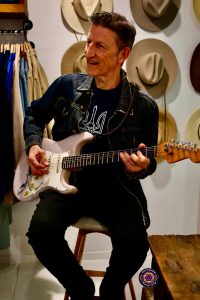 When you started code blue, it seemed like you got signed almost immediately. What was it like navigating Warner Bros. Records as a brand‑new band?
I had inside knowledge because I was working for Warner Bros. as a street guy, listening to demo tapes. I even got a letter from Christopher Cross later thanking me because I was the only person who wrote back when he first sent out demos.
The story of getting signed actually starts with The Motels. We were playing the Starwood, getting buzzed, and Phil Spector walked in with a 300‑pound bodyguard. He hung out with us, even pulled out his gun at one point. Then he took Martha aside for a private talk, and I knew the Motels were over.
I traded her the name in exchange for a lost microphone, and then I realized I wanted to do my own thing. I started writing songs and auditioning players — thousands of them. Eventually I met Randall Marsh and Michael Ostendorf, and we formed a tight unit.
Our first gig had maybe a dozen people, but these guys in the back started whistling like crazy — not because they were drunk, but because they were moved. That was encouraging.
Within six months, things accelerated. We played the Troubadour, and afterward my boss Roberta Petersen said, “You didn’t tell me you guys were good.” Then Peter Philbin from CBS said, “We gotta talk.” Two labels wanted us in one night.
We showcased for Clive Davis, but I knew Warner Bros. so well and liked them so much that I said, “Let’s do this.”
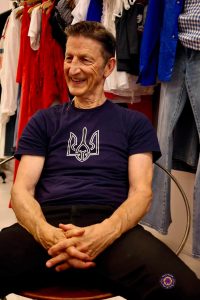 One of your members, Gary Tibbs, played in Roxy Music and Adam & the Ants. How did he become involved with code blue?
A: It’s funny — even I had a moment of revelation about Gary. We were on tour in Spain, and Spain is surreal for us. In L.A., it’s hard to sell out a gig. In Spain? National radio interviews, sold‑out shows.
During one interview, the host played Roxy Music’s Manifesto and said, “Gary Tibbs — you were in Roxy Music and Adam & the Ants.” I’m listening, thinking, Shit… this guy is playing with me. Gary carries that song. It hit me what an honor it is to have him in code blue.
We met Gary the same night Nigel Gray came to see us — the night the club on La Brea got busted by the cops. We wound up spending the night in the drunk tank. Wild night. But that’s how we met Gary.
Nigel had just produced two Police albums, so we went to England to record. Eventually, when Nigel had to leave to record The Police live, we finished the record ourselves. Warner Bros. believed in us — maybe more than they should have — but we got it done.
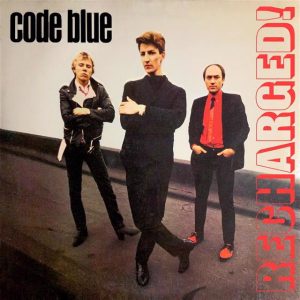 The album is being re‑released as code blue: RECHARGED. What made you decide to revisit and rework the record in 2026?
It started through my son’s soccer team. One of the dads owns a small punk/underground rap label. His partner is Peter Heur from Triple X Records. When he heard I’d been in code blue, he said, “I’ve always been a fan. Let’s put out his records.”
It felt like a full‑circle moment.
There was a Rhino reissue in the early 2000s, but I was never fully happy with the first album. I buried the guitars, sped up the songs — I was drinking the New Wave Kool‑Aid. My roots are Jeff Beck, Jimmy Page, Jimi Hendrix. But in 1980, blues‑rooted lead guitar was forbidden.
Last year, the opportunity came up to truly recharge the record.
A guy who used to rehearse at my studio — the same studio where Guns N’ Roses and Jane’s Addiction rehearsed — reached out. He showed me new software that can extract vocals, guitars, drums, bass from a finished mix using AI. It’s remarkable.
I told him what disappointed me about the original release. He rebuilt the mix from the inside out. And that’s code blue: RECHARGED.
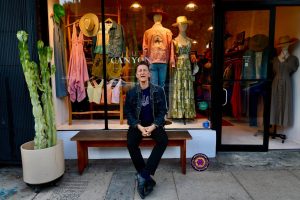 By the time I saw you live, you were performing songs that ended up on True Stories. What was your mindset going into that record?
I’d lost the original direction. I was chasing post‑punk influences — Simple Minds, The Cure — and left behind what people loved about code blue. There wasn’t a through‑line. I’ll take responsibility: it was my fault.
Warner Bros. passed on the demos. But producers like Ed Stasium and Joe Chiccarelli wanted to work with me. I played with Randy Castillo, Chalo Quintana, Pete Thomas — incredible musicians.
True Stories became a collection of different situations. After a year or two, there was enough material for a record. It’s not terribly cohesive, but there are good songs there.
One reviewer wrote, “Basically it’s very, very bad.” I thought, Wow — tell us how you really feel.
Could True Stories ever be remastered or re‑released?
That’s next.
I’ve recorded a lot over the last thirty‑plus years. Some of it’s worth hearing. Triple X is interested in putting it out. Some master tapes are gone, but we transferred True Stories from an unopened vinyl disc, and the engineer said it sounded better than many two‑track masters he gets.
We’ll do the remastering magic. There are big fans in Spain of these songs. And honestly? There are some good songs there. I’d love to fix a few things — there’s one note in “Greener Pastures” that drives me nuts. It’s so flat.
 In Conclusion
With code blue: RECHARGED now officially released, Dean Chamberlain stands at a rare crossroads — revisiting the past not out of nostalgia, but out of clarity. His stories are wild, funny, and unfiltered, but beneath them is a musician who has always chased momentum, honesty, and evolution. Whether it’s the early Motels chaos, the Warner Bros. whirlwind, the post‑punk detours, or the modern AI‑powered resurrection of his debut, Dean remains one of Los Angeles’ most compelling musical storytellers.
And with True Stories potentially next in line for revival, the code blue saga may be far from over.
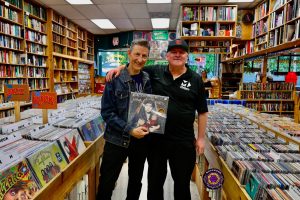 Personal Sidebar: A Full‑Circle Moment
There are bands you discover, and then there are bands that find you. For me, code blue was one of the latter. I was a teenager roaming the clubs of Los Angeles — the Troubadour, the Roxy, the Whisky — chasing the kind of music that made the city feel electric. Dean Chamberlain’s songs were part of that spark. I remember hearing “When She Comes,” “Leavenworth,” “Greener Pastures,” long before they ever appeared on True Stories, and feeling like I’d stumbled onto something secret and essential. And then of course there were the classic such as Whisper Touch and The Need from the iconic debut!
Those nights stayed with me. They shaped the way I listened, the way I wrote, the way I understood what a band could be. So sitting down with Dean decades later, talking through the wild early days, the Warner Bros. whirlwind, the lost second album, and now the rebirth of code blue: RECHARGED, wasn’t just another interview — it was a return to a part of my own history.
Music has a way of looping back when you least expect it. This conversation was one of those rare moments where past and present meet in the same room, and you realize the songs that mattered to you still matter. Maybe even more now.
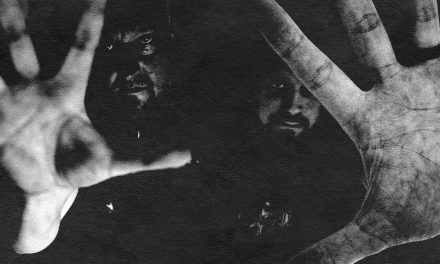
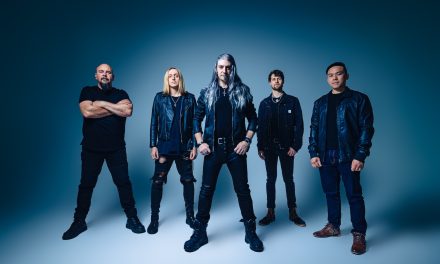
(Interview by Ken Morton – Photos by Karyn Burleigh of Rock Edge Photography)
code blue on Instagram

![WILDNESS Unveil New Single & Lyric Video “Broken Heart” [Frontiers Music SRL]](https://highwiredaze.com/wp-content/uploads/2024/12/WILDNESS-avenger-COVER-440x264.jpg)