
For Pete’s Sake: Carla Olson Brings the Words of Pete Brown to Life
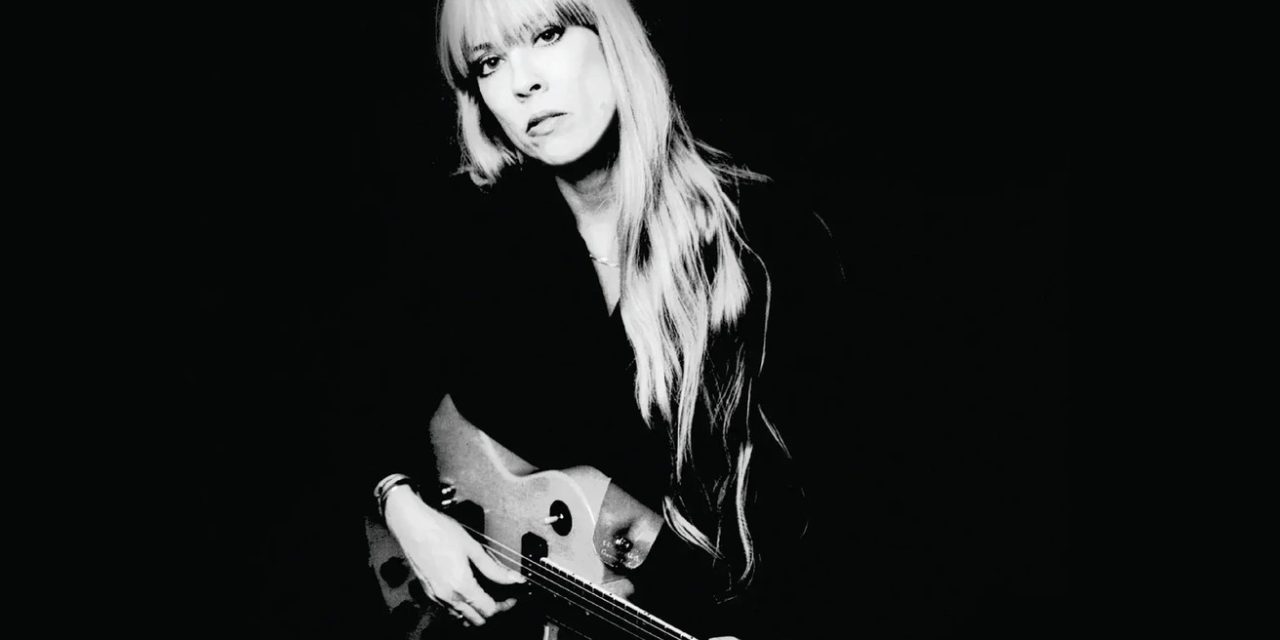
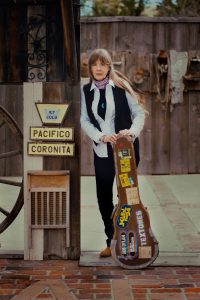
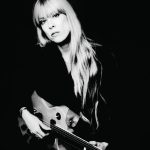
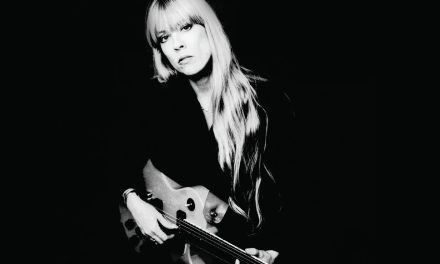
CARLA OLSON CREDIT DIETMAR KOHL
For Pete’s Sake: Carla Olson Brings the Words of Pete Brown to Life
Some musical partnerships are planned, while others come together through unexpected circumstances and a shared love of songwriting. For acclaimed singer, songwriter, and producer Carla Olson, her collaboration with legendary British lyricist and poet Pete Brown became one of those special musical journeys.
Best known for his extraordinary lyrical contributions to Cream, including such classics as “Sunshine of Your Love” and “White Room,” Pete Brown had a remarkable gift for words. When the two connected in 2019, Olson found herself with the opportunity to bring new musical life to Brown’s poetry, resulting in a creative partnership that would continue through the challenging days of the COVID pandemic.
The fruits of that collaboration can now be heard on Olson’s new album, For Pete’s Sake, a tribute to a remarkable songwriter and friend.
In this conversation with Highwire Daze, Carla takes us behind the making of the album, shares the stories behind songs like “With My Black Cat by My Side” and the single “Read Me My Rights,” and reflects on her friendship and songwriting relationship with Brown. We also travel back through her own musical history, revisiting the Textones, her work with Gene Clark, the upcoming 40th anniversaries of Cedar Creek and So Rebellious a Lover, and a memorable performance at a Walter Mondale presidential rally.
It’s a conversation filled with music, memories, laughter, and a heartfelt appreciation for the creative connections that make rock and roll so special.
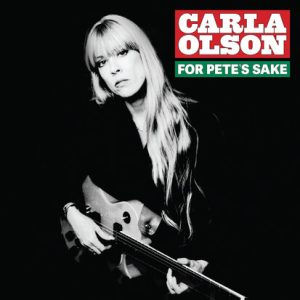 Carla, how did the collaboration with Pete Brown initially come about? Where did you first meet him?
CARLA: Well, I knew of Pete as a writer when I was a teenager because I’d bought albums like Disraeli Gears and Wheels of Fire, which featured his co-writing credits. We were a group of kids who were all big Yardbirds, Cream, and John Mayall’s Bluesbreakers fans. There were a bunch of guys I hung out with who played guitar, and luckily, I was allowed to tag along and learn my lessons about how to plug into an amp, get feedback, and all that stuff. We’re talking about 1965 or 1966.
We were aware of these incredible psychedelic lyrics written by this mysterious guy, Pete Brown, whom Clapton referred to as the fourth member of Cream. I was always fascinated by his wit and the dryness of his lyrics.
Through the years, I hadn’t really had much contact with songwriters outside of people in my own circle. I’d written a couple of things with other people from afar, but at one point, I started producing artists. I ended up producing Paul Jones from Manfred Mann. He was obviously the singer who sang “Do Wah Diddy Diddy.”
Paul went solo at a point when Manfred Mann was in its heyday and doing very well. He decided to pursue a solo career, although he hadn’t put out many solo records over the years. We started communicating through other members of his band, particularly Tom McGuinness, who was a friend of ours. My husband, manager, and I started talking with Paul about making a record in America. We brought him over in 2006 to record songs that he and I had chosen.
Then, in 2016, we did another record together. Throughout that time, Paul had a show on BBC Radio 2 called Blues FM. We would tune in on our laptops Monday mornings and listen to his blues show. He often had musicians in the studio who were touring Great Britain, including a lot of American acts, and he’d interview them.
One particular Monday in 2019, he had Pete Brown on the show for an hour. We were fascinated by how clever, funny, dry, and sardonic Pete was.
At one point in the conversation, he mentioned to Paul that his latest writing partner, Phil Ryan, had passed away. They had been writing together for a number of years.
Pete was a lyricist and a well-known poet in the ’60s, and his voice sounded so sad when he talked about not having anyone to write music for his poetry anymore. So I got in touch with Paul Jones and said, “Would you give Pete my information, my email, and tell him who I am? I’d love to write music for some of his lyrics if he’d be up for it.”
Thankfully, Pete knew of my work with Mick Taylor from the Rolling Stones. He also knew about my work with Paul, which was a relief because at least he knew who I was! He was also familiar with some of the things I’d recorded with Gene Clark from The Byrds and my band, the Textones.
I was so thrilled. I thought, “Wow, how fortunate am I?“
We did start writing, and he began sending me lyrics in late 2019. By the end of the year, I’d received two sets of lyrics, started working on one, and sent him my basic demos. So that’s kind of how it started.
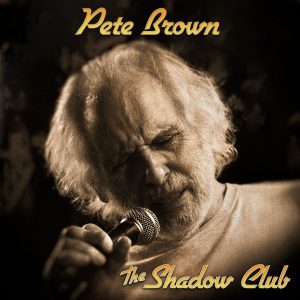
The Shadow Club by Pete Brown
Let’s talk about a few of the songs. Tell me the story behind “With My Black Cat by My Side,” which appeared on Pete’s final album, The Shadow Club.
I’m glad you know the album. That’s really wonderful. It’s a great album, too, and the people who perform on it are astounding. I mean, Clapton is on it, Bobby Rush is on it, and Joe Bonamassa is on it. There are also a lot of British musicians on it, like Arthur Brown.
The song lyric was the third one I received, and that was in February 2020. I asked Pete about it. At that point, we were corresponding by email, and he sent me a reply saying, “There actually is a black cat. As a matter of fact, there are two black cats. They’re mine, and they’re both named Benny.”
One was named after Benny Carter because Pete was a big jazz fan. Benny Carter was his namesake.
I knew Pete had been writing from home and was living in Hastings, if you know where that is. It’s on the coast of England. He’d been through some illness, but he was doing pretty well and going on and off the road to places like Vienna and Zurich, doing shows over there and in Germany.
When he sent me the lyrics, I just found them so humorous. They really piqued my interest. I said, “Tell me a little more about the black cat situation.”
Anyway, long story short, those were real black cats, and the lyrics were obviously autobiographical.
When I got my guitar out and started working on the song, we were in the first throes of COVID. It was the middle of March when we went into lockdown. Pete was locked down in Hastings, and I was locked down in L.A.
Once you’ve cleaned everything you can possibly clean in your house because you can’t leave, you realize maybe you ought to start working on some songs!
Luckily, I did. I didn’t have any recording equipment here other than my laptop and my cell phone. I had a couple of guitars, but no amps or anything. I sat down and started working on the song as a blues number. I felt it needed to be an old-fashioned blues, almost with a dobro kind of sound. That’s sort of how the song came together.
I was so pleased when Pete decided it was one of the songs he wanted to record for The Shadow Club. He actually sent me a rough mix of what he’d done so far and asked if I would sing harmony with him on the song.
By that point, we were actually back out on the road and able to record again, rather than being confined to our homes. So I was able to go into my studio, cut the vocal for him, and send it right away.
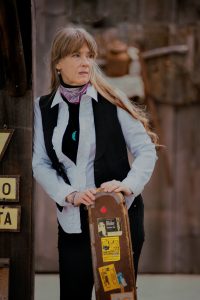
CARLA OLSON CREDIT DIETMAR KOHL
“Read Me My Rights” is the single. Tell me about that one and how it came about.
Well, all the songs were sent to me by email in what I would refer to as poetry format. They were couplets, arranged the way they would have been if Pete were going to recite them. He had several poetry books out already, so I was able to pick up a few things about cadence and how the words might sound.
I would ask myself, “What is this song? What emotion is it evoking in me?“
I kind of felt that “Read Me My Rights” might have been a song about frustration and anger, with Pete talking to himself. I wasn’t really going to ask him what it was about because it seemed like a bit of a sore spot.
As we went back and forth, I told him, “I kind of feel like this one needs to rock a bit.”
He said, “Go for it!“
All right! So when I sat down with the little acoustic guitar I had, it was actually a very small parlor guitar. It wasn’t quite a ukulele, but it was a tiny guitar. I was playing it, and it didn’t exactly have the power chords you might think you’d need. But in your mind, you can hear it.
When I’m writing, I usually have a feeling for where I want to go musically. But when you’re writing music for somebody else’s lyrics, you want to make sure you pass that by them and ask, “Are we on the right track?“
It was an uptempo song in a minor key. I’m not particularly a minor-key person. I tend to write in major keys, but this one seemed like it needed to be angry. Really angry!
So that’s kind of what it’s about. I’m not really sure whether the phrase “Read Me My Rights” in Britain would mean the same thing it does here in America. Here, it’s basically saying, “You’re holding me here. I don’t know what I’ve done, or if I do know what I’ve done, you need to read me my rights.” It’s what we would refer to as Lady Justice. That’s sort of where we went with it.
As far as the single goes, we wanted it to be something impactful. I don’t really think about writing for the times. Sometimes I do, but you can find later that it sounds a little stilted or trite.
When we put the song up on the internet to get people’s opinions, some people interpreted it as being about what’s currently going on in America, particularly with ICE. This is the first single from the record, and a lot of people took it that way.
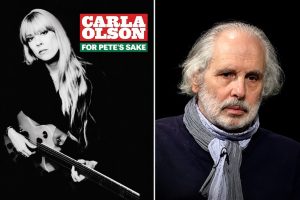
Carla Olson and Pete Brown
Pete passed away in May 2023. How much of the album had already been completed by then?
Well, the songs were completed. Remember, we were writing as a partnership. When you’re writing with someone you know well, like a band member, and you’re working toward eventually making an album or adding songs to your repertoire, that’s one thing.
But when you’re writing with someone you’ve never written with before, you don’t really know whether the material is simply going to go to his publisher or my publisher, and they’ll take it from there. Since Pete wasn’t performing the songs himself at that point, I didn’t really know how far to go with the demos.
I remember thinking that some of the songs needed a little embellishment to become proper song demos. So I enlisted Joe Read, the bass player from the Textones and a very close friend of mine. We’ve been dear friends since the ’80s. He was locked down in London, but he had a full recording studio in his house.
I emailed him and said, “Let me send you this song and see if you could give me a drumbeat, a bass part, or something to add some texture.”
Joe is a great musician. He plays everything, including keyboards and drums, and he had a drum machine available.
That’s basically how the process worked. I would write the music to Pete’s lyrics, Pete would approve the direction I was taking, and then I’d send the demo to Joe by email. He would send it back with something closer to an actual recording.
That’s what we did with most of the songs, except for maybe two that Joe wasn’t involved with and that were recorded later.
The original song demos were very basic: just me, an acoustic guitar, and vocals. I’d send those to Pete, and he might say, “Let me add another verse,” or tell me he needed to change a line. I’d go back and record it again. Eventually, it would go to Joe, then back to me, and then back to Pete.
That’s the process we went through.
With COVID, there really wasn’t an opportunity for everybody to get into a studio. It simply wasn’t possible. As you know, March 15, 2020, was my last day recording with other people in an actual studio in Los Angeles. I don’t think I got back into a proper recording studio until 2021.
But that’s how it was for everybody. I remember Ray LaMontagne releasing an album that he’d recorded in his living room with just a microphone and a guitar during COVID. There were quite a few recordings like that. We were all in the same boat.
So that’s what I’d say about the writing process. We were really hamstrung by the circumstances.
Did you know that Pete had cancer?
I did know he’d had a bout with cancer. He sent me an email back in 2021 and said, “Yeah, I’ve had a bout with cancer. We’ve gotten rid of it. I’m doing great. I’m going to Zurich to do a concert with a full band.”
At that time, the band included some of the same people who performed on The Shadow Club. There was Malcolm Bruce, Jack Bruce’s son, Clem Clempson from Humble Pie, and Richard Bailey, who played with Jeff Beck, among others.
The point is that Pete didn’t know he was dying. I think during COVID, you really couldn’t get proper medical care, especially in England. He was living in Hastings. I’m sure there was a hospital there, but people simply weren’t going to hospitals.
I didn’t go to a doctor’s appointment for two years. Everything was handled through telehealth.
You probably know that because we had a huge COVID situation here in L.A. County. We were locked down, and it was a difficult time. We didn’t get vaccines until several months later. I remember going to Dodger Stadium for my first vaccination in January.
I don’t want to get into the whole political discussion about who was responsible, but I do think much of this could have been avoided if somebody had woken up sooner.
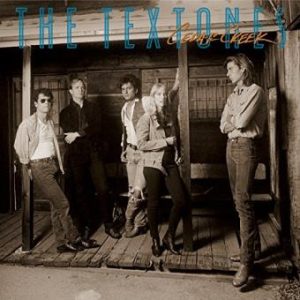
Cedar Creek by The Textones
I have a few questions from the past that I want to ask because you’ve got two big anniversaries coming up next year. First of all, it’s the 40th anniversary of Cedar Creek. When you look back on that album, what do you think of it now, in retrospect?
I love this album! We play it in the car. We still have an old car because it has a CD player in it. That’s where I listen to my mixes and everything. I judge everything by what I hear in the car because you can’t really judge anything on a phone, especially when you can’t get into a studio.
I love Cedar Creek. I love the songs and the performances. To me, there’s nothing particularly dated about the production because I’m an analog, bass-and-drums-and-guitars kind of gal. That’s what I love.
I produced that album with the intention that it wouldn’t sound dated. I always try to produce my own albums that way.
There are certain things you can’t get away from, like the big hair of the ’80s, although I never had big hair, so I’ve never had that problem!
I still wear the Western clothes I brought out here from Texas in 1978. I’m not really a trendy kind of gal.
My band members were all excellent musicians. The musicians on that album, as well as on the first Textones album, Midnight Mission, were top-notch. As I went along, I learned how to produce myself in a way that pleased me.
Sometimes I’d get a little guidance here and there, but basically, that’s what I do.
The late Barry Goldberg co-produced Midnight Mission with me, along with Brad Gilderman, who worked with Tom Petty and John Mellencamp. He engineered a lot of that material, including “Uh-Huh” and “Hurt So Good.”
Anyway, I would love to see Cedar Creek reissued. We didn’t really have any extra tracks from those sessions, but I think the album still has some legs. There are songs on it that I think people would find interesting today.
And Cedar Creek was the name of my grandfather’s ranch.
I didn’t know that! Okay, cool.
Cedar Creek, Texas, is about 30 miles southeast of Austin. That’s where my mother was born and raised, on a ranch. I spent many summers and weekends there riding and poking cattle with my grandparents and grandmother.
So that’s where the name Cedar Creek came from. There’s also a studio in Cedar Creek, but that didn’t happen until after I’d already moved out here to L.A.
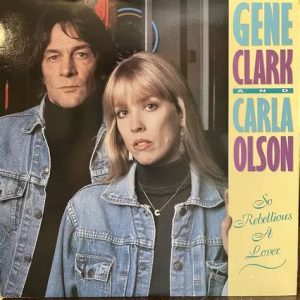
So Rebellious A Lover by Gene Clark and Carla Olson
Another anniversary coming up is So Rebellious a Lover, your album with Gene Clark. That’s also celebrating its 40th anniversary!
Yeah, yeah! Well, I’m sure we’ll pull out something. I always think about doing something special. My husband and manager, Saul, is always putting together events to commemorate the various people we’ve dearly loved and want to remember who have passed away.
There’s another anniversary coming up on May 15 next year, and that’s Phil Seymour’s birthday and we’re going to do a concert with different people. Kathy Valentine will probably participate. Kathy from the original Textones.
We’re also going to bring in some other people. I think we’ll try to get some musicians who were big admirers of Phil but perhaps never got the chance to perform with him.
Phil and I were the same age. We were both born in 1952.
I can’t wait for that. Do you think it will be here in Los Angeles?
Yeah, we’ll probably do it at McCabe’s, or somewhere like that. We might do something bigger if we get some people who want to play electric.
McCabe’s is a great venue. You just don’t really want to play electric in that room because of what you’d be subjecting people’s ears to! Although, I have heard electric guitar there. When I played there with Stephen McCarthy, he almost always played his Telecaster. So, you know!
Did you ever get that album I did with Stephen? I originally intended it to be a Stephen McCarthy solo album, but he was having none of it. He wanted it to be a duet album.
No, I never got that one. I’ll have to check it out.
Wow! Yeah, you’ve got to get that one. We had a lot of fun making that album. It’s called Night Comes Falling.
Night Comes Falling. Okay, I’ll definitely check it out. One more thing I want to cover before we run out of time. Election Day is coming up this week. You actually participated in an Election Day concert rally for Walter Mondale a long time ago, when you performed at Pershing Square in downtown Los Angeles.
Forty-five thousand people at Pershing Square! You bet I did. I remember!
What was that experience like? I was actually there. I saw it!
Where were you standing? Were you standing back by the hotel?
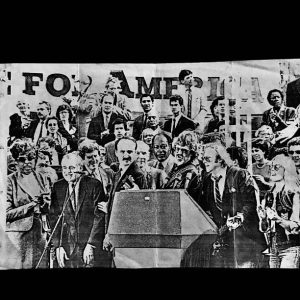
The Walter Mondale Rally – Pershing Square 1984 – Photo Courtesy of Carla Olson
Way the hell in the back! Far, far away!
Well, it was phenomenal! First of all, you had Stephen Stills, Kris Kristofferson, Ronee Blakley, and Walter Mondale, who was running for president. All of the big Democrats were there, too. We had Mayor Bradley, Barbara Boxer, and all these people in the audience. It was phenomenal.
Of course, what were we singing? Well, we performed a Textones song from our first album called “Hands of the Working Man.”
George Callins and I performed that song together, just the two of us with acoustic guitars. Then everybody came out onstage, and we sang “This Land Is Your Land.”
I’ve got a photograph that was taken by the Herald Examiner. I found it! It’s a mimeograph copy, unfortunately. I’ll send it. I’ll send it right now. I’ve got it on my phone.
There I am standing next to Stephen Stills while he’s playing, and Kris Kristofferson is next to him. Walter Mondale is clapping along and singing.
If you look through the photograph, you’ll see Gray Davis, who eventually became governor, and all these other Democrats. Everybody who was anybody was there! It’s unbelievable how many familiar faces you can pick out when you go through it.
I’m going to see how many you can identify!
I’ve already voted, by the way. We always vote in person, and we vote early. There were people there guarding the precinct, too. I won’t say what they looked like or what they were doing, but they were watching to make sure nobody came along and tried to disrupt the voting.
Nice! Now, on a scale of one to ten, how terrifying was it to play at the Walter Mondale rally?
Ken, you don’t know me! I’m such a ham. I’ll do anything, anywhere!
Are you kidding? I’ll play anywhere for anybody. I love performing, and I love bringing something to an audience and getting something back from that exchange. I absolutely love performing. I’ve loved it since I was six years old.
I played classical piano, and I did my first piano recital when I was six. I played “Moonlight Sonata.” My father was a classical pianist, and that’s where I got the bug.
Of course, he’s also the one who said, “You’ve got to come in and see these guys on TV on The Ed Sullivan Show.”
And it was The Beatles!
That was the first time I thought, “I want to be in a band! I want to play that! I want to do that!“
In Conclusion
From the poetry of Pete Brown to the musical memories of the Textones and Gene Clark, Carla Olson’s story is one of creativity, collaboration, and an enduring passion for making music. For Pete’s Sake celebrates the remarkable words of a legendary lyricist while giving them a new musical life, ensuring that Pete Brown’s distinctive voice continues to reach listeners.
And as our conversation makes clear, Carla Olson has no intention of slowing down. With musical anniversaries to celebrate, stories still to share, and plenty of performances ahead, there’s always another chapter waiting to be written.
Sometimes the best musical partnerships happen when you least expect them. With For Pete’s Sake, Carla Olson has created a fitting tribute to a friend, a gifted poet, and one of rock’s most distinctive lyricists. Pete Brown may be gone, but his words—and the music they inspired—will live on.
(Interview by Ken Morton)
Carla Olsen on Instagram