
Night In Gales: Reaping the Rewards of 31 Years of Melodic Death Metal
 Night In Gales: Reaping the Rewards of 31 Years of Melodic Death Metal
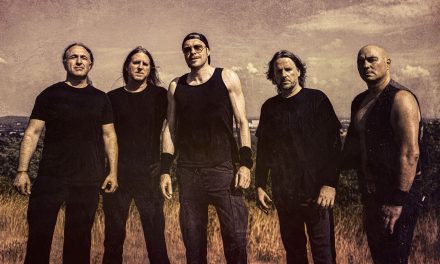
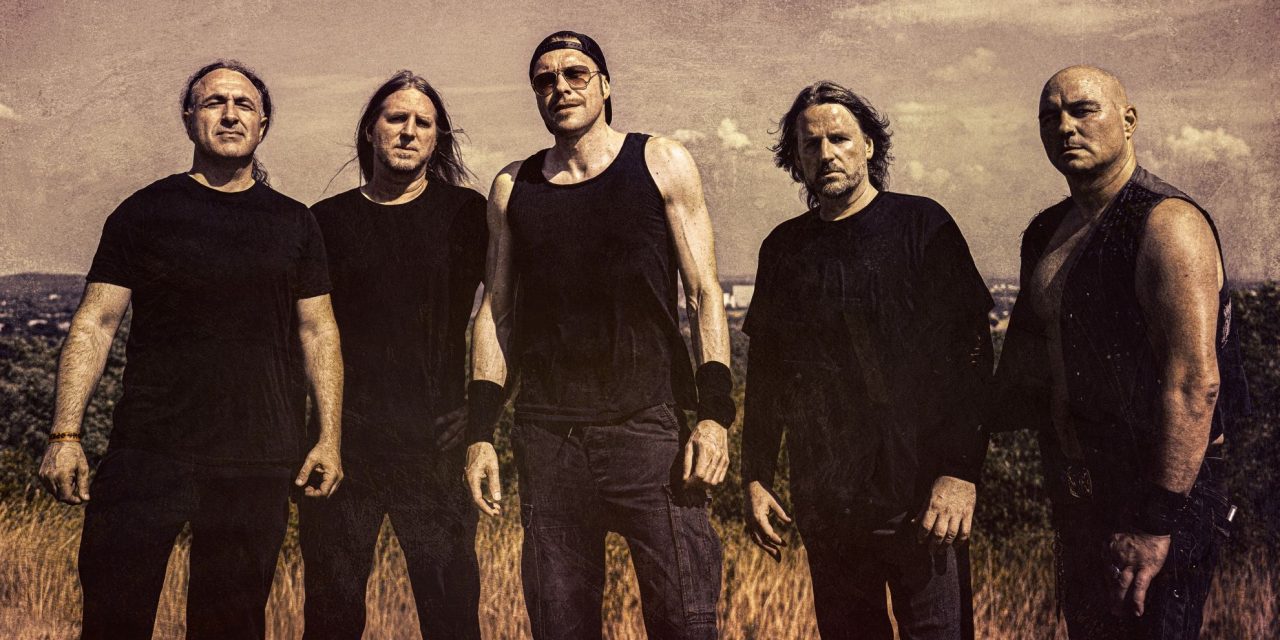
German melodic death metal veterans Night In Gales have spent more than three decades keeping the spirit of old-school melodic death metal alive. From their landmark 1997 album Towards the Twilight to their latest offering, Bitter Harvest, the band has continued to evolve while remaining true to the sound and spirit that started it all.
For this Highwire Daze interview, we catch up with guitarist and songwriter Jens Basten to discuss the concept behind Bitter Harvest, reaching the milestone of the band’s 10th studio album, revisiting their early material, and looking back at some significant anniversaries throughout his musical career. We also talk about Gloryful, Deadsoil, a memorable appearance at the legendary Whisky a Go Go, and the possibility of Night In Gales finally bringing their music to American audiences.
We’re here with Jens from Night In Gales, and we’re going to talk about the new album, Bitter Harvest. Is there an overall story or concept behind the title Bitter Harvest?
Kind of. There’s been pretty much the same concept behind Night In Gales since I started writing the lyrics, particularly since our former singer, Christian, rejoined the band.
That was in 2016, when we signed with Apostasy Records and got a new beginning for the whole band. We decided to go back in the direction of our original old-school melodic death metal sound, without incorporating the things we’d experimented with during the band’s earlier years, particularly in the 2000s leading up to our break.
That’s an old story by now. As you know, this is our 10th album and the fifth with this reunited old-school lineup and sound.
My lyrical themes have remained pretty much the same. They’re classic death metal topics, primarily death itself and everything surrounding it. I can keep writing about that subject forever.
I focus on different aspects of it from album to album, just as we do with the music. This time, I think the focus is more on the idea that you harvest what you sow in your life. That can apply to humanity as a whole, but it can also be something very personal when you reach the end of your life.
I think when you have only a few days left, or you can see the end approaching, some people might start thinking differently about things. We all know that, and it’s certainly not the happiest subject, but I think it fits the music very well. So, yes, it’s kind of a concept.
Speaking of the lyrics, I’d also say they’re more poetic this time, with more rhymes. I’d avoided rhyme schemes and things like that for years because I hated them. But this time I tried to make the lyrics a little more catchy as well, and I think it turned out very well. It gives the songs a slightly more commercial approach, or perhaps an easier-listening factor, throughout the album.
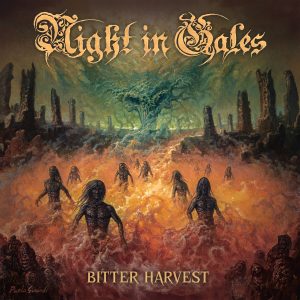
Bitter Harvest by Night In Gales
Now, as you mentioned, and this is my next question, this is album number 10. What are your thoughts about making it to the 10th album?
This time it’s number 10, right? Yes. You know, the last five albums have come together very smoothly and quickly. I knew we could release a new album every two years, and that’s what we’ve been doing.
I’ve got a studio here in my basement, so we can pre-record everything very easily without too much effort. We have a good label that’s releasing everything we do, and people seem to like it.
We also have plenty of time because we’re not really a touring band anymore. We only play five to ten concerts a year, hopefully including some festivals. That’s the most important thing for the band at this point.
With the 10th album, I started thinking about how we’re all getting older. We were actually talking about the band’s 20th anniversary not that long ago, and now we’re in our 31st year.
You know, we lost Tomas Lindberg from At The Gates last year. He was three or four years older than us. That’s the generation before ours, the people who invented that style of music. We came along as part of the second generation, a few years later.
And my brother and our bassist, who are both in the band, are around his age. So you start thinking a little more about these things.
This album could be your last if something really bad happens to the band. Maybe someone important to the band has an accident. Maybe the singer comes to me next year and says, “That’s it, I’m out.” Maybe there’s a new child being born or something like that. The end could be very near without you even knowing it.
So I was thinking about writing album number 10 as an album that could stand as our last one. It should be better than the last album. It should have something for everyone who has liked the band since we started. We wanted to take the songwriting to another level, and I think we achieved that. We haven’t really received any reviews yet because the promotion has only just started. But I think all the songs are really catchy. Some of them have more of a mid-tempo feeling, with a little more of a rock-oriented sound. I don’t know exactly how to describe it. That’s what I wanted to do here. I didn’t want everything to be like “Raining Blood,” you know, the hardest and fastest stuff. I wanted something catchy, with good tempos and a little more of an easy-listening factor.
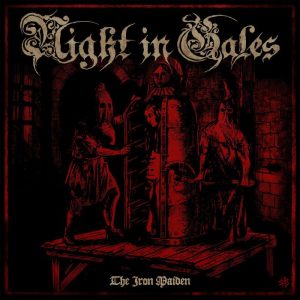
The Iron Maiden by Night In Gales
Tell me about the Iron Maiden EP you released earlier this year. Have any members of that legendary band heard it or commented on it?
The story behind this seven-inch release is pretty much a follow-up to our Sylphlike re-recording, which was released a year earlier.
Back in 1995, we released our demo on CD. That was something quite new at the time. We were one of the first bands here in Germany, or perhaps even Europe, to release a demo on CD rather than on tape.
It was re-recorded last year and released in different formats as a regular release.
Back then, we had about 20 minutes of playing time. We received a lot of offers to play shows, but we didn’t have enough material to perform headlining sets. Even in the death metal scene, where you had four or five bands playing in one night, you had to perform for at least 35 or 40 minutes.
So we had to do some cover songs. We had two more original songs, I think, “Razor” and “The Crimson Eclipse,” which appeared on the seven-inch released in 1995 called Razor.
But we also had to play cover versions, and we chose Iron Maiden and Slayer’s “Raining Blood.” Those songs were relatively easy for us to play at the time. They weren’t too difficult, with lots of solos and things like that.
As a follow-up to these historic releases, including Sylphlike, we thought it would be a good idea to record the Iron Maiden song and continue this look back at our history.
The label was interested because it’s really a non-profit project. You’re not going to make any money releasing a seven-inch with two songs. In fact, you’re more likely to lose money than make any. It’s really just a collector’s item.
So Apostasy Records did that for us.
As for Iron Maiden, I think they’re so big and receive a million messages through their management every day. They probably don’t care about something like this. Maybe someone in their management receives the information and has to decide what to do with it, but I don’t think anything will come of it. They’re just so huge.
But I did meet Paul Di’Anno once in my lifetime. I was playing with my heavy metal band, Gloryful, which doesn’t exist anymore. We had a show in Germany in 2013 or 2014, and I met him backstage in a very small room.
It was very important for me to meet someone from Iron Maiden’s original lineup.
The song is one of the first songs they ever wrote. It was written by Steve Harris, and everybody knows it. We didn’t try to turn it into a melodic death metal version or anything like that. We simply played it the way we used to play it in our early years.
We had recorded it during the same session as Shadowreaper, so it was sitting there as a bonus track that we could release later on different formats, as many bands do.
And that’s pretty much all I can say about it.
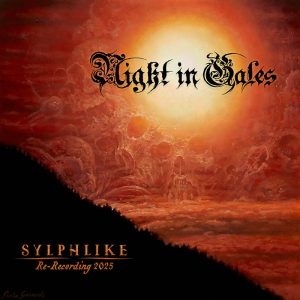
Sylphlike (Re-Recording 2025) by Night In Gales
Now, how scary or nerve-wracking was it to re-record the legendary Sylphlike EP all these years later and revisit the whole thing again?
We knew what to expect because we’d already played three of those songs here and there over the last 30 years, in different setlists.
Even at our Wacken show in 2019, I think we played “Mindspawn” and “Sylphlike.” We also sometimes play “Bleed Afresh,” which is the opening track. We’ve performed those songs at various times over the last 10 or 20 years.
So we still knew how to play that material.
But there was something different for me this time because, of course, we now play with a click track. Back then, until around 2005 or 2011, we didn’t play with a click track. We had another drummer, Christian, who later played in Deadsoil and is now in Heaven Shall Burn. He never used click tracks.
And you know, there are many tempo changes in those old songs. When you write music using a sequencer program like Cubase or something similar, you usually write everything at one tempo, with one click setting, because we’re not a progressive metal band.
So it’s perfectly fine not to have all those click-track changes and tempo variations. But when you have to record an old song that was originally written without regular tempo changes mapped out, you have to make decisions. Is this section 112 BPM? Is the next part 170 BPM? Is it 210 or 220? You have to make those decisions and then give them to the drummer. That was very strange, and you never really know if you’ve made the 100 percent correct decision with things like that. We did it quite well, and people liked it. We wanted to preserve the old spirit and the spirit of youth, that magic moment you have when you’re just starting out as a band.
We tried to keep that feeling rather than polish everything for too long, constantly trying things out until they were 100 percent perfect. That’s what we try to do with every album, I think. We want to record things with a sense of freshness and spontaneity. That’s very important to me.
It was something to celebrate our 30th anniversary. We didn’t care too much whether people liked it or not. We did it for ourselves, for the label, and simply because we wanted to do something to mark the occasion and have it documented. It was an opportunity.
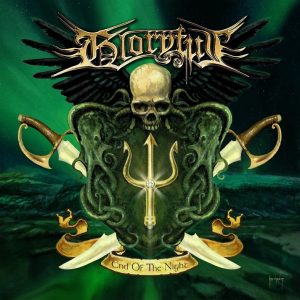
End Of The Night by Gloryful
Let’s talk about a few of your anniversaries. I’d be interested to hear what you have to say about some of them. Let’s go back 10 years to 2016 and End of the Night by Gloryful. When you look back on that album, and the fact that it’s been 10 years, what do you think of it now in retrospect?
I’m surprised you’re asking me questions about Gloryful, but that’s very okay! I still think it’s a very good album, and I still like the entire catalogue of that band. Actually, we had some discussions about reforming the band. We split up one or two years ago for different reasons, and now I’m used to not having that band anymore, you know? There’s just not enough time. I can’t really imagine having that band again at the moment. Maybe next year we’ll think differently, but right now there’s simply no room for it.
I still like the album. We had some good tours with that band, including European tours, and we had some really good times. Actually, I have enough to do with Night In Gales, I think.
Yeah, the album was recorded and mixed by the guitarists from Powerwolf, who have become a huge band all over the world by now. He’s also their marketing manager and label CEO, so we’re quite connected with them through him.
But, yeah, I still like that album, especially the song “End of the Night.”
I remember being in the studio during the summer. That was the year I got together with my now-wife. We had such wonderful times in that studio, listening to that song. It’s kind of our coming-together song, you know?
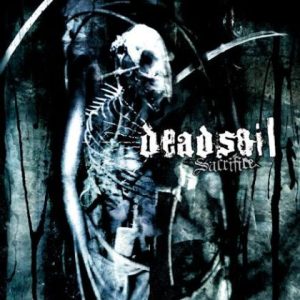
Sacrifice by Deadsoil
Let’s go back 20 years. We’re going back to 2006, when Sacrifice by Deadsoil was released. When you look back on that album, and the fact that it’s been 20 years, what do you think of it now in retrospect?
It was the first full-length album with my contributions to the band – and the last. There was another one afterward, but that album was never released. I remember the studio time in Münster. It was a huge and expensive studio. Production-wise, I think I’d do things differently now. The kick drum in particular was too big and too fat. I don’t know of many albums with such a blownup kick drum sound! But overall, it was a good time, especially after the album was released. We had a lot of live activity with that record. We played many gigs and had some good tours. There was good chemistry in the band, and I think I’d still like the album if I listened to it today. Although I don’t think I’ve actually played it in 10 years, so I’d have to listen to it again!
Metalcore was a good thing for me back then. But then it suddenly disappeared, you know? For me, it was just a part of my musical journey. Maybe it wasn’t my original direction or exactly where I belonged, but it was a good experience at the time.
That band actually got you out here to the States, and you played a show at the world-famous Whisky a Go Go. Looking back on that particular show, what do you think?
It was a strange experience because I’m a guy who got into music through Guns N’ Roses, Mötley Crüe, and stuff like that. I loved the whole Sunset Strip scene and that kind of music. Then suddenly you get the chance to go there for the first time, but you don’t have any time to visit the whole area. It’s all very strange, you know, when you’re there and have to play. But it was a good experience. We have stories to tell people about some of the places we visited in the United States. It’s totally different from what we’re used to.
But it was awesome to be there, especially with such good bands. There are good memories from that entire tour. And, of course, I’m eternally thankful that I got the opportunity to be in Deadsoil, especially to Boris, who was the bandleader back then and brought me into the band. And a funny thing is that Adriano from Night In Gales was helping out on that tour. He was still the drummer in Night In Gales at the time, but he was also playing with me on the Deadsoil tour as a stand-in drummer.
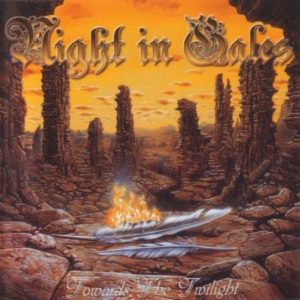
Towards The Twilight by Night In Gales
We’re going to go back even further now. Next year, the 1997 release of Towards the Twilight will be celebrating its 30th anniversary. When you look back on that album, and the fact that it’s been 30 years, what do you think of it now in retrospect?
This album definitely has a big place in my heart. I would say it’s still our most important album. It’s difficult to compare that album, which featured Björn as the singer, with the last five albums we’ve made with Christian. But I wrote in the information sheet for the new album that Bitter Harvest is our best album since Towards the Twilight. That means Towards the Twilight is still the best one, I think!
I don’t think it’s because it was recorded at such a high professional level. It’s more about the magical moments it contains. When you listen to it through headphones, or when you remember listening to it during your youth or high school years, it becomes very important to you.
There are many people around the world who grew up with that album, and for them, Towards the Twilight is one of the most important records in their lives. It doesn’t matter whether it’s In Flames, Metallica, or Night In Gales. When you’re young, those first albums you discover are often the most important ones.
We managed to achieve that status for some people with this album, and that makes me very proud. That’s what it’s all about.
Of course, it wasn’t recorded as professionally as we would record an album today, and we weren’t the best musicians back then. But, as I said, there are a lot of magical moments captured on that record.
And it’s a good package overall. We had great cover artwork, created by Andreas Marschall, who was famous for working with major bands like Blind Guardian, a very important band in Germany. In Flames also worked with him, along with many others. And we had the opportunity to record in a really good studio. So, yeah, good memories. Good memories!
Musically, things were a little different back then, both in terms of songwriting and our overall approach. What we played was much simpler, of course. The music wasn’t as dark as it is today. In other words, it was more varied. There were more happy moments, like you might hear in a Running Wild or Helloween song. There were more speed metal and happy metal melodies alongside the darker parts.
I would say we’ve become darker over time, and that has something to do with our musical development and how we’ve grown as musicians. Back then, we were 16, 17, or 18 years old when we started writing that material. There was obviously plenty of room for us to learn and develop. But none of that really matters now. I think it’s one of our milestones, and everyone should have this album!
By the way, it’s still availableon black vinyl at Apostasy Records!
Is there any chance of Night In Gales playing any shows in the United States in support of the new album? Would you like to do that?
Yeah, of course! We would all love to do that. We’ve never played in the USA with Night In Gales, unfortunately, but I don’t think it’s realistic that it will happen. I think the only chance for us to get over there would be if a big festival such as Maryland Deathfest invited us. That’s the only way. I don’t know what the arrangements would be for smaller bands like us, whether they would have to cover our flights, visas, and things like that.
But if we were invited and they covered the expenses, like they did for our Greek tour, we would definitely do it. A full tour isn’t realistic for us because of our jobs, family commitments, and things like that. We’re so tied to our regular lives nowadays, and we don’t really miss the touring lifestyle. We had that experience in the ’90s, and the scene and the music business have changed a lot since then. If you want to lose money, you have to go on tour, you know? For a band in our position, it’s different. If you’re a headlining band, the support bands will help pay for your tour. But we’re not at that level, so it’s a completely different situation for us.
We would lose our jobs and all our money if we went on two tours every year. Of course, the label would like us to do that, but if any promoters are listening, please get in touch! We definitely want to play over there.
We’d also love to play some of those festivals, as well as the festival in Mexico. We have a lot of people over there waiting for us, I think.
Never say never, you know?
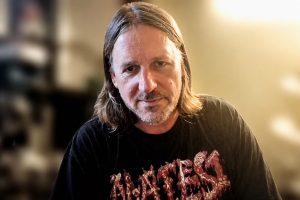
Jen Basten of Night In Gales via Zoom!
Exactly! Never say never. Do you have any messages for Night In Gales fans who’ve been following you all these years, or perhaps for fans who are discovering you for the first time?
Okay, for both, of course! I want to thank everyone who is still interested in our music, who follows what we do, and who cares about our new releases. I know that with every new album we put out, there are always some people who discover us for the first time. They didn’t even know that we’ve been releasing albums again since 2011. That’s a signal to me that I need to keep putting out more albums and make sure that everyone who knew us back in the ’90s gets the message that we’re back. I’ve been doing that for 15 years now, trying to reach all those people. But it’s hard work, especially when you’re not signed to one of the biggest labels in the world, which can reach everyone through extensive media and promotional campaigns with a lot of money behind them.
If you like the raw and unpolished melodic death metal that existed in the early ’90s, from the first releases by bands like At The Gates, Dark Tranquillity, Eucharist, Desultory, Edge of Sanity, and, of course, In Flames, I think you’ll love our albums. I think we still have exactly that vibe in our music. Over time, we’ve developed more of our own style, and I think you’ll hear that when you listen to our albums.
We don’t do this for the money or for anybody else. We do it for the same reasons we started making music in the first place. We miss exactly those kinds of albums in today’s music scene, so we feel we have to make them ourselves. That’s the reason we do it. We’re also very thankful to have a label that’s willing to release our music.
And if you want to talk about your experiences from the early days, when you discovered us back in the ’90s, just get in touch through our social media channels. We’re on Instagram and Facebook, of course, and you can reach us there. We can talk, so just get in touch! We also have a good Bandcamp page with plenty of merchandise. It’s a great way to support the band and the label.
And I’m especially thankful to you, Ken, and Highwire Daze, for getting in touch with us again and again and for talking about the good old times.
In Conclusion
A huge thanks to Jens Basten for taking the time to revisit the past, discuss the present, and share what’s ahead for Night In Gales. With Bitter Harvest, the band demonstrates that the old-school melodic death metal spirit is still very much alive and well.
From the groundbreaking days of Towards the Twilight to reaching the milestone of their 10th studio album, Night In Gales have continued to follow their own musical path, remaining passionate about the music that inspired them in the first place.
For longtime fans and those just discovering the band, Night In Gales continues to deliver the goods. Here’s to 31 years of metal, and hopefully many more to come!
Check out Night In Gales, support Bitter Harvest, and keep the old-school flame burning!
(Interview by Ken Morton)
Night In Gales on Instagram