The Unholy Trinity of Lord Belial
 The Unholy Trinity of Lord Belial
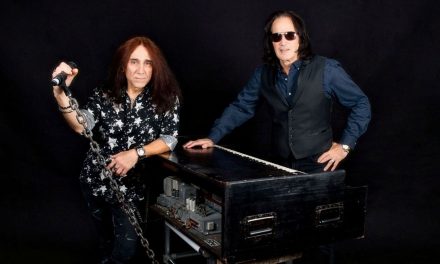
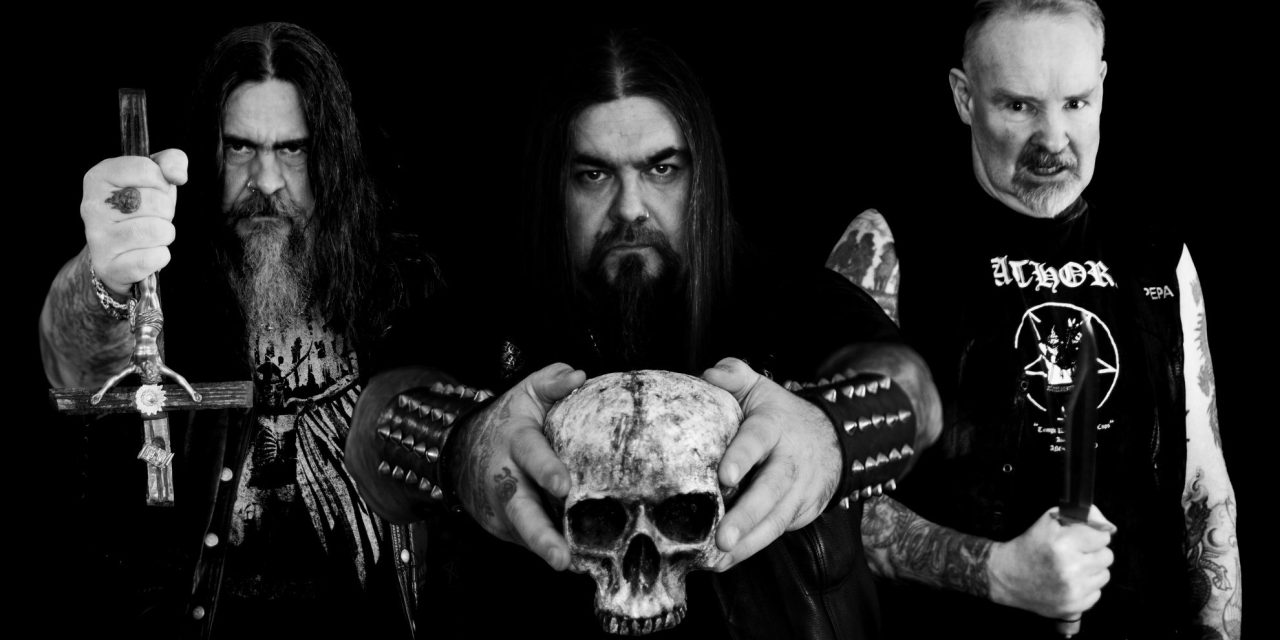
Swedish black metal legends Lord Belial has returned with their tenth studio album, Unholy Trinity (now available on Hammerheart Records), a fierce continuation of their legacy, set to push the boundaries of extreme music even further. Formed in 1992, Lord Belial has been a cornerstone of the Scandinavian black metal scene for over three decades, known for blending raw aggression with haunting melody and atmosphere. Kiss The Goat and Enter The Moonlight Gate are genre classics, and with the unveiling 2022 album Rapture, Lord Belial delivered a stunning comeback manifesto! Highwire Daze recently caught up with guitarist Niclas Pepa Green to discuss the blackened hymns of Unholy Trinity, the 30-year anniversary of their iconic 1st album Kiss The Goat, his other band Vassago, and more!
Is there any overall story or concept behind that title, Unholy Trinity?
Yes, we have been four members for quite some time. And then for the last, I think, seven or eight years, we’ve been three members. So, we thought it to be appropriate to, from Revelations, to dive deeper into turning things from Christianity and the other religions into something that might reflect upon the band as a threesome-ness.
The Holy Trinity of Christianity, and then us representing the Unholy Trinity. That’s kind of the idea behind it.
At the time of this interview, the only song that people outside of press have heard is the first single, Ipse Venit. What is the inspiration behind that first song?
Ipse Venit is Latin for, “he comes” or “he himself comes.” And it’s, shall we say, a prophetic tone. And we wanted it to sound like a divine or anti-divine announcement. Something you would hear in ancient scripture or apocalyptic prophecy. So it’s inspired from the Book of Revelation in the Bible. And we have that part where we say, “the beast with seven heads and 10 horns.”
So it’s a reference also to Armageddon. And then the Unholy Trinity, is like counterpart to Christian Holy Trinity.
What can fans expect from the rest of the Unholy Trinity album when they finally get to hear it?
The lyrics have a deeper meaning this time. We have actually worked quite a lot with the lyrics and like a spiritual inversion or a liturgical poem that explores the sacred through the profane. And in particular with Christian motifs. So, there is a symbolism in the texts. If you analyze the lyrics, you will kind of realize that they have meaning. So, it’s just not like it used to be, but it’s more meaning this time.
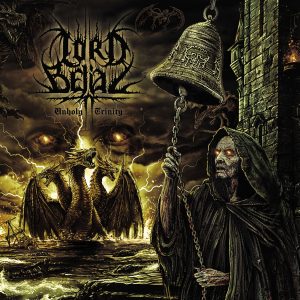 Andy LaRocque worked with you on this album. What was it like working with Andy this time around?
He had just come back from his US tour, and he was happy to be in Sweden again, working with us guys, because he really appreciates our type of humor. And I think we’re on the same page mentally, both privately and also in the studio. And he understands what we want and also how to articulate that in the sense of having a sound picture.
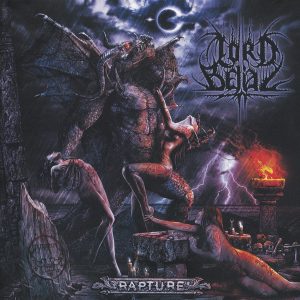
The previous album, Rapture, was such an epic comeback for you guys. What was it like returning to the studio with Lord Belial after all this time? The previous album was, I think, in like 2008.
Oh, that’s right. Time just runs away sometimes. I don’t think any of us realized how long time it had gone since we last were in the studio, because we have been so involved in our lives that time just ran away.
And then we realized that, oh, we need to do something. And we had all these ideas again that had accumulated through time. And then we just sat down and put it all together.
We rehearsed for maybe nine months before we entered the studio. But it was quite a process that time with Rapture. It was immense rehearsal and riff making, and turning of ideas back and forth. So, this time was a little bit different because Thomas made almost every riff on the entire album. But with Rapture, it was a group effort.
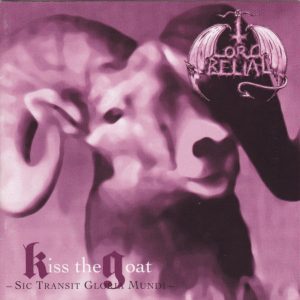
I’m really going to take you back now. Kiss the Goat is celebrating its 30th anniversary this year. When you look back on the album, the fact that it’s been 30 years, what do you think of it all now in retrospect?
I think that maybe if we would have been alone on the planet somewhere, we would have continued in that vein, actually. But then I think we were a little bit inspired by other bands. And we took it further.
And also, we wanted more aggression. And at that time, particular time, I had another band called Vassago. Me and the drummer explored extremity in a way. And then when we returned to Lord Belial, we kind of wanted it to also be a little bit faster and more aggressive. So I think we got Thomas on that train, so to speak, because if we wouldn’t have explored the extremity in Vassago, I don’t think Lord Belial would have become more aggressive or faster. But it turned out great.
In retrospect, the Kiss the Goat album, it’s kind of old school and kind of slow, but also perhaps fast at times. But the sound is very clear and distinct. And then on Enter the Moonlight Gate, it became more of a like a guitar mat, you know, like the floor is made of guitars, and then everything else kind of stands on that floor.
Whereas on Kiss the Goat, it’s more Black Sabbath, where it’s really dynamic and jumps up and down, and there is really no floor to stand on. It’s just flows through everything. So the style on Enter the Moonlight Gate kind of became more like a solid block of steel to stand on and then develop from there.
 You mentioned Vassago, and let’s talk about that. Storm of Satan came out a few years ago, and that was a super long period of time between that album and the first album. What made you decide to revisit Vassago after all that time?
There was this guy, he wanted me to make an album, so he asked me if I could make another album and make it sound a little bit like the first one. And I said, the drummer is dead, the bass player maybe won’t join us, and the guitarist lives in the United States. He lives in Howell, New Jersey. And Micke hasn’t been singing for quite a number of years, so maybe it’s not possible. But he insisted.
So I talked to another drummer who is really fast as well, and he accepted the offer. However, on the first day of recording, he didn’t show up, so we had to go in an alternative direction and rewrite the entire thing. So it became rather tragic, unfortunately, I would say at this time, because it’s not at all what I set out for it to be, because I had written all the riffs for Extreme Drumming, and then Micke hadn’t been playing drums for about five years. He had to start all over, but he did it. He delivered on the album, so I thank him for it. But it’s not at all actually what it was supposed to be from the beginning. But in the end, I suppose it turned out to be an okay album. It’s nothing I’m really proud of, but I think it’s okay in a sense. Also, lyric-wise, I didn’t have that much time.
So we just went primal and back to basics and just as primal as possible and nothing fancy at all. Just primal and medieval and just basic stuff that has no deeper meaning or anything like that.
Would you like to try and do another Vassago album?
Maybe sometime in the future. But right now, I feel that both me and Micke, we get what we need from Lord Belial, actually. So there is really no idea to dive deeper into anything more insane, or it would just be, I think, not that great. Maybe sometime if we have the energy and the passion for it. But right now, it feels like it’s put on solid ice for quite some time. Thank you for your interest, and thanks for asking. It’s really flattering, actually.
One of your credits that I found pretty cool was you played on Forever Blasphemy with In Aeternum. How did that come about?
It was a period in my life when I was in the studio for a number of months a year and with a variety of bands. And I kind of became like the guy that people went to for having a guitar lead put down. And suddenly I was kind of hyped in a way, and I didn’t really like that.
So, I turned down all the offers and said, no, I’m actually exclusively for Lord Belial. Lord Belial is my band, and I will not be part of all the bands in the Gothenburg area anymore. So for a couple of years there, I was kind of a studio musician, I suppose you could call it.
And then also with Sacramentum, we were on tour for a number of times, and touring really takes its toll, especially on me, because I really value my private time and having serenity and peace and quiet around me in order to unwind and get some energy back.
And when you’re on tour, you’re constantly surrounded by people and you have no way of finding even remotely one hour for yourself because there is always someone there, always someone that wants your attention and takes your energy and gives nothing back. So, it’s all about giving, being on tour, giving energy all the time. So anyway, at least, me, I’m exhausted after a tour, which unfortunately has become a sort of problem.
So we don’t tour or even play live anymore. We talked about playing live, actually. But I think that both Thomas and Micke, they are strictly against it, unfortunately, for a number of reasons. And so I don’t think that’s going to happen.
 What’s up next for Lord Belial?
We have started a recording studio, and we are actually already recording some ideas and putting down some riffs for the next album. It’s in kind of a flow right now. Having our own studio really helps to develop new ideas and get them down on, to listen to it and develop further. That’s where we are right now.
Do you have any messages for Lord Belial fans who are reading this right now?
Absolutely. If you’re into Lord Belial – which you should be – please take a moment and enjoy the new album, because we worked really hard on it. And it has quite a number of hidden messages, et cetera. Once you realize that, once you get it, it will be like a game for you. You won’t need any more games because you will dive into the world of Lord Belial and realize that, wow, this is actually a very narrow passage of a new world that has been created in a sense that even though you can’t see video images or anything, you will understand the message and you will see a picture that is developed by the music.
When you realize it, it will be like enjoying literature or seeing a good movie, the feeling that you get afterwards, that really, “Wow, that was quite profound! And I understand it now!” I don’t think that’s something that I can say without lying or sounding too proud or anything. I’m very proud of Rapture and Unholy Trinity.
Line up:
Thomas Backelin – Vocals, guitars
Niclas Pepa Green – Guitars
Micke Backelin – Drums
(Interview by Ken Morton)
Lord Belial on Instagram