
Tom Ciurczak: Stories, Songs, and the Sunset Strip
 Tom Ciurczak: Stories, Songs, and the Sunset Strip
Introduction
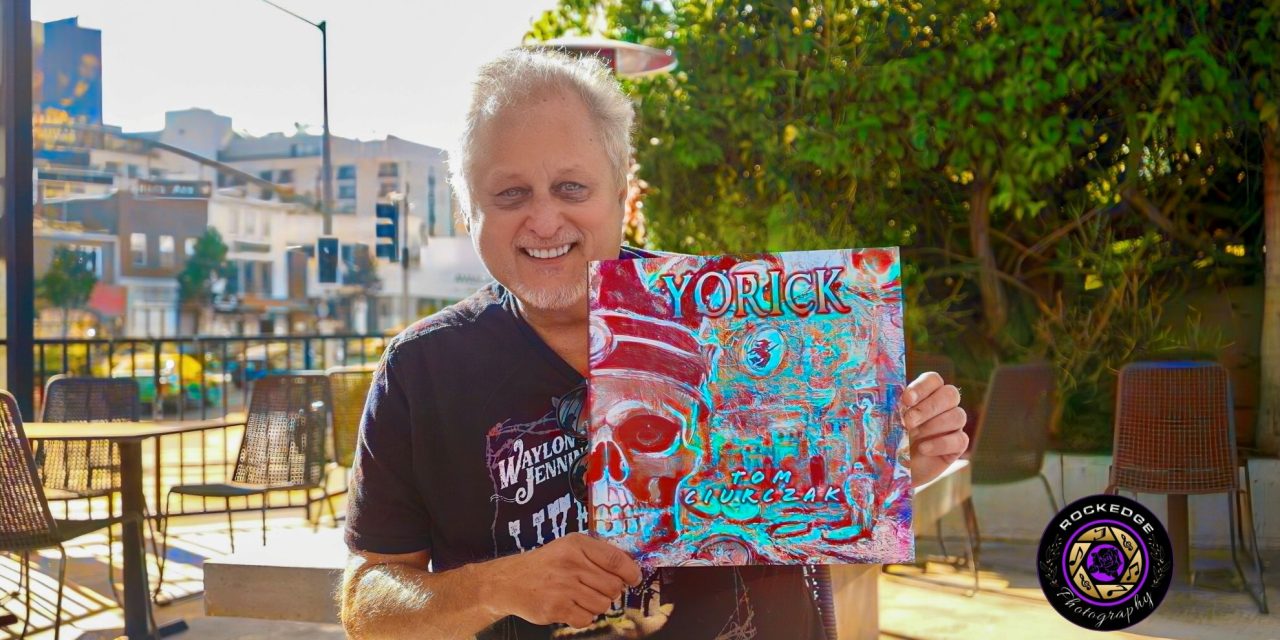
The Sunset Strip has long been a beacon for rock legends, a stretch of neon-lit history where ghosts of The Doors, Zappa, and countless others still linger in the walls of iconic venues. On this storied boulevard, singer-songwriter Tom Ciurczak is carving out his own chapter. Fresh off a performance at The Whisky alongside Tommy Tutone, Ciurczak sat down with us in West Hollywood to talk about his latest album Yorick, the art of storytelling through song, his playful holiday recordings, and what’s next on the horizon.
What follows is a conversation that moves from the roots of his musical journey in New York, to the thrill of playing bucket-list venues, to the craft of weaving hooks and narratives that resonate long after the last chord fades. It’s a portrait of an artist who balances reverence for rock’s golden past with a restless drive to push forward, blending wit, melody, and heart into songs that feel both timeless and fresh.
Growing up in Los Angeles, how did the city’s music scene shape your sound and your story?
Well, I’ve got to tell you — I didn’t grow up in Los Angeles. I grew up in New York, and later moved out here. New York really shaped my musical foundation. I grew up with the radio, and in the mid-60s, when I was really young, the British Invasion was hitting hard. I’d go to sleep every night with a transistor radio in my ear, just absorbing all of it.
Within a few years, everything shifted to FM radio. First it was WABC in New York, then WNEW-FM. The cool thing about radio back then was that it wasn’t siloed the way it is now. Today, you’ve got stations or playlists dedicated to soft rock, hard rock, country — everything separated. Back then, it was all mixed together under what they called album-oriented rock. DJs would play entire sides of albums, and when you’re young, that kind of immersion seeps into your brain.
Eventually, all of that came out in my songwriting. I started writing songs at 13. We had phenomenal guitar players and singers in my neighborhood, but I knew I wasn’t going to be the next Hendrix, Clapton, or McCartney. So I thought, I’d better figure out something else. That’s when I started writing songs, and all those influences knitted together.
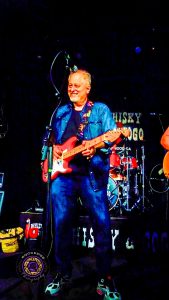
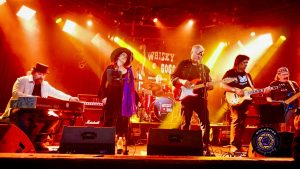
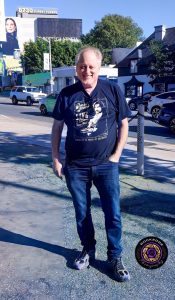 Let’s switch over to The Whisky and your show with Tommy Tutone. Performing at The Whisky is so iconic. What did it mean to you personally to play there?
Oh, you know what? There are ghosts in the walls at The Whisky. I was so excited to play there because it’s the place where The Doors played, where Frank Zappa played, where The Byrds played. It’s one of those bucket-list venues I wanted to check off, and I’m thrilled I got to do it.
I’m still chasing The Troubadour — haven’t played there yet, but I’m working on it. And I’ll be back at The Whisky again. Missing Persons is doing a residency in February, every Wednesday night, and I’ll be closing out the last Wednesday with them. That’ll be on February 25th.
Playing with Tommy Tutone was wonderful. I got to chat with him a bit upstairs in the hallway. It’s amazing that he’s still going strong. He was phenomenal that night, and the whole lineup was solid. He capped off the evening perfectly.
I’ve always loved “867-5309/Jenny,” which was written by Alex Call. Alex was part of a Bay Area band called Clover, along with Huey Lewis. They never quite broke through, though they did record Elvis Costello’s very first album in London. After that, the guitarist joined the Doobie Brothers, and Alex became a songwriter. He ended up writing a bunch of great songs, and “867-5309” was one of his big hits.
 Tell me the story behind your album Yorick.
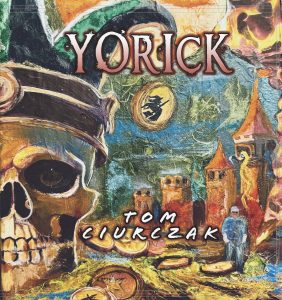
I wanted to weave pieces of the Yorick story — the medieval jester from Hamlet. Hamlet loved him as a child, but nobody really knows how Yorick lost his head and became a skull. So I thought, I’ll make my own story up. I created a fractured fairy tale, bringing in characters like the Wicked Witch, Rapunzel, and others, all combined together.
The song itself blends influences: I wrote Dylan-esque verses paired with a Genesis-style chorus, smashing them together so it has both a rootsy and prog-rock side. That’s something I really enjoy. The whole album carries a lot of influences, but one thing I always try to stay focused on is creating hooks — musical and lyrical. Hooks are the first thing that grab a listener’s ear. People don’t usually dive into the lyrics until the second or third listen. Early on, it’s all about the “ear candy”: a sweet guitar riff, an interesting harmony, or a catchy lyric.
On radio or Spotify, you’ve got about six seconds to hook someone before they skip to the next track. So I think about that constantly when writing. It’s like putting together a crossword puzzle — fun, but strategic. And if you listen to the whole album, you’ll hear plenty of 1970s influences woven throughout.
 Which track from Yorick best represents where you are musically right now?
The first two tracks — The Watcher and The Wild One — probably represent me best right now. I wanted to lead off with strong songs because the first three tracks are crucial in grabbing listeners when you release an album.
With The Wild One, I incorporated twin guitar harmonies, a sound that goes back to Wishbone Ash, the Allman Brothers, and Thin Lizzy. It’s an ear-catcher. I also used a technique I picked up from Springsteen: before Clarence Clemons would go into a solo, Bruce often changed key to lift the solo up. I did the same thing — changing key before the twin guitar harmony — so the solo stands out more.
With The Watcher, I drew inspiration from Broadway musicals, adding stops and pushes in the vocal lines. Again, it’s all about grabbing the listener’s attention. Then comes the challenge of translating those tricks into live performance — catching the eye as well as the ear — which is a whole different art.
 What do you hope listeners take away emotionally after hearing Yorick from start to finish?
I hope they’re drawn in enough by the melodies and hooks to take a deeper dive into the lyrics. I’m a storyteller, and I write elaborate songs that often play out like little three-act plays. Act one sets the stage, act two develops the story, and act three throws in a twist — spinning the whole thing on its head.
Take The Watcher, for example. It’s about an alien sent to Earth to create the Nazca Lines. That idea came from Frank Zappa’s Inca Roads, which referenced the Nazca Lines. In my story, the aliens abandon him, but he’s immortal. So he starts photobombing history — showing up at the pyramids, the Roman Empire, Stonehenge — hoping they’ll notice him and come back. Eventually, hundreds of years later, they do.
I even made a fun video for The Watcher that captures all of that, and it’s out there on YouTube. It’s playful, but it also shows how I like to twist stories and keep listeners guessing.
 If you could open for any band or artist, either now or from the past, who would it be and why?
I’m such a singer-songwriter fan. I’m a huge Springsteen guy — being from New York and New Jersey, that’s in my DNA. But I also love Bob Dylan, Tom Petty, and Warren Zevon.
What really pulled me back into music was attending Steve Earle’s songwriting camps. I went to a couple, and there were about a hundred singer-songwriters from all over the world. At night, after the open mics, we’d have picking parties that went until five in the morning. I learned two things: one, I could hang with these folks, and two, I wasn’t going to keel over from staying up all night for a week.
It sent me a message: there’s still more I can do. I didn’t want to grow old and regret not pursuing this. Friends asked, “Tom, you’re in your 60s — why now?” My answer was simple: if not now, when? Once I started, it was like potato chips — I couldn’t stop at just one album.
And you can’t just record albums; you’ve got to perform them. So I cracked into the LA and Orange County music communities, met incredible musicians, and built a top-level band. Their résumés are amazing — my guitarist, for example, played all the leads for Guitar Hero, along with touring for major acts. One thing I learned in business is to surround yourself with people better than you. I want to be the weak link, not the strongest. And I think I’ve done that — my band is absolutely first-rate.
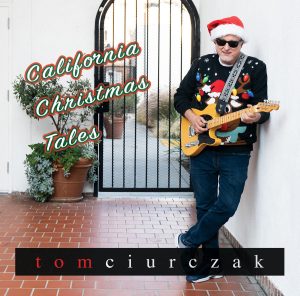 We’re in the holiday season. You’ve released some Christmas recordings. What inspired you to take on holiday music alongside your rock work?
Rock music is my foundation, but one Christmas I thought, I can do this. It’s a niche, and my PR person in Europe puts out a Christmas album every July. So I wrote and recorded a few holiday songs — in May and June, no less — at Sunset Sound.
Recording there was like being a kid in a candy store. I was staring at the walls, at all the gold records — it’s like a museum for a rock fan.
One of the songs I released again this year is Santa’s Got a Brand New Bag, my homage to James Brown. It’s got that James Brown trill on guitar, heavy sax — almost like the Saturday Night Live band. Another track, Come On, Rudolph, is about a drunken reindeer who’s gotten old and is drinking too much. The other reindeer tell Santa, “We’ve got to do something about this guy.”
The twist at the end came from Sting’s Roxanne. He sings, “Roxanne, you don’t have to turn on your red light.” I flipped it: “Rudolph, I need you to turn on your red light.” It’s playful, but it ties the whole concept together.
 What’s coming up for you in the new year?
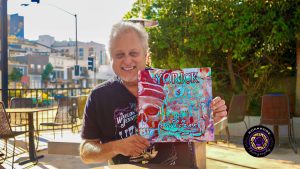
Besides the show with Missing Persons, the biggest thing is another album. When I recorded Yorick at Sunset Sound, I came in with 50 demos. My producer and engineer laugh because most people barely have enough for an EP, and I show up with 50. We recorded 20 songs, so I’ve got another full album ready.
It’s called Antarctica, and it’s tentatively set for summer. Originally, it was going to come out before Yorick. Yorick is more melodic, while Antarctica is more of a rocking record. We divided the songs between the two albums, and it worked out that way.
I’m also planning to get back in the studio again. My goal is to release something every year. I’ve been writing since I was 13, and you learn through the process. You write bad songs, okay songs, and eventually good ones. It’s repetition. McCartney and Lennon got better because they kept writing, refining, and improving.
That’s true for any art form — poetry, painting, sculpture, songwriting. You’ve got to keep at it, step back, see what works, and refine until you create something that resonates with you and with others.
 In Conclusion
From his roots in New York radio to the neon glow of the Sunset Strip, Tom Ciurczak’s journey is proof that passion doesn’t fade with time — it deepens. Whether he’s spinning fractured fairy tales on Yorick, channeling James Brown in a holiday groove, or gearing up for the release of Antarctica, Ciurczak approaches music with the curiosity of a storyteller and the drive of a lifelong craftsman.
As he continues to check off bucket-list venues and surround himself with top-tier musicians, one thing is clear: Tom isn’t slowing down. He’s building a catalog that blends nostalgia with fresh energy, reminding us that rock and roll is as much about reinvention as it is about tradition. On the Sunset Strip, where legends echo through the walls, Ciurczak is adding his own voice to the chorus — and it’s one worth listening to.
(Interview by Ken Morton – Photos by Karyn Burleigh of Rock Edge Photography)