

Footsteps in the Stone: Thomas Allain Finds His Voice on Words I’ve Learned to Say
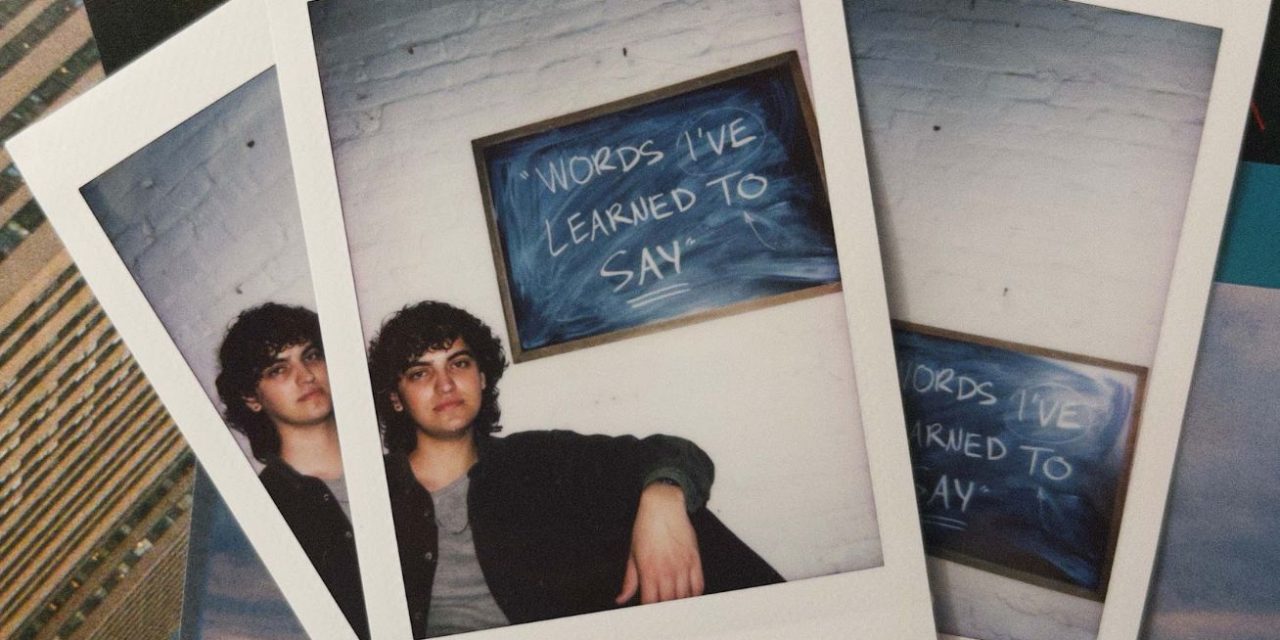
 Footsteps in the Stone: Thomas Allain Finds His Voice on Words I’ve Learned to Say
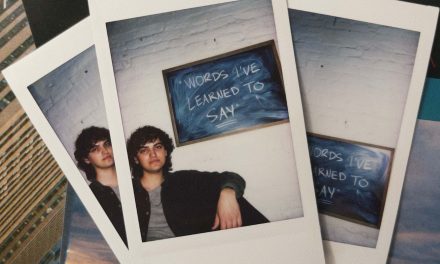
In a world that moves faster every day, it can be easy to lose sight of what truly matters. For Gainesville, Florida-based singer-songwriter Thomas Allain, his new album Words I’ve Learned to Say is a deliberate attempt to slow down, reflect, and rediscover the meaning behind the words we speak and the songs we sing.
Drawing inspiration from personal experiences, friendships, hometown roots, and the search for lasting connections, Words I’ve Learned to Say finds Allain embracing vulnerability while delivering some of his most thoughtful songwriting to date. Recorded in the legendary music town of Muscle Shoals alongside producer Dan Hannon and an accomplished group of collaborators, the album balances intimate storytelling with expansive musical arrangements.
Highwire Daze recently caught up with Thomas to discuss the new album, Gainesville’s thriving music scene, memorable festival appearances, the influence of The Late Night Losers, and the lessons he’s learned while finding his own artistic path.
Where are you based out of, and what is your local music scene like?
I’m based out of Gainesville, Florida, which is a college town and home of the Gators. The music scene here is really cool because it’s constantly rotating and shifting with the changing college semesters.
At the same time, there are a lot of people who’ve been here for years and are brilliant songwriters in their own right. Some came here for school and decided to stay. So you’ve got a mix of fresh faces and what I’d call local legends. It’s a really inspiring environment to be part of.
Let’s talk about your newly released album, Words I’ve Learned to Say. Is there an overall story or concept behind the title?
Yeah. The idea comes from thinking about all the expressions and habits we repeat in our daily lives without really examining them. Everything on this album is autobiographical in some way, and I started asking myself what I was actually trying to communicate through my music.
Whether I’m performing my own songs or singing covers at a gig, it’s easy to get caught up in logistics and routine. You’re worried about getting to the venue on time, making sure everything is running smoothly. At some point I stopped and asked myself, “What am I actually singing about?“
The album became a process of relearning what I want to write songs about and what I want to express to an audience. That’s really where the title comes from.
“Footsteps in the Stone” was the first single and was co-written with the very prolific Jordan Burchell. Tell me about that song and how it came together.
That song really boils down the central theme of the album. Over the last few years, there have been so many major events and shocking news stories that grab our attention, and then almost immediately we move on to the next thing.
As a young person trying to build a life and establish myself as an artist, it can feel difficult to leave any lasting impact. There’s a famous poem called Footprints in the Sand, which has a Christian context. While that’s not necessarily where I’m coming from with this song, the idea inspired me to think differently.
Instead of leaving footprints in sand, we’re trying to leave footsteps in stone. We’re trying to make a mark on something lasting and immutable.
When I explained that concept to Jordan, he immediately understood what I was getting at. We were completely aligned on the message, and that made the writing process really natural.
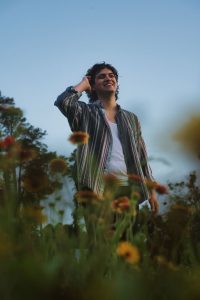 Another standout track is “How to Move Away.” What’s the story behind that song?
That song is very much a love letter to Gainesville. It’s autobiographical as well.
I’m twenty-seven now, and there can be this feeling that if you want to be successful, you need to move to a bigger city and chase the next opportunity somewhere else. There’s always this pressure to make a dramatic change.
But sometimes you can spend your whole life chasing something external when the real change needs to happen internally.
Gainesville is such a transient town. Every year I see friends moving away, and part of me wants to follow them. But the song is really about looking inward and asking whether the change I’m searching for might actually need to come from within myself.
“I Never Get Sleep” is a title I can definitely relate to. Tell me about that track.
That one’s probably the most straightforward breakup song on the album.
It’s about unresolved guilt connected to a past relationship. That can apply to romantic relationships, but I was also thinking about friendships when I wrote it.
It’s really about that lingering feeling you can’t quite escape. The yearning follows you around and even shows up in your dreams. It’s about living with emotions that haven’t fully been reconciled.
Let’s jump to the closing track, “Plastic Cup.” What inspired that song, and why did you choose it as the album closer?
I was really inspired by Lizzy McAlpine’s song “Drunk Running.” In her case, she’s writing about a romantic relationship. “Plastic Cup” is more about friendship.
The song centers on trying to reconcile your feelings toward a friend who keeps making unhealthy decisions, the kind of decisions that start with a plastic cup on a weekend.
It’s about coming to terms with the fact that sometimes you have to step back. There’s a line of thinking that says, “The next time you fall, I won’t be there to catch you. You’re going to have to catch yourself.”
That’s a difficult decision to make. I’ve had to make it before, and if I’m being honest, I’ve probably also been that person for someone else at different points in my life.
As a closing track, it ties together a lot of the album’s themes. Musically, it’s a little more rock-oriented than some of the other songs, and I really loved the way it ends abruptly. That sudden stop felt like the perfect way to close the record.
Producer Dan Hannon has worked with artists ranging from Manchester Orchestra and Paris Jackson to Warped Tour favorites like Issues and A Rocket to the Moon. What did he bring to the recording process?
He brought a lot to the project.
This album was really the culmination of everybody involved at Ivy Manor Studios in Muscle Shoals. Dan has since become the owner of the studio, and he was wearing multiple hats throughout the recording process.
Not only was he producing the record, serving as the creative director behind everything, but he also played drums on the entire album.
His son, Eli Hannon, is an incredible musician, songwriter, keyboard player, and singer. He contributed keyboards throughout the record. Jared Przybysz played bass, and together we recorded the fundamental tracks live, all in the same room facing each other.
That created a really collaborative atmosphere. A lot of ideas emerged naturally. The piano turnarounds in “Footsteps in the Stone” came directly from Eli. On “Plastic Cup,” Jared developed that distinctive groove that became such an important part of the song.
We also had Clint Ingersoll engineering the sessions. At one point while we were recording “Plastic Cup,” I was playing the guitar part in a very straightforward way. Through the headphones, Clint suggested I try arpeggiating the chords instead.
That suggestion became the foundation for the off-kilter guitar riff that ended up defining the song.
So this record was very much a group effort from start to finish.
 Speaking of groups, let’s talk about The Late Night Losers. How did that band shape your musical identity?
I started The Late Night Losers with some of my college friends, and it was really our first taste of how much fun it is to play rock and roll music on stage.
That’s where I learned the basics of being in a band, rehearsing, showing up for gigs, and figuring out how all of that works. Admittedly, there were times when we weren’t always great at the “showing up on time” part.
It was my first serious musical project, and it’s actually how we met Dan Hannon. We connected through Dan Nolen, the owner of Smith’s Olde Bar in Atlanta. We had been reaching out to play shows there, and Dan Nolen really connected with what we were doing.
He introduced us to Dan Hannon, and that eventually led to us making music together in Atlanta.
Do you see your solo work as a continuation of what you did with The Late Night Losers, or more of a departure?
That’s a good question.
In many ways, it’s still part of the same journey of finding my voice and figuring out what I want to say through music. But I do think it’s a departure in terms of how I approach songwriting.
When I started working on this album, I wasn’t in the best place mentally. I was dealing with a lot of imposter syndrome. Working with Jordan Burchell really helped me through that.
I actually started collaborating with him right after he completed his one-song-a-day project. There’s probably no better person to write with than someone who’s successfully written a song every day for an entire year.
He constantly encouraged me to stop overthinking everything. He’d say, “Just finish the song. Relax. This is good. Let’s see where it goes.”
That mindset helped shape the record, and because of that, I’d say this album represents a real step forward and a departure in the way I think about songwriting.
What did you learn the most from being a touring member of Cat Ridgeway & The Tourists?
That was an absolute blast. It was just the three of us, me, Cat, and Natalie, traveling together in a van.
Honestly, I think the biggest thing I learned is that I truly love being on the road. Touring was almost a trial run for me, a way to see if this lifestyle was something I really wanted to pursue.
The answer was yes.
Getting up every morning, heading to the next city, sleeping on friends’ couches, playing shows every night. I loved all of it. It confirmed for me that touring is exactly what I want to be doing with my music.
If you could open for any artist, past or present, who would it be and why?
Man, that’s a tough one.
Right now I’d have to say Theo Katzman. He’s one of my musical heroes. I have so much respect for him as both a songwriter and a performer.
If we’re talking about the past, though, I’d want to open for the classic Eagles lineup during the One of These Nights era. Give me Bernie Leadon, Don Felder, Glenn Frey, everybody up there on stage.
Then I’d walk out there with just me and my guitar and see what happens.
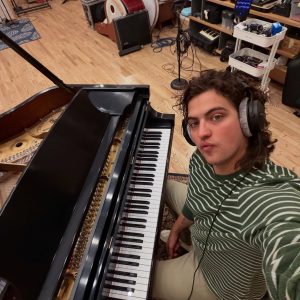 You’ve played some interesting festivals recently. What was it like performing at the Jimmy Buffett Festival?
That festival is a blast. It’s really a labor of love put together by Jared Hart here in Gainesville.
He works closely with Save the Manatee, an organization that Jimmy Buffett supported throughout his life, and the whole event has this wonderful community atmosphere. Admission is free, so people bring lawn chairs, relax, and enjoy the music.
One of the fun traditions is that everyone has to claim the Jimmy Buffett songs they’re covering so you don’t end up hearing ten versions of “Margaritaville” in a row.
Preparing for the festival encouraged me to dive deeper into Buffett’s catalog. His early records are essentially folk albums, and the songwriting is fantastic. The lyrics are often much sharper and more thoughtful than people realize.
Which Jimmy Buffett songs did you end up covering?
The first year I performed “Death of an Unpopular Poet” and “Ace,” both of which are fantastic songs.
This year I played “Makin’ Music for Money” and was planning to close with “Tonight I Just Need My Guitar,” but unfortunately our set got cut short.
That’s Florida for you. Thunderstorms tend to have other plans.
You’ve also participated in the Tom Petty Weekend celebration. What’s that experience been like?
That’s another really special festival that feels uniquely Gainesville.
I’ve been fortunate enough to participate for the past few years, and it’s always incredible. Tom Petty’s estate is involved, and fans come from all over the country to celebrate his music and legacy.
This year is especially exciting because Stan Lynch and his band are headlining. Of course, he was the original drummer for Tom Petty & The Heartbreakers, so that’s pretty amazing.
I’m also a huge fan of White Denim, who are performing as well. I love their fusion of funk, rock, groove, and grunge influences, and the songwriting is incredibly creative.
Events like Tom Petty Weekend really put Gainesville on the map as a musical destination. People travel from all across the country specifically to be part of it.
Have you ever played Los Angeles or anywhere else on the West Coast?
Not yet, but I’d really love to.
It’s definitely a long trip from Florida, but Los Angeles has such an exciting creative community right now. I’m actually playing an upcoming show with Lucy Clearwater, who’s based out there.
I’m also a big fan of artists like Ryan Lerman, Lila Ford, Benjamin Jaffe, and the whole Scary Pockets scene. Benjamin Jaffe’s recent album Songs for Agreement has been in heavy rotation for me lately. It’s exactly the kind of record that checks all the boxes for what I love as a songwriter and listener.
So hopefully I’ll make it out there sooner rather than later.
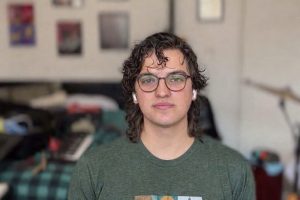
Thomas Allain via Zoom!
You have a new album out now. What’s next for you?
First, I’m looking forward to playing more shows.
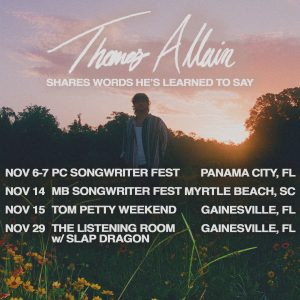
We’ve got Tom Petty Weekend coming up next month, and I’m genuinely excited to perform and then stick around to catch White Denim’s set.
I’ve also got appearances at a songwriter festival in Myrtle Beach and another festival in Panama City. Both are community-driven events run by people who genuinely care about supporting songwriters.
After that, it’s back into the shed.
I’ve got a batch of new songs in progress that I need to finish, so the goal is to keep touring, keep writing, and keep moving forward.
What would you like listeners to remember most after hearing Words I’ve Learned to Say for the first time?
I hope the songs find people when they need them most.
If someone is listening during a vulnerable moment in their life, I hope the album reminds them that they’re not alone.
There are very few feelings or experiences that are completely unique. Whatever someone is going through, chances are there are other people who have been through something similar.
If these songs can help create that feeling of connection and understanding, then they’ve done their job.
I hope listeners walk away knowing that they’re not alone, and that whatever they’re facing, they can get through it.
In Conclusion
With Words I’ve Learned to Say, Thomas Allain delivers an album rooted in honesty, reflection, and genuine human connection. Whether exploring the desire to leave a lasting mark, navigating complicated friendships, or learning how to embrace vulnerability, the songs reveal an artist growing more confident in both his voice and vision.
Backed by a talented creative community stretching from Gainesville to Muscle Shoals, Allain has crafted a collection of songs that feel deeply personal while remaining universally relatable. As he continues to tour, write, and build momentum, Words I’ve Learned to Say serves as both a snapshot of where he is today and a promising indication of what’s still to come. For listeners searching for sincerity, substance, and heartfelt songwriting, Thomas Allain has plenty worth saying.
(Interview by Ken Morton)
Thomas Allain on Instagram