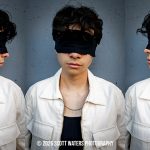

From Desolation to Firebrand: Gabe Gazic’s Sonic Reckoning
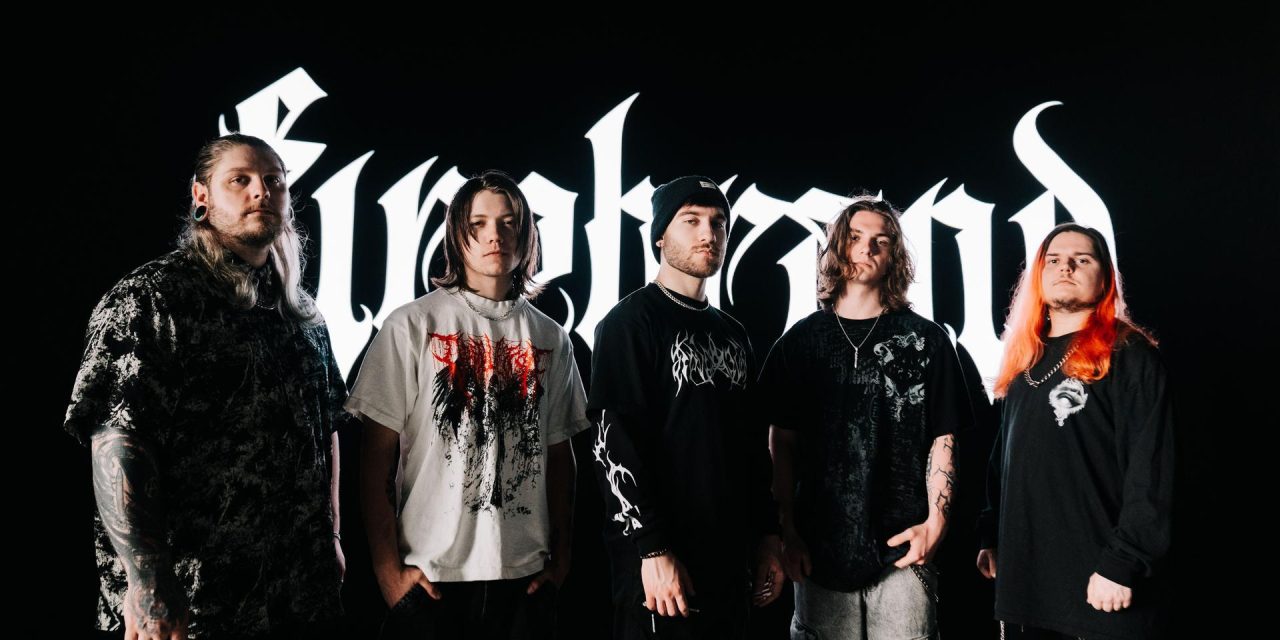
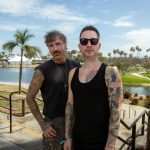
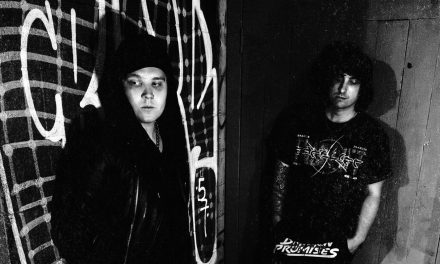
Promo photo credit: Cameron Perry
From Desolation to Firebrand: Gabe Gazic’s Sonic Reckoning
In the heart of Cleveland’s metalcore underground, Gabe Gazic has spent nearly a decade forging sound from heartbreak, friendship, and pure DIY fire. From his early days fronting Dying Desolation to the emotionally raw solo project firebrand, Gazic’s journey is one of reinvention—both personal and musical. His latest EP, π // waking from a dream, trades apocalyptic themes for intimate storytelling, channeling the aftermath of a breakup into a genre-blurring catharsis.
But Gabe isn’t just building songs—he’s building community. As co-founder of the Cleveland Mosh Fest, he’s helped carve out space for local bands to thrive, even as national acts take notice. In this exclusive Highwire Daze interview, Gabe opens up about the final days of Dying Desolation, the creative freedom of firebrand, and what’s next for a project that refuses to be boxed in.
For those unfamiliar with firebrand, where is the band based and what’s your local music scene like?
We’re based out of Cleveland, Ohio. I love the scene here—I’ve been part of it for years. As you mentioned, I was in a band called Dying Desolation for six years before this, so I’ve been in the game since around 2017. Coming up on a decade now.
Like any scene, bands come and go, but the ones that stick around really mean business—and they’re all incredibly talented. It’s exciting to see fresh faces emerge, and to watch musicians evolve. I’ve seen people start in one project and eventually find their footing in another, myself included. It’s been cool to grow alongside the scene.
My buddy Jordan—he was the drummer in Dying Desolation and is helping me out with drums on firebrand—he and I even started a Cleveland-based festival a few years back called Klee Mosh. It’s kind of in the spirit of Inkarceration, but on a much smaller scale. So we’ve expanded beyond just playing in bands—we’re also putting on events and supporting other local acts. We love it. It’s a great scene.
How did the Firebrand project come together?
After Dying Desolation ended, I never stopped making music—I just wasn’t sure what I wanted to do with it. Jordan and I have always been partners in crime when it comes to music, so we started testing out different vocalists from the area. We tried a few things, but nothing really clicked.
Then I went through a pretty rough breakup, and I needed something to pour my energy and passion into. That’s when I decided to start making music entirely on my own and release it as a solo project. I’d never really sung on anything before, but since the material was so personal—an emotional outlet—I didn’t want to wait around or have someone else sing those lyrics. I just went for it.
Right now, firebrand is still mostly a solo thing, kind of like how Ronnie Radke runs Falling in Reverse. It’s my baby, but I’ve got people helping out—playing live with me, appearing in videos. So while it’s deeply personal, it’s also evolving into something collaborative. It’s a passion project through and through.
What do you find in firebrand that you didn’t necessarily have in the final days of Dying Desolation?
Honestly, it’s the freedom. firebrand is a solo endeavor, so I can just do what I want creatively. Dying Desolation didn’t end dramatically or anything—it was more that compromises were being made, and we weren’t feeling fulfilled anymore. There were four of us, and that’s a lot to manage creatively. Everyone had different tastes and expectations, and it got harder to align.
With Firebrand, I don’t have to appeal to anyone else’s palette or intensity. I can follow my instincts and make whatever I feel like making on any given song. That’s been the biggest shift—and the most liberating one.
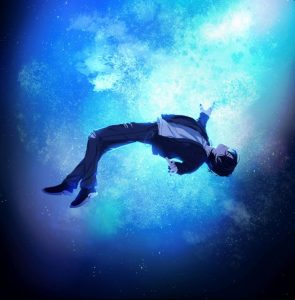
Orbit single cover art
Let’s talk about some of the songs you’ve released. You have a new track out called “Orbit.” What inspired that one?
Yeah, so like I mentioned earlier, this whole project started as a way to vent after a pretty tough breakup—almost five years together. “Orbit” was the first song I released after my debut EP, which was basically me processing that breakup in real time.
“Orbit” came a few months later, once I was out of that immediate aftermath. It’s about feeling like I’d completely lost touch with someone I’d been so close to. I wanted to use space as a metaphor—floating through a world I used to know, now just drifting in isolation. There’s a lyric about that exact feeling, and I really tried to paint a picture of what that emotional distance felt like. It’s about that no-contact phase, where everything feels surreal and disconnected.
Let’s dig into another track—“Ultimatum.” What’s the story behind that one?
That one’s pretty deep. All the songs I’ve released are personal, but “Ultimatum” especially so. I actually haven’t shared the real meaning publicly before, so this is a bit of a scoop.
It’s part of that same five-song EP I wrote within a month of the breakup. At the time, I really wanted kids with this girl, and she wasn’t sure. I think I ended up putting pressure on her—kind of giving her an ultimatum, like “You need to figure out if this is something you want.” Looking back, I regret that. I think that pressure may have played a role in things falling apart.
So the song is me working through that regret. I kept the lyrics vague on purpose, so listeners could interpret it in their own way. But that’s the true meaning behind it.
Thanks for sharing that. Has she heard any of these songs?
Yeah, she has. We haven’t spoken in about eight months, but we’re on good terms. I try to stay respectful with anyone I’ve spent that much time with.
Since those first five songs were pretty blatantly about her, I actually wanted her to hear them before anyone else did. I sent them to her first—just to clear the air and make sure there was no ill will or awkwardness. To my surprise, she loved them. Some of the songs are more negative, some more positive, but they were all just honest expressions of how I was feeling.
As for “Orbit” and the newer stuff I’m working on, I haven’t sent those to her. We haven’t been in touch, so I’m not sure if she’s heard them. But I know she liked the first five, and that means a lot.
“Circular” is such a standout track. What’s the story behind that one?
“Circular”—yeah, that’s an interesting one to pick. It’s definitely different from anything I’ve done before. It’s the second track on the EP and it’s more of a storytelling piece. There’s no traditional structure—no chorus, no repeating parts. It’s just me painting a picture of the entire relationship.
It starts off with this almost happy vibe, capturing the excitement and buildup of falling in love. But about three-quarters of the way through, it takes a sharp left turn into a heavy, screaming section. That shift is meant to reflect the emotional whiplash of suddenly being thrown out of something you thought was stable.
A lot of the EP’s themes—and especially “Circular”—are framed around our first date, which happened in the backseat of my car. That moment became a recurring motif. I wanted the whole EP to reflect back on that scene, almost like a memory loop. That breakdown in “Circular” feels like a car crash to me—symbolic of the relationship’s sudden end.
Even the final track on the EP, “π – Pie,” ends with a line about the car. So yeah, I really tried to flex my storytelling muscles throughout the EP, but especially on “Circular.” It’s less of a radio-friendly song and more of a cinematic experience.
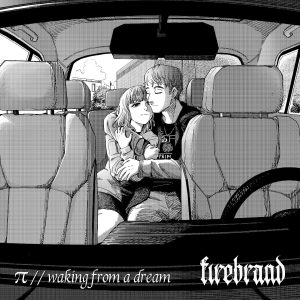
π // waking from a dream cover
The EP is called π // waking from a dream. Did writing it feel like waking up?
Yeah, it did. With Dying Desolation, the songs were more impersonal. I started that band when I was 15, and I hadn’t really gone through much at that age. So I wasn’t used to putting my thoughts and feelings out there for people to hear. I was nervous about it.
But this EP was different. It was a new experience—more vulnerable, more honest. And yeah, in a way, I didn’t exactly wake up from the dream, but it was definitely enlightening. I’m really glad I did it. People seem to be resonating with it in ways my earlier songs didn’t. Back then, I’d write about the world ending or big abstract ideas because I didn’t have much personal material. This time, it’s all real.
With these songs being so personal, have you had a chance to perform them live? Is that difficult?
I haven’t played them live yet. The only one I’ve performed was “Dream,” the first firebrand release. I did that at an afterparty for the festival I run with Jordan—just a little karaoke-style performance to kick things off.
It wasn’t too difficult, honestly. I’m used to performing, so I can separate myself from the material when I need to. But when it comes to full live shows, that’s where the band comes in. Like I mentioned, firebrand is still building its catalog. “Orbit” was only my sixth song, so I’m waiting to get more material out and build a stronger presence in the scene before we hit the stage.
I’ve never been a frontman or done vocals live before, so I’m really looking forward to that moment. Hopefully soon—but nothing yet.
If firebrand could open for any band—past or present—who would it be and why?
Man, currently? Probably any of the bands that have inspired me. The big ones are definitely Bring Me the Horizon and Bad Omens. And since you said past or present—Linkin Park, for sure. Ideally, I’d love to have opened for Chester’s version of Linkin Park. Those are the top three that come to mind instantly.
Much of Dying Desolation’s run happened during the pandemic. You released a good amount of music during that historic time. What was that experience like?
People were stuck at home, starved for things to listen to and do. In a way, we kind of benefited from that. We caught people at a time when they were looking for something new, and that helped us grow. I’d say 2020 to 2021 were our peak years—our hottest stretch for Dying Desolation. We weren’t playing shows, which felt strange, but we were releasing what I think was some of our best material.
One example is a song called “Tick,” which was about climate change. We filmed the video right before the pandemic hit—literally the week it all started. We were wearing masks in the video, and when we released it a month or two later, people assumed it was about COVID. It wasn’t, but the timing made it feel relevant. That helped us reach a bigger audience.
So yeah, my experience was probably different from most. It was exciting and creatively productive, even though the world was going through something really heavy.
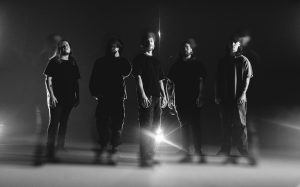
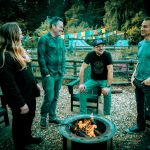
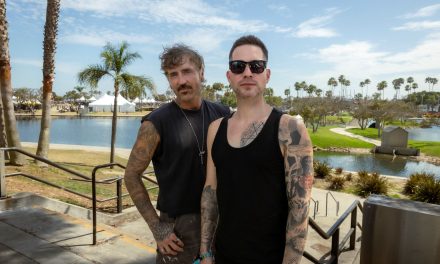
Promo photo credit: Unhinged Studios
Let’s talk about the final Dying Desolation show in June 2023. What was going through your mind that night?
Man, just being able to perform that night meant everything. A lot of bands quietly call it quits and fade out. We knew we wanted to go out with a bang. We didn’t want to disappear without giving people one last chance to see us live.
The energy in that room was unreal. It was packed with people—some who had never seen us before, and others who had been to every show. Everyone knew it was the final time, so they went hard. We fed off that energy and delivered what I think was one of our best performances ever.
We recorded the show and released the video, and I revisit it often. I miss playing live, but I’m proud of that show. What was going through my mind? Just that I was going to miss it—but I was glad to be ending it on my own terms. No drama, no bad blood. It was the perfect way to close that chapter.
Are you currently involved with any other bands outside of firebrand?
Not in a songwriting or musical capacity, no. A lot of my closest friends are in other local bands, and I try to support them however I can—giving feedback, sharing advice from my own experience. I’m friendly with a lot of people in the scene and help out where I can, but musically, firebrand is my sole focus right now.
How stressful is it to organize the Cleveland Mosh Fest?
Oh man, it’s a whole different beast. I’ll be the first to admit—when we started it in 2022, back when Dying Desolation was still active, it was kind of an excuse to give ourselves a big show. We realized no one had really done a local-level festival in the Cleveland area, at least to our knowledge. Sure, there’s Inkcarceration and Sonic Temple—those giants are amazing, and I go to them whenever I can. But nothing existed on a grassroots level.
So Jordan and I, along with the crew, decided to cook up an idea: let’s get our closest friends and favorite local bands together for a stacked show. We’d conveniently headline it and draw a big crowd. That first year was definitely selfishly motivated—but once we announced it, people flocked to it. It gained traction fast, and even some national bands reached out to include it in their tour routing.
We ended up stepping back and letting a national act headline that first year. And after Dying Desolation broke up, we kept the fest going because it was so well received. It’s been really fun to organize—even when I’m not playing.
That said, it comes with its own challenges. It’s a mosh fest, after all—people get injured sometimes, and that’s always tricky to navigate. It’s also become a staple in the local scene, so I get constant DMs from bands wanting to play. I want to make everyone happy, but there are only so many slots.
Still, I love it. I love seeing the work pay off every December—watching the room fill up, people partying, having a great time. It’s cool to step back and be part of it from the sidelines. It’s different, but it’s awesome.
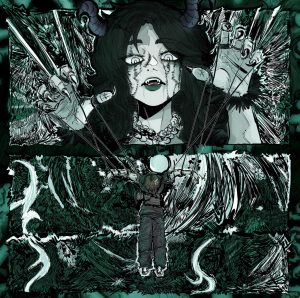
Backburner – Brand new single cover art!
Will there be a fourth edition this year?
Definitely. We’re working on it now. Still sorting through some details, so I can’t announce any bands yet—but it’s happening for sure.
Villain of the Story played the last one, and you guys actually did a song with them, right?
Yeah, that was super sick. I finally got to meet Christian Grey from the band—we’d known each other for years but never met in person. We never got to play that song live, which sucks. I was telling Jordan, if we hadn’t broken up a year or two earlier, we could’ve done it on stage. But we still got to meet, snap a photo, and I had him sign my copy of the CD. That was a cool full-circle moment.
firebrand has a new single out. What’s next for you guys?
My strategy lately has been to record a new song every two months. I want to build a backlog so I can release consistently. In today’s landscape, you can’t let people forget who you are—you’ve got to stay present.
“Orbit” was the first of five songs I’ve written for a second EP. Starting with its release in June, I’m aiming to drop a new track every two months. I’ve already filmed a video for the next one—it’s mixed and mastered, and we’re working on editing the video and creating the single art. I’ve also got another song fully recorded and ready to go.
They’re all pretty different. The next one is heavy—more like an installation piece. After that, there’s a pop-punk-inspired track, which is new territory for me. It’s catchy and cool, and I’m excited about it.
Once all five songs are out, I’d love to do an EP release show as Firebrand’s first live performance. I want to do it right—with a proper light show, solid openers, and everything dialed in. We’ll see if we’re ready by then. But for now, I’ve got a solid batch of songs I’m proud of, and I’m excited to keep putting them out at a steady pace.
Do you have any message for people who’ve been following your career since the Dying Desolation days?
First off—thank you. I really appreciate it. I’m glad to have you along for the journey, and I hope you continue to enjoy what I’m putting out.
I know firebrand has been a little more tonally and sonically all over the place—and that’s intentional. I’m exploring different sounds and trying to keep things personal and emotionally honest. So if there’s a song or two that didn’t quite hit for you, I hope you’ll stick around. There might be something coming that’s more in line with what you’re used to—or maybe something new that resonates in a different way.
My goal is to keep pushing myself creatively, to make music that’s relatable and emotionally varied. I want each song to capture a different feeling, a different moment. So yeah—thanks again for sticking with me. I hope you’ll keep listening and see where this goes next.
(Interview by Ken Morton)
firebrand on Instagram