With Guts, Glory, and 35 Years of Chaos: Martin Schulman Reflects on Centinex, Demonical, and the Road Ahead


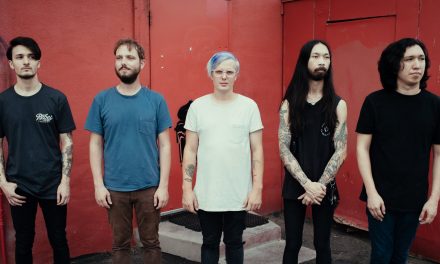
Photo Credit: Susan Wicher
With Guts, Glory, and 35 Years of Chaos: Martin Schulman Reflects on Centinex, Demonical, and the Road Ahead
From the raw fury of Swedish death metal to the gritty swagger of Motörhead-inspired riffage, Martin Schulman has spent the last 35 years forging his own path through the underground. As the founder and driving force behind Centinex—and a key figure in bands like Demonical and Internment—Schulman has never been one to follow trends or play it safe.
In this exclusive interview, we catch up with Martin to talk about Centinex’s latest album With Guts and Glory (out November 7th on Black Lion Records), the band’s evolving sound, his reflections on milestone releases, and what it means to still be raising hell three and a half decades later. From pandemic-era recording sessions to dreams of playing The Whisky in Los Angeles, Martin opens up with the same honesty and grit that defines his music.
Let’s start with the new album, With Guts and Glory. Is there a story behind the title?
Not really—there’s no deeper meaning behind it. For me, it’s always important to have a strong title, something that catches your eye and ear. It should be easy to remember, easy to write, and just… easy. A good title matters, whether it’s for an album or a track. So no, I’ll admit there’s no profound concept behind it.

With Guys and Glory cover art
I’m picking up a Motörhead vibe on this record. It feels like a different direction for Centinex. What inspired that shift?
Yeah, there’s definitely a Motörhead vibe, and a more rock-oriented feel overall. Centinex has always been a band where I can do whatever I want musically. I’ve been the main songwriter for almost the entire history of the band, and I’ve never felt the need to follow a formula or meet expectations.
When we came back in 2014 and released a few albums, they already had a different death metal sound compared to what we did in the ’90s. This Motörhead influence actually started with an EP we released a couple of years ago. It was just me wanting to try something else. I don’t feel limited by any genre rules—Centinex is like a playground for me.
Of course, I understand it might be confusing for some fans. There are always people who want us to recreate the same album from 1993, but I don’t care. Personally, I’m tired of the standard death metal formula. It doesn’t excite me anymore. I’m much more into old hard rock and heavy metal these days.
So yeah, this album represents a new approach for the band, and it feels good. Sure, some people complain, but most seem to find it refreshing and cool. Ultimately, it’s a personal thing—this is the music I want to make right now.
Let’s talk about the track “Your Religion Dies Tonight.” What inspired that song?
All the lyrics are written by our vocalist, so I don’t really have much to do with them. I trust him completely. I focus on the music, and he handles the lyrics. Before recording, he shows me the lyrics and I give them a quick read—just to make sure everything fits. I know what the lyrics are about in general, but I don’t know where he gets his inspiration or why he chooses certain topics.
For me, lyrics are important, but they have to match the music. You can’t play this kind of music and pair it with cheesy, happy lyrics. That wouldn’t work. I get asked about the lyrics in every interview, and I always have to say—sorry, I don’t really know.
What are you most looking forward to with the upcoming Centinex shows? And how much of the new album will you be playing live?
Honestly, I’m looking forward to all the shows. We haven’t played live since last year, and we were getting tired of performing the same older songs over and over. It feels great to have new material and to hit the stage again.
We’ve rehearsed the entire album and plan to play most of it live, but we’ll see how it goes. We’ll probably do a 50/50 split—half new songs, half older ones. We haven’t finalized the setlist yet, so it’s still up in the air.
When planning a show, you want to play the songs you enjoy, but you also have to think about the audience. You need to include some of the older, more familiar tracks. It also depends on the type of show—club gigs give us more freedom to play lesser-known songs, while festivals require a more crowd-pleasing approach to reach new listeners.
We’re especially excited to focus on shows in Sweden. It’s always felt like an unexplored territory for Centinex. We’ve mostly played abroad over the years, so it’ll be nice to shift our focus locally. Plus, we’re now working with a Swedish record label, which adds a new dynamic. So yeah, we’re really looking forward to it.
 Have Centinex—or even Demonical—ever played in the States? If so, what was the experience like?
Yeah, Centinex has actually played in the States twice, though both times were quite a while ago. The first time was around 2000 or 2001. We played a festival in New Jersey called Metal Meltdown—I think that was the name. It was in Asbury Park. Kind of a classic event. The guy who organized it was the same guy behind Milwaukee Metalfest, if I remember correctly. So yeah, that was the first time.
The second time was in 2016 when we played Maryland Deathfest. So just two shows in the U.S. so far. It would be great to return. I’ve also played in the States a couple of times with Demonical—again, Maryland Deathfest and a few others. But with Centinex, it would be amazing to do a proper tour or at least play more shows there.
The challenge is that it’s pretty complicated and expensive for European bands to come over. It’s a much bigger deal than, say, doing a tour in Germany or somewhere closer. But hopefully in the future, we’ll get the chance to play more in the States. We seem to have a small but loyal fanbase there, so it would be great to connect with them live.
Absolutely crossing my fingers on that one. I’m in Los Angeles—you should come out here sometime.
Yeah, I mean, I’m at that age where I don’t really have a bucket list anymore, but playing the West Coast would definitely be a dream come true. With Demonical, we’ve done a few more shows in the States than with Centinex, but they’ve all been on the East Coast. I’ve never actually been to the West Coast—not even as a tourist.
And for me, Los Angeles is iconic. I started listening to metal in the mid-’80s, and I grew up on all those LA hair bands. I really dig that stuff. So yeah, playing in LA—especially at a place like The Whisky—would be amazing. That’s been a goal for us. If we ever get to play the U.S. again, the West Coast is our top priority. It just hasn’t happened yet.
So yeah, fingers crossed. Before I die, I want to play the fucking Whisky!

World Domination by Demonical
Crossing my fingers too! Now, let’s talk about some anniversaries. In 2020, right in the middle of the pandemic, you released World Domination with Demonical. Looking back now, what are your thoughts on that album and the timing of its release?
Yeah, World Domination—if I remember correctly—we had written all the music a year or two before it came out. We were really eager to record a new album, and this was just before the pandemic hit. We ended up recording it during the early months of the pandemic, when everything was still very uncertain. There were so many rumors and questions—how long would it last, what would happen next, and so on.
But since we already had the music written and everything prepared, we decided to go ahead and record it. We were hoping the pandemic wouldn’t last long, that we could release the album and then get back to normal. But by the time it came out, the pandemic was in full swing, and it became clear there wouldn’t be any live shows.
That actually inspired me to start working on new material right away. I figured, okay, if we can’t tour, I’ll use the time to write and record. That’s why the follow-up album, Mass Destroyer, came out just two years later—which is a pretty quick turnaround for Demonical.
I still like World Domination. It was our first album with a new vocalist, so that brought a different dynamic. The whole situation in the band was a bit different, and of course, the pandemic added to the chaos. There are maybe a couple of things I’d do differently—mostly production-related—but overall, I’m proud of it.
We live in the Swedish countryside, so we didn’t feel the pandemic as intensely as people in big cities like Stockholm. Sweden also had a different approach to handling the pandemic compared to many other countries. So in some ways, life felt a bit more normal here.
But yeah, World Domination was a solid album, and I’m happy with how it turned out—even if the timing was a bit wild.

Into the Crypts of Blasphemy by Internment
Let’s go back 15 years to the anniversary of Into the Crypts of Blasphemy by Internment. What are your thoughts on that album now, looking back?
First of all, I admire you—you’ve clearly done your homework! That’s great.
Yeah, Internment. I was in the band for a relatively short time—maybe a couple of years. I played bass, and when I was asked to join, I made it clear that I’d only be the bassist. I wasn’t going to write music or lyrics, book shows, or handle any of the practical stuff. I just showed up to rehearsals and played.
Internment isn’t known for being super active. There are often long gaps between releases, so things move slowly with that band. But back then, we decided to do an album, we had a deal, and the main guy in the band wrote the music. We rehearsed, recorded, and released it, and did a few shows.
Around 2011 or 2012, things started getting busier with Demonical, and Internment became a bit chaotic. So, I decided to leave—not because of any hard feelings, but just because I prefer things to be organized and structured. I’m not really a free spirit in that sense. I’m pretty black and white—gray areas aren’t my thing.
Still, I really enjoyed playing in Internment because I didn’t have to do anything besides play bass. It was a relief not to deal with business decisions or logistics. I could just relax and focus on the music. The shows we did—in Sweden, Germany, and Finland—were great too. I didn’t worry about anything. If a problem came up, I’d just say, “Ask the main guy, not me.”

Hellbrigade by Centinex
Now let’s go back even further—to the year 2000. It’s the 25th anniversary of Hellbrigade by Centinex. What do you think of that album today?
Honestly, I haven’t listened to Hellbrigade in almost 25 years. It’s been a long time. But I remember really enjoying it when it came out. It felt like a new beginning for the band. We had a new guitarist—actually, two guitarists—and one of them had joined not long before we recorded the album. I think we did the Bloodhunt mini with that same lineup.
Hellbrigade was kind of a breakthrough for us. We got signed to a solid label, and the album was released during the peak of the CD era. It was licensed to different labels for various territories—North America, South America, Russia, Asia. There were tons of different versions of the album.
Musically, the standard was quite high, and promotion-wise, it was a great moment for Centinex. That early 2000s period—2000, 2001—was a really good time for the band.
If I were to listen to the album today, I’m not sure what I’d think. These are the memories I have, and I kind of want to preserve them. I haven’t listened to it in maybe 10 or 15 years, and I’m hesitant to revisit it. I’d rather keep those good memories intact than risk spoiling them by hearing it with fresh ears now.
This year marks an important milestone for Centinex. You were formed in 1990, which makes this the 35th anniversary. What goes through your mind knowing you’ve been doing this—for this band or anything—for 35 years?
Yeah, 35 years is a really long time. But honestly, I haven’t thought much about it. In general, when people talk about bands celebrating how many years they’ve been active, I don’t put too much attention on it. Maybe it’s because I’m getting older—I just don’t think about time in the same way anymore.
For example, take a band like Scorpions. I’ve loved them since the mid-’80s, and now you read that they’re celebrating their 60th anniversary or something. It feels surreal. So yeah, 35 years is a big number, but I don’t really dwell on it.
As you get older, time feels different. A year or two now feels like nothing—it’s like, “Oh, that was yesterday,” but it was actually two years ago. When you’re 15 or 16, even a month feels like a lifetime. Your musical taste could change completely, you’d have three different girlfriends—time moved fast. Now, it just flies by.

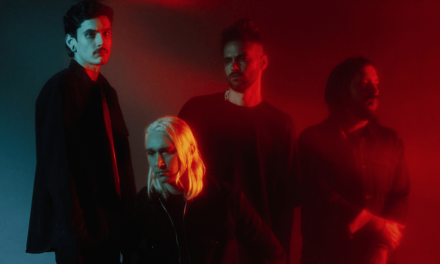
Photo Credit: Susan Wicher
So, I haven’t really celebrated or reflected much on how long the band has been around. Also, Centinex had a break for quite a few years, so it’s not been a continuous run.
But yeah, when you stop and think about it, 35 years is impressive. If you rewind 35 years from 1990, you’re in 1955—that’s a long time ago. It’s wild to think about. When we started the band, we never imagined we’d still be doing it 35 years later. Back then, in 1990, there weren’t even bands that had been around that long. So yeah, it’s kind of crazy.
Do you have any message for Centinex fans here in the States who are reading this now?
First of all, I want to thank all the fans for their support. As I mentioned earlier, it seems like we have a decent following in the States—even if it’s not huge, it’s definitely there—and we really appreciate that.
We’d love to play in the U.S. more often. And of course, I hope people enjoy the new album. Those are the main things. But above all—thank you for the support.
LINE-UP:
Martin Schulman – bass
Jörgen Kristensen – guitar
Henrik Andersson – vocals
Florian Rehn – drums
(Interview by Ken Morton)
Centinex on Instagram