The Architect of Blackened Death: Gene Palubicki on Malefic Throne, Perdition Temple, and 30 Years of Chaos


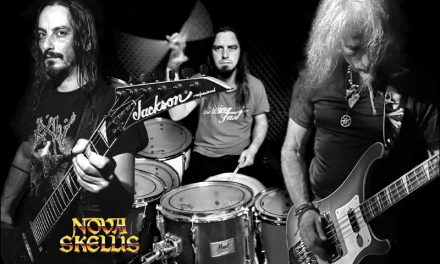
Malefic Throne
The Architect of Blackened Death: Gene Palubicki on Malefic Throne, Perdition Temple, and 30 Years of Chaos
Few musicians in extreme metal have carved a legacy as deep and uncompromising as Gene Palubicki. From the war‑charged chaos of Angelcorpse to the relentless precision of Perdition Temple and the newly ascendant force of Malefic Throne, Palubicki has spent more than three decades shaping the sound of blackened death metal. With two new albums dropping on the same day—Malefic Throne’s The Conquering Darkness and Perdition Temple’s Malign Apothesis—2025 marked a rare moment where past, present, and future collide in one of the genre’s most prolific creative minds.
In this conversation, Gene opens up about the writing process behind both records, the evolution of extreme metal, the legacy of Hammer of Gods by Angelcorpse as it approaches its 30th anniversary, and the fire that keeps him creating with the same intensity he had in the ’90s. What follows is a deep dive into the craft, conviction, and controlled chaos of one of metal’s most enduring architects.
Introduce yourself and tell me what you do in the band.
I’m Gene Palubicki, lead guitarist and principal songwriter for Malefic Throne.
Let’s talk about the new album, The Conquering Darkness. Is there any overall story or concept behind the title or the album?
It’s not a concept album. Each song has its own theme. The title reflects the band itself—this is the beginning of what we see as our conquest. The album’s atmosphere comes from the three of us channeling our own voices and instrumentation into a unified force. That’s the essence of The Conquering Darkness.

The Conquering Darkness
“The Voice of My Ghost” is the first single. Give me some background on that song and what inspired it.
We chose it as the first single because it gives a well‑rounded first taste of the album. It’s almost like an overture—there’s a bit of everything the full record explores. It shows some technical elements that might surprise people familiar with my past work, along with the immediate aggression we wanted to carry through the entire album.
Since this is our first release on a bigger label, some might expect something more polished or commercially friendly. That’s not what we’re here to do. We wanted to make some of the most furious, ugly, aggressive death metal we’re capable of, and I think we achieved that. This track represents that direction perfectly.
You have one more song coming before the album drops, “Athirst for Dissonance.” What can you tell me about that one?
That track pushes even further into variation and experimentation. There are riff structures and arrangements that step outside what I’ve typically done in the past, and I think people will be surprised—in a good way. We’re not chasing modern trends or commercial angles; it’s still pure extremity. The avalanche of riffs never stops on this album. Honestly, there are enough riffs here for some bands to make two records. Let them try.
The trio lineup for Malefic Throne is stacked with veterans. How do you balance individual styles while maintaining a unified sound?
The key was not dictating anything. A lot of bands have one person directing every detail, but we didn’t want that. I wrote the core music—riffs, melodies, structures—and made demos. Then I handed them to John Longstreth with zero instructions. I trusted him completely, and he delivered drum parts that were often different from what I initially imagined, but always worked perfectly.
We all live in different states, so everything was done through file sharing, but the process was smooth. What you hear on the album is almost entirely John’s own interpretation.
The same approach applied to Steve. I gave him the music but no rules for bass or vocals. He chose the lyrical themes and phrasing, as long as they fit who we are as people. There was no “put a verse here, put a chorus there.” He shaped his parts freely.
In the end, the album reflects all three of us contributing exactly what we wanted to express. That’s rare, because most bands default to one person steering the ship. We didn’t, and the record is stronger for it.

Malign Apotheosis by Perdition Temple
On the same release date as The Conquering Darkness, Perdition Temple has a new album coming out entitled Malign Apotheosis. What can listeners expect from it?
There are already two preview tracks out, and they’ve been well received. The simplest way to describe my approach on this album compared to previous Perdition Temple releases is that I pushed the contrast further—between traditional old‑school death‑metal riffing and the more experimental, atonal, dissonant elements I’ve explored over the years.
Malign Apothesis really highlights that contrast. You’ll hear abrupt shifts from radical technicality into parts that are far more primitive—almost something you’d expect on an old Celtic Frost record. That dynamic was intentional. I always try to introduce a new element with each album without changing the core identity of the band.
What I dislike is when bands find a formula that works and then repeat it endlessly. I want to preserve the spirit of the first album, Edict of the Antichrist Elect (2010), while evolving just enough each time to keep things interesting—never so much that it alienates long‑time followers.
Next year marks the 30th anniversary of Angelcorpse’s Hammer of Gods. Looking back three decades later, what does that album mean to you now?
It hit me recently—its 29th anniversary was just a couple weeks ago—that I’ve been deeply involved in this music for more than half my life. Before Angelcorpse, I had demo material with a project called Impiety (not the Singapore band), then the Angelcorpse demo in ’96, and then Hammer of Gods. That album was really the moment people first became aware of what we were doing.
As a debut, I still think it has a lot of strengths. It reflects the mindset I had at the time, shaped by everything I grew up listening to—Slayer, Sodom, Celtic Frost, Bathory, and more. You can hear those influences clearly, along with the contributions and influences of Pete and John.
The album still holds a strong place for me. Every record I’ve done has songs I wouldn’t change a single note of, and on Hammer of Gods, tracks like “Black Solstice” and “When Abyss Winds Return” still feel like perfect representations of where we were creatively at that moment.

Hammer of Gods by Angelcorpse
Would you ever want to do an Angelcorpse reunion or record new Angelcorpse music?
No, that that bands a dead issue now.
I believe you were part of Anal Blast for like two minutes…
That’s not really accurate—if anything, it was less than two minutes. What happened is that someone on Metal Archives wanted to be a completist and added my name because they found out about a one‑off session I did. I was never a member of Anal Blast, but I knew the guys. I’m originally from Minnesota and spent time in Minneapolis, so I knew a lot of the musicians from the early and late ’90s.
At the end of ’99, I was in town for the millennium New Year. The band had been commissioned to record several cover songs for those Dwell Records tribute albums that were everywhere back then—Iron Maiden, Judas Priest, and dozens more. They invited me to come in and play on a few tracks since I was around.
We recorded Morbid Angel’s “Maze of Torment,” Kreator’s “Extreme Aggression,” and a Venom medley that combined “Red Light Fever” with a short segue into At War With Satan. As far as I know, only the Venom track ever saw release. The others never came out, probably because Dwell stopped doing those tributes.
That was the entire story—one night of recording cover songs with friends. Metal Archives picked it up and listed me as a member, but I was never actually in the band.
You’ve been a key figure in shaping the sound of blackened death metal. How do you feel the genre has evolved today?
People often say the genre has run out of steam or that nothing good comes out anymore, but that’s not true. There’s still a lot of great music being released—it’s just harder to find because the volume is overwhelming. Between YouTube, Bandcamp, Telegram, and everywhere else, you’re hit with thousands of new releases every month. That includes everything from one‑man bedroom projects to fully produced bands, and social media gives everyone equal visibility. That makes it easy to miss the gems.
I constantly discover incredible records that came out two or three years earlier, and I’m late to the party. But the quality is still there. This year alone I’ve heard several standout releases. Necromaniac from the UK put out an album that blends Slayer‑like intensity with early Master’s Hammer vibes and that archaic atmosphere bands like Negative Plane have tapped into. On the more aggressive end, Chaos Inception from the U.S. released their first album in over a decade—fantastic stuff. And an Italian band, Continuum of Xul, really impressed me as well.
All of these bands still operate within the core ingredients that defined death and blackened death metal in the early ’90s. That’s probably why they resonate with me. The great material is still out there—you just have to dig a little harder to find it.

Gene Palubicki of Malefic Throne and Perdition Temple
Is there any chance of Malefic Throne or Perdition Temple touring or doing shows in the new year?
Highly likely. For Perdition Temple, we already have plans forming for Europe—possibly a couple more weeks there—and we’re looking at about a week in South America as well. We’ll also be working on U.S. dates, but those are still in the early stages.
For Malefic Throne, the focus right now is getting the album out. Once it’s released and we see how the reception develops, we’ll start discussing live possibilities. It’s a bit of a juggling act since all of us are involved in other active projects, so scheduling without overlap takes some careful planning. But we definitely want to make it happen.
Do you have any messages for metal fans—especially those in Los Angeles or anyone reading this now?
It’s a great feeling to still be a productive artist in this music, and I hope what I’m creating continues to feel relevant and brings something meaningful to the table. One of the biggest honors is knowing that something you’ve done can inspire or motivate someone else in their own work.
I’m still alive, breathing, and fully committed to this. I’ll be doing it until the day I die. If I ever stopped creating, I’d feel like I was already dead. So fans can rest assured—there’s always something new in the works, and there’s plenty more to come.
IN CONCLUSION
As Gene Palubicki enters another year with two new albums and no sign of slowing down, his commitment to extremity remains as sharp as ever. Whether channeling chaos through Malefic Throne’s unified assault or pushing the boundaries of dissonance with Perdition Temple, he continues to operate with the same fire that fueled his earliest work. Three decades in, he’s still expanding the vocabulary of blackened death metal while inspiring the next generation to carve their own path with equal conviction.
If The Conquering Darkness and Malign Apothesis prove anything, it’s that Palubicki isn’t interested in nostalgia or repetition—only forward momentum, deeper exploration, and the relentless pursuit of the next riff. For fans old and new, the message is clear: the war rages on, and Gene is far from finished.
(Interview by Ken Morton)