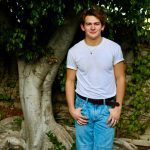


Cycles of Life: Inside the Creative World of Mystery Moon’s Markus Pfeffer
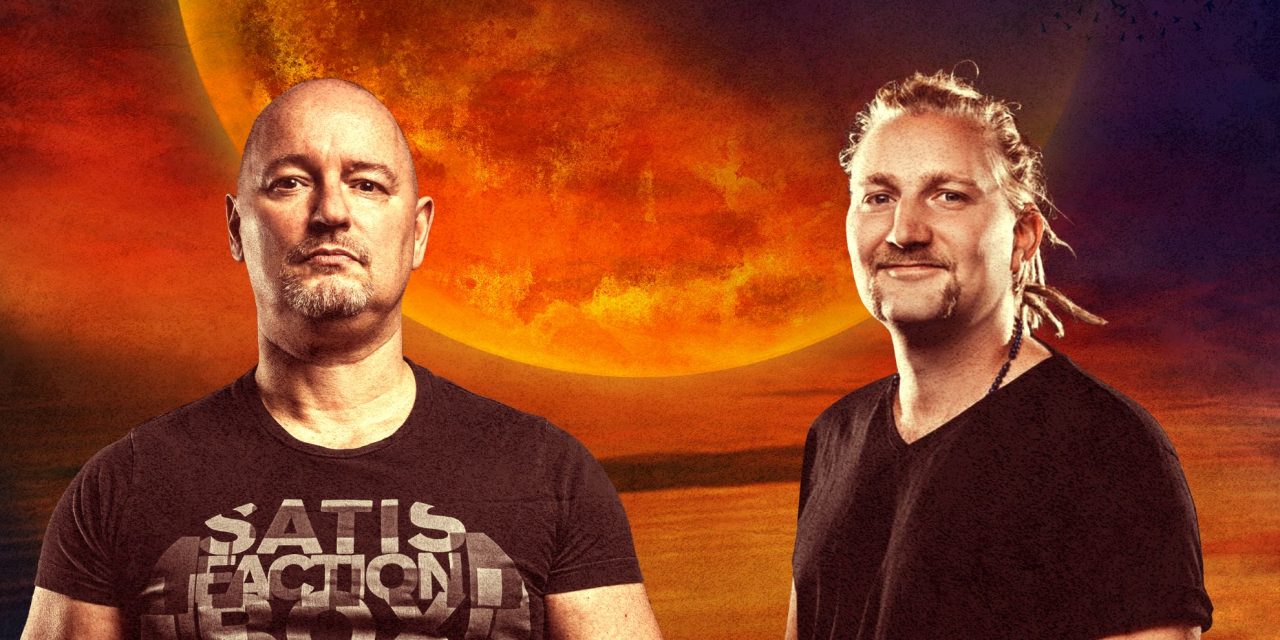
Mystery Moon 2026
Cycles of Life: Inside the Creative World of Mystery Moon’s Markus Pfeffer
There’s a certain kind of artist whose creative engine never shuts off — who writes, records, collaborates, and reinvents with a momentum that feels almost supernatural. Markus Pfeffer is one of those rare musicians. Best known for his work in Mystery Moon, Barnabas Sky, Lazarus Dream, Winterland, and a constellation of other projects, Markus has spent decades building a world of melodic hard rock, AOR, and atmospheric storytelling.
With the upcoming Mystery Moon album Way Beyond on the horizon via Pride & Joy Music, Markus opens up about the life events that shaped its deeply personal themes, the collaborators who help bring his visions to life, and the whirlwind of projects he somehow juggles alongside a full-time career. From reconnecting with old friends to performing Tyketto classics with Danny Vaughn — the singer who shaped his youth — Markus’s journey is one of passion, persistence, and pure musical instinct.
We’re here with Markus Pfeffer from Mystery Moon — and a variety of other bands — so let’s jump right in. The new song just released is Cycles of Life. Tell me about the inspiration behind that amazing track.
How much time do you have? I’ll try to keep it short. The whole album, coming out September 18th on Pride & Joy Music, deals with the subject of life. While I was writing the music, I was going through some very challenging family issues. A close family member was in the hospital for several months, and I was alone, unsure how things would turn out.
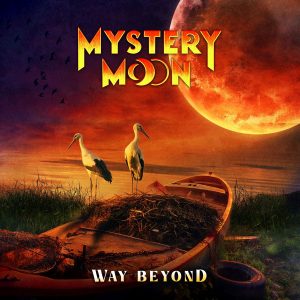
I told Rob Lundgren, who writes the lyrics, what was motivating each song. Interestingly, he was going through life‑changing events of his own. If you look at the cover of Way Beyond, you’ll see all of that symbolized — the abandoned boat waiting to be pushed out to sea, the storks building a nest in it as a symbol of new life, and the sky where moonlight and darkness meet without a clear boundary. These are metaphors for what we face in life: unexpected events, long‑awaited moments you never thought would come true, and situations where hope returns when you least expect it.
That’s what Way Beyond means — sometimes life goes far beyond what you imagined. Cycles of Life reflects all of those themes. It sums up the lyrical content of the album. It’s not a “let’s have a party” record; it’s meaningful, thoughtful. Not necessarily sad, but grounded in real life. I’m over 50, Rob is in his early 40s — at our age, you deal with different subjects than sex, drugs, and rock ’n’ roll. You deal with life, and with losing people you love. That’s what the album, and this song, are about.
 Let’s talk about Chaos and Order. Tell me about that one.
That one really sums up what I said earlier. Life can be chaotic. Sometimes you think you’re facing a huge problem, and then things resolve themselves without you doing anything. The chorus says, “Chaos and order dancing together,” which is one of my favorite lyrics. Rob managed to make it a little tongue‑in‑cheek.
Musically, I combined a very melodic ’80s synthesizer lick with a heavy downtuned guitar. I really love that song. I think it’s the second track on the album.
Lost and Found. Tell me about that one.
Lost and Found is one of the most personal songs Rob has ever written. As far as I understand, he reconnected with someone he was very close to in school. They hadn’t seen each other for decades, and suddenly they met again. And I think what happened was more than just friendship — but I don’t want to reveal too much, because it’s personal to him.
What’s important is that it’s a real story. Not invented. It’s his life, told through the lyrics.
This is your second full‑length album with Rob. What has it been like working with him? How has the partnership developed?
Very smooth and absolutely uncomplicated. I’ve worked with many vocalists and lyricists over the last few years — since the pandemic, this is actually the tenth album I’ve released. I’ve only met two of those vocalists in person: Danny Vaughn, who I’ve met several times and even played a house concert with in the Netherlands. I also visited him in Spain recently.
Rob and I met when he was on tour in Germany with his main band, Mentalist. Originally, I only wanted to write and record one song with him for my Barnabas Sky project. That song turned out so incredible that I gave him a second one. Two friends of mine — my “metal chicks,” as I call them — heard the songs and said, “You already have two. Why not make a full album with this guy? His voice is amazing.”
A few weeks later, I went to his gig in Mannheim, where Mentalist supported Manimal. We met up, had a beer — only one, because I was driving — and I asked him what he thought about doing a complete album. He said he liked my writing style, so we went for it.
The collaboration was so smooth that doing a second album was an easy decision for both of us. I send him my music, and most of the time he immediately knows what kind of lyrics he wants to write. He records, sends me the tracks, and always explains what the lyrics are about. I appreciate that. Some singers prefer to leave interpretation open, even to me, but it bothers me when I don’t know what my own songs are about. Rob is very open, very frank. He’s a thoughtful, sensitive person — and sensitive people write sensitive lyrics. That’s what I love.
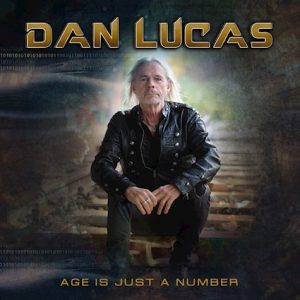
Age Is Just a Number by Dan Lucas
Thomas Rieder has been the drummer for several of your projects. What makes you and Thomas work so well together?
Thomas used to be a full‑time member of my band Winterland. Winterland turns 30 this year — we founded it in 1996, and Thomas joined in 2013. I’ve known him for 13 years now.
He’s a professional drummer, so he needs to take well‑paid gigs, which means he’s no longer a full‑time member of Winterland. But he lives only a few kilometers away, and I know exactly how he plays. He gives drum lessons, he’s a great drummer, and he’s also a percussionist. Everything you hear on the album — the percussion, the Schellenkranz — is played by hand. No samples. Old‑school, with a microphone and real instruments.
In today’s AI world, going back to the roots is something I really appreciate. And Thomas is a very nice guy. We’re friends — and that’s the main reason it works so well.
I couldn’t find much about keyboardist Timo Becker online. Give me a little background on Timo and some of his other credits.
Timo Becker is actually Professor Dr. Timo Becker. I’m a doctor too — in business administration — and we both worked at the same university about 25 years ago. He started shortly before September 11, 2001, and we were both in the office that day. We shared an office for several years and became close friends.
He comes from the electronic music genre. I’ve recorded experimental electronic music with him — I played guitars, and he contributed from his very different musical background. For some songs, I felt his input could elevate the material to another level, and I think it did. Like Thomas, Timo is a long‑time personal friend.
Let’s talk about some of your other projects. You worked with Dan Lucas on Age Is Just a Number. Tell me about that collaboration.
Like with most singers, even though he wasn’t far away, we never met in person. Dan recorded and produced his album at Empire Studios. I have most of my albums mastered there by Rolf Munkes — who used to be Tony Martin’s guitarist from Black Sabbath.
When Dan started working with Rolf, he asked if Rolf knew anyone who could submit melodic hard rock material. Rolf asked his friend Carsten Lizard Schulz, singer of Lazarus Dream, who said, “Markus Pfeffer is always writing songs — contact him.”
Rolf reached out, and I said sure. Within two weeks, I wrote five songs specifically for Dan because I knew his style — I’d seen him on The Voice of Germany Senior. They took four of the five songs. I really like the album, and I love his voice. We talked on WhatsApp a few times, but never met. Still, he’s a very nice guy.
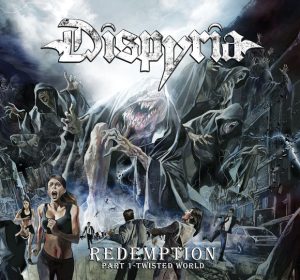
Dispyria — Redemption Part One: Twisted World
Dispyria — Redemption Part One: Twisted World. How did you become involved with that project?
That goes back to when I met drummer Thomas Rieder. He used to be in a band in the early ’90s — I think the name was Fatty Acid Chain. The guitarist was Jürgen Walzer, who leads Dispyria.
When Jürgen started recording his project in 2005, I gave him technical advice, and Thomas played percussion. That’s how I met Thomas. I’ve known Jürgen since the early ’90s — he’s a well‑known heavy metal guitarist in our area. We became friends and even played together in a Billy Idol/David Bowie tribute band called Billy Bowie. Jürgen played guitar, and I played bass — Bowie’s bass lines are challenging.
I played on the first Dispyria album in 2013 and later on the second. The first two albums were self‑released, and the one you mentioned was the first to attract label interest — mainly because Zak Stevens and Ralf Scheepers were involved.
You also played on Mason’s Seconds to Impact. Tell me about that collaboration.
Marcus Mason and I connected through Facebook. He asked if I’d be interested in playing on some of their songs. I said yes — I write 50 to 70 songs a year, but playing on someone else’s material is always inspiring. I played on the first two Mason albums. And interestingly, Marcus and I share the same birthday — a fun fact I like to mention.
Tell me about Hellfire & Warreck.
That’s Ritchie Newton. He ran the Metalheads Forever Rockcast show for several years and interviewed me for all my releases. One day he asked if I’d write a song for him — he used to be a singer in Bavaria in the late ’80s and early ’90s, then toured Asia as an Elvis Presley impersonator.
He wanted to make a rock album again, so I wrote the title track for his recent album Higher Power. He was very happy with it.
Now he’s rediscovered old material from his bands Hellfire & Warreck, and Monsters. The upcoming album will be called Monsters from the Past. He found old video recordings, and AI cleaned up the audio. Those tracks are the basis for me on guitar, Jimmy Katone on drums, and Horst Zirngibl on bass. We don’t leave any AI audio in the final product — we re‑record everything.
I just finished guitars for the second song. It’s mind‑blowing. Here I get the chance to shine as a guitarist. I didn’t write these songs — I just play what I feel. I think I’ve never played cooler stuff. I’m very happy with it — maybe even a little proud.
You mentioned Danny Vaughn earlier. What did you think of Closer to the Sun, and tell me about your collaborations with him?
I became a Tyketto fan in 1991 when Don’t Come Easy came out. They were my favorite band while I was still in school.
During the pandemic, I wrote a song that sounded like a Tyketto riff. I thought, “How cool would it be to have Danny Vaughn sing on it?” So I contacted him, sent a demo, and included Lazarus Dream videos so he knew I was serious. He responded quickly and said my style was close to his roots.
We didn’t meet until September last year, in 2025, when he was on tour with Tyketto. Later, he played a private house concert in the Netherlands, and the host invited me to play some songs with him. It was a seven‑hour drive, but of course I said yes.
Playing Tyketto songs with Danny Vaughn — the singer of my favorite band — was unforgettable. I was nervous, practiced all morning, but it went great. Danny was encouraging and told me he appreciated how thoughtfully I approached the parts. I even sang harmony vocals — and hit the right notes.
A few weeks later, I was in Andalusia, and Danny invited us to his home. I saw where he lives and where he records vocals for Barnabas Sky. We had a beautiful lunch together. Danny is truly a wonderful person.
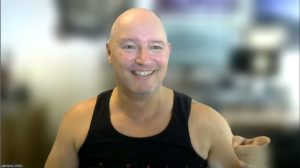
Markus Pfeffer of Mystery Moon via Zoom!
Do you have anything else coming out? Any upcoming projects we haven’t discussed?
Yes — quite a few. I’m currently recording guitars for the Hellfire & Warreck album. The next Lazarus Dream album — the fourth — is already recorded and will be released early next year.
The next Barnabas Sky album is finished except for two songs. One of them is the opener, sung by Danny Vaughn.
And the music for another Winterland album is composed — now it’s our singer Stephan’s job to write lyrics and melodies.
So you have the Mystery Moon album coming in September, plus three more albums over the next 12 months, and the Ritchie Newton Hellfire & Warreck album whenever it’s ready. That makes five albums in the next year that I’ve played guitar on.
All this — and you have a day job too. You’re busy!
Absolutely. Since I first listened to Tyketto in 1991, I’ve been recording and writing constantly. I got my first four‑track recorder that year and wrote my first songs. I’ve played hundreds of gigs, and for the last 35 years I’ve worked in the studio almost weekly.
When I record guitar, 80% of what I do is first take. It’s just experience — I’m like a machine. I almost never hit a wrong chord. I’m very quick in recording, and that’s the “problem”: I record and write too many songs for just one, two, or even three projects.
In Conclusion
Whether he’s composing for Mystery Moon, trading riffs with Danny Vaughn, resurrecting vintage material for Ritchie Newton, or shaping the next chapter of Lazarus Dream, Markus Pfeffer remains one of the most quietly prolific musicians in the melodic rock world. His stories reveal an artist driven not by ego, but by gratitude — for the people he works with, the music that shaped him, and the listeners who continue to follow each new chapter.
With five albums on the way and no sign of slowing down, Markus proves that creativity doesn’t just survive life’s cycles — it thrives through them. And as Way Beyond approaches release, it’s clear that his most meaningful work is still unfolding.
(Interview by Ken Morton)
Mystery Moon on Facebook