
Name Taken: Where Are They Now?
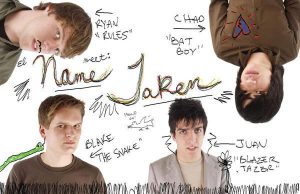 Name Taken: Where Are They Now?
Blake Means and Ryan Edwards Reflect on The Silent Game, Hold On, Chain Reaction, and Life After Name Taken
There was something special about the early 2000s Southern California scene. Before social media dominated music discovery and before every band had a worldwide platform at their fingertips, communities were built one show at a time in packed local venues like Chain Reaction, The Roxy, and The Troubadour. Among the bands helping to define that era was Name Taken, whose melodic blend of emo, post-hardcore, and punk rock earned them a devoted following and a lasting legacy far beyond their relatively brief run.
From their early DIY recordings and the release of The Silent Game through their acclaimed full-length Hold On, Name Taken carved out a place in the hearts of fans who still revisit their music more than twenty years later. Along the way, they shared stages with future giants such as Fall Out Boy, Bayside, and Yellowcard, toured relentlessly, and became part of a scene that continues to resonate with listeners decades later.
For this latest installment of the Highwire Daze Where Are They Now? series, I caught up with guitarists Blake Means and Ryan Edwards to discuss the band’s beginnings, recording with Beau Burchell, memorable moments at Chain Reaction, touring during the golden age of emo, unreleased music, and what everyone is doing today.
We’re here with two members of Name Taken. Let’s get started. First of all, introduce yourselves and tell me what you did in the band, starting with Blake.
Blake Means: I’m Blake Means, and I played guitar in the band.
Ryan Edwards: I’m Ryan Edwards, and I also played guitar in the band.
Let’s go back to the beginning. What’s the origin of the name Name Taken?
Blake: We were trying to upload music to one of those really early streaming sites, long before SoundCloud and all that stuff. At the time, we were called All That’s Left. When I tried entering the name, the site said a band in Florida had already claimed it.
As a placeholder, I typed in “Name Taken.” We figured we’d come up with a real name the following week and update it. But we never came up with anything else, so we ended up stuck with it for the rest of our lives.
Looking back on that very first EP, The Stupid Chad EP, what do you think of it now in retrospect?
Blake: Ryan, correct me if I’m wrong, but you weren’t on that one, right?
Ryan: No, I wasn’t.
Blake: Yeah, The Stupid Chad EP was just me, Chad, our singer, and our original drummer from high school, Brett. We recorded it when we were about fifteen years old. We couldn’t even drive yet, so a friend had to take us to a studio somewhere around Pomona.
It was really just a bunch of kids making silly songs and having fun. Looking back, I love it for what it was. Objectively, it’s not great music. There’s nothing particularly groundbreaking happening there musically. But for a few fifteen-year-olds trying to make something creative, it was a great experience.
We even burned the CDs ourselves on Chad’s parents’ computer. There were probably only fifty to a hundred copies ever made. If you have one, you’re very lucky, because I certainly don’t.
I’ve never even seen one.
Blake: Yeah, neither have I. I don’t think I’ve seen one in twenty-five years.
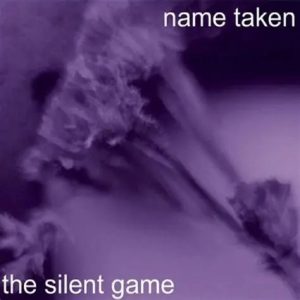 One release I have seen is The Silent Game, which is now celebrating its twenty-fifth anniversary. Looking back on that album and that era of the band, what are your thoughts?
Ryan: I might be a little more generous about it than Blake. It was my first time recording, and I think we were only sixteen years old. We recorded it at a studio in Riverside, out in Inland Southern California.
I think we spent two or three days there, although at the time it felt much longer. We had an absolute blast. We were really proud of those songs, and while some of them hold up better than others, I mostly remember how excited we were.
We were starting to play with more bands in the Southern California scene, and it felt like we’d accomplished something significant. It really felt like a milestone for us at the time.
It’s honestly crazy to think it’s been twenty-five years. I hadn’t even realized that.
Blake: Yeah, I didn’t realize that either, so thanks for making us feel old.
My pleasure. According to Wikipedia, there was also an unreleased album called Hold Your Breath. What’s the story behind that?
Blake: Our manager, Lance, had a friend who owned a studio somewhere around the Burbank area. We wanted to start recording material so that, if labels ever took interest in us, we’d have something to show them as we matured as a band.
At the same time, our original drummer Brett was leaving the band, so it was kind of a frantic period. We were just trying to piece together songs and get recordings done.
The song “Motionless” came out of those sessions, and it eventually landed on one of the big compilation releases of the time, maybe a Warped Tour or Atticus compilation. That was actually how a lot of people first discovered us.
As for the collection as a whole, we always viewed those recordings as demos. We knew that if we ever got the chance to make a proper record, we’d want to revisit the material and do it better. Fortunately, we eventually got that opportunity, and some of those songs were reworked for the album we released a year or two later.
Ryan: Yeah, it was really more of a collection of demos that happened to add up to a CD. It was never intended to be an official release.
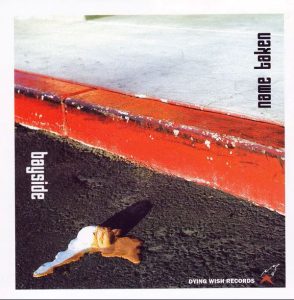 In 2003, the Name Taken/Bayside split was released. What do you remember most about that release, and had you met or toured with Bayside at that point?
Blake: Ryan probably remembers more about this one than I do.
Ryan: We actually hadn’t met them before recording the split. I know it was released through Dying Wish Records, but I’m still not entirely sure how the two bands ended up being paired together.
At the time, we were still in high school, and we were pretty much willing to do anything. We had songs we were excited about and saw it as a great opportunity.
What makes it even cooler in retrospect is that a couple of years later, after we released our full-length album, we ended up touring with Bayside, along with Fall Out Boy and Armor for Sleep. That was an incredibly fun tour and a great experience.
A year later, you ended up signing with Fiddler Records and recording Hold On. Tell me about that era of the band, signing with Fiddler, and making that full-length album.
Blake: At the time, we were playing a lot of one-off shows because we were still in high school. We’d play weekend shows around Los Angeles at places like the Troubadour, the Roxy, and other venues. Labels would come out to see us, and Fiddler was one of them.
The thing that really stood out about Fiddler was their roster. They had recently released Ceci n’est Pas un Cliché by Recover and were putting out Pass the Flask by The Bled, both of which we absolutely loved. Beyond that, we really liked the owners, Amy and Jay. Honestly, those were probably the biggest reasons we signed with them. We couldn’t believe the same label that released albums we thought were so incredible wanted to work with us.
Ryan, what else do you remember about that?
Ryan: The way we met them was pretty great, too. We had been talking with a few different labels, and people were coming out to our shows. Around that time, we somehow ended up on a short Southern California run with the New York hardcore legends H2O. To this day, I have no idea how we got on those shows because we had absolutely no business being there.
We played three or four dates with them, and Chad Gilbert from New Found Glory was out with the tour helping load gear and hanging around. New Found Glory was already huge by then. One night Chad saw us play and called Jay at Fiddler Records, telling him he should check us out.
That introduction felt very different from our other experiences with labels. It was a really genuine and organic start to the relationship, and that’s always stood out as a great memory.
Blake: Thanks for bringing that up because I had completely forgotten about the Chad Gilbert connection.
As for the scene at the time, I was actually talking about this with friends last night. They were reminiscing about the Southern California scene back then, and I realized I don’t remember it the same way because we were still in high school. We weren’t really “scene kids” in the traditional sense.
We went to local shows all the time, especially at Chain Reaction, and we started getting to know people, but we still felt like outsiders in a lot of ways. We were really just a bunch of kids figuring it all out.
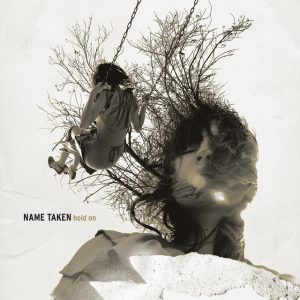 What was it like working with Beau Burchell on Hold On?
Blake: Beau was awesome. He had also worked on the songs we recorded for the Bayside split, so we’d already gotten to know him a little.
At the time, he was making incredible-sounding records out of what I think was basically his parents’ garage. We couldn’t believe how good everything sounded. He was super encouraging, fun to be around, and always had interesting people stopping by, whether it was his brother or friends.
When it came time to record Hold On, we had some opportunities to work with bigger, more expensive producers. But those options would have meant very limited studio time because of the cost. Working with Beau gave us a comfortable environment and a lot more time to develop the record.
He hadn’t yet become the production powerhouse that he’s become over the last twenty years, but even then we knew how talented he was. Choosing him felt like the right move.
In 2004, you did a tremendous amount of touring. Were you still in high school at that point?
Blake: We graduated in 2003. Right after graduation, we did a few short tours, recorded Hold On, and then spent about nine months straight on the road.
One of those tours included Fall Out Boy. What was it like touring with them during that particular point in their career?
Ryan: It was unreal. I remember some of the breakout records from that era. Taking Back Sunday’s debut was massive, and there were several others, but Fall Out Boy’s record felt like an absolute phenomenon.
By the time they headlined that tour, they easily could have been traveling on a bus and playing venues twice the size. Instead, they kept things very DIY. They came from deep hardcore roots in the Chicago scene, and that mentality was still very much there.
The crowds were unbelievable. You’d walk into a venue with three or four hundred people and somehow it sounded like two thousand. The energy was incredible.
What stood out most, though, was how nice everyone in the band was. They were still very grounded and approachable. It was just a really fun tour. Looking back, it probably doesn’t seem possible that they were playing rooms that small, but they were.
Blake: For a band that was exploding the way they were, it was amazing how humble and kind they remained.
They’d hang out with us all the time. Pete Wentz would even joke about wanting to ride in our van for the night, and we’d all just spend time talking and laughing together. I actually ran into Pete a few years later and it was great catching up.
Honestly, when I think back on that tour, my first memories aren’t even the shows. It’s how much fun everyone had and how great all the people were.
Did you ever get a chance to play Warped Tour?
Ryan: We did.
 Tell me about that experience.
Ryan: I believe our date was at the University of Southern California. It was a little unusual because we weren’t on the full tour. We basically showed up that morning, played, and left.
Because we weren’t traveling with the tour, we didn’t really understand its rhythm the way the full-time bands did. They had already made friends and figured out how everything worked, while we were just arriving for a single day.
So in some ways it felt more like playing a festival than actually being part of Warped Tour. But at the same time, it was incredible walking around with a pass and seeing bands we’d been listening to for years.
We were still in high school at that point, and a lot of those bands seemed larger than life to us. Looking back, they probably looked at us and thought, “Who are these kids?“
Blake: I think that was the summer before our senior year.
What I remember most is wanting to finish our set on time so I could run over and watch Home Grown play. They were only about a hundred yards away.
Ryan: Exactly. That’s really the story of it. We were still more fans of the music than we were people thinking of ourselves as a band on the bill.
In 2005, the band broke up. Then in 2007 you reunited for a pair of shows. What was it like coming back together after two years away?
Blake: It was so much fun.
We’d occasionally talked about getting together and playing again, but by then we were all in school full time and starting our lives outside of music. Being able to revisit it without any expectations was great.
We knew it was just going to be a couple of reunion shows and nothing more. The first show sold out almost immediately, so we added a second night, and that one sold out too.
It was such a special experience. Those shows ended up being the last time I played original music onstage, so they’re memories I’ll always cherish.
Ryan: It’s funny hearing that The Silent Game is twenty-five years old because, in hindsight, a two-year break doesn’t sound like much.
At the time, though, it felt like forever. We’d toured so heavily around Hold On that we really never stopped, and honestly, part of the reason the band ended was because we were burned out.
Having some distance from it made those reunion shows incredibly meaningful. We genuinely didn’t know if anyone would come, let alone whether we’d sell out two nights.
The response was amazing. People were so kind and supportive.
Blake: Every now and then I’ll still get messages from people on Instagram telling me those reunion shows were some of their favorite concerts ever.
Hearing things like that means a lot because I had an incredible time, too. It was a special experience for all of us.
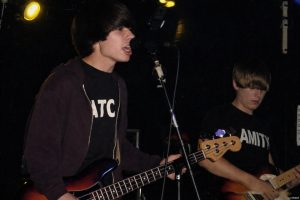
Name Taken at Chain Reaction – Photo by Ken Morton
Chain Reaction recently closed its doors. What are some of your favorite memories of Chain Reaction? I’m guessing the reunion shows are probably high on the list.
Blake: I’ll let Ryan answer first, but I want to point out that growing up, I’m not exaggerating when I say we were at Chain Reaction one to three times a week, every week, for a couple of years. There are endless memories tied to that place.
Ryan: Yeah, I could probably name a dozen shows that would shock people looking back on that era. You’d never believe some of the bands that shared a bill in a room that only held about 300 people.
One of my earliest memories was when we played a Battle of the Bands there. That was actually our first show. But the first sold-out show we played at Chain Reaction was opening for Yellowcard.
That was huge for us because we’d followed Yellowcard since their Florida days, and then they moved to California. The first time they played Chain Reaction there might have been twenty people in the room. Then, a year later, they were selling the place out, and we were opening for them.
That felt like a major milestone.
Not long after that, we started headlining Chain Reaction ourselves. At that point, if we’d never toured and never done anything else, I still would have felt like we’d made it. We spent our entire high school experience going there every week, so to eventually sell out that venue ourselves was incredible. What more could you ask for?
Blake: My favorite recent memory was going back shortly before it closed. Our friends in Home Grown played one of the final shows there, maybe a couple of weeks before the venue officially shut down.
I went with my brother and ended up running into a bunch of old high school friends. It was definitely bittersweet and a little emotional knowing the place was about to disappear, but I’m really glad I had the opportunity to be there one last time.
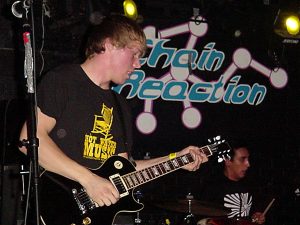
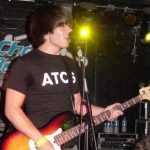
Name Taken at Chain Reaction – Photo by Ken Morton
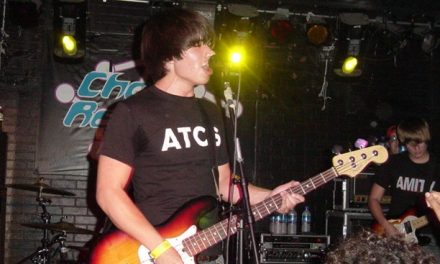
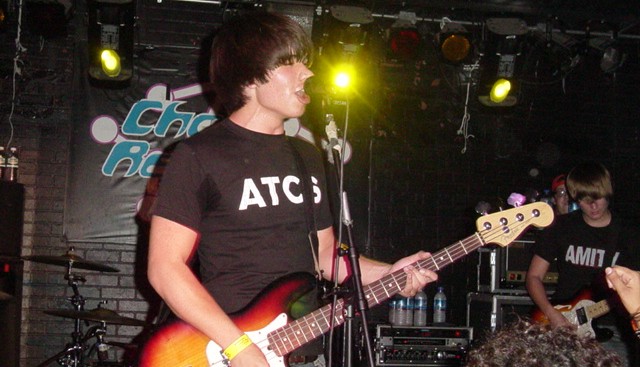
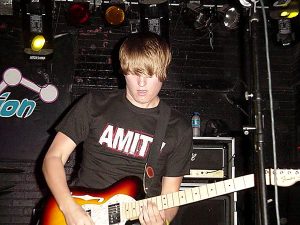
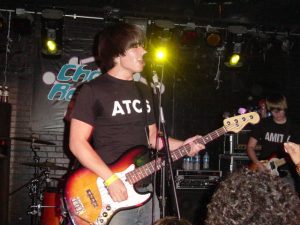
I recently came across some old photos of you guys at Chain Reaction from around 2003. I was trying to figure out which show they were from. Did you happen to see the photo I posted?
Blake: Yeah, I did. That was me and Chad in the picture. I was wearing an Amity shirt. They were buddies of ours from Downey.
As for which show it was, I honestly have no idea. We played Chain Reaction so many times. If I had to guess, it was probably somewhere between twenty and thirty shows over the years. It all kind of blends together.
Ryan: Funny enough, I didn’t recognize those photos at all. I’ve watched some of the old videos people have uploaded to YouTube and can usually figure out which show they came from, but those pictures didn’t ring a bell.
I did love seeing the Amity shirt, though. We played with them all the time, and the drummer who ended up playing on Hold On actually came from that connection.
That’s great. I’m planning to post a few more of those photos alongside the interview.
Ryan: That’s awesome.
Blake: By the way, can I just say thank you for posting those? Seeing things like that is a genuine joy. We really appreciate it.
You’re very welcome. I found an old disc and thought, “I wonder what’s on this?” Then I discovered photos of Name Taken and even JamisonParker. It was a pretty fun surprise. Let’s do a few more questions. In 2018, “Blood and Bones” was released. What’s the story behind that song?
Blake: I’ve never really stopped recording music. I still make music today. Over the years, I’d occasionally send ideas to Ryan and Chad.
Most of the time, I’d spend those conversations trying to convince Chad to sing on something, and most of the time he’d say no.
Then I sent him “Blood and Bones,” and he said, “I’ll give it a shot.”
Ryan and I were both completely shocked.
Ryan helped me work through some of the arrangements and ideas for the song, while Chad recorded his vocals from home. The instrumental track was pretty rough. I recorded everything on my laptop using virtual instruments and whatever tools I had available.
But when Chad sent his vocals back, I was blown away.
I already liked the music, but hearing Chad’s voice again and hearing him write lyrics again reminded me why I’d always been such a fan of what he brought to the band.
I immediately asked him, “Are you okay if we release this?” And once again, I was surprised when he said yes.
To this day, it’s the only time I managed to get him to say yes. It may very well be the last time, but I’m incredibly grateful it happened.
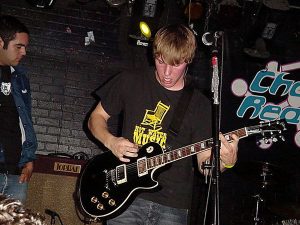
Name Taken at Chain Reaction – Photo by Ken Morton
In 2022, the 2007 home demo of “Nanking” was released. Are there any other surprise releases hiding in the archives?
Blake: Ryan can probably explain where that demo came from.
Ryan: Most of it was recorded in my parents’ living room. I think I was home from school during a holiday break, and we decided to work on a few songs.
Some of it may have been recorded at Blake’s house as well. We tracked a handful of ideas, but “Nanking” was the song we liked the most.
It’s also one of the songs we played during the reunion shows.
Even after the band stopped being active, we all continued making music in different ways. Whenever we came up with something we genuinely liked and felt was worth investing time into, we’d record it.
Releasing “Nanking” years later felt right because we still hear from fans who would love more music or another reunion. We know a reunion probably isn’t happening, but at least we can share some of the material that’s been sitting around all these years.
Blake: At the reunion shows, we played “Nanking” along with two other songs, “Nothing in My Shirt” and another one I think was called “Dead 45.”
We actually recorded all three songs, but “Nanking” was the only one we ever fully completed.
I can still go back and find those other recordings. Honestly, I really like both of those songs. But they were never finished, and I highly doubt they’ll ever be completed.
That said, I’d put the chances of people hearing another unreleased Name Taken song at maybe one or two percent.
It’s unlikely, but not impossible.
Let’s move into the post-Name Taken years. What are you guys up to these days?
Ryan: Chad isn’t with us today (in this interview), but I’ll mention that he’s a new dad and was recently married, so we’re all really excited for him.
As for me, I’ve had sort of two different lives since Name Taken. After the band, I went to graduate school and spent some time as a college professor, which put me in the relatively small but surprisingly cool group of former scene kids who ended up in academia.
These days, I work in financial services, but I still play music whenever I can.
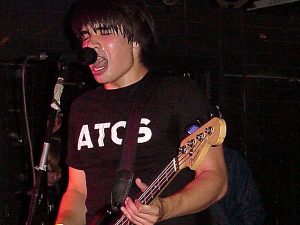
Name Taken at Chain Reaction – Photo by Ken Morton
Blake, what have you been up to?
Blake: My wife and I have been together for twenty years now, so that relationship started pretty much right after Name Taken. We have a three-year-old child, which has been amazing.
Professionally, I spent most of my adult life working in IT. A few years ago, my wife started a marketing agency and was absolutely crushing it, so we decided to join forces. Now we’re both entrepreneurs working in online marketing.
Musically, I got back into playing a couple of years ago. Our friends in Home Grown had a Strokes cover band and asked me to join them. For the first time in about eighteen years, I found myself playing shows again. Nothing serious, just free, fun shows playing Strokes songs.
About a year ago, I also started a hardcore band with my brother. He grew up loving hardcore, he’s in a band already, and he’s a fantastic screamer. I started writing and recording songs with him, and we’ve now got nine or ten songs on Spotify that I’m really proud of.
We’re actually playing our first show in Costa Mesa on October 30, and the coolest part is that Ryan is flying out from Texas to play with us. It’ll be the first time Ryan and I have shared a stage since 2007.
So that’s pretty much everything I’ve been up to lately.
Nice! Did you mention the name of the band?
Blake: We’re called Looks Bad Sounds Worse (LBSW).
I love that name.
Blake: Thanks. It’s a name I’d been saving for years. I always thought, “One day I’m going to use that for a band.” Eventually this hardcore project ended up getting it.
Name Taken at Chain Reaction – Photo by Ken Morton
Looking back twenty to twenty-five years later, why do you think the music of Name Taken still resonates with fans today?
Blake: I’m going to let Ryan answer that one, and it better be really good.
Ryan: I’ll zoom out a little bit beyond Name Taken and talk about the scene as a whole.
We were part of one of the last generations of music fans before the internet completely changed everything. It was right at the beginning of internet culture becoming central to music, with things like MySpace starting to emerge.
What made that era special was how local and intimate everything felt. Scenes were centered around specific communities and venues. Then suddenly this style of music exploded and became one of the biggest genres in the world.
For a lot of people, it wasn’t just a hobby. It was a huge part of their identity and social life.
Now everyone’s older. People have careers, families, and, in some cases, a little more disposable income than they did back then. There’s a natural desire to reconnect with that period of their lives. They remember the friendships, the communities, and all those late-night drives spent screaming the lyrics to those songs.
Why people specifically connect with Name Taken after all this time, I honestly don’t know. I can tell you why I connected with the bands I loved, but I think the general experience is similar for everyone.
What I find fascinating is seeing how that influence continues today. One of my favorite examples is emo rap. The idea that younger artists can discover these influences and build entirely new genres from them is pretty incredible.
Name Taken at Chain Reaction – Photo by Ken Morton
That’s a great answer. Blake, what do you think?
Blake: Ryan, that was terrible.
(Much laughter)
No, I’m kidding. I think Ryan nailed it.
The only thing I’d add is that our scene existed during the transition from almost no internet to the early internet. Facebook either didn’t exist yet when we broke up or had just started and was still limited to college students.
Because of that, a lot of these scenes were completely local. If you lived in Southern California, you knew those bands. If you lived somewhere else, maybe you didn’t.
Then over the last fifteen or twenty years, the internet gave people a place to reconnect, share memories, upload old photos, trade recordings, and tell stories. Suddenly, all these isolated local scenes became connected.
I think that’s why the legacies of so many bands from that era continue to grow.
What’s funny is that between 2010 and maybe 2018 or 2020, I almost never heard anyone mention Name Taken. Nobody talked about us.
Then, over the last six to eight years, it’s been the complete opposite. I get messages about Name Taken every week, sometimes more than that.
And now here I am doing an interview with you.
Honestly, it’s been awesome. I don’t think Ryan and I did a single interview for fifteen years after the band ended. Yet in the last couple of years, I’ve done three or four of them, and that’s kind of mind-blowing.
 In Conclusion
Listening to Blake Means and Ryan Edwards speak about Name Taken, what becomes immediately clear is that the band’s legacy isn’t measured solely by records sold, tours completed, or milestones achieved. Instead, it’s defined by friendships, community, and the memories that continue to connect people more than two decades later.
Whether discussing sold-out shows at Chain Reaction, touring with a then-exploding Fall Out Boy, recording songs in living rooms, or revisiting long-forgotten photographs from the band’s formative years, both musicians speak with a genuine appreciation for what Name Taken represented and continues to represent to fans today.
While a full reunion may not be in the cards, the affection surrounding Name Taken has only grown with time. New listeners continue to discover the music, longtime fans remain passionately connected to the band’s catalog, and songs like “Blood and Bones” and “Nanking” serve as reminders that the creative spirit of Name Taken never completely disappeared.
Today, Ryan has built a successful career in financial services while continuing to play music, and Blake remains active both professionally and creatively, recently launching the hardcore project Looks Bad Sounds Worse. Yet despite the passing years, it’s clear that Name Taken remains an important chapter in their lives and in the history of the Southern California scene.
Twenty-five years after The Silent Game and more than two decades after Hold On, the story of Name Taken continues to resonate. Judging by the enthusiasm of the fans who still share memories, photographs, and messages with the band, that connection isn’t fading anytime soon.
And for anyone who ever packed into Chain Reaction, screamed along to those songs in a crowded club, or discovered Name Taken through a friend’s burned CD, that’s a pretty wonderful legacy to leave behind.
(Interview by Ken Morton)
Name Taken on Instagram