






Still Young, Still Wild: Chip Kinman Looks Back and Moves Forward”
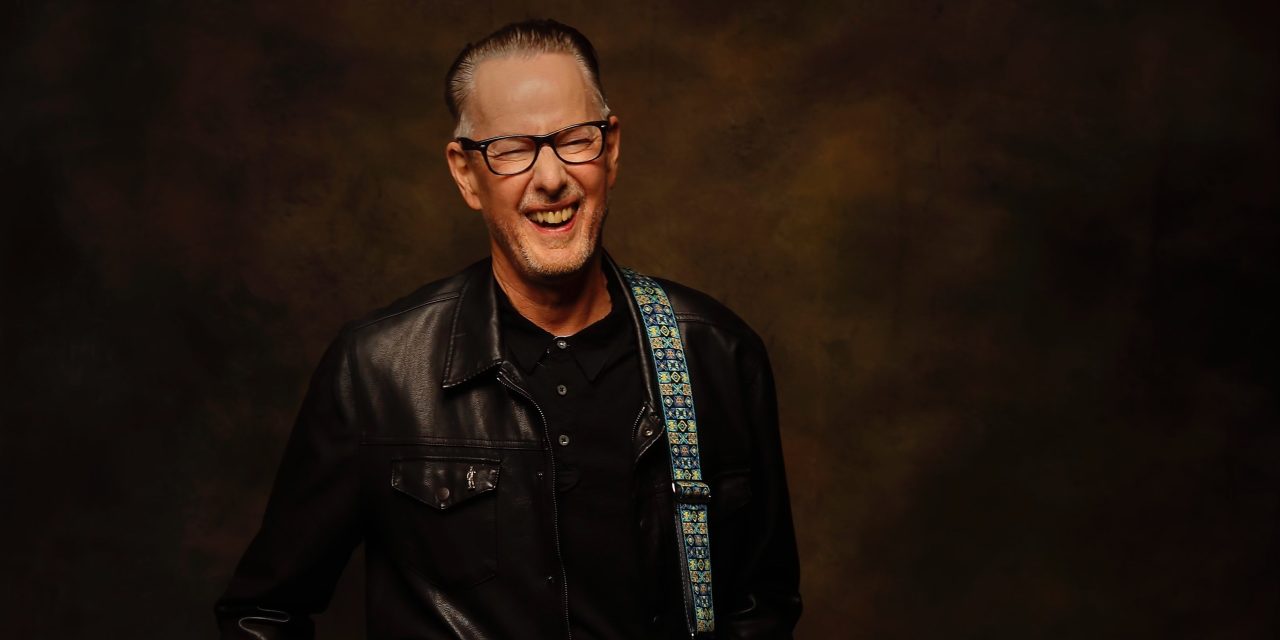

Photo: Stephen Linsley
Still Young, Still Wild: Chip Kinman Looks Back and Moves Forward
Few artists embody the restless spirit of American punk and roots music quite like Chip Kinman. From the incendiary days of The Dils to the groundbreaking cowpunk of Rank and File, the abrasive experiments of Blackbird, and the wide‑open horizons of Cowboy Nation, brothers and co-conspirators Chip and Tony Kinman have never stood still. Now, nearly five decades into a career defined by zigzags and reinvention, Chip is released a self‑titled solo album — his first collection of songs under his own name.
In this candid conversation, Kinman reflects on the inspirations behind his new record, revisits pivotal moments across his career, and shares stories of collaboration, missteps, and triumphs. What emerges is a portrait of an artist who refuses to be boxed in, still chasing the thrill of discovery, and still young at heart.
Editor’s Note
This interview holds a special place in Highwire Daze history. Chip and his brother Tony — who sadly passed away — were among the very first artists I interviewed back in 1990, before we even had an official print issue. Sitting down with Chip again, decades later, feels like coming full circle. It’s not just another feature; it’s a tribute to the journey we’ve shared, to Tony’s memory, and to the enduring spirit of an artist who continues to inspire.
Chip, what made you decide that now was the time to do a solo record?
I had already done an electronic album, which was technically a solo record, but it wasn’t songs in the traditional sense. After that, I went back to Larry Hardy at In the Red Records and we talked about doing another record. He said, “Sure, sounds great,” but then he paused, and I could tell what was going through his mind. So I asked, “Larry, do you want songs? With me singing?” He said, “Yes, I would love that.”
I told him, “All right, I can handle that. I know how to write songs and make a record.” So I went back and spent about a year working on it. It was a lot of fun.
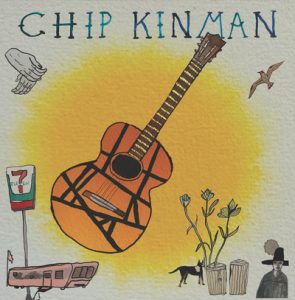
Chip Kinman Self-Titled Album
Let’s talk about a few songs on the new record. “So Young” — what inspired the lyrics and that amazing video?
When I started the album, I didn’t have any songs written. I’d go into my Busy Bee Studio and sit there thinking, “What do I do?” A lot of people have mentioned that “So Young” has an Another Green World feel — kind of an Eno vibe. There’s a good reason for that: I actually borrowed the structure from one of Eno’s songs. I loved the long intro with vocals coming in at the end, and I thought it would be interesting to try something like that since I’d never done it before.
I recorded “So Young” maybe fourth or fifth in the process. As I was writing the lyrics, I realized many of the songs were looking back — not in a nostalgic way, but reflecting. I didn’t want to say something like “Woodstock” with all the “we are golden” stuff. No, we weren’t that. We were just young. We were wild, and we didn’t care what people thought. We cared about what we were singing and writing, about how we looked and presented ourselves, but not about anyone’s approval.
The video was Larry Hardy’s idea. He suggested using old photos with a bit of me singing. At first I resisted because I worried it might lean too far into nostalgia, but I agreed. I sent everything to Andrew Hooper, who put it together, and it turned out really well.
I also want to talk about “Me and Tony.” Tell me about the process of writing that song.
“Me and Tony” is interesting. I wrote the music first — basic chord changes with a few breaks. I knew I wanted to tell the Chip and Tony story. Then I invited Dan West to play piano, and he nailed it in one pass.
When it came to lyrics, I went up to the mic just to get a feel, ran the tape, and improvised off the top of my head. That’s what you hear. I didn’t write anything down. Later I thought, “This is pretty good, but maybe I should fix a few words.” I played it for a friend, and he said, “Don’t touch it. If you try to perfect it, you’ll ruin the feel.” So I left it as is.
It turned out to be one of my favorite songs. I’m amazed I managed to hit the right parts of the story at the right times — the solo, the breaks — without counting bars. I don’t know how I did it. A lot about making this record felt charmed like that.
Tell me about “Goodbye Rock and Roll” and the inspiration behind it.
That one’s a true story — well, mostly true. It happened in Carlsbad, though not during my senior year like the song suggests. It was actually the summer before, when I decided to spend time at the beach with my friends. There was a girl visiting my family from Arizona. She was a junior in high school, and I was just a freshman, so to me she seemed much older.
The song tells that story. We didn’t go all the way, but for a freshman it was mind‑blowing. Later, as I was finishing the record, I thought, “This album needs one more song.” So I wrote and recorded it quickly. While mixing with Jose Alcantar, he suggested I play real drums instead of using a drum machine. I’d never played drums on a record before, but I went in and did it.
Listening back, the track felt a little odd — it reminded me of Elton John’s “Bennie and the Jets.” I asked Jose to add a crowd sound. He offered a stadium, but I said, “No, I don’t play stadiums. Give me a nightclub.” So we layered in that atmosphere, and it worked perfectly. Honestly, it’s my favorite song on the record. I wanted it to have that classic Chip and Tony three‑chord feel — like “It’s Not Worth It” or “You Don’t Matter Anymore” — with a big sing‑along chorus. That’s what I came up with.
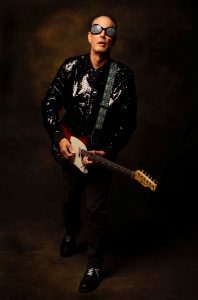
Photo Credit: Stephen Linsley
Let’s talk about another track, “Brian.” What’s the story behind that one?
“Brian” is about a real person I followed on Facebook. His posts kept showing up in my feed, and his story moved me. He seemed like someone I would have liked to know. Apparently he knew Tony, though I never met him myself.
Before delivering the song to the label, I reached out to him and said, “Hey, I wrote this song based on your stories. Is that okay?” He said yes. I thought it was the perfect way to open the record. That guitar you see on the cover and back of the album — that’s the first sound you hear, right on the downbeat.
To me, it set the mood for the whole record. I wanted to make something that people our age could relate to — something that captured the feeling of hearing Patti Smith for the first time, or the Buzzcocks’ debut EP, when you realized there was a whole new world out there. I think I managed to create what I call “the first punk rock record for old people.” Not in a nostalgic way, but in terms of vibe — the journey we’ve all taken.
Mike Watt from the Minutemen is a special guest on your album. How did he become involved?
When I started making the record, I didn’t want to do it alone. I didn’t really have a band, and I didn’t want to sit in the studio by myself. It’s always better to bring in people — they’ll do things you wouldn’t think of. I knew I wanted a bass solo at the end of one track, so I called Mike. He and Tony were close, and he agreed right away.
At first, though, he misunderstood what I wanted. On “So Young,” during the intro, he dropped in a bass part. We call it “Watt’s Mistake.” I had actually asked for a solo at the end of the song. But when I heard his part, I decided to keep it — it gave the track a real kick.
I liked the riff so much that I built another song, “Drive Drive Drive,” around it. It’s the exact same riff. I told Mike I was giving him 50% of the writing credit because he gave me the idea. He was easy and fun to work with, and his contributions really added something special to the record.
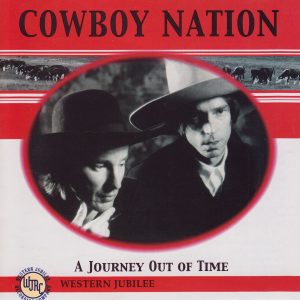
A Journey Out of Time by Cowboy Nation
Let’s go through a few anniversaries. There are some interesting ones this year. First, back to the year 2000 — 25 years ago — A Journey Out of Time by Cowboy Nation. Looking back now, what do you think of that album in retrospect?
Cowboy Nation is probably my favorite band that Tony and I ever did — and it was Tony’s favorite too. Journey Out of Time is a great record. It was really well received because we were signed to a cowboy label, playing cowboy shows to a cowboy audience. That felt good — we had achieved what we set out to do. I hope someday those records see more daylight, especially the first two Cowboy Nation albums. I’d like to get my flowers while I’m still here, but I really believe those records deserve more recognition. I love A Journey Out of Time — it’s a great record.
Now let’s go back 35 years, to 1990. You were in the midst of Blackbird. I had just interviewed you guys for the very first time — one of my earliest interviews. Looking back, what do you think of that period now?
That came right after the disastrous third Rank and File album. Bless Tony’s heart, but it was kind of my idea: “Hey, we’re sick of playing country music, let’s make a hard rock record.” And of course, nobody liked it. It had a couple of good songs, but really, nobody liked it.
We went from selling out clubs all across North America to playing empty rooms everywhere. It destroyed our career. When it was over, Tony and I thought, “What are we going to do?” We had to regroup. Tony said, “Fuck it, let’s just get a drum machine and make some noise.”
Like everything we did, it was high concept. We decided our shows would be nonstop — no breaks, no talking to the audience — just loud, abrasive, but still with songs. I really liked Blackbird. It had a lot of success and revived us. Mike Watt famously covered “Big Train,” and Blackbird became popular. We were selling out clubs again, and it was a lot of fun.
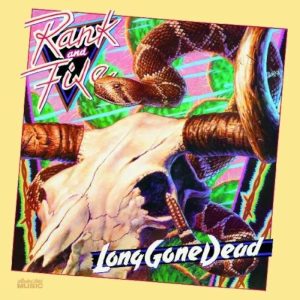
Long Gone Dead by Rank and File
Let’s go back 40 years — to 1984. Rank and File’s Long Gone Dead just celebrated its 40th anniversary. What do you think of that album now?
I think it’s a terrific album. It would have been even better if the band hadn’t broken up. Losing Slim and Alejandro took away some of the magic. Even though they didn’t write the songs, you know how it is with bands — the chemistry adds to the playing.
It was harder for Tony and me to make the record without that chemistry. We brought in other players, and we made a good record, but it lost a bit of the band feel. Some people prefer Sundown, but a lot of people really like Long Gone Dead. It was well reviewed, and we were still at the top of our game.
One more blast from the past. Let’s go all the way back to 1980 — 45 years ago. You’re in the midst of The Dils, opening for The Clash. What was that show like, and did you get to meet them?
Honestly, it was a miserable night for me. We had met The Clash earlier when they were recording with Joe Strummer. In fact, when they left San Francisco, they had bought this really nice Marantz stereo. They couldn’t take it back to England, so they gave it to me. I passed it on to my older brother Charles, and he still has it. So we knew Joe, and The Clash knew us.
But when we got the gig opening for them, things went sideways. As the opening band, we didn’t get a sound check. We had two yellow lights on either side of us — not much of a rock show. And The Clash completely ignored us. I later heard someone had told them not to hang out with The Dils because we were “troublemakers.” That was around the time we were accused of setting Rodney Bingenheimer’s on fire — which we didn’t. A fan did, but we got blamed.
So the night started strange. Then we played, and like any band, sometimes you’re great, sometimes you’re not. That night, I thought we kind of sucked. The sound on stage was weird, and I was already rattled by The Clash ignoring us. The punk in me thought, “We were treated like shit, this is a drag. Screw The Clash — I hope they suck.”
But then they came out and they were incredible. So good. That made me feel even worse. My parents were at the show, and the next day I asked my dad what he thought. Bless his heart, he said, “I thought they were a second‑rate Dils!” (laughs). That made me feel better. It was bittersweet, but I learned a lot. They were legends.
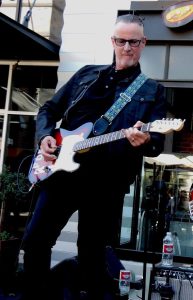
Chip Kinman live – Photo by Ken Morton
Let’s come back to the present. You have a new album about to come out. Do you want to do live shows in support of it?
The response so far has been what I hoped for. People have said, “Wow, this brings a tear to my eye,” or “This really speaks to me.” That’s exactly what I was going for — capturing how it felt back then. The single is getting way more views on YouTube than any of my other videos, which is encouraging.
The record comes out November 21. If it’s well reviewed and widely covered, I’ll put together a band and go out to support it. If not — well, I’m almost 70. Do I really need to be playing a nightclub on a Wednesday night? Maybe not. In that case, I’ll just head back to the studio and make another record. We’ll see how it goes.
Do you have any message for your fans who’ve been following your career since the ’80s or earlier?
I want to thank them for sticking with me — and with Tony — through all the zigging and zagging. People expect that from us now, and they still expect it from me. The last record I put out, The Great Confrontation, was a double album — electronic and laser. Now this one is more like punk rock for old people. And people have followed along with it.
It probably hasn’t been the best career move, because a lot of my contemporaries have stayed consistent, doing the same thing over and over, and it’s worked out for them. That’s just not who I am. I’ve never been that guy. So I’m grateful that people continue to think of us, and continue to listen.
IN CONCLUSION
Chip Kinman’s journey has never followed a straight line — from punk firebrands to cowboys, from noise experiments to heartfelt reflection, he’s always chosen reinvention over repetition. With his self‑titled solo album, he proves that the spark that fueled The Dils, Rank and File, Blackbird, and Cowboy Nation still burns bright. Whether he takes the stage again or heads back into the studio, Kinman remains a restless artist, unafraid to chase new sounds and tell new stories. For fans who’ve stuck with him through every twist and turn, this record is both a reminder of where he’s been and a bold statement of where he’s going.
(Interview by Ken Morton)
Chip Kinman on Facebook