
Yeah Yeah Yeah and Beyond: John Power Reflects on Cast, The La’s, and 30 Years of All Change
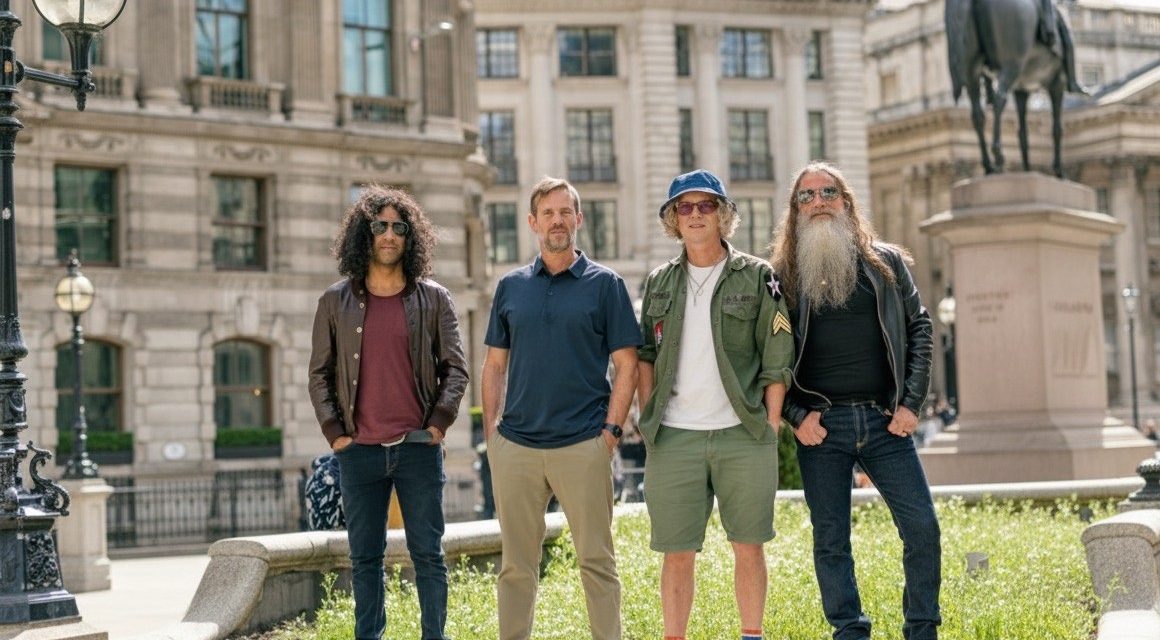
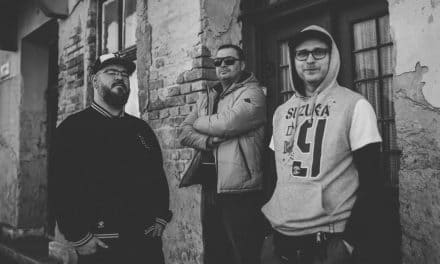
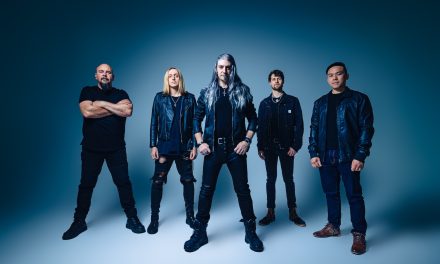
Photo by Jim Mitcham
Yeah Yeah Yeah and Beyond: John Power Reflects on Cast, The La’s, and 30 Years of All Change
Cast frontman John Power has never been one to sit still. Fresh off the psychedelic shimmer of Love Is the Call, he and the band have returned with Yeah Yeah Yeah — a widescreen, anthemic record that arrived far sooner than anyone expected, including Power himself. But as he explains, momentum has a way of taking over when the songs start coming.
In this wide‑ranging conversation, Power reflects on the creative spark that ignited the new album, the unexpected resurgence of Cast’s live energy, and the emotional weight of revisiting All Change three decades after its release. He also looks back at his formative years in The La’s — a period he describes as intense, euphoric, heartbreaking, and ultimately transformative.
With a new generation discovering the band, a top‑ten album in the UK, and a renewed desire to return to the United States, Power speaks with the clarity of someone who has lived several musical lives and still feels the fire. What follows is a candid, thoughtful, and often moving look at where Cast has been — and where they’re heading next.
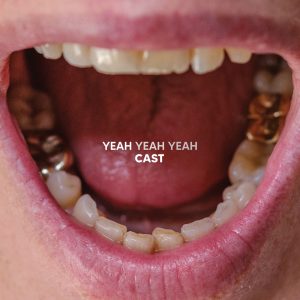
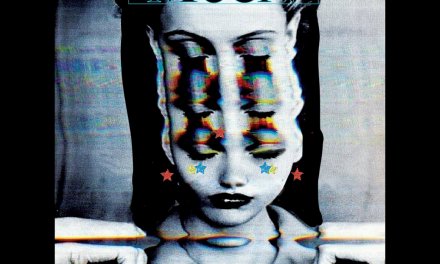
Yeah Yeah Yeah by Cast
We’re here with John Power from Cast to talk about the new album. First of all, what’s the story behind the title Yeah Yeah Yeah, and how did it end up coming out so soon after Love Is the Call?
Well, the album definitely came before the title. And you’re right — it arrived quickly after Love Is the Call. I’ll be honest, I had a real keenness about keeping the momentum going. Love Is the Call had this psychedelic pop vibe, and we were feeling the energy from it.
Around December 2024, I spoke to Alan McGee and said, “2025 is going to be a big year.” There’s a track on Love Is the Call called “Tomorrow Call My Name”, the final song. When I heard it back, I thought, Wouldn’t it be amazing to make a whole album of songs with that anthemic, emotional feel? That track was really the seed of Yeah Yeah Yeah.
People were picking up on it, and it made me want to write more songs in that vein. So I started working straight away — not with any pressure, because I assumed we’d record the next album about two years after Love Is the Call. But by Christmas I had a handful of strong choruses, and then I wrote the verse and chorus for “Free Love.” That was the moment I thought, Okay, there’s something here.
I played the ideas to Alan and said, “I think we should seize the opportunity. I’ve got a feeling next year is going to be big. If we can start it with a new album, we can keep the momentum rolling.” He agreed, and we took a leap of faith.
We went into the studio in February. Youth was free, the band was free. I didn’t have all the songs finished, but after working with Youth on Love Is the Call, I knew we’d find the arrangements in the studio. I was finishing lyrics the night before sessions, but I was confident and excited. I felt this album was going to be a step up — majestic, widescreen, full of anthems.
The production reflects that: strings, orchestration, bits of brass, touches of soul, gospel, pop, even some funk. They’re all connected, and nothing feels out of place. The album feels like a community of ideas rather than a collection of odd tracks.
As for why it came out so soon — we knew we had the Oasis tour coming, then the 30th anniversary of All Change right after. I thought, Wouldn’t it be amazing to have a great new record to carry us into the new year? So we pushed ahead.
The title came later. There’s a line in “Don’t Look Away” — “yeah, yeah, yeah” — and it just stuck with me. My daughter claims she suggested it, my wife claims she did… everyone in the house thinks it was their idea. But once it landed, it felt right. It’s cheeky, fun, very present. Not philosophical or mysterious — just fresh and immediate.
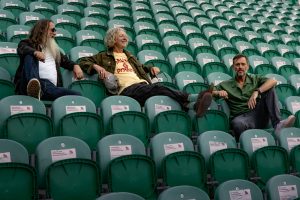
Photo by Jim Mitcham
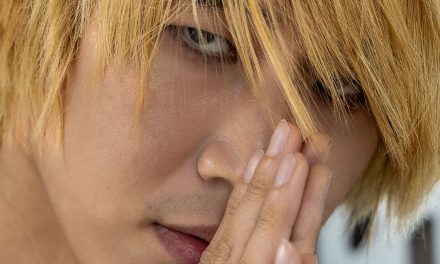
The cover came from a selfie I took after getting a gold tooth put in. It had this punky feel. When Alan asked for the title and artwork, I sent him that photo with Yeah Yeah Yeah underneath. He loved it. The label recreated it properly, but the vibe stayed the same.
To me, the title sums up the record: fresh, spirited, full of character. It feels like a new chapter for us. We’ve been around a long time, but this album looks forward. The arrangements, the songwriting, the performances — they all feel very present. Our legacy is in there, but the sound is moving ahead.
People have been saying it’s the best thing we’ve ever done. I don’t need to get into that debate, but it’s a beautiful thing to hear at this stage of our career. To release Love Is the Call and Yeah Yeah Yeah within less than two years — that’s the kind of output you’re lucky to have when you’re young. I was on fire writing these songs.
I haven’t even tried to write anything since — I wanted the album to come out before picking up the guitar again. And then we got a Top 10 in Britain, radio’s been playing “Free Love” and “Poison Vine,” and there’s a lot of love for the band. And it’s not just nostalgia — there’s a new generation discovering us. The Oasis tour was massive for that, and it was an incredible thing to be part of.
So, when was the last time Cast was in the States? And is playing shows here something you’d like to do in support of the new album?
We’d absolutely love to. I’ve got some unfinished dreams about playing in America. We did go over a long, long time ago, but for various reasons — which I won’t get into now — things fell apart a bit. The wheels came off.
But we did play some amazing shows: MetLife Stadium with Oasis, the Rose Bowl in Pasadena, four stadiums in total. We also did a couple of gigs with the Brian Jonestown Massacre — New York and Philadelphia. So we’ve had a taste of it.
There’s definitely talk about going back. We want to make it happen. I’ve got a great feeling that if an American audience saw the band now, they’d genuinely dig what we’re doing. We’ve got the melodies, the songs, and we’re a tough live band — a lot of energy, a lot of dynamics. I think it suits American audiences.
And to be honest, American crowds aren’t as fad‑driven as some British ones. We’ve earned our stripes. We’ve been around, and right now we’re really in the zone. The band is playing better than ever, and I’m singing better than ever. It’s a great place to be as a musician.
We’re actively trying to find a way over. Whether it happens or not, I can’t say — there are so many little pieces that have to fall into place. But we’d love it. Alan McGee is talking to a few people, trying to make it a reality.
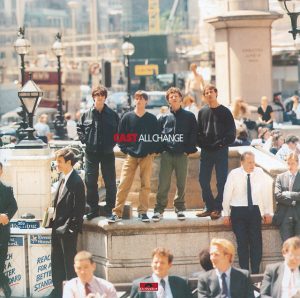
All Change by Cast
Let’s talk about anniversaries. The 30th anniversary of All Change has come and gone. When you look back on that debut album now, what do you think of it in retrospect?
Thirty years — it’s wild. You almost have to let that much time pass before you can even grasp what it means. Time is such a strange concept, because those songs still feel incredibly fresh to me. When we toured the album at the end of last year, it didn’t feel like I was revisiting something ancient. It felt alive.
Maybe it’s proven itself as a classic now. Maybe thirty years is the magic number where the cycle comes back around. I wonder if the ’90s are to younger people what the ’60s were to me — a kind of golden era. And I think All Change captured something from that moment.
The tour was joyful. A whole new audience came out, along with people who’ve been with us since the beginning. But time is funny. When I sing those songs, I don’t feel like I’m singing “old songs.” There was a period when the band split — eight or nine years — when I couldn’t sing them at all. I’d fallen out of love with myself and that part of my life. But I’ve rediscovered it.
I’m not the type to pat myself on the back, but they’re great songs. They still stand up. You can hear it’s a young man’s album — idealistic, immortal, everything ahead of you, nothing to lose. That’s a hard thing to recreate later in life. Back then I lived completely for music. I hung around mates’ houses, walked the streets, wrote constantly. The album rose out of the ashes of The La’s and became the phoenix of Cast. It straddles both eras, really — I already had some of the songs or parts of them when I left The La’s.
What’s funny now is that I’ve been out doing promo for Yeah Yeah Yeah, singing seven of the new songs, and that’s where my heart is at the moment. I feel right in the middle of that record. Then I’ll play something like “Walkaway,” and it’s like slipping into something that’s part of my DNA. They’re beautiful, energetic songs, and I can do them at the drop of a hat.
And strangely, all the experience that’s brought me to Yeah Yeah Yeah has made me perform the All Change songs better too. They’re benefiting from the journey.
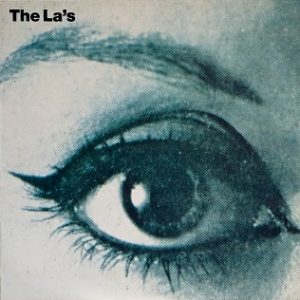
The La’s cover art
The La’s album recently celebrated its 35th anniversary. When you look back at that record now, what do you think of it in retrospect?
The La’s was such a defining moment in my life. That’s where I learned to play, where I found the beginning of the dream. I was completely immersed in that world. Lee was an incredibly gifted songwriter — one of the greats of his generation — and being around him at that age had a huge impact on me.
The La’s were an intense band. A lot of people touched that world and came away a bit bruised by it. But I thrived in it. I learned how to hold my own, how to survive in that environment. Those songs feel like part of my own history. Even though they’re Lee’s songs, they feel like mine too because I was so young and so absorbent. I spent six, maybe six and a half years playing them day in, day out. It was all I knew.
As for the album itself, it’s well documented that the band wasn’t happy with the recordings at the time. I’ve softened on that over the years. I understand now that for most people, that’s the record — that’s how they know those songs. Sure, I could pick apart “Son of a Gun” because I think that version is a bit weak, but “There She Goes” still sounds like the perfect pop song on the radio.
I’ve got so many memories from that period — not all bad, even though the band ended in a toxic way. The dream was over, Lee didn’t want to be on stage, and I was ready to move on. The last line of the album, “the change is cast,” became the beginning of Cast. I used to stand on stage every night hearing that line echo in my head. I already had songs like “Alright,” “Fine Time,” “Sandstorm,” “Four Walls.” They were waiting for their moment.
I’ve got nothing but love for The La’s and nothing but respect for Lee. Everything I’ve done since has been my own journey, but I had to meet him. He sparked the flame in me. I was a sponge at that age, and being around someone so inspirational was a baptism of fire — heavy, heartbreaking, euphoric, all of it. I walked willingly through the flame.
“Tomorrow Call My Name” was an important song on Love Is the Call and essentially sparked the new album. What does the final track on Yeah Yeah Yeah, “Birds Heading South,” represent to you?
It’s a very wistful song. I love it. It has this dreamy, Bowie‑esque quality to it. Without over‑analyzing it, it’s a song about dreams whose moment may have passed — but the memory of them is still strong.
Maybe it’s the kind of song you write at my stage of life. I haven’t let go of my dreams, but I’ve had to pick them up off the floor many times and breathe life back into them. The chorus — about birds heading south, dreams falling gently to the ground, leaves turning red — it’s about acceptance. Time moves on. Life moves on.
It could be me talking to myself about The La’s. It could be anyone talking to themselves about who they used to be. We were all idealistic once. We all thought we’d change the world. Even the biggest cynic only needs the right nudge to remember they once believed in something too.
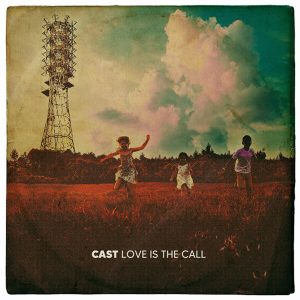
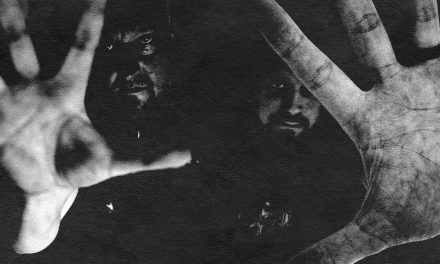
Love Is The Call by Cast
Do you have any message for Cast fans in the States who are reading this?
Stick with us, brothers and sisters. We want to get over there, and I can’t think of anything more unifying than playing live for the fans in America. We’re at the peak of our game right now.
Thank you for following the band and holding on to the music. When I started Cast, I used to say that if just one person connected with these songs, it would all be worthwhile. The fact that people all over the world have connected with them — even in places we haven’t played for decades — that’s incredible.
We did make it over last year, but before that it had been something like 26 or 27 years. The fact that people in the States still care, still listen to All Change, and are getting into Yeah Yeah Yeah — that’s inspiring. It keeps us going, and we hope we can come play for you soon.
Yeah, yeah, yeah — that’s where we’re at. And it feels great to be making music that people appreciate.
In Conclusion
As our conversation winds down, it’s clear that John Power is an artist who has lived several musical lifetimes yet still speaks with the hunger of someone chasing the next great song. Whether he’s reflecting on the fire and chaos of The La’s, the youthful idealism of All Change, or the widescreen ambition of Yeah Yeah Yeah, he carries a rare mix of gratitude, humility, and unshakable belief in the power of music to endure.
Cast may be decades into their journey, but Power’s creative spark is unmistakably alive — and with a new generation discovering the band, a top‑ten album, and a renewed desire to return to American stages, the story feels far from finished. If anything, it feels like another beginning.
For now, fans on both sides of the Atlantic can take him at his word: the band is playing better than ever, the songs are flowing, and the dreams — even the ones that needed to be picked up and dusted off — are still very much alive.
Yeah, yeah, yeah. The change is cast once again.
(Interview by Ken Morton)
Cast on Instagram