






Visions in the Bowling Alley: The Jack Rubies’ Unlikely Return
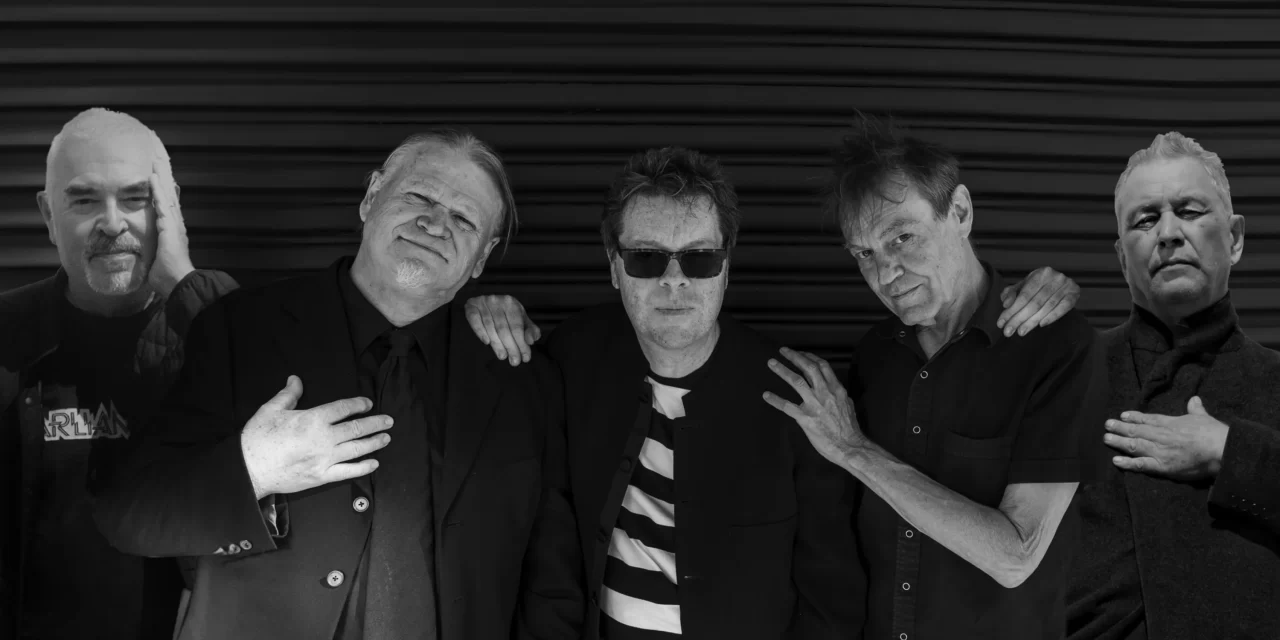
The Jack Rubies
Visions in the Bowling Alley: The Jack Rubies’ Unlikely Return
After three decades of silence, The Jack Rubies have re-emerged with a creative spark that feels both surprising and inevitable. Once fixtures of the UK’s vibrant underground scene, the band seemed to vanish after the early ’90s—only to return with a pair of albums that sound as urgent, witty, and adventurous as anything in their catalog. With Visions in the Bowling Alley, their second release on Big Stir Records, singer‑songwriter Ian Wright and drummer‑producer Peter “Max” Maxted dive into conspiracy lore, chaotic inspiration, and the strange alchemy of rediscovering a band you thought you’d left behind. We sat down with Ian and Max to talk about their unlikely revival, their early days in squats and pubs, and the joy of finding new life in old chemistry.
We’re here with two members of The Jack Rubies. First off, please introduce yourselves and tell us what you do in the band. Ian, let’s start with you.
Ian: Hi, I’m Ian Wright. I’m the singer, I play quite a bit of guitar, and I’m the principal songwriter.
Max: And I’m Max. I play drums, I’m the band’s producer, and I add some guitar here and there, along with a fair amount of MIDI instrumentation. Any proper piano playing, though—that’s definitely someone else.
After nearly 30 years, what made you decide it was time to reform The Jack Rubies?
Ian: Max, why don’t you take that one?
Max: Sure. It’s an interesting story. For a long time, we’d basically memory‑holed the whole thing. Everyone went off and did different things—some musical, some not. But we were all a bit dismayed that our back catalogue wasn’t available on streaming platforms. A lot of the music we’d made had essentially vanished.
Ian took on the huge job of curating all the old material, getting it onto streaming services, and tracking down the rights. That process sparked something in all of us. We went back and listened to our legacy a bit.
Around the time of COVID, we started talking about whether we could make new music. The initial reaction wasn’t exactly warm. I think people weren’t sure we could still do it—it had been so long. Ian especially wasn’t immediately persuadable.
But I’d been teaching myself production techniques and getting interested in computer‑based sounds again. Then Ian wrote a song—Poltergeist—and sent over an iPhone recording. I thought, “This is weird… but interesting.” I added instrumentation, built a version of it, and sent it back. People were genuinely surprised that it sounded good. That was the moment we realized we could do this again.
Ian: Yeah, that iPhone recording was just a demo. But it’s true—I hadn’t thought about playing music, touching a guitar or piano, or writing a song for at least 15 years. I was doing something completely different with my life and had no intention of returning to music.
But as Max said, the process of reclaiming our history—because we really had disappeared into the ether—jumpstarted something. I was reluctant at first. I couldn’t remember how to play guitar and had to relearn it. Luckily, muscle memory kicked in. Once I got that first song under my belt and everyone responded positively, things started moving quickly.
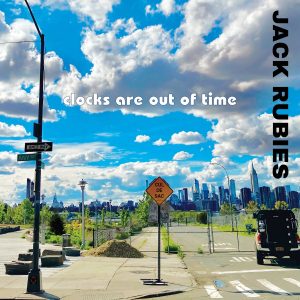
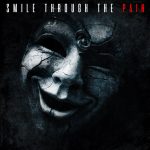
Clocks Are Out Of Time by The Jack Rubies
In 2024 you released your comeback album, Clocks Are Out of Time. What does that title represent to you?
Ian: The title comes from a line in one of the songs—Poltergeist, I believe. It’s part of the chorus. It was the first new lyric we had, and when we were looking for an album title, we went through the lyrics, as we’ve always done. A few options came up, but Max suggested this one, and it just felt right.
It reflects the strange journey we’ve been on—stopping abruptly 30 years ago with no real explanation, disappearing completely, and then suddenly coming back to life. Clocks Are Out of Time captures that sense of lost years and unexpected renewal.
This was your first record with Big Stir. How did that relationship come about?
Ian: After we started writing again—beginning with Poltergeist—we spent about a year creating enough material for an album. All along, we weren’t sure what we’d do with it. We released a couple of singles ourselves, but once we had a full album, I thought, “We could put this out independently… or we could see if a label might be interested.”
I didn’t have many music‑industry connections left, so I expected a long process—maybe contacting a hundred labels. I researched a handful that seemed like a good fit, and Big Stir was among the first five or six I reached out to. To my surprise, they got back to us almost immediately and said they’d love to work with us. That’s how the conversation began.
Your newest album is Visions in the Bowling Alley, which has just been released. Tell me about that title. Is there a concept behind it? What does it mean to you?
Max: I’ll take this one. The title actually comes from the song This Is Not a Joke, which was probably the track that triggered the second album. It started as a bunch of fragments we didn’t quite know what to do with. Eventually, I put some rhythms down, and suddenly it began to crystallize. I sent it to Ian, and a few weeks later he came back with this amazing set of lyrics about conspiracy theories. I remember thinking, “Bloody hell—where did that come from?” It turned into something really interesting.
The lyrics explore secret societies and Illuminati‑type mythology. Around that time, I’d been reading about the Discordians—a strange, intentionally absurd “fake religion” created in the 1960s by a couple of American pranksters. They engaged in something called Operation Mindfuck, where they spread fake conspiracy theories through places like the Playboy letters page. A lot of modern Illuminati lore actually comes from their hoaxes.
The Discordians claimed their sacred scriptures were delivered to them in a vision in a bowling alley by a chimpanzee, who handed over the holy documents and then exploded. Their religion centered on chaos and the worship of Eris, the goddess of chaos. It was so bizarre and funny that it felt like the perfect metaphor for the themes in the song.
Ian: Exactly. I thought it was a great metaphor for what I was writing about. These two guys lived in a sleepy California town, and the only place they could meet late at night was the local bowling alley. That’s where they planned this absurdist religion. And yes—according to the story, after the chimpanzee delivered the tenets of the faith, it exploded. That level of madness was irresistible to me.
Max: And here’s the kicker—we later discovered that Kerry Thornley, one of the founders of Discordianism, served in the military with Lee Harvey Oswald.
Ian: This was before Dallas. So we thought, “Okay, we’re being sent a message here.” It was too perfect not to incorporate.
Max: So you could say the song—and the album title—felt like a message from Eris that we had to follow.
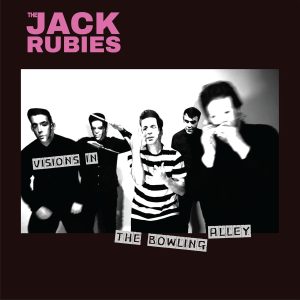
Visions In The Bowling Alley by The Jack Rubies
Let’s talk about the two latest singles from the album. The newest one is a cover: “Swamp Snake” by the Sensational Alex Harvey Band. What made you choose that song?
Ian: We’ve always loved the Sensational Alex Harvey Band. We didn’t know each other as kids, but all of us grew up with a fascination for them. They were mavericks—part theatrical heavy rock, part British glam. Not Bowie glam, but more in the Slade or Sweet direction, which really appealed to teenagers. They had this slightly menacing, Clockwork Orange vibe that was oddly attractive to young minds.
The album Next, which includes “Swamp Snake,” was a band favorite. We used to play it in the van on the way to gigs.
Max: Alex Harvey was a classic Glaswegian—full of humor, but with an edge of menace. A terrific frontman. In Glasgow, the word for someone like him is gallus—a little naughty, mischievous, edgy.
Ian: We’ve never done many covers, but when we do, we always try to reinterpret the song rather than copy it. Our version of “Swamp Snake” is obviously the same song, but the treatment is very different—lighter on its feet, almost with a rockabilly beat.
We were near the end of the album sessions and had just used a wonderful sax player on another track, “Dead Man.” Almost on a whim, we said, “Let’s try ‘Swamp Snake’—the sax would sound great on it.” And that’s how it ended up on the record.
The single before that was “Boat Rocker.” Tell me about that song and the inspiration behind it.
Ian: Boat Rocker is more like an old‑school Jack Rubies song. Unlike tracks such as This Is Not a Joke, which are inspired by current events or internet culture, this one is more of a doomed‑relationship song—a warped love song, which used to be my stock‑in‑trade.
I try not to write too many of those anymore, but this one slipped through. It’s a slightly comical, straightforward lyric about deciding to embark on a romance that is clearly a terrible idea. Everyone knows it’s a bad idea—including you—but you go ahead anyway and upset everyone, yourself included.
Two years ago, I interviewed Michael Conroy from Modern English, another band that recently made a comeback. I know you toured with them back in the day. What was that experience like? They had that huge hit, “I’ll Stop the World and Melt with You.”
Ian: Max, what are your memories of that tour?
Max: It was a really nice experience. We had a lot of shared reference points—two groups of mostly ex‑Brits touring around the States—so it felt familiar and friendly. It was a very sociable tour, as I remember. The only challenge was keeping an eye on the rider to make sure it was still there when you got back to the dressing room.
Ian: I’m still friends with those guys. I see them from time to time, especially Mick. That tour was 30 years ago, and we’ve all had plenty of adventures since, but when they started working again and touring, we reconnected. They seem to be doing great.
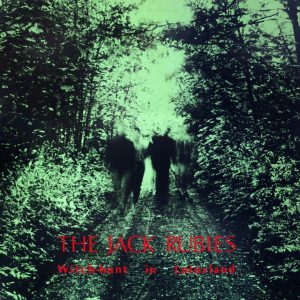
Witch Hunt in Lotus Land by The Jack Rubies
Let’s go back even further. Forty years ago—if my math is right—you released Witch Hunt in Lotus Land. Looking back now, what do you think of that record in retrospect?
Max: I actually enjoy going back and listening to that stuff. It captures the riotous energy of what we were like when we first started—really noisy, really loud, full of attack. It takes me back to that strange time when you could live in London completely broke, everyone living in squats, and half the venues were squats too.
There was a great energy in London then—lots of bands, lots of small venues, lots of places to play. The Rubies all squatted on a road in Stoke Newington, and the Three Crowns, one of the local pubs, had bands on constantly. It was a fantastic place: punks at one end, rastas in the middle, and a stage at the other.
Ian: And occasionally a pool ball flying through the air, so you had to stay alert. But yes—Witch Hunt in Lotus Land was the first record I ever made. I’m not sure about the others; Max may have done something before that. We hadn’t been together long—maybe a year—when it came out. It was thrilling. It was the first time we got any attention, and we were having a ball: playing regularly, getting press. That record was the launchpad for everything that followed.
Jumping back to 2026—would you like to tour in support of the new record? Does that appeal to you at this point?
Max: Well, Ian and Steve actually did a mini‑gig at a launch party just recently—about a week ago, wasn’t it?
Ian: About a week and a half. We did a record‑release party in Brooklyn, where I live. It was me and SD Ineson—the other guitarist and sometime writer in the band—doing a stripped‑down, semi‑acoustic set of songs from the album. We had a couple of local musicians helping out, so it wasn’t truly The Jack Rubies, but it was a great one‑off performance. Full house, great energy. It definitely inspired me to want to do more live work.
Some of the band live in the UK and some in the States, so there are logistical hurdles. But if we can set something up for later in the year, we’d definitely like to pursue it. It’s very much on our minds right now.
When was the last time you were out here in the Los Angeles area?
Ian: As a band, it’s been about thirty‑something years. I’ve been back to L.A. personally since then, but as The Jack Rubies, it goes way back—probably the Modern English tour, actually.
Max: I think that’s right. I worked in Santa Monica for a while, and I also worked in San Diego, so I know that part of the world quite well and have spent a fair bit of time there. But gig‑wise, it’s been a very long time.
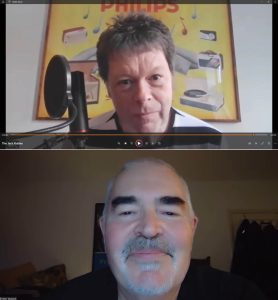
Ian Wright and Peter “Max” Maxted of The Jack Rubies via Zoom!
Jack Ruby is a mysterious figure in history, as we all know. What made you decide to name the band after him?
Ian: Funny enough, we were never asked that question back in the day. (Laughter) I’ll tell you the real story, but when we first came to the States in the late ’80s and early ’90s, we were a bit nervous about the association. We even have a song called “Dallas Blues” on Witch Hunt in Lotus Land, which was a huge live favorite in the UK, but we were always hesitant to play it in America. We’d make up alternative explanations for the band name because we didn’t want to seem like we were making a statement.
The truth is much more innocent. Back when we were all living in London—broke, squatting, drinking endless cups of tea, and playing board games—we were playing something like Trivial Pursuit. One of the questions was, “Who was responsible for the first live TV assassination?” The answer was Jack Ruby.
Of course we knew the JFK story, but Jack Ruby wasn’t really on our radar. Still, the name stuck with us. We thought, “If you turn Ruby into Rubies—like gems—that actually sounds like a great band name.” It kicked around for a while, and when we had an early gig coming up and still hadn’t settled on a name, we used The Jack Rubies. It stuck immediately. People loved it. It was more about the cadence of the words than the historical association, though we’re not denying it’s a bit provocative.
Do you have any messages for your longtime fans—and for new listeners discovering you now?
Ian: We’re incredibly grateful for the interest in our second coming. Honestly, we sometimes wonder if this is real or if we died and woke up in some alternate reality. We truly thought this chapter was closed. But over the last five or six years, it’s grown and grown into what it is now. It’s still an indie project, but it’s wonderful to be back in the land of the living.
Max: Absolutely. I’m very grateful to be having such a strong second wind. For anyone who’s been with us since the early days—it’s brilliant that you’re still here and still listening. And for people discovering the newer material first, that’s brilliant too.
I never expected we’d make music again, and what I’m most pleased about is that we’re making good music. We’re not rehashing old ground. We’re doing new things. Ian’s songwriting muscles are fully intact, and the lyrics have been fantastic. I’m genuinely delighted with what we’re creating.
In Conclusion
Chaos, chance, and a chimpanzee in a bowling alley—somehow it all makes sense for a band whose history has always been a little unconventional. The Jack Rubies have stepped back into the light with music that feels both familiar and newly charged, carrying the weight of years but none of the weariness. Their second life is unfolding in real time, and if the past is any indication, it’s bound to be unpredictable in all the best ways.
(Interview by Ken Morton)
The Jack Rubies on Facebook