Rob Math of Leatherwolf and Soul Sign – The NAMM Show 2026 Interviews
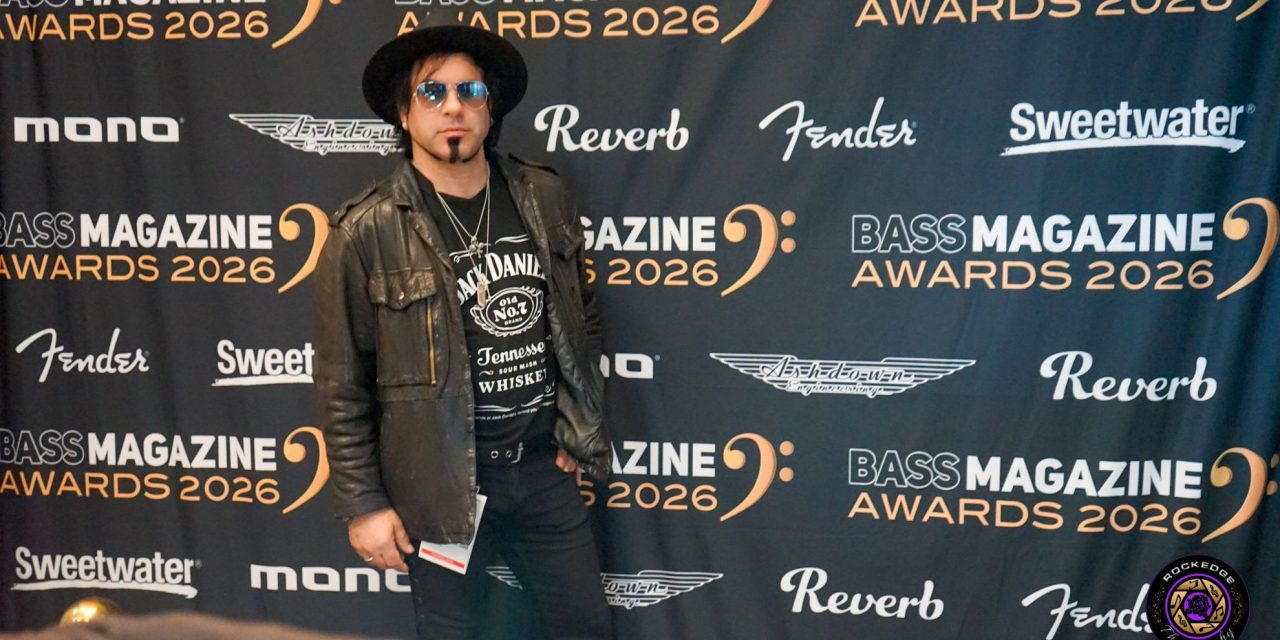
 Rob Math of Leatherwolf and Soul Sign – The NAMM Show 2026 Interviews
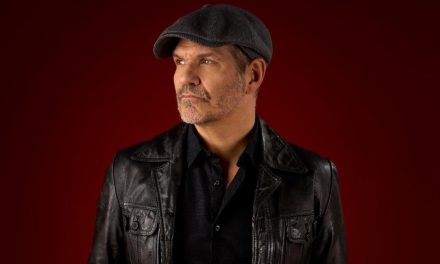
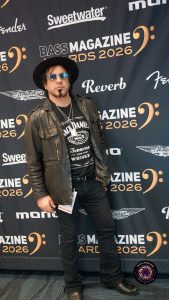
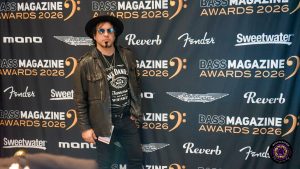
Few guitarists move as effortlessly between worlds as Rob Math. Whether he’s delivering the triple‑axe attack with Leatherwolf, crafting melodic firepower with Soul Sign, or harmonizing through yacht‑rock classics with Peter Beckett’s Player, Math has carved out a career defined by versatility, precision, and genuine passion for the craft.
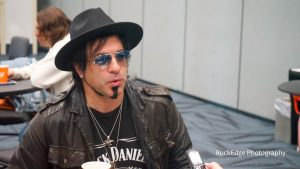
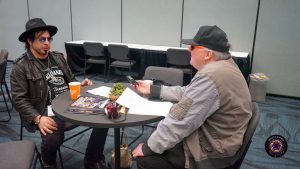
We caught up with him at this year’s NAMM Show — one of the rare times he wasn’t racing between performances, clinics, or gear demos — to talk about everything from the making of Kill the Hunted to his unexpected path into Player, his reunion with Soul Sign, and what’s next for Leatherwolf.
What followed was a candid, funny, and refreshingly honest conversation about music, chemistry, perseverance, and the strange magic of being in the right place at the right time.
Here’s our full interview with Rob Math.
We’re here with Rob Math of Leatherwolf. First of all, what has been your highlight of the NAMM Show so far?
Honestly, just having the time to actually walk around and check things out. A lot of years I’m playing for different companies and manufacturers, and you never get a chance to see anything. This time I was able to stop by the EBS booth and really dig into their pedals, which was cool.
But the biggest highlight has been running into familiar faces and catching up with people. I never get to do that — I’m usually stuck working the whole time. So having that freedom has been great.
 You’ve been with Leatherwolf for about 15 years now. How did you initially get involved with the band?
I think it was around 2010. I met Bjorn Englen, the bass player, at NAMM. We were both Fender artists, hanging around the Fender booth, and we just hit it off.
A little after the show, he reached out because his band Soul Sign had a tour coming up in Sweden and their guitarist couldn’t do it. He said, “We’re leaving in five days — can you do it?” So I went to his place, listened to the material, and it was really cool. We had great chemistry right away.
I flew out to Sweden, did the gigs, and the singer in that band was Michael Olivieri — the original Leatherwolf singer. We had a blast. When I got back home, maybe a month later, Michael called and said Leatherwolf was looking for a guitarist for some recording and possibly some shows.
He put me in touch with Dean, who started sending me parts. At that point we still hadn’t played any shows together — it was all recording. Eventually they decided, “Yeah, this is the guy,” and we started playing live. I think our first show together was in 2011. It’s been a ride ever since.
 How do you think the 2022 album Kill the Hunted compares to the classic Leatherwolf albums?
It’s definitely edgier. And the production process was very different. Almost the entire album was recorded by Dean Roberts and me in his garage. I recorded about 99.9% of the guitars on that record. Luke did a few solos, but the rest was me — it was a real labor of love and sweat.
Originally, around 2017, some of the original guys — Geoff, Carey, Dean — were talking about making a new record, and I was involved too. Geoff is an incredible writer; I call him the riff master. He had tons of killer riffs, and we started collaborating right before COVID.
But then Carey and Dean had a falling out, so it became Geoff and me planning to record all the guitars. Then Geoff and Dean had a falling out too — total soap opera stuff. Dean called me and said, “Do you think you can do all the guitars?”
At first I thought, Man, that’s a lot of work. Leatherwolf is known for the triple-axe attack, and I didn’t want it to sound like just one guy. But it was during COVID, Dean and I work well together, and I finally said, “Okay, let’s do it.”
So I took on the job of doing all the guitar parts — my rhythm parts, the second guitar parts, and then the third layers where needed. The challenge was keeping it true to the Leatherwolf sound, because a lot of the writing came from the original members, but many of the ideas were unfinished. We had riffs and parts, but not complete songs. We had to finish writing everything, then I had to record it all in a way that still felt like me while honoring the band’s style.
I wasn’t going to copy anything verbatim. I wanted to put my own stamp on it, but also make sure it felt undeniably Leatherwolf. We didn’t cut corners — sometimes we recorded things three or four times. I’d nail a performance, but then someone would say, “I’m not sure about the tone,” and we’d redo it.
At one point we even lost everything — all the tracks. Gone. I had to re-record everything from scratch. That was brutal.
During COVID we got into a rhythm. I’d go to Dean’s a couple times a week, masked up, and we’d grind through it. We tracked all the rhythms for 10 or 11 songs first — double-tracking everything — then moved on to the solos. That was tough too because you start running out of licks. I’d think, I already used all my tricks on this song!
Thankfully Luke came in and did a couple solos, and Joel Hoekstra guested on a version of “Thunder (MMXXII)” — not on Kill the Hunted, but still very cool.
 From heavy metal to yacht rock — you were also a member of Peter Beckett’s Player. What was it like working with Peter and with Ronn Moss?
It was super cool — honestly just a blast. Peter is such a great singer. He sounds exactly like the records, even live. He’s also an amazing musician. And the whole band was fun to play with. Everyone sang really well, and the harmonies were a big part of what made it special. We weren’t the Eagles, but that was the level we were aiming for.
Back in the day we rehearsed in Ronn Moss’s garage — he’s a ton of fun too — so it was always an interesting scene.
My introduction to those guys was totally random. I was in a music store just jamming, and Peter happened to be there. He overheard me playing and came over. At the time I was kind of repping for one of the companies, so I was showing him a guitar and talking gear. But he really perked up when I started doing some country licks.
I’ve always played a lot of styles — metal, classic rock, blues, chicken pickin’, country — and I used to do that stuff in clinics for amp companies like Marshall. I’d jump from Albert Lee–type lines to heavier stuff. Peter dug it and asked, “Where’d you learn to play like that?”
Then he said, “Have you ever heard my band, Player?” I said, “Player?” And he goes, “You know the song Baby Come Back?” And I said, “You mean Baby Come Back?” He said, “Yeah — that’s my song.” I couldn’t believe it. I used to see that video on TV all the time as a kid — Solid Gold, infomercials, all that.
He’s old-school, so he literally handed me his phone number on a piece of paper and said, “Give me a call. I’m looking for a guitar player.” I looked him up later and thought, Holy crap — that really is the guy.
I called him, and he sent me a bunch of tunes to learn — some Player stuff, some solo material. I had maybe a week or so to absorb everything. Because there were multiple guitar parts and vocal harmonies, I learned all the parts — every guitar line and every harmony — since I didn’t know who would sing what.
Eventually Peter invited me to Ronn’s house — he called it “the castle.” It was just the three of us in the garage. We played Baby Come Back, and everything clicked instantly. Peter sang the melody, Ronn took the lower harmony, and I jumped on the high falsetto part. It sounded great, and they loved it.
That was the start. We rehearsed, booked gigs, and the whole thing took off from there.
 You also have another band, Soul Sign, which recently released a new album. How did you become involved with Soul Sign?
That goes back to 2010 when I first met Bjorn Englen — Soul Sign is his baby. When he asked me to fill in for that Sweden tour, that was my introduction to the band. They had another guitarist originally, but he bailed last minute, so I stepped in. After the shows, they loved what I did and asked if I wanted to join.
We did some local LA shows, and I recorded some parts on the first Soul Sign record. I was with them for a couple of years, but then I got really busy with Player and Leatherwolf, and scheduling became impossible. So I stepped away for a while.
During COVID, Bjorn reached out again. He said, “I’m making a new album — want to come over and record some guitar stuff?” We’ve always been great friends, so of course I said yes. He had a couple tracks ready, and as soon as we started working, the chemistry was right back where it had been.
Mark Boals was in the band at that point — he’d joined back when I was still in the band originally — and hearing his vocals on the new material was inspiring. My style just fit naturally with what they were doing. Bjorn loved what I was adding, and the creativity was flowing.
We’d have these marathon sessions — start at noon and go until three or four in the morning. I remember one night thinking, I don’t feel so good, because we’d been recording all day, then having a couple drinks, and suddenly it was 4 a.m.
But the music was sounding great. The guitar parts had my stamp on them, and the songs were strong. With Mark on vocals, Bjorn on bass, and Mike Cancino on drums, it just felt right. Eventually they asked, “Do you want to rejoin the band?” And that was it — I was back.
We just released Desert Fire, and we’re really excited about it.
 What advice would you give a young artist seeking an endorsement deal?
That’s a good question. Honestly, it comes down to meeting the right people and focusing on being the best at what you do. Believe in your craft. An endorsement isn’t the end-all, be-all — a lot of people treat it like validation, like, “I’m endorsed now, I’ve made it.” It’s nice to be recognized, but that shouldn’t be the goal.
Just keep improving, be consistent, and be out there. These things rarely happen when you’re actively chasing them. You can’t force it. You meet someone, they like what you do, and something comes from it. Networking happens naturally when you’re present and doing your thing.
I was never pushy about endorsements — maybe I should’ve been, I don’t know — but for me it was always right place, right time. I’d just show up somewhere and somehow end up in the middle of something cool.
People want instant gratification, but you have to remember why you play music in the first place. Stick to that. For me, I can sit with a guitar for hours — practicing, playing, creating. That’s the core of it. The rest follows. And yeah, we all have to make money, but the passion has to come first.
I hope that helps a bit.
What’s coming up in the new year for Leatherwolf?
We’ve got a festival coming up called Two Minutes to Tulsa — that’s in March, the 27th or 28th. It’s a really cool event. We’re also looking at doing some shows in New York.
On top of that, we’re recording new music and re-recording some of the older classics. We’ve already got a couple finished. Did you hear the new version of “Thunder” we did? It’s a heavier, edgier take with our current singer, Keith Adamiak. We released it around the Kill the Hunted era, but it wasn’t on the album.
We’ve also got some new originals in the works, and there’s an instrumental track I can talk about now — Dean Roberts on drums, Barry Sparks on bass, me on guitar, plus George Lynch and Joel Hoekstra. So it’s basically Rob Math, George Lynch, and Joel Hoekstra trading on an instrumental. I just need to finish my last couple of crazy solos and we’ll have that wrapped up.
Lots of cool stuff coming.
 Do you have any message for Leatherwolf fans reading this?
Just keep checking out what we’re doing — we’ve got new music on the horizon. We love you guys. You kick ass. You’re the reason we do this. Thanks for all the support, and keep spreading the love.
In Conclusion
Catching up with Rob Math is a reminder of why musicians like him leave such a mark on every project they touch. Whether he’s navigating the precision of Leatherwolf’s triple‑axe attack, diving into the melodic textures of Soul Sign, or harmonizing through the smooth hooks of Peter Beckett’s Player, Rob approaches it all with the same mix of passion, humility, and relentless creativity.
As Leatherwolf gears up for new shows, fresh recordings, and some exciting collaborations, and as Soul Sign continues to build on the energy of Desert Fire, it’s clear Rob’s musical journey is nowhere near slowing down. His enthusiasm for the craft — and for the fans who fuel it — shines through in every story he tells.
Stay tuned, because if there’s one thing certain about Rob Math, it’s that there’s always another riff, another project, and another unexpected chapter right around the corner.
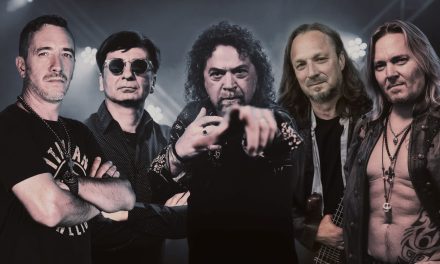
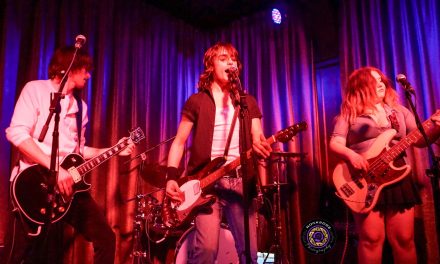
(Interview by Ken Morton – Photos by Karyn Burleigh of Rock Edge Photography)
Rob Math on Instagram
Leatherwolf on Instagram
Soul Sign on Instagram