
Lion’s Share Unleashed: Lars Chriss Talks Inferno, Legacy, and the Road Ahead
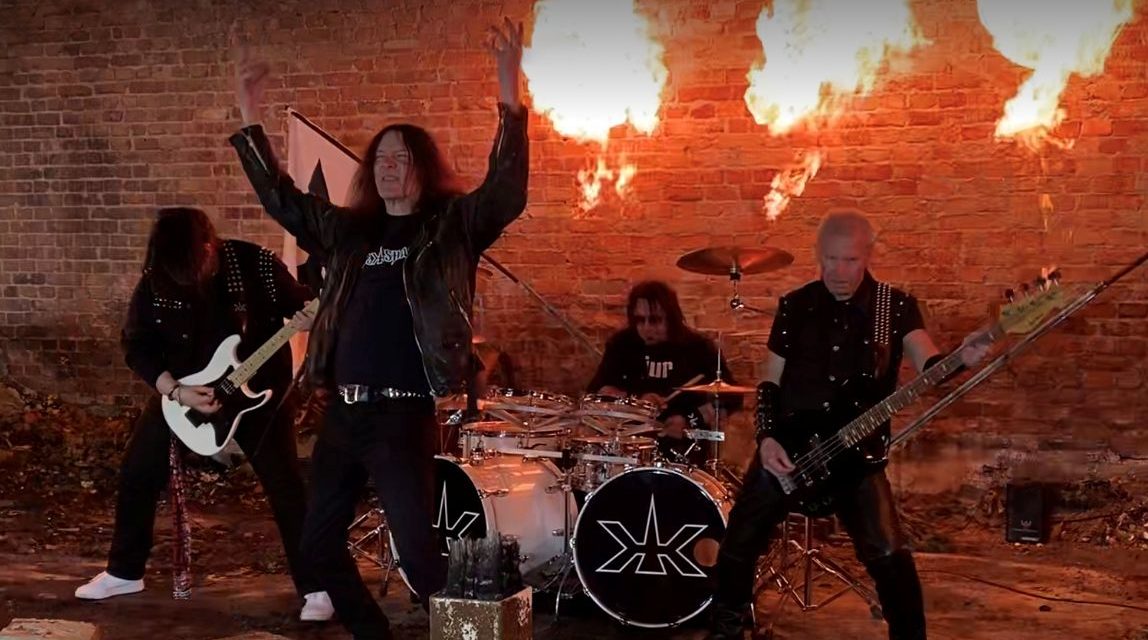
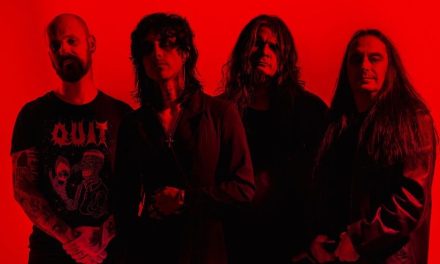
Lion’s Share 2026
Lion’s Share Unleashed: Lars Chriss Talks Inferno, Legacy, and the Road Ahead
After more than a decade of industry upheaval, lineup changes, outside projects, and a global pandemic that stopped the world in its tracks, Lion’s Share have returned with Inferno — a record that feels less like a comeback and more like a rebirth. Guitarist, songwriter, and producer Lars Chriss, the band’s driving force since the beginning, has spent the past several years quietly shaping the next chapter of Lion’s Share while navigating a music landscape that looks nothing like it did when the band last released a full-length album.
But Inferno isn’t a collection of leftovers or a patchwork of old singles. It’s a fully re‑recorded, sharpened, and revitalized statement of intent — a reminder of why Lion’s Share earned their reputation as one of Sweden’s most respected heavy metal exports. With anniversaries approaching, long‑lost albums being remastered, and long‑awaited touring plans finally taking shape, the band stands at a rare crossroads: honoring their past while forging a heavier, darker future.
We sat down with Lars Chriss to talk about the making of Inferno, the band’s evolving legacy, the projects that kept him busy during the downtime, and why 2026 might finally be the year Lion’s Share take their roar across the Atlantic.
First of all, the new album is called Inferno. Is there any overall story or concept behind the title?
No, not really. It’s simply a combination of the artwork and discussions between the band and the artist. There’s no big concept behind it.
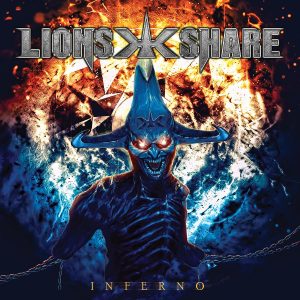
Inferno by Lion’s Share
It’s been a while since the last Lion’s Share full‑length. What made you decide that 2026 was finally the year to make it happen?
After the last album in 2009, the music industry went through a complete transformation. Physical sales collapsed, streaming took over, and the focus shifted to singles. Then the U.S. bank crisis hit and affected the whole world’s economy. Everything was in turmoil.
I told our singer, Patrik (Nils Patrik Johansson), “Let’s keep writing for the next album, but let’s chill for a bit and see what the industry looks like in a couple of years.” Around that time, I also started getting offers to produce and mix other bands, which took a lot of time. Patrik and I would still get together maybe twice a year to write, but we live three hours apart, so it wasn’t always easy.
The years just flew by. Around 2017, Patrik said, “Come on, Lars — let’s get our shit together and finish this album.” So we started recording songs and released a few digitally, just to show fans we were still alive. They were basically demos or work‑in‑progress versions, but the fans responded really well.
As a producer, I actually enjoyed focusing on one track at a time. Each song got its own spotlight — a press release, maybe a lyric video — and that was fun. But eventually fans started demanding a CD, and vinyl was coming back strong. They wanted physical releases.
So we planned an album for 2020. We even booked shows and played some headline dates in Germany. We flew home from Frankfurt on a Sunday… and three days later the whole world shut down because of COVID. So we lost another couple of years. There was no point releasing an album we couldn’t tour on. And here we are now.
Yeah, and it seems like those years went by pretty fast, didn’t they?
They did — especially because I was producing so many albums. I was heavily involved in a lot of them, including the three solo albums by our singer, Nils Patrik. Each one of those was basically like making a Lion’s Share album in terms of workload.
We wrote a lot of songs over the years, so when it was finally time to record Inferno, we had plenty to choose from. We also revisited some of the singles we had released, re‑recorded them, improved them, replaced solos and drums — whatever was needed. So Inferno isn’t a compilation of previously released singles. These are new, fully re‑recorded versions.
This is a super exciting time for Lion’s Share. Are there any plans to tour — maybe even here in the States?
We have our first show on the album’s release day, March 27th, here in Stockholm. Then we have six more shows booked in Sweden. Of course, we hope to play all over Europe, and we’d love to play the United States for the first time. It’s never happened before. Even one of the cool cruises you have, or ProgPower — something like that.
But we need someone to bring us over. We’re available and keeping our fingers crossed.
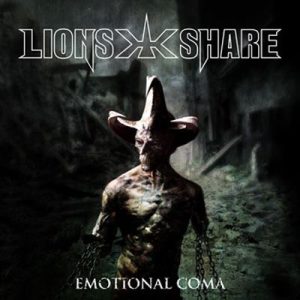
Emotional Coma by Lion’s Share
Let’s talk about some Lion’s Share anniversaries. In 2007 you released Emotional Coma, which I believe was Patrik’s first album with the band. With its 20th anniversary coming up next year, how do you look back on it now?
I still think it’s a great album. We wrote that one — and half of Dark Hours, which came two years later — around the same time. So again, we had a lot of songs to choose from and could build a strong album.
Inferno is actually the first album I’ve mixed myself. I produced the earlier ones, but I do have plans to go back and remix Emotional Coma in a style closer to the production on Inferno. Just to spice it up a bit. But I need time to do it.
We’re planning to re‑release the entire six‑album back catalog. None of those albums were ever released on vinyl because vinyl wasn’t big in the ’90s and early 2000s. The CDs have been out of print for decades. We’ve already changed the artwork for the first four albums and remastered them. So Lion’s Share fans have a lot to look forward to.
Another milestone: your 1996 album Two is hitting its 30th anniversary. What comes to mind when you look back on that one?
That was a long time ago. We don’t really do anniversary celebrations because the band never truly broke up, but we’ve had long gaps. I think you need to be active all the time to really celebrate anniversaries properly.
It was a completely different lineup back then. The band was semi‑progressive, and we had a permanent keyboard player. There were lots of keyboards and instrumental parts. So that album feels very far away from what Lion’s Share is today.
Lion’s Share has toured with some epic performers — Motörhead, Dio, Saxon, Manowar. What do you remember most about those experiences?
It was fantastic. I grew up on the heavy metal of 1980 to ’87 — Judas Priest, Saxon, Accept, Black Sabbath. That’s my DNA when I write songs.
So to tour with Saxon — we did two tours with them — and then open for Dio, Manowar, and Motörhead for a month… it was amazing. I couldn’t believe it. I used to sit in my teenage bedroom listening to those albums and worshipping those guys. To finally be on tour with them and hang out every day was mind‑blowing.
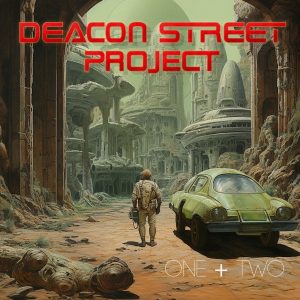
Deacon Street Project
Around 2004–2006, you worked on the Deacon Street Project with Tommy Denander. What was that experience like, playing a different style of music?
We started Lion’s Share in the ’80s, and that more melodic style was huge in Sweden at the time. I’ve always liked a lot of those bands — I’m a big Foreigner fan, for example — so I’m not a stranger to that kind of music.
As long as it’s a separate project, I’m totally fine with it. When we released the first Lion’s Share album, we tried to bring all our influences into one band — the metal stuff, the progressive stuff, the melodic AOR stuff — and that didn’t really work. It’s better to keep Lion’s Share pure classic heavy metal and do the other styles outside of it.
I did a great album in 2007 called Road to Ruin with Matti Alfonzetti — fantastic record, but it didn’t fit Lion’s Share. I also worked with the UK band Seven, which was pure AOR, and we made two great albums. So I’m not against different styles of hard rock or metal, but I want to keep them separate from Lion’s Share.
Another project you were involved in was Johan Kihlberg’s Impera. How did you become part of that, and are you still working with them?
I’ve known Johan since around 1995. He was the president of the Swedish KISS Army, and I grew up loving KISS — they’re the reason I started playing in bands.
Around 2013, he wanted to release a couple of albums under his own name. He hired me as a mixer and co‑producer, and I think I did three albums with him, with Tommy Denander and Matti Alfonzetti also involved. Then he wanted to change the lineup a bit, and I got more involved — writing, playing, and mixing. I think we’ve done five or six albums now.
After the last studio album — which had great guests like Snowy Shaw on drums, John Levén from Europe on bass, and Lars Säfsund from Lionville on vocals — we got to open for KISS on their farewell show in Sweden. It was supposed to be their very last show, though they came back for another. It was in a packed ice hockey arena in Gothenburg, and opening for our teenage idols was incredible.
That show was recorded and released as a live CD and DVD a couple of years ago. We’re still friends and still work together, but it’s all about time. Johan is a big Lion’s Share supporter and wants to start another Impera album, but if he wants me involved, he’ll have to wait until we’ve promoted Inferno and played some shows. But yes — I’m sure we’ll do another Impera album.
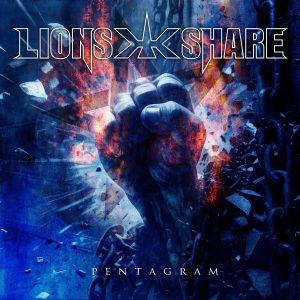
Pentagram single by Lion’s Share
Are you currently involved with any other new bands or projects outside of Lion’s Share?
Lars: No, not right now. We’re in full‑speed Lion’s Share mode, and it’s hard for me to take on big projects. I can do the occasional mix, but when I’m involved in writing, arranging, producing, and mixing, that’s three or four months of work — and I don’t have that time at the moment.
When we’re not working 100% on Lion’s Share, I do work with Nils Patrik Johansson on his solo albums. It’s basically the same lineup as Lion’s Share — same drummer, same keyboard player — so in a way, those albums feel a bit like Lion’s Share records. He writes the initial ideas, and I take his demos and produce them.
With Lion’s Share, we’re a riff‑based band. I love that Tony Iommi riffing style. I start with riffs, build an instrumental background, and then Patrik and I work on vocal melodies together in my studio — bouncing ideas back and forth until we’re happy. Then he writes the lyrics. It’s a different process, but the same team.
One of the recent covers you released — though it didn’t make the album — was your 2023 version of “Life on Mars?” by David Bowie. What made you choose that song, and has Bowie influenced Lion’s Share at all?
Not really, no. Usually our covers start with me getting an idea when I hear a song — “We could do it like this, make it a Lion’s Share song.” We try it out, and if it works and everyone’s happy, we release it as a fun thing. That’s how all our covers have happened over the years — just me getting a crazy idea.
With the new album coming out, what’s next for Lion’s Share? What do you hope this year brings?
We’re going to go out and play live shows to promote Inferno and give it a proper chance. At the same time, we’ll start working on the next album, because it takes a long time. We hope to have it out in autumn 2027. We don’t want these huge gaps anymore.
Do you have any message for Lion’s Share fans in the United States who are reading this?
We’ve always felt that our music fits really well with the American hard rock audience. We’re super grateful for your support over the years, and it would be fantastic to finally come over, meet you, and play live.
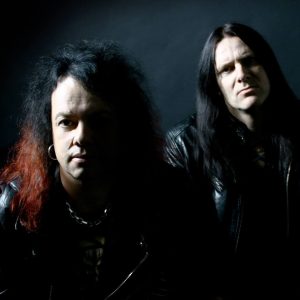
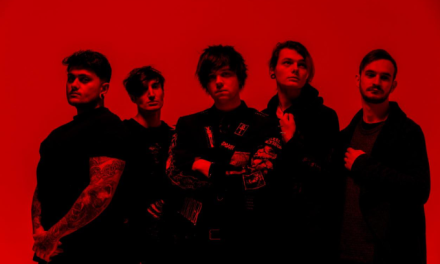
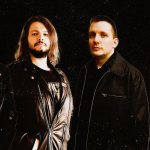
Lion’s Share 2021
We’re not the typical European power metal band — we’re darker and heavier, more in line with American power metal like Savatage, Riot, Metal Church, those kinds of bands. For some reason, we’ve always felt a connection with U.S. fans, and we’ve always felt appreciated over there.
In Conclusion
As Lion’s Share step back into the spotlight with Inferno, it’s clear that the years away haven’t dulled their edge — they’ve sharpened it. Lars Chriss speaks with the calm confidence of a musician who has weathered industry upheaval, creative detours, and global shutdowns, only to emerge with a renewed sense of purpose. The band’s past may be filled with milestones, tours with legends, and albums that helped define their sound, but their future feels even more compelling.
With new music, long‑awaited reissues, and the promise of live shows on the horizon — including the hope of finally reaching American soil — Lion’s Share stand ready to reclaim their place in the heavy metal landscape. Inferno isn’t just a return; it’s a reminder of what made the band special in the first place, and a signal that there’s still plenty of fire left to burn.
For longtime fans and newcomers alike, the message is simple: Lion’s Share are back, louder and hungrier than ever. And if Lars Chriss has his way, the roar will only grow stronger from here.
(Interview by Ken Morton)
Lion’s Share on Instagram