




Lost at Sea and Found Again: The Evolution of The Legal Matters
 Lost at Sea and Found Again: The Evolution of The Legal Matters
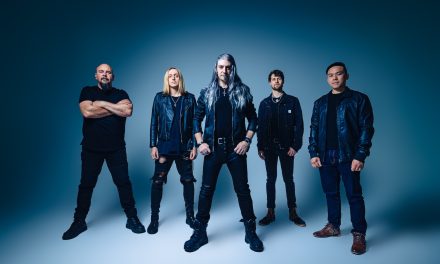
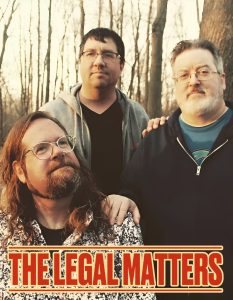
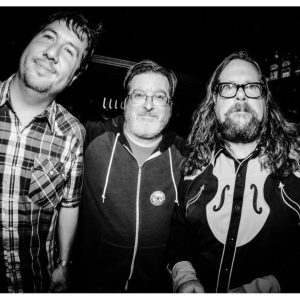
For more than a decade, The Legal Matters have quietly built one of the most thoughtful and harmony‑rich catalogs in modern melodic pop. What began as a friendship between Detroit‑area songwriters Chris Richards and Keith Klingensmith eventually expanded into a three‑way creative alliance with Bay City producer‑musician Andy Reed — a partnership that has yielded some of the most beautifully crafted pop records of the last twenty years. Their latest album, Lost at Sea, released through Big Stir Records, finds the trio pushing deeper into collaborative songwriting, emotional nuance, and Beach Boys‑esque vocal architecture while still sounding unmistakably like themselves.
In this candid conversation, Chris Richards reflects on the band’s evolving creative process, the unlikely origins of their new album title, the joys and challenges of long‑distance collaboration, and the winding path that led from Hippodrome to The Phenomenal Cats to The Legal Matters. Along the way, he shares memories of early songwriting missteps, the thrill of unexpected fan connections, and why the band’s future may lie more in the studio than on the stage.
First of all, introduce yourself and tell me what you do in The Legal Matters.
I’m Chris Richards. I play guitar, sing, and write songs. The Legal Matters are really a collective of three songwriters, and we all pick up whatever instrument is in front of us. We’re not a traditional “bass player, guitarist, lead singer” type of band. It’s much more fluid than that — very collaborative.
Where are you guys based out of, and what is your local music scene like there?
The other two members of The Legal Matters are Keith Klingensmith and Andy Reed. Keith and I live in the Metro Detroit area, and Andy lives in Bay City, which is about two hours north. Like most big states, those two areas feel like completely different worlds.
Detroit has a pretty thriving music scene — maybe a little more cutting‑edge, with a lot of different pockets and sub‑scenes. Bay City, from what I can tell, leans a bit more rock and roll and country, though there are definitely some adventurous bands up there too.
We don’t really play live, so we’re not deeply plugged into the current live scene, but Detroit has always had a strong power‑pop community. People like Nick Piunti and Ryan Allen have been doing melodic pop for a long time. Keith and I were in a band together back in the late ’80s, so we’ve been part of that world for decades.
How did you wind up signing with Big Stir Records?
Our first record came out independently in 2013. Then Omnivore Recordings picked us up in 2016, which was a big win for us. After that, we went back to doing things on our own in 2021.
Keith had already been friends with Rex and Christina from Big Stir because he runs a small power‑pop label called Futureman Records, and they had done some shared releases. We’d always admired how Big Stir operated — every band they worked with seemed to get radio play, podcast attention, press, and global reach. They really know how to get records out into the world.
Making a record is one thing, but selling a record is a completely different skill — and most musicians aren’t great at that part. Rex and Christina are just wonderful people who genuinely love music, and we couldn’t be happier working with them.
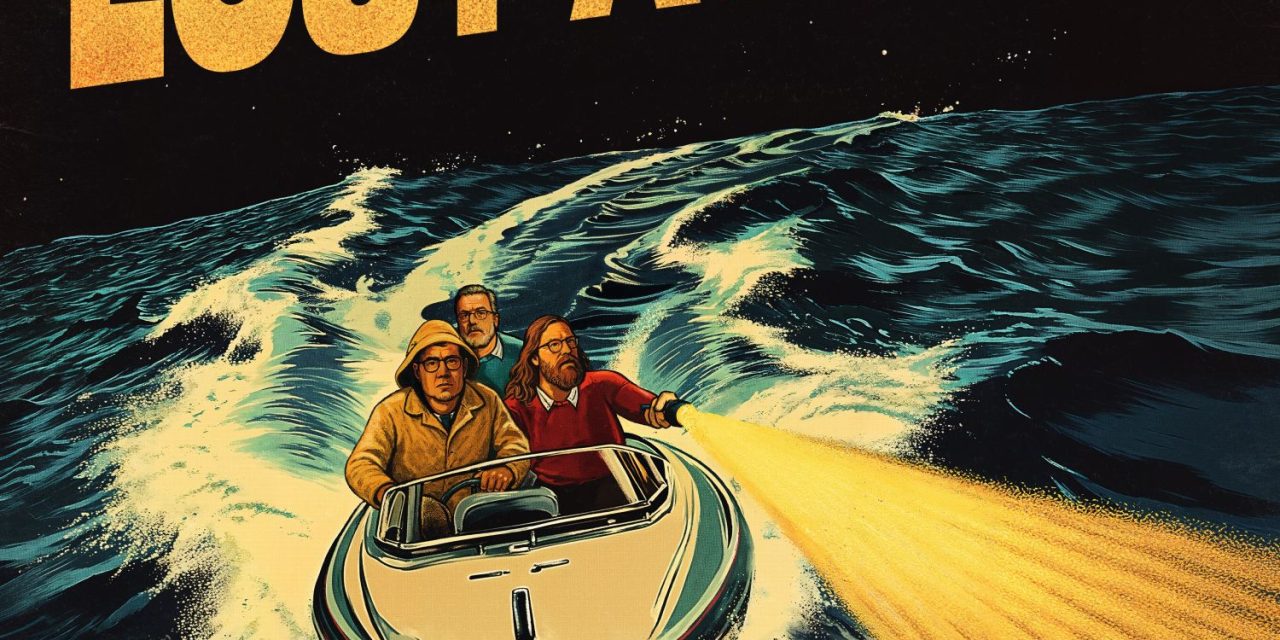
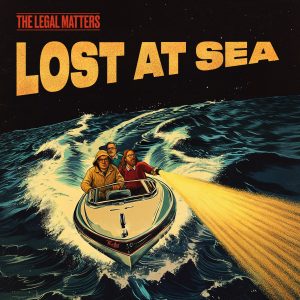 You have a new record out called Lost at Sea. Tell me about the title — the story or concept behind it. We all feel lost at sea sometimes.
Yeah, absolutely. When we were making this record, we actually had a different title in mind — one that one band member was very against. For a long time, we were jokingly running with the idea of calling the album Thriller. Keith hated it. There was no way we were going to name the record Thriller if even one person wasn’t on board. Majority rule doesn’t really work in a band like ours.
One of the last songs we tracked was “Stuck With Me,” and there’s a line in it about feeling “lost at sea.” It hit me immediately — that’s exactly how things feel right now. Not personally; we’re all happy guys with families and stability. But in a geopolitical sense, the world feels chaotic. A lot of people feel unmoored, like they’re floating alone in a little dinghy. The title captured that feeling perfectly.
Let’s talk about a few of the songs. “Everybody Knows” is one of my favorites on the album. Tell me about that one.
“Everybody Knows” was a fun one. On our previous records, we worked in a very traditional way: Andy or I would demo a full song, and Keith would bring in one of his songs, and we’d build from there.
For this record, we decided to flip the process. No finished songs. No complete lyrics. Just ideas — a verse, a chorus, a groove, a melodic sketch. We wanted to build the songs together from the ground up.
Andy came in with this really cool Spoon‑like groove — chugging guitars, that little ding‑ding‑ding‑ding riff — and a basic structure. Not many lyrics, just enough phrasing to show where things might go. His idea was to keep it groove‑based with no real chorus.
As I was driving up for one of our sessions — it’s about a two‑hour drive — a melody suddenly hit me. I don’t know where melodies come from; they just appear. I heard Andy’s groove in my head, and over it came this counter‑melody: “It doesn’t matter what you say or what I do…” I grabbed my phone and recorded a voice memo while irresponsibly driving 75 miles an hour.
When I played it for Andy, Keith, and our engineer, we all felt it immediately. That became the chorus, and we built the rest of the song around it. It gave the track this cool dynamic — a tight, rhythmic groove that suddenly explodes into something big and soaring. We’re really proud of that one.
 What is the message of “The Message”?
I’d say the overall feeling of that one leans a little into religious territory — not religious doubt, exactly, but more doubt in the individual who claims to be religious. It’s about the hypocrisy of not living out the things you supposedly learned from your “good book,” whatever that may be.
It’s not quite a classic good‑versus‑evil song, but it does call out the disconnect between preaching a message and actually following it. And that can apply to anything — religion, vows, friendships. A lot of people have come back to us with their own interpretations of the lyrics on this record. One person thought it was a political song, which never crossed our minds. But that’s what I love about lyrics: people take a bunch of words and apply them to their own lives in ways you never expected.
To me, it’s a song about individuals straying from their own moral beliefs.
We’ve talked about the first couple of songs. Let’s jump to the end of the album — “The Exit Signs.” Tell me about that one.
“The Exit Signs” is a strange one. I had the verse melody and chords for a while, and Andy had a completely different song that included what became the chorus. As we were working, those two pieces started fitting together.
It’s funny — even though it’s the last track on the album, it was actually the first song we started working on for this record, maybe early 2025 or late 2024. When we laid down the verse, we went into this super Brian Wilson‑inspired production. It’s probably the most Beach Boys‑ish thing we’ve ever done — or maybe more like Brian Wilson’s solo stuff from the ’80s.
But the song itself is kind of a Frankenstein. It wasn’t written as one cohesive piece; it was two separate ideas stitched together. And that was new territory for us. We’d never really tried writing songs together before. We all thought, “If this doesn’t work, we’ll just go back to our usual process.” But it did work — shockingly well. It was the most collaborative idea we had, and we started the record with it. A real swing for the fences.
 Let’s talk about a few anniversaries. Right now, Conrad is celebrating its 10‑year anniversary. When you look back on that album now, what comes to mind?
I honestly hadn’t thought about it until you mentioned it. But yeah — 2016 — that’s the 10‑year anniversary of Conrad. That was the record where we felt like, “Okay, we can really do this.” The public loved it, the press loved it, and we actually played live shows for that album. That was probably the last time we did full‑band performances.
I’m really proud of Conrad. It was such an easy record to make, and I only have great memories of it. Being involved with Omnivore was also really cool. They’re primarily a reissue label, but at the time they were developing more melodic pop bands, so it felt special to be part of that roster for a while.
Let’s go back to Dogbunny by Hippodrome. When you look at that album now, what do you think of it in retrospect?
That was a completely different time. Keith and I were around 19 or 20 in 1989, and that was my first real band. I had written songs before, but mostly terrible ones in high school bands. I honestly believe you have to write bad songs before you can write good ones — otherwise you don’t learn anything. You don’t learn how to write a hook, or lyrics that land, or how to be in a band that can actually perform live.
Hippodrome was huge for me. That’s where I met Cormac — he was in a band called The Shouting Club, and we gigged together a lot. We were even roommates around that time. Looking back now, at 57, it blows my mind. A lot of my contemporaries stopped — maybe not writing songs, but definitely stopped recording them. Being a songwriter is one thing; being a songwriter who makes records is a whole different beast. You need a certain level of confidence that someone out there cares.
So when I look back at 1989 and then look at what we’re still doing now, it astonishes me. I’m grateful we never stopped.
 Same question about The Phenomenal Cats. What do you think of that project now?
The Phenomenal Cats came out of the ashes of Hippodrome. My wife and I had just had our daughter in the early ’90s, and instead of continuing to play out twice a month, I stepped away from the local rock scene. But I was still writing — a lot. Not all good, but a lot.
I built a little eight‑track ADAT studio in my basement, and Keith would come over because that was the only way we’d see each other. We’d just write and record endlessly — weird little pop songs, harmonies, experiments. That period was foundational for what eventually became The Legal Matters.
When we met Andy in 2013 during a session for one of my other bands, we immediately clicked. We asked him if he wanted to join The Phenomenal Cats as a recording project. There wasn’t even a hesitation. We went out, drank too much, and the next morning wondered if it had been a terrible idea. And here we are, more than a decade later, still making records together.
The Phenomenal Cats is where we really honed our harmony skills. When Andy joined, it elevated everything. Our three‑part harmonies feel almost brotherly — our voices blend in a way that feels natural and effortless. That’s the legacy of The Phenomenal Cats for me.
Back to The Legal Matters — would you guys like to tour or play shows in support of the new album?
I’d say those days are completely over. Andy and Keith are very adamant about not playing live anymore, and I get it. It’s a lot of work, and since we live two hours apart, we can’t just get together regularly to rehearse.
We’ve also recorded ourselves into a corner. The instrumentation on our records is so layered that we’d probably need ten people on stage to recreate it. And with our careers and where we are in life, playing shows just isn’t part of the future.
When was the last time one of your bands played out here in Los Angeles?
I don’t think any of us ever have. We’ve always been more of an East Coast band. From Michigan, you can drive to New York, Boston, Chicago — but driving to LA isn’t viable. You’d need label support, and that never lined up. I would have loved to, though.
Are you currently involved with any other bands or projects outside of The Legal Matters?
No. I had a band called The Subtractions for about twenty years, but we disbanded a few years ago, right before COVID. That was my live band. I miss it.
Of the three of us, I’m probably the one most likely to play live again someday — outside of The Legal Matters. Keith will never get on a stage again, and Andy has retired from live performance multiple times. I think it’s stuck now. Playing live is a different beast. Some people do it so well, and it’s hard to compete with that level of experience.
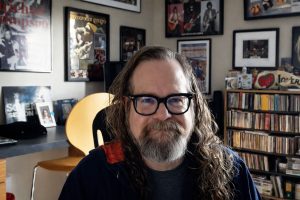
Chris Richards of The Legal Matters via Zoom!
What do you hope the rest of 2026 brings for you and for The Legal Matters?
I hope people dig Lost at Sea. It feels like it’s off to a good start. We’ve talked about getting together in the summer to maybe do a little Beatles‑style Abbey Road medley — Keith sings one song, Andy sings one, I sing one. It might happen.
We’ve also talked about making another record like Lost at Sea — starting with ideas instead of fully composed songs and building them together. I wouldn’t be surprised if we start a follow‑up in the fall. Our cadence has been 2013, 2016, 2021, 2025… so maybe 2027.
Do you have any messages for fans who have followed your career from Hippodrome to now?
I adore you. If you’ve followed us since Hippodrome, you deserve a medal — a real, society‑issued medal that I would personally fly to LA to place around your neck.
As someone who never did this as a career, it’s the most amazing feeling to wake up to an email from someone in Spain saying the record blew their mind, or someone telling us a song helped them through a horrible time. I don’t even know if my brain can fully comprehend the power of that.
Anytime someone streams a song, buys a record, or says something kind — especially in a world where social media can be such a cesspool — it means everything. We make these records in our spare time, and the response to The Legal Matters has been incredible.
If you keep listening, we’ll keep making music.
In Conclusion
As Lost at Sea makes its way into the world, The Legal Matters continue to prove that great pop music doesn’t require a stage, a tour, or a spotlight — just three voices, a shared vision, and the kind of friendship that can weather decades of life, change, and reinvention. Chris Richards speaks with the humility of someone who still can’t quite believe people are listening, yet the band’s catalog tells a different story: one of craft, care, and a deep commitment to melody that has quietly resonated with fans across continents.
Whether they gather again this summer for a Beatles‑style medley, begin sketching the next record, or simply let Lost at Sea drift into the hands of listeners who need it, The Legal Matters remain a testament to the enduring power of harmony — musical and otherwise. And as Chris says, if we keep listening, they’ll keep making music. That’s a promise worth holding onto.
The Legal Matters on Facebook