


Magnet, Steel & Serendipity: The Enduring Journey of Walter Egan
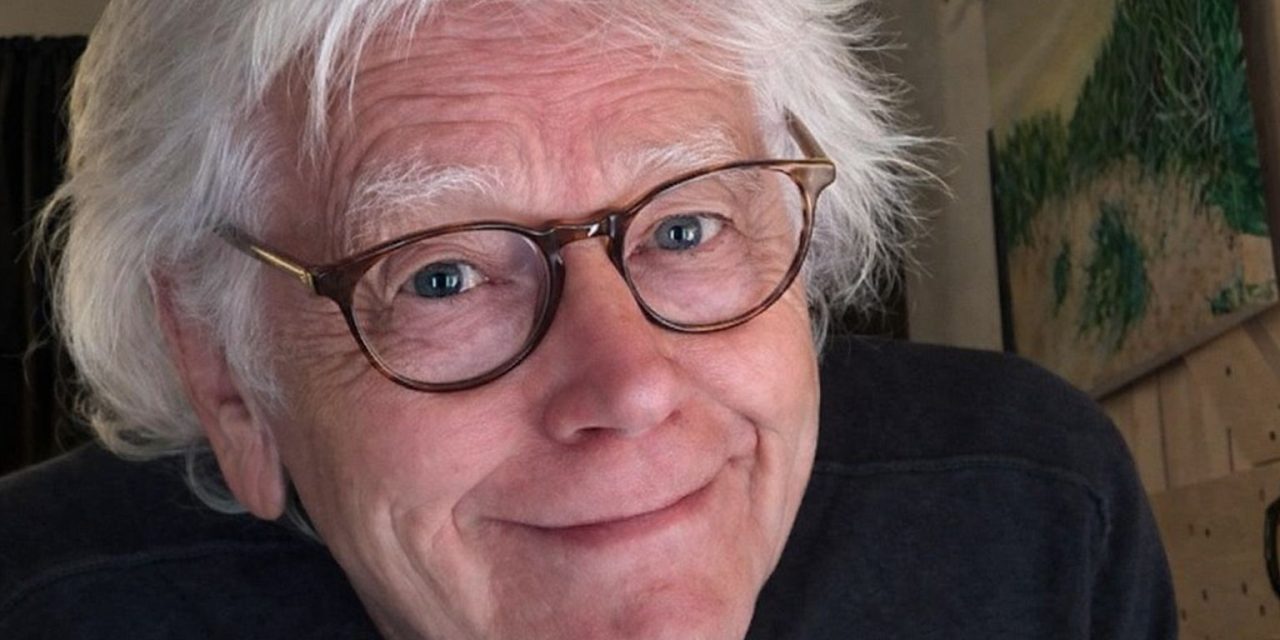
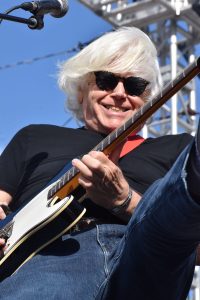
Walter Egan
Magnet, Steel & Serendipity: The Enduring Journey of Walter Egan
There’s a certain cosmic poetry to Walter Egan’s career — a life shaped by chance encounters, California highways at dawn, and the unmistakable pull of musical destiny. Best known for the timeless hit “Magnet and Steel,” Egan has lived a story that stretches from the Laurel Canyon era to Nashville’s songwriting circles, from Fleetwood Mac’s inner orbit to the modern resurgence of yacht rock. Now, as he joins Ambrosia for Yacht Rock The Dock at the Downey Theatre on June 6th, Egan returns to Southern California with a legacy that feels both nostalgic and newly energized. What follows is a conversation as candid, funny, and deeply storied as the man himself — a songwriter who has never stopped creating, connecting, or following the strange, beautiful currents of his musical life.
What are you looking forward to the most about the Yacht Rock The Dock show with Ambrosia at the Downey Theatre?
Coming to Downey, of course. I lived in Southern California for about twenty years, and I haven’t lived there for about that long now. I left in ’92, so it’s been even longer than I realize sometimes. I’m always excited about getting back to California. I still have a lot of good friends out there.
I was actually surprised to see the show was in Downey. My manager, Greg Lewerke — who sadly passed away a couple of years ago — managed The Blasters, and I always associate The Blasters with Downey. I think they’re from there. And doesn’t Downey have a vintage McDonald’s? Do you know much about Downey?
Yeah — so we’ll go to McDonald’s and then we’ll come to the show.
Well, you know, In‑N‑Out Burger just arrived here in Middle Tennessee, and it’s a bit jarring because they recreate the facilities exactly like the ones in California. So going there feels like stepping into California for us here.
It’s in a part of Franklin — which has become this huge growth area. When I moved here about 30 years ago, it was a nice, sleepy town where some songwriter friends of mine lived. But it’s become a boom town along with Nashville over the last five years or so.
I’m doing these shows with a guy who’s also from Franklin — Mr. John Ford Coley of England Dan & John Ford Coley fame. And for years now, John has been complaining to me about all the carpetbaggers moving in — the California license plates, the slightly different attitude on the roads. People drive a little more aggressively now. It really does feel like Southern California sometimes.
So going to Southern California might actually feel like a relief from being in Franklin. I’m looking forward to just being back in California, even though it’ll be a brief stay.
Are you a native Californian, Ken?
Yes — born and raised here in Los Angeles.
Cool. You’ve seen a lot of changes too.
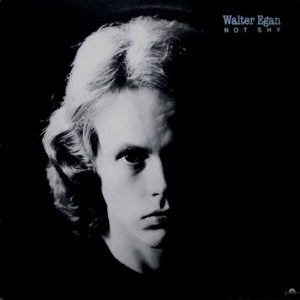
Not Shy by Walter Egan (1978)
Definitely. So of course we’re going to go straight to “Magnet and Steel,” but I promise we’re going to talk about other things too.
Well, you know, it is part of the legacy. I’m “Not Shy” about it, so to speak. (Editor’s Note: Not Shy is the Walter Egan album featuring Magnet and Steel)
What do you remember most about creating “Magnet and Steel”? Did you have any idea it would become such a massive legacy song for you?
It certainly didn’t occur to me at the time. As a songwriter, you try to write from your heart — and my heart was very much captured by my producer. On the first record she produced, and on the second she was one of the singers, of course I’m talking about Stevie Nicks.
When COVID hit, I finally decided to write my story all the way through. And part of that process was asking myself: How did these things happen the way they did? What were the decisions — the butterfly‑effect moments — that led me to that place? You can trace it all the way back to high school if you want, but more realistically, it starts with a guy named Chris Darrow.
Chris lived in Claremont, California. I met him in 1970 when he was working with Linda Ronstadt — he’d been in the Nitty Gritty Dirt Band and Kaleidoscope, and he was tour‑managing Linda while also playing fiddle and mandolin. He wanted to produce my college band, Sageworth. We were at Georgetown University. We negotiated for a while, but it fell apart because he wanted publishing, and I wasn’t ready to give that up. But we stayed friends.
When Sageworth broke up a few years later, I talked to Chris and he said, “Come on out to California. You can be in my band.” So I took that as a sign. In April of ’74, I moved to California, stayed with Chris, and wound up touring England with him, opening for a group called The Man Band.
That was May ’74. On that tour, I met Andrew Lauder from United Artists UK. Two years later, he was in L.A., and I had a band based out of Claremont. He came to see us at a Troubadour hoot night — the open‑mic night — and he offered me a record deal. Not the band. That was touchy, because I’d always been in bands where I wrote the songs, played lead guitar, and often led the group, but I never thought I sang as well as everyone else. Other people always sang my songs.
So my first question was, “You want me to sing too?”
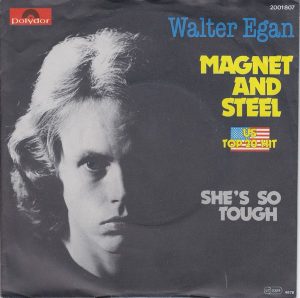
Magnet and Steel by Walter Egan
The offer was for three singles — six songs — for United Artists in England. And by pure happenstance, we’d been doing demos at this funky little studio in Van Nuys called Sound City. At the time, it was just a run‑of‑the‑mill studio. Nothing special on the surface. But if you looked closer, you realized the Buckingham Nicks album had been made there, and what people call the “White Album” by Fleetwood Mac had been recorded there too.
So someone said, “Maybe Buckingham Nicks could produce your six songs.” I had no idea who Buckingham Nicks was. I thought it was one person. And then I thought Stevie was the guy and Lindsey was the girl — because a magazine had mislabeled them. By the time I met them in April ’76, I was all tangled up.
They were playing a Sunday afternoon show in Santa Barbara. I went up there and was blown away by how good Fleetwood Mac was — even in daylight. After the show, I met Lindsey and Stevie. Lindsey said, “By the way, Stevie’s not going to be doing it. We’re having some problems.” So suddenly Lindsey was going to be the producer. Then management stepped in, cooler heads prevailed, and they came in as a pair. They wanted to preserve the Buckingham Nicks brand outside of Fleetwood Mac — they were only about a year and a half removed from releasing that record.
I was incredibly fortunate to be in the right place at the right time. Lindsey and I shared a lot of influences — Beach Boys, Kingston Trio. My middle name is Lindsey, spelled the same way. And Stevie reminded me of Annie McLoone, the lead singer in Sageworth. Annie’s birthday is about a week and a half after Stevie’s. All these cosmic elements were swirling around.
After struggling for six or seven years to get a record deal — first with my college band, then on my own — suddenly doors were opening. People were saying, “I loved you from the beginning.” My manager even made buttons that said I was there from the beginning, poking fun at the CBS execs who claimed that.
Once Lindsey and Stevie produced those first six tracks, everyone was blown away. They wanted to do the whole album, working around Fleetwood Mac’s schedule. Meanwhile, my manager Greg Lewerke had connections with David Krebs — who managed Aerosmith — and Krebs took the tracks to Columbia. He came back with a six‑album deal and advance money. Suddenly it was all happening.
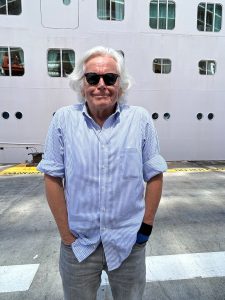
Walter Egan
Having Lindsey and Stevie on board gave me confidence to step out as a singer and make those early recordings.
One night, we were working on a song of mine called “Tunnel of Love” — my most salacious song, you might say. It was late. Lindsey had gone home. Stevie turned out all the lights, lit a candle in Studio A, and sang this wailing Welsh‑witch thing she does. If you listen closely to that track, there are some magical background vocals happening.
Afterward, I drove her home. Then I headed back out to the Inland Empire — Claremont, Ontario, Pomona. As dawn was breaking, I got behind a car — a full‑on pimp‑mobile, candy‑apple red Lincoln with lights underneath and a diamond window in the back. The license plate said NOT SHY.
I took that as a message from the collective unconscious.
By the time I got home, I had fit this new concept — Whoa, that’s Stevie Nicks, holy cow — into a song I’d been working on but didn’t like the lyrics for. It had this 1950s feel. Within an hour, I had finished the new lyrics for “Magnet and Steel.”
It was a memorable evening, you might say.
“Magnet and Steel” has 26 million streams on Spotify. What does a number like that mean to you?
Yeah — that’s a lot of streams. It’s pretty crazy. That’s the thing about that song. Even tying it into what we’re talking about — the Yacht Rock The Dock show — I always say I’m the barnacle on the yacht of rock. These other guys have these elaborate songs, they’re up on the deck riding high, and I’m just along for the ride because of “Magnet and Steel” and the feel of it.
But I think there’s a sincerity in the lyric and in the song itself. And of course, there’s some kind of magic circuit created when a song is about Stevie and Stevie is singing on it. At the time, it really stood out on the album. There’s one other ballad, “Just the Wanting,” but most of the record is more up‑tempo rock — more rock than yacht, let’s put it that way. “Magnet and Steel” was the immediate standout for the CBS executives when they heard the eleven or twelve tracks.
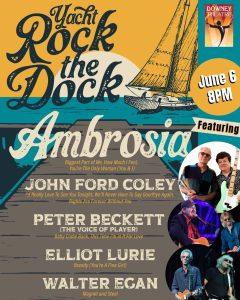
Yacht Rock The Dock
I know people of my ilk who’ve had one big hit sometimes feel the burden of having to sing the same song over and over. But I’m really happy to. It’s always pleasant to see people singing along or to hear that the song has a special meaning for them. As a songwriter, you couldn’t ask for more. Well — you could ask, “Hey, have you listened to the other eight albums past that one?” There are some good songs on those too. But I don’t need to do that. I’m very happy that “Magnet” has endured the way it has.
I didn’t know it had 27 million streams, though. That’s pretty good.
And of course, the way the deals were made back in 1976 — my manager Greg Lewerke assigned the North American rights to Columbia Records, but we kept the worldwide rights. Those rights eventually reverted back to us, right around the time Greg was going through the terrible cancer that ultimately took him. But we made a deal with Demon Records in England, which feels like another full‑circle moment.
Demon Records was started by Andrew Lauder — who also passed away in the last couple of years. Those two men, Greg and Andrew, were responsible for me getting my start in the music business. So it feels fitting that Demon Records is reissuing my first four Columbia albums. That’s coming out June 23rd, and I’m very excited. Hopefully they’ll put some promotion behind it. Maybe this is the time of year — or the time of man, as Joni Mitchell wrote — but it feels like something is brewing for me this year.
Not only are those four albums being re‑released, but Keith Urban — you probably know him — has recorded a Yacht Rock album, and “Magnet and Steel” is on it. He does a version with Little Big Town, who are a very Fleetwood‑Mac‑ish country band. That’s exciting.
There’s also a label in England called Red Steel that’s been putting out my later‑day work. I really do have fifteen solo albums, even though only the first five were on vinyl. Red Steel is about to vinalize — if I can use that word — the sixth album, which came out as The Lost Album about twenty years ago. That record has Jackson Browne, Christine McVie, and Chris Darrow on it — and Chris, I believe, is the crux of me having a career in the music business at all.
So yeah — I feel like good things are happening.
And of course, I’m doing these shows with Ambrosia — at least one a month for most of the year. They’re such a good band. It’s a real pleasure to step onstage with them. They’ve got all the harmonies, great players — Doug Jackson is an amazing guitar player, Joe is a great bass player, and I love Burleigh’s drumming. It’s been like a new family for me, being included with those guys on this Yacht Rock The Dock thing.
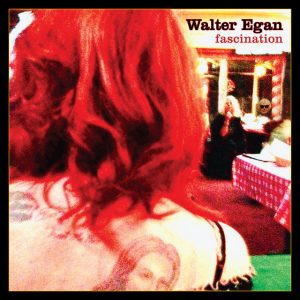
Fascination by Walter Egan (2021)
I want to go to some of your later albums. Fascination — tell me about that one. That’s about a world‑famous groupie.
It is, yes. The story starts with my daughter — she’s about 30 now. When she was getting out of high school, she wanted to move to California for a year or so. I was about to take her out there to look for places and introduce her to friends when she said, “Before we go, Dad, I want to show you this book. Don’t take it the wrong way, but I really love it.” And she pulled out I’m With the Band — Pamela Des Barres’ famous book.
I told her, “That’s funny — I’ve met Pamela.” I was in a band called the Brooklyn Cowboys around 2001–2002. I’d written “Hearts on Fire,” which Gram Parsons and Emmylou Harris recorded, so I’ve always had this connection to country‑rock. We were doing a show in Burbank, and Pamela was there with Polly Parsons, Gram’s daughter, who she’s the godmother of.
So I connected with Pamela on Facebook, and when my daughter Daphne and I came out to California, Daphne met her. At that point, I was about 15 years into my separation/divorce — very much the bachelor father. Our flight home got canceled, so we ended up spending an afternoon with Pamela. I was quite smitten.
By the time I got home, I’d written a song called “I’m With the Girl.” I recorded it the next day and sent it to her — because that’s what songwriters do when they’re trying to impress women.
My daughter eventually moved to California, and I was coming out three to five times a year, playing with a band called The Malibooz — which connects back to my high‑school band. Every time I came out, I’d take Pamela out, and I’d wind up writing another song. I ended up with about ten songs chronicling the arc of this relationship — mostly in my head, but still a story.
Daphne even wound up renting Pamela’s extra room. So it was all part of this big, intertwined chapter of my life.
In 2019, The Malibooz played The Cavern in Liverpool, and my friend from the Red Steel label in England came. I gave him a bunch of recordings I’d made over the previous five years. He said, “What’s this Pamela album? I really like it.” So we made it happen. Fascination came out in 2021 — my COVID album.
Promoting that record — and having all that free time during lockdown — finally pushed me to start writing my story. I’ve titled it Magnetude: My Secrets to Reveal — with “magnet” hidden inside the word. I’m still looking for a publisher. If any are listening, it’s ready to go.
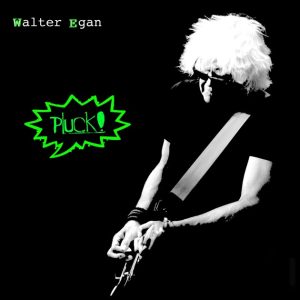
Pluck! by Walter Egan (2023)
Let’s mention Pluck. Give me a little background on that album.
As a songwriter, I’ve never stopped writing. When I moved to Tennessee in ’97, I had a bunch of songs ready to go, and I started recording them. I also began co‑writing — which is what they do here. That led to my later recordings: Walternative, Apocalypso Now, Raw Elegant (an anagram of my name), Myth America in 2014, True Songs in 2017, and then the Pamela album in 2021.
I’d also been recording with a great drummer named Ronnie Krasinski, who lived near me in Franklin and played with me often. I had a backlog of recordings — basically, every year I’d make an album of the new songs I’d written.
Robert, the man behind the Red Steel label in England, really appreciated my aesthetic — somewhere between digital and analog, not fully digitized, with humanity in the grooves. Pluck was the most recent one. There are a couple of singles and videos from that album — including my cover of Stevie’s “Dreams,” and a song called “Hard Summer Days,” which is the flip side of my other big song “Hot Summer Nights,” the one Eminem sampled for “We Made You.”
It’s a strange cross‑current of careers I’ve intersected with — Gram Parsons, Fleetwood Mac, Eminem — but it’s fun. My life has connected with some pretty weird and wonderful paths.

Walter Egan via Zoom!
In Conclusion
Walter Egan’s journey is one of those rare rock‑and‑roll odysseys where every twist feels fated — from Sound City to Stevie Nicks, from Claremont to Nashville, from “Magnet and Steel” to the fifteen albums that followed. As he steps onstage with Ambrosia for Yacht Rock The Dock, he brings with him not just a classic hit, but a lifetime of songs, stories, and serendipity. And with reissues, new collaborations, and long‑overdue recognition all converging at once, it’s clear that Egan’s story is still unfolding. The barnacle on the yacht of rock? Maybe. But he’s also one of the reasons the yacht still sails.
(Interview by Ken Morton)
Walter Egan on Facebook