


A Lament Long Buried: Joe Stamps on the Folklore and Fury of Hecate Enthroned
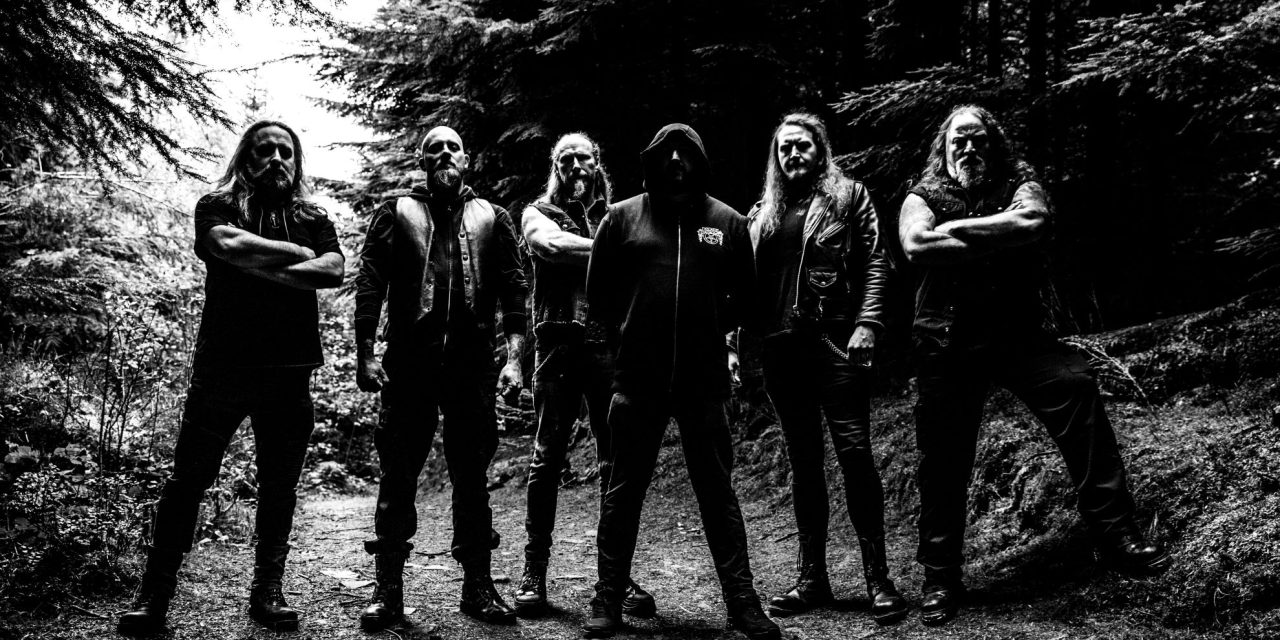
Hecate Enthroned 2026
A Lament Long Buried: Joe Stamps on the Folklore and Fury of Hecate Enthroned
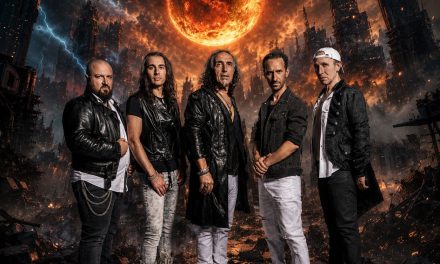
The shadows of ancient myth and modern despair collide once more as Hecate Enthroned return with The Corpse of a Titan, a Lament Long Buried, their most evocative and story‑driven album to date. Steeped in Welsh and English folklore, shaped by personal history, and sharpened by decades of blackened symphonic fury, the record finds the band exploring the ghosts beneath our feet — the forgotten gods, the buried tragedies, and the echoes of lives long extinguished.
At the center of it all stands Joe Stamps, whose lyrical vision threads together bog‑body hauntings, grim fairy tales, and the stark realities of industrial‑era loss. In this conversation, Joe opens the door to the album’s mythic underworld, reflects on a decade within the Hecate legacy, and looks ahead to new horizons with both Hecate Enthroned and his other band Ba’al.
We are here with Joe Stamps of Hecate Enthroned, discussing the band’s brand‑new album The Corpse of a Titan, a Lament Long Buried, out now via M‑Theory Audio. The record dives deep into ancient mythology, personal history, and the shadows of the past — themes that run through every corner of the band’s latest work. Is there an overall story or concept behind the title The Corpse of a Titan, a Lament Long Buried?
The title ties into the overarching theme of the album, which is rooted in Welsh and English mythology. Much of that folklore is still present in our culture, but it’s buried beneath the surface — forgotten or overlooked. The title reflects that sense of ancient stories lying dormant beneath modern life.
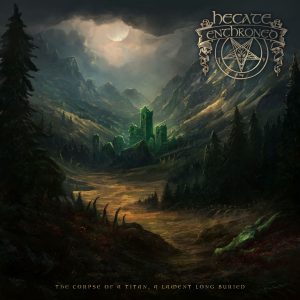
The Corpse of a Titan, a Lament Long Buried by Hecate Enthroned
Let’s talk about the first single, “A Gallery of Rotting Portraits.”
That was one of the later songs we wrote. It was inspired by the bog bodies — the peat bog mummies found across the UK and Europe. Many were Celtic sacrifices, often noble individuals offered to appease the gods. One story suggested a sacrifice was made to ward off the Roman invasion… which obviously didn’t work out historically.
Lindow Man, one of the most famous bog bodies, was found near where the band is based. I imagined what it would be like if someone like him returned today and saw that the Celtic gods are no longer worshipped, that the world is completely unrecognizable. The song is built around that sadness and horror — the future being alien to someone from the past.
The title refers to portraits of long‑dead individuals decaying in galleries, and also to the mummified bodies displayed in glass cases. People come to stare at them, trying to peer into the past. That idea shaped the atmosphere of the track.
Tell me about the second single, “Deathless in the Dryad Glade.”
There’s a lot of Welsh folklore about people being entranced by wisps and drawn into nature — transformed into trees, logs, or other natural forms. I wanted to take one of those tales and twist it into something darker, almost like a grim fairy tale.
Dylan pointed out that my lyrical style on this album is very much like a collection of short stories, and I think that’s true. Deathless in the Dryad Glade is the dark fairy‑tale chapter of the record.
Tell me about the final track, “Into a Vale of Endless Snow.”
There’s a lot of historical context behind that one. The album deals with life and death, and the Adar Rhiannon — the three birds of the goddess Rhiannon — are said to lull the living to sleep and raise the dead. By the end of the album, we’re moving from life back into death.
“Into a Vale of Endless Snow” is based on mining tragedies, particularly during the Victorian era. These stories connect Wales and northern England, and being from northern England myself, I have a deep personal connection to that history.
The song is heavily inspired by the Oaks Colliery disaster in Barnsley, near where I’m from, and similar tragedies throughout Wales. We wanted this album to reflect the band’s identity, and these stories are part of who we are.
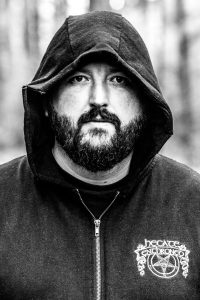
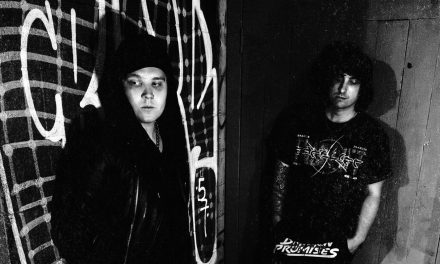
Joe Stamps of Hecate Enthroned
You recently played Black Hole Fest. How did that show go?
The show went brilliantly, but for me personally it was incredibly stressful. I had laryngitis leading up to it, and it only cleared up around 4 PM on the day of the show. I got on the plane to Switzerland not knowing if I’d do permanent damage or how I’d sound.
But once we arrived, everything was fantastic. The festival was run incredibly well, and we were treated wonderfully. Switzerland is beautiful — we had time to walk around, find food, and enjoy the atmosphere. And the fans were amazing. Really friendly, really passionate.
What are you looking forward to most about your Latin American dates with Old Man’s Child?
Just playing with Old Man’s Child is incredible — they’re such a legendary band. But getting to Latin America has been something we’ve wanted for a long time. The fanbase there is unbelievable. They’ve always had a strong connection to Hecate Enthroned and treated us incredibly well.
It’ll be amazing to finally play for them. When we visit places we haven’t been in years — or ever — the reaction is unreal. Fans finally get to hear songs they’ve waited so long for. I think it’s going to be something really special.
When was the last time Hecate Enthroned played in the States? And do you plan to do any shows here for this album?
We’ve actually never played in the United States, and it’s something we’d absolutely love to do. The biggest obstacle is the cost — flights and visas for six people are extremely expensive. We’d need promoters who could help make that possible.
There’s also a lot of red tape. The U.S. visa process is complicated, and you constantly see bands whose visas don’t arrive in time. So while we’d love to come over, it’s one of the most difficult places to get to logistically.
You also have another band, Ba’al. The Fine Line Between Heaven and Here was released last year. Tell me about the album and the concept behind it.
That album is rooted in our home city of Sheffield — a large industrial city in northern England that’s surrounded by nature. There’s a real dichotomy between the sprawling metropolis and the beautiful landscape around it, and that contrast inspired the title.
Lyrically, the album deals with mental health, growing up in a city like Sheffield, substance abuse, alcoholism, loss, and grief. It’s a very personal and emotionally charged record. Writing it meant revisiting some dark places, but it was cathartic — like undergoing surgery. It’s painful, and recovery takes time, but you come out better for it. Seeing how deeply people connected with the themes meant a lot.
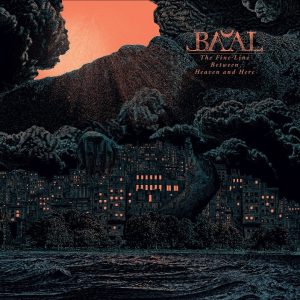
The Fine Line Between Heaven and Here by Ba’al
Would Hecate Enthroned and Ba’al ever want to tour or play shows together?
It’s happened a couple of times. We haven’t toured together, but we’ve played a few one‑off shows. Years ago in Plymouth, Hecate headlined and Ba’al opened. We’ve also done a couple of two‑day festivals where Ba’al played mid‑day and Hecate headlined.
The bands know each other well — we’ve all been around each other for years. Our drummer Matt is also in Sidious, and they’ve played with Hecate as well. We get around a bit.
What’s currently going on with Ba’al?
Right now we’re writing the follow‑up to The Fine Line Between Heaven and Here. Today, actually, I finished a full demo of a new song and started working on the vocal arrangements. I’ll begin writing lyrics soon.
With any luck, we’ll be ready to record early next year, and the new album should be out in 2027. Ba’al moves a bit faster because we’re all in the same place and practice weekly, unlike Hecate where we’re spread across the country.
Are you currently involved with any other bands or projects outside of the two we’ve discussed?
At the moment, no. The only other thing I’m involved in is Metal to the Masses — a battle‑of‑the‑bands competition across the UK where the winner gets to play Bloodstock Festival.
I recently judged the Sheffield final, and a band called Descendancy won. This year’s Bloodstock is headlined by Lamb of God, Slaughter to Prevail, and I believe Judas Priest. It’s always great to help choose a band that gets to play such a massive festival.
Last year marked your ten‑year anniversary with Hecate Enthroned and the band’s own thirty‑year anniversary. What goes through your mind knowing you’ve been part of this legendary band for a decade now?
It’s flown by. When I realized it had been ten years, it didn’t even register at first. I’ve known these guys for a long time — back in 2006 I filled in on vocals for a couple of shows when I was only twenty. We stayed in touch ever since.
So when 2015 came around and I officially joined, it felt natural because we already had that connection. Now it’s coming up on eleven years next month, which is crazy to think about. Time really does fly.
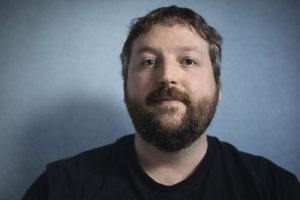
Joe Stamps of Hecate Enthroned via Zoom!
Do you have any messages for Hecate Enthroned fans here in the States?
Thank you for your support and your patience. We know it’s been seven years since we’ve released anything, and we know we haven’t been able to get over to the United States yet. Hopefully one day we will. Hold tight — and hopefully we’ll see you soon.
In Conclusion
As The Corpse of a Titan, a Lament Long Buried ushers Hecate Enthroned into a new era, Joe Stamps stands as both storyteller and torchbearer — honoring the band’s past while carving out its future. From Celtic specters to Victorian tragedies, from the forests of Welsh folklore to the steel and stone of Sheffield, his words carry the weight of history and the pulse of something fiercely alive.
With new music, new chapters, and long‑awaited tours on the horizon, Hecate Enthroned continue to prove why their legacy endures. And for fans in the States still waiting for that first blast of live ritual — Joe’s message is clear: hold tight. The lament may be long buried, but it’s far from silent.
(Interview by Ken Morton)
Hecate Enthroned on Instagram