



The Chandelier Tree: Cillian Leddy on Identity, Ireland, and His Solo Debut
 The Chandelier Tree: Cillian Leddy on Identity, Ireland, and His Solo Debut
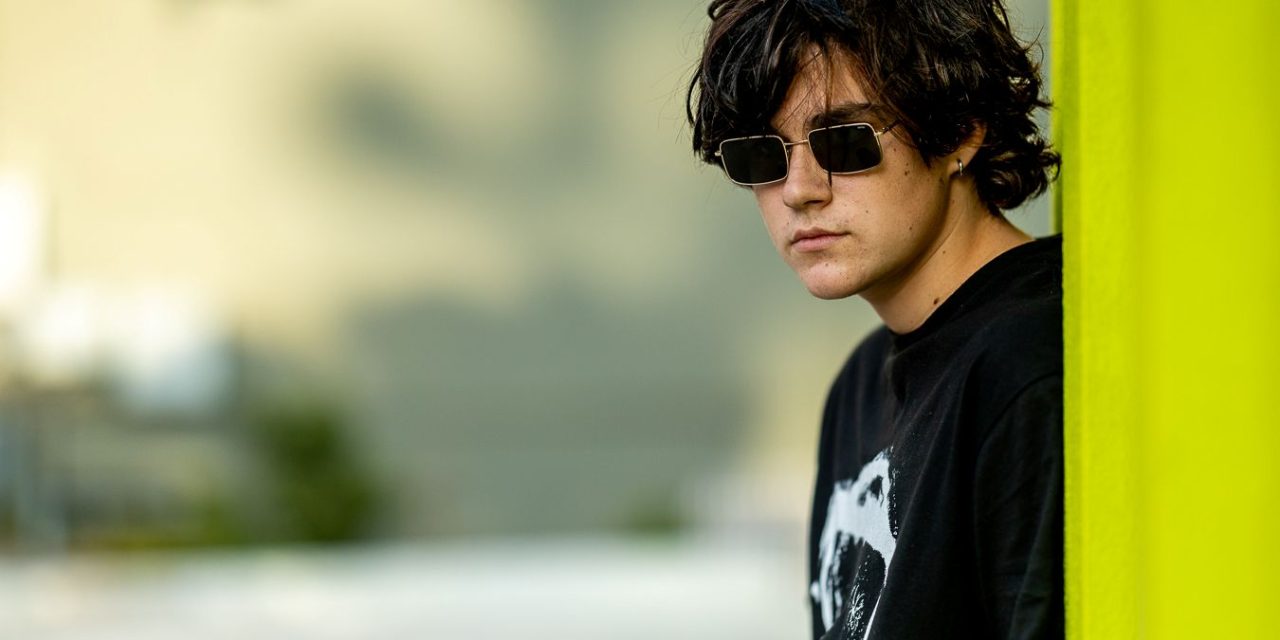
At just eighteen, Cillian Leddy stands at the crossroads of two worlds — the sun‑soaked sprawl of Los Angeles and the rich, windswept history of Ireland. Known for fronting the indie‑rock outfit Birdhouse, Cillian now steps into a new chapter with his solo EP The Chandelier Tree, a collection shaped by nature, memory, identity, and the restless curiosity of a young artist finding his own voice. In this conversation, Cillian opens up about the LA music scene, the inspirations behind his new songs, his upcoming move to the Clive Davis Institute in New York, and the evolving future of Birdhouse.
We’re here with Cillian Leddy of Birdhouse, but today we’re diving into his solo material and the upcoming EP The Chandelier Tree. First off, let’s talk about the local music scene. What are your thoughts on the LA music scene?
My thoughts on the LA music scene… let me think. I actually haven’t been here for the last couple of months because I’ve been traveling, doing shows, and playing around. But overall, I think the LA scene is great. It’s accepting of all styles and all types of people.
A lot of folks still associate Los Angeles — especially the Sunset Strip — with certain genres, but that’s not the full picture anymore. There’s definitely still a lively metal and heavy rock scene, but the acts I’ve been seeing locally also include jazz players, jam bands, and singer‑songwriters like myself who also come from rock and guitar‑driven backgrounds.
What I love about LA is that the music reflects the culture of the city — that laid‑back California feeling, that sense of community. When you go to a show here, it’s very participatory. People are involved, open, and willing to dig into anything. That’s liberating as an artist because you can create on your own terms and there will be an audience for it, no matter the style. You can’t say that about a lot of other places.
Whenever I’ve been part of the local scene, people have been kind, receptive, and not taking themselves too seriously. Some do, sure — but the people who’ve opened their arms to my music have always been willing to laugh and have a good time. That’s what I’d say about LA.
Your new EP is titled The Chandelier Tree. Is there a story or concept behind that title?
Honestly, it sounded cool. But there is a bit more to it. I live near this beautiful tree in Silver Lake by the reservoir — it’s covered in chandeliers. The EP mirrors the spirit of that tree. It brings together two different worlds: nature and the classic beauty of chandeliers. It’s about making sense of multiple identities.
Each song on the record comes from a different place and a different aspect of who I am, especially as someone with a multicultural identity. In my head, each song is like a different chandelier hanging on the tree. I don’t know if that makes sense, but that’s the idea. And again… it just sounded cool.
Let’s talk about some of the songs. “The Right Shade” is the latest single. Tell me about the inspiration behind it.
It’s a song rooted in nature. When I’m in Ireland during the summer, there’s so much natural imagery and so many memories that come up. The song is tied to that imagery, but also to feelings of mourning — mourning past love, past isolation, or indifference from others.
“The Right Shade” is essentially about someone you could picture yourself with, but for whatever reason, the colors didn’t blend. The circumstances didn’t align. There’s no hard feelings — that’s just how it is. The lyrics are sad, but the music feels happy. Maybe it’s not that black and white, but that contrast is part of the song.
 You mentioned alternate tunings. How does that play into this track?
Yeah, I’ve been exploring alternate tunings a lot this year in my solo material. “The Right Shade” is in a drop‑C tuning — one Nick Drake used. It’s grounded in lyrical, poetic imagery, but it’s also just really fun to play.
I was proud of the chord progression because it captured exactly what I was feeling. Lines like “Our lives are lilies on the water, crystal clear, like I won’t die without you here” — I wanted the simplicity of the lyrics to contrast with the complexity of the guitar melody. It’s one of my favorite tunes on the record.
What about “The Only Lie That’s True”?
That one started as something I was messing around with on my laptop. I’m also a producer — I’m actually heading to New York to study production — and I was throwing together loops, samples, and little recorded parts. I wanted to create something totally different from what I usually make, and different from what I’ve done with my band.
It turned into more of a dance track. I love the sincerity and storytelling of folk music, but I also love to move. Even club music gives me a certain feeling, and I wanted to incorporate more rhythm into something I put out. It’s just a fun little tune. Not my magnum opus or anything — but who knows.
Tell me about the Clive Davis Institute and what you’ll be doing there.
Well, I’m going to the Clive Davis Institute — it’s in New York, part of NYU. They let in about fifty or sixty students a year, so it’s a pretty small program. It’s a school that teaches all the major aspects of the music industry: songwriting, production, performance — everything.
For me, it’s a chance to meet interesting artists and other young, up‑and‑coming people. I love LA, but I’m also excited to get away for a bit and be somewhere that sits between the two centers of my life: LA and Ireland. It feels like a fresh start, but also a place I can return from and keep building things here. It’s essentially a music school, and I’m really excited.
Sweet Spot Recording — that’s your studio? Tell me about it.
Yeah, for sure. Sweet Spot Recording is the studio space I work at in Burbank. My father and his friend are in a band called Tree Lined Streets, and they’ve been recording in this little studio for years. I basically grew up around it.
In recent years, we decided to turn it into more of a studio business — offering post‑production, mixing, and recording services. It’s been a great way for me to learn before heading to New York to study production. Honestly, the only way I’ve really learned production is by doing it myself: working with artists, recording them, experimenting.
It’s a cool space with lots of interesting instruments, eccentric guitars, old amps, and a big emphasis on analog gear. I’ve been learning how to record with actual physical equipment, which not everyone does anymore. So yeah — it’s a studio I work at, hope to keep growing, and I’d love for anyone who wants to come through and record to do so. It’s another creative outlet for me.
Ireland has such a rich history. How does that inspire you and your music?
Summer is the best time to go — it’s so beautiful. All the dormant beauty from the year kind of releases into the atmosphere. It’s inspiring for me because I’m someone who’s always been observant and tuned into my surroundings.
Being in a landscape with so much history, and so many great artists who came from there, is incredible. My father grew up there, and hearing how much it’s changed since he was a kid has been illuminating. It was a little rougher back then.
Irish artists have definitely influenced me — Sinéad O’Connor, The Cranberries, Van Morrison. Even getting to interact with people my dad knew from the old Irish music scene has been meaningful. My dad’s friend Tim Boland, who I work with now, is part of that lineage. I never met Glen Hansard, though he just passed away, but hearing stories about him was great. And talking with producers like Rob Kirwan, who worked with Hozier, has been huge.
Ireland — the friendships, the connections, the natural experiences — that’s really the bedrock of my artistic journey, along with the craziness of LA.
 Have you read James Joyce’s The Dead?
Yeah, I’ve read The Dead. It’s my favorite story of his. I read Dubliners, and even if I eventually read Finnegans Wake or Ulysses, I think I’ll still appreciate that collection of short stories the most.
As someone who’s lived in Ireland and been a Dubliner, it’s amazing to read those stories and picture what those people were actually like. His use of Irish vernacular and language tied to Irish culture is fascinating to me. I really like his work.
What’s going on with your other band, Birdhouse?
Right now, we’re all going to different places — we’ll all be on the East Coast. I still have a great love for what we created together and what we will create, but we’re exploring different avenues at the moment. We never officially broke up.
The band might have to go through a slight mutation as we move into college and whatever comes next. We want to get a vinyl made of the eight‑song record we did — just as a keepsake. I really appreciate those guys; nothing but love.
But personally, I’m ready to explore as many musical avenues as I can. Birdhouse was a really cool band, but it’s not the only thing I’m going to do. We’ll probably play more shows — it’s just a little nebulous right now.
Final question — what’s next for you? What do you hope the future brings?
After this EP comes out on the 21st, I’m hopping back into the studio with my producer, Tim Boland. I want to make a more fully instrumental record — still with songs, but more fleshed out. I’m interested in making a record where I can really execute my vision and have it feel full, with a band sound.
I’ll record before I go to New York, then meet great musicians out there and see what happens. I have an idea of what I want and who I want to be, but I’ve never been rigid about timelines. It’s easy to compare your timeline to other people’s, and that only gets you down.
I’m on my way. I’m excited to keep writing, recording, performing, and being the best musician I can be.
In Conclusion
As The Chandelier Tree prepares to make its way into the world, Cillian Leddy is already looking ahead — writing, recording, and embracing the unknown with the kind of openness that defines both his music and his outlook. Whether he’s working out of Sweet Spot Recording in Burbank, studying production in New York, or reconnecting with the landscapes of Ireland, Cillian carries a sense of curiosity that keeps his artistic path wide open. If this EP is any indication, his journey is only just beginning, and the branches of his creative world are about to stretch even further.
(Interview by Ken Morton – Photos by Scott Waters)
Cillian Leddy on Instagram