

In My Life and Beyond: Linus of Hollywood Reflects on Three Decades of Power Pop, Punk Rock, and Musical Adventure
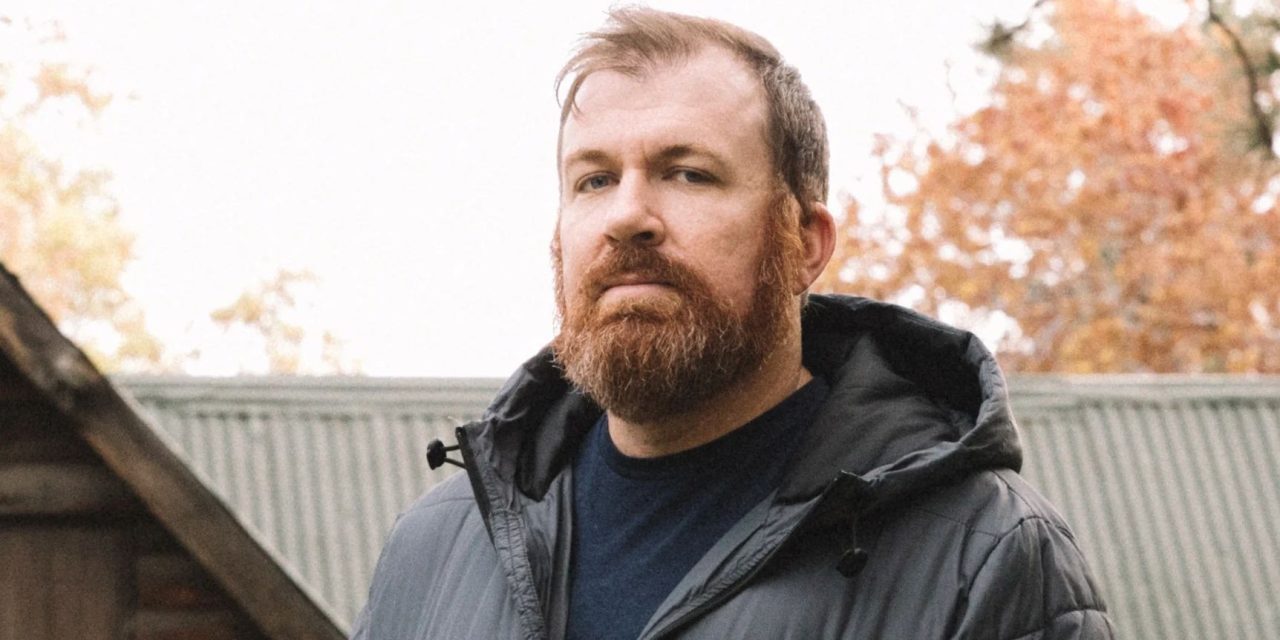
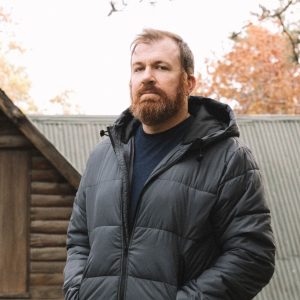
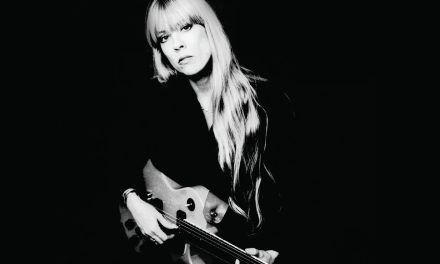
Linus of Hollywood 2026
In My Life and Beyond: Linus of Hollywood Reflects on Three Decades of Power Pop, Punk Rock, and Musical Adventure
Few artists have traveled a musical journey as varied and fascinating as Linus of Hollywood. From the Weezer-inspired alternative rock of Size 14 to his critically acclaimed solo work, collaborations with Paul Gilbert and Bowling for Soup, years of success in Japan, and his current endeavors with Nerf Herder and Able Machines, Linus has spent the better part of three decades following inspiration wherever it leads.
Now, with a newly released cover of The Beatles’ classic “In My Life,” Linus finds himself revisiting the project that established him as a beloved figure within the power pop world. What began as a personal gift for a friend’s wife unexpectedly became a fitting reintroduction to the Linus of Hollywood sound and spirit.
In this candid conversation, Linus discusses his latest release, memories of the Los Angeles music scene, his experiences working alongside some of rock’s most respected musicians, and why he’ll always be grateful to the fans who have followed his ever-evolving career.
Let’s talk about the new single. What made you decide to record a cover of “In My Life” by The Beatles?
A good friend of mine named Carl Caprioglio owns a label called Oglio Records, which has released a lot of my music over the years. I also had a label with Bowling for Soup singer Jaret Reddick and Carl called Crappy Records, and my own label, Franklin Castle, used to work through Oglio as well. So I’ve known Carl for a long time.
A couple of years ago, he commissioned me to record “In My Life” as a gift for his wife because it’s their song. He wanted a pretty faithful cover of the original. When I first recorded it, I kept the arrangement and tempo very close to The Beatles’ version.
Recently, Carl suggested that we release it. Before putting it out, I wanted to give it a little production refresh. I added some elements that weren’t on the original recording, including Mellotrons and acoustic guitar, and gave it a more “Linus” style mix.
It’s a cool thing to have out. Releasing it wasn’t originally my idea. It was definitely Carl’s. But it felt like a good way to get back into Linus mode because I’ve spent the last few years focusing on other projects.
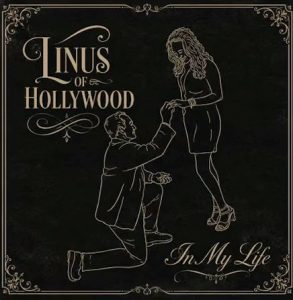
In My Life by Linus of Hollywood
Tell me about your drummer, Reade Pryor. What makes the two of you work so well together?
Reade is someone I’ve known for quite a while. He was actually referred to me by Adam Marcello.
You’ve been around for a long time, and I’m pretty sure you reviewed one or more of my old bands. I was in Size 14 and later a band called Pint Size with Paul Gilbert.
Adam was the drummer in Pint Size, but once he got the Katy Perry gig, he introduced me to Reade. Since then, I’ve hired Reade to play on a lot of my productions and records.
He’s a really great drummer who understands how to serve the song, which is one of the most important qualities a drummer can have.
It’s been a few years since we’ve heard from Linus of Hollywood. Is there any new music on the horizon?
Definitely.
I’ve been talking about making a Christmas album for a few years now, and I think I’m getting pretty close to actually doing it. The plan is for it to be half covers and half original songs.
At some point I’ll also get around to making another original Linus of Hollywood album.
My current focus has been on other projects. I play in Nerf Herder, and we’ve been fairly active. I also have an electronic project called Able Machines, which has occupied much of my attention over the last several years.
I just need to get myself back into Linus of Hollywood mode.
Looking back on the Size 14 era, what do you think of that music now in retrospect?
Well, I’m proud of what we did.
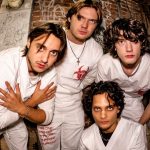
That was about thirty years ago at this point. I had just moved to Los Angeles and formed a band with my friends. We played a bunch of clubs around L.A., quickly built a following, and eventually landed a record deal. For a kid who had just stepped off the plane, that felt like a pretty significant accomplishment.
The music was heavily influenced by what I was listening to at the time. Weezer was a huge inspiration. I grew up on hair metal, so there’s a little bit of that in there too.
There were also bands around in the 1990s like Supersport 2000, Ridel High, Shufflepuck, and That Dog that really inspired me while writing the Size 14 material.
Looking back, there are songs I still think are really cool. There are also songs that make me cringe a little. I probably wouldn’t write some of those lyrics today. But I was a somewhat drunken kid in my twenties, and that’s what came out at the time.
Overall, though, I’m proud of that record. It wasn’t exactly a huge commercial success, but the people who love it really love it. Even today, people will come up to me and tell me how much that album meant to them, and that’s always a great feeling.
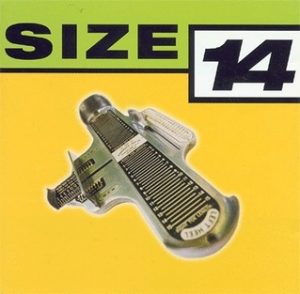
Size 14 album cover
Were you able to play the Sunset Strip during the Size 14 era? If so, what was that experience like?
Absolutely.
By the time we were playing regularly, around 1995 and 1996, the classic Sunset Strip scene had already faded. Growing up in Florida, I was a huge fan of hair metal, and friends would bring me copies of Rock City News, BAM, and all those music magazines from Los Angeles. I’d look through them and dream about being part of that scene.
I would have loved to experience the Strip during the late ’80s and early ’90s, when everyone was handing out flyers and all those legendary bands were playing.
But there was still a scene when we arrived. It was just a different scene. Weezer had broken through around 1994, and there was a whole network of bands operating in that orbit. Size 14 was very much part of that movement.
We played everywhere, including the Roxy, the Troubadour, the Whisky, and Coconut Teaszer.
The Whisky also hosted a Monday night event called Bianca’s Hole. It was free, and so many incredible bands would play those shows. I was there almost every Monday, soaking it all in and learning from what I saw.
It was a glorious time.
Let’s go back to the beginning of Linus of Hollywood. How did the project come about?
As I’ve mentioned, I grew up as a metal kid. But in the early ’90s I became obsessed with a band called Jellyfish. They were heavily influenced by The Beach Boys, The Beatles, The Zombies, and a lot of classic ’60s pop.
At the same time, the first few Lenny Kravitz albums had a huge impact on me because they were recorded with a very organic, Beatles-inspired approach.
Ironically, I hadn’t really grown up listening to much of that music. Once I discovered Jellyfish and Lenny Kravitz, I went back and bought albums like Pet Sounds, Odessey and Oracle, and Rubber Soul. I was completely blown away.
Even while touring with Size 14, I was listening to The Zombies and all those classic records in my headphones.
When Size 14 eventually got dropped by its label, I decided to stop worrying about expectations. I went into my bedroom with an eight-track recorder and tried to make a record that sounded like the albums I loved.
Honestly, I figured nobody would get it. I thought everybody would be confused, but I wanted to make it anyway.
To my surprise, it connected with people. The power-pop community embraced it, including the International Pop Overthrow scene. Then the music got licensed in Japan and really took off over there.
For about ten years I did quite well in Japan, and that success helped fund Franklin Castle. The label would release almost everything I produced.
During that period I was regularly traveling to Japan, often three times a year. I was playing with Paul Gilbert and Roger Manning from Jellyfish, and I actually met Roger through my solo work.
From around 2000 through 2010, Japan became a very important part of my musical life.
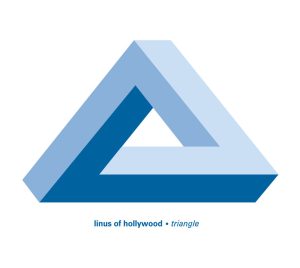
Triangle by Linus of Hollywood
Let’s jump ahead twenty years. Triangle was released in 2006. Looking back, what are your thoughts on that album today?
I’m really proud of that record.
Just like with Size 14, there are probably a few lyrics I’d write differently today. But musically, I think it represents a major step forward.
After making my first few albums largely on an eight-track recorder in my bedroom, Triangle was the first record where I was really able to work in larger studios with better equipment and a bigger palette of sounds.
On the earlier records, I couldn’t afford things like string sections, horn arrangements, and orchestral textures. A lot of those sounds were simply me trying to emulate them on keyboards.
By the time I made Triangle, I had been producing records for other artists, and I had access to the resources needed to make the album exactly the way I envisioned it. I was able to use real strings, real horns, and actual players.
As a result, it sounds the way I always wanted it to sound.
I can still listen to that record today and think, “That’s pretty darn good.”
What was it like working with Paul Gilbert of Mr. Big and Racer X?
It was amazing.
I grew up listening to Paul and learning his guitar solos when I was trying to be a shredder myself. He’s such a precise player. Everything he does feels intentional and carefully crafted, so slowing down his solos and learning them was educational. In a way, he was a great teacher long before I actually met him.
I ended up meeting him in Japan. He came to one of my shows, and when he came backstage we immediately connected.
Beyond my admiration for his playing, we started talking about bands we both loved, like Enuff Z’Nuff, Del Amitri, and a lot of other artists that reflected very similar musical tastes.
We hit it off right away, and eventually he asked me to produce his album Burning Organ. I stayed at his house in Las Vegas for about a month while we made that record. I think somewhere along the way he realized I actually knew how to shred, and then he asked me to play bass in his band.
For the next few years, I toured all over the world with Paul and musicians like Marco Minnemann. It was an incredible experience.
As a heavy metal kid, if someone had gone back in time and told me I’d someday be playing with Paul Gilbert, I would have thought they were crazy.
Paul is still a friend today. He’s a genuinely nice guy, a unique personality, and someone who simply loves playing guitar. It shows in everything he does. He’s easily one of the five greatest rock guitarists in the world.
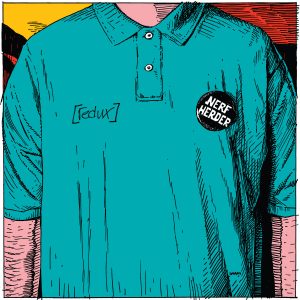
Nerf Herder (redux)
You joined Nerf Herder around 2008, shortly after the release of Nerf Herder IV. Were you involved with that album?
I wasn’t actually on that record.
Nerf Herder had taken a bit of a break and then reunited to make Nerf Herder IV with the original lineup. Once they started booking shows to support the album, they wanted an additional musician because some of the later material had been performed as a four-piece.
So they asked me to come aboard as the extra guy. Later on, Charlie Dennis left, Ben Pringle joined the band, and the lineup has remained pretty much the same ever since.
Nobody ever officially asked me, “Do you want to join Nerf Herder?” It was more like, “Do you want to play these shows?” And now, eighteen years later, I’m still playing with them. I guess that means I’m in the band.
Nerf Herder recently released a Redux project through Fat Wreck Chords. Were you involved in those recordings?
Yeah, absolutely.
We had previously made an album called Rockingham with the current lineup about eight or ten years ago.
Then we put together the Redux project. Honestly, I can’t even remember if it was last year or this year. Time goes by so fast.
We went up to Santa Barbara and recorded at Alan Parsons‘ studio. Another producer, Thom Flowers, helped us finish everything up.
The original idea was to keep it really spontaneous and stripped down, almost in a Violent Femmes kind of way. But once we got into the studio and started having fun, we kept adding things. By the end, it was a little more produced than we originally intended, but in a good way.
Have any of your bands ever played the Vans Warped Tour?
You’d think the answer would be yes, but surprisingly, no.
I’ve worked with Bowling for Soup quite a bit, and they’ve played Warped Tour many times. But none of my own bands ever ended up on the tour.
That’s actually kind of a shame.
What has it been like working with Bowling for Soup?
It’s been incredible.
Jaret Reddick is another longtime friend, much like Paul Gilbert. I probably met him around 2008, and from that point forward I ended up co-writing and producing most of Bowling for Soup’s material, with the exception of their newest album.
We’ve had a long and successful creative partnership. Those guys are basically family to me at this point.
Jaret is an amazing person, and we’ve written a lot of great songs together and shared countless good experiences over the years.
You’ve collaborated with artists as varied as Cheap Trick and 5 Seconds of Summer. What’s it been like writing with such a diverse range of musicians?
It’s been a lot of fun.
A lot of those opportunities came about through publishing deals, industry contacts, and of course my work with Jaret. I think that’s actually how the 5 Seconds of Summer opportunity came about.
For a while, I had a music publisher, and there was a period when artists like Kelly Clarkson and Hilary Duff were huge. Songwriters would constantly get together in hopes of landing songs on those projects.
Through that process, I ended up meeting all kinds of artists and writers. Sometimes you’d spend a day writing a song and nothing would come of it. Other times, you’d end up with a song on an album or even a hit record.
I don’t do quite as much of that these days because the business has changed significantly, but it was a great experience and introduced me to a lot of talented people.
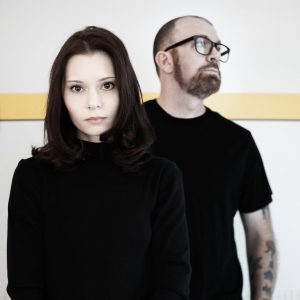
Able Machines
Let’s talk about Able Machines. How did that project come together?
I’m a huge fan of female-fronted electronic pop music.
Before Able Machines, I had been working on a similar project with my ex-wife. When that relationship ended, I realized I still wanted to continue making that style of music.
I put an ad on Craigslist describing the type of singer I was looking for and listing my musical influences. Tay responded to the ad. In fact, she was the only person I met with.
We wrote a song together on the very first day, and the chemistry was immediate. We worked incredibly well together, even before we really got to know each other.
Seven years later, we’re finishing our third album. We’ve played shows in Japan and throughout the United States, and it’s been an incredibly rewarding experience.
We’re very self-sufficient. We make our own records, shoot our own videos, and operate largely out of my house. It’s a very independent project, but it’s also one of the most creatively fulfilling things I’ve ever done.
Tay and I have become incredibly close over the years, so it really feels like family now.
Are you involved in any other bands or projects that we haven’t talked about?
I don’t think so.
Nerf Herder and Able Machines are definitely my main priorities these days.
I did have a comedy project with Jaret called Jarinus, and every once in a while we’ll put out a new single. It’s pretty ridiculous and a lot of fun, so I wouldn’t rule out doing more of that in the future.
Beyond that, Tay and I have discussed starting another project together that’s a little closer to the Linus of Hollywood sound. Something inspired by artists like The Cardigans or Margot Guryan.
It wouldn’t replace Able Machines. It would just be another creative outlet.
The only challenge is finding more hours in the day. I’m already doing way too many things as it is.
You’ve been part of the Los Angeles music scene for decades. Are you still based in L.A.?
Absolutely.
I lived in Hollywood for more than thirty years. During the pandemic, I moved over to Frogtown, which is near Dodger Stadium. Now I have a little house with a home studio, and I love it.
I love Los Angeles. There are times when I think, “Maybe I need to get out of here.” But after a couple of days away, I can’t wait to come back. At this point, I think I’m a lifer.
What do you think about today’s Los Angeles music scene?
It’s definitely different, but there’s still a lot of great music happening.
There’s a really strong power-pop scene right now. Bands like The Lemon Twigs have become fairly well known, and there are local groups like Uni Boys and Softjaw from Long Beach doing great things.
I still go out to see shows quite a bit. I live close to Permanent Records Roadhouse, and they’re constantly showcasing interesting new artists and indie bands.
There’s always great music in Los Angeles.
That said, Hollywood itself has changed a lot. I loved what Hollywood was like when I first moved there in the 1990s.
You see venues struggling, the Viper Room closing, and so many changes taking place. It’s hard to watch sometimes.
But I guess that’s how things go. The scene seems to have shifted more toward the East Side these days, which works out pretty well since that’s where I live now.
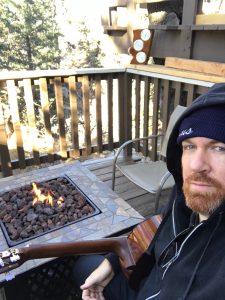
Linus of Hollywood
One final question. Do you have any message for fans who have followed you since the Size 14 days, or for people just discovering your music for the first time?
That’s a great question.
Honestly, my message is simply thank you.
My career has probably been a little confusing for some people. I’ve done pop-punk, metal, R&B, ’60s-inspired pop, electronic music, and a lot of other things along the way. The common thread has always been classic songwriting and strong pop-song structure.
I realize that if someone discovers one of my projects, they might wonder why I’m suddenly doing something completely different somewhere else.
So I’m especially grateful for the people who understand that I enjoy exploring different musical styles and who continue to follow what I do.
And even if someone only connects with one aspect of my work, I’m still incredibly appreciative that they’re listening at all.
At the end of the day, my message is simply one of gratitude. The fact that people still want to hear my music means a lot to me.
In Conclusion
Few artists have built a career as diverse as Linus of Hollywood‘s. From the alternative-pop hooks of Size 14 and the lush melodies of his solo recordings to collaborations with Paul Gilbert, Bowling for Soup, Nerf Herder, and Able Machines, Linus has never allowed himself to be confined by a single style or expectation. Instead, he’s followed his creativity wherever it has led.
That spirit remains alive today. Whether he’s revisiting a Beatles classic, reflecting on three decades of Los Angeles music history, producing records, or crafting new songs with longtime collaborators, Linus continues to approach music with the same enthusiasm that first inspired him to move to California and chase a dream.
With a Christmas album potentially on the horizon, a new Able Machines release nearing completion, and the possibility of more Linus of Hollywood material ahead, one thing remains clear: Linus is still creating on his own terms. For longtime fans and newcomers alike, that’s very good news indeed.
(Interview by Ken Morton)
Linus of Hollywood on Instagram