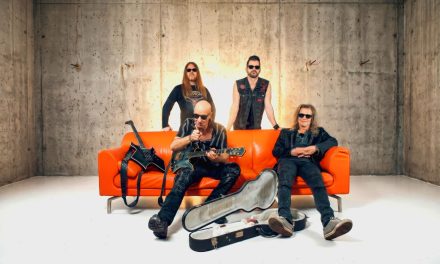


Heavens Edge: Still Rockin’, Still Rising
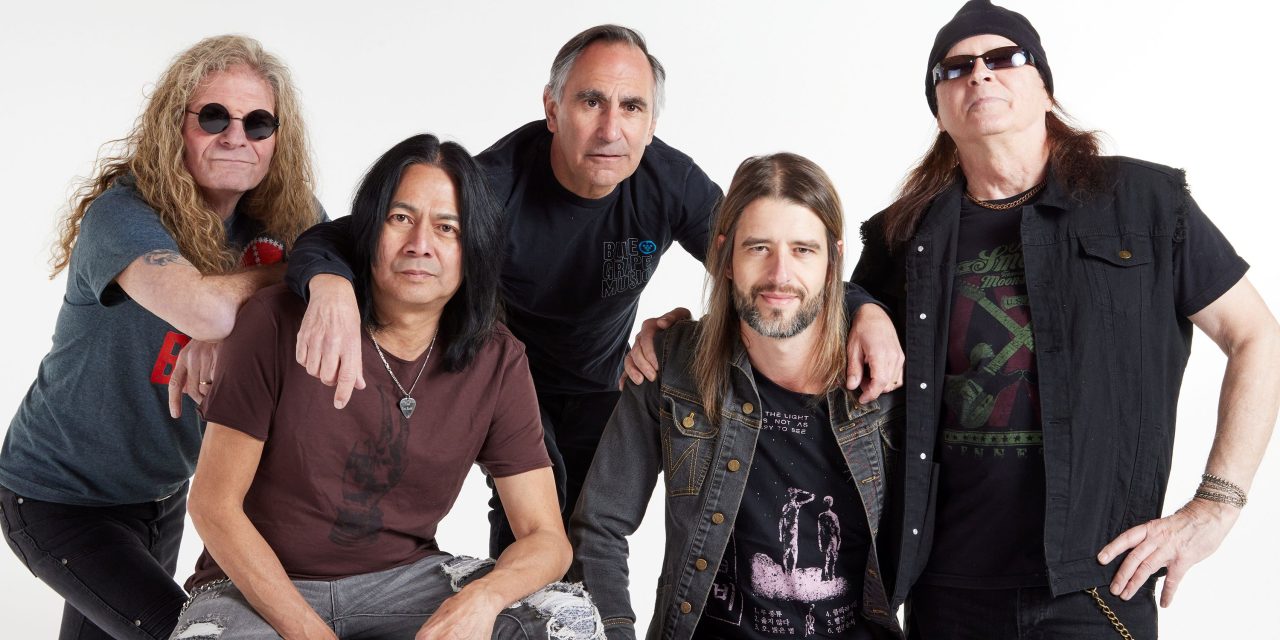
 Heavens Edge: Still Rockin’, Still Rising
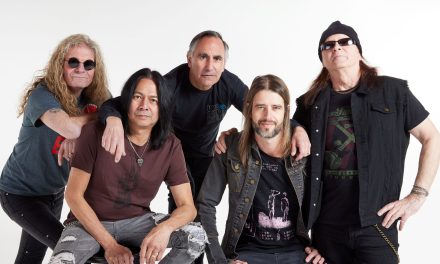
Some bands are fortunate enough to experience success, but not every band gets the opportunity to come full circle, reclaim its place in the rock world, and prove that the fire never really went out. Heavens Edge is doing exactly that.
Hailing from Philadelphia, the band has weathered its share of challenges, changes, and unexpected detours since its early days. Now, with their new album Philadelphia, Heavens Edge is embracing its roots while showing just how much musical ground they’ve covered along the way.
I recently caught up with drummer David Rath for a conversation that went well beyond the new record. We talked about the inspiration behind the album, working with producer Jacob Bunton, their memorable return to Los Angeles at The Whisky, and their experiences on the Monsters of Rock Cruise. David also opened up about his years working in A&R at Roadrunner Records, his current work with Blue Grape Records, and what it takes for emerging bands to make their mark in today’s music industry.
From the past to the present, and with plenty of rock and roll still ahead, David gave us an inside look at the music, the business, and the journey that continues to keep Heavens Edge moving forward.
Let’s talk about the new album. Is there an overall story or concept behind the title, Philadelphia?
Well, basically, the band is obviously from Philly and the surrounding area. We’ve played all over the world and throughout the United States, and we’ve always felt there’s a certain attitude that comes out of that city. I’d like to think the band reflects that. What I mean by that is it’s kind of a blue-collar town in many ways.
Right now, I feel like the city is experiencing a musical renaissance. There are so many great new bands coming out of Philadelphia. It’s really incredible. If you look back at the history of the music scene in Philly, there have been so many great bands, artists, and influential sounds that we’re just so proud to be a part of it. We wanted to pay homage to the city that gave us our start.
Another thing is that we feel this is a really special album for us. It’s probably our most diverse body of work, and we’ve been doing this for quite a while now, as you well know. We wanted a title that felt a little more important for the album and for us. We didn’t want to come up with some kind of slogan or cute, catchy phrase. We just wanted a word that felt solid and, most importantly, important to us.
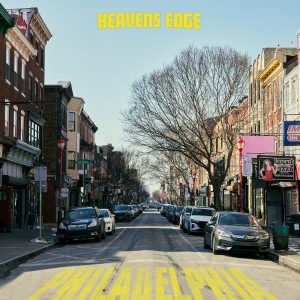
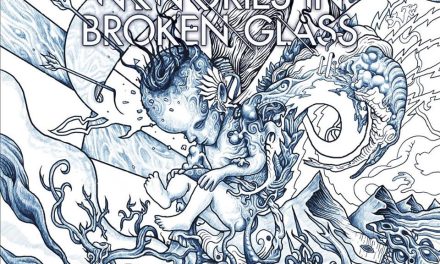
Philadelphia by Heavens Edge
Jacob Bunton is someone I see in the clubs here in Los Angeles all the time. It seems like every show I go to, he’s there! He’s awesome. What was it like working with Jacob on the production of this album?
Yeah, he’s awesome!
Jacob is what we call the sixth guy in the band, the sixth band member. He’s amazing. Without question, he’s one of the most talented people I’ve ever met in my life. What’s really great about Jacob, aside from his melody ideas, production ideas, and vocal harmony ideas, is his ability to take the essence of a band and blow it up.
He can get into any band, figure out what’s in its DNA, and then make it the best it’s ever been.
There are a lot of other bands Jacob could work with. He’s extremely talented and very successful as a songwriter and producer. We’re just so honored that he takes the time to work with us. It’s a great privilege.
I’ve known him for many years, and I’ve worked with him and crossed paths with him through my other line of work, which is my own personal music stuff.
He’s just so inspiring because he’ll do things that make you think, “My God, this is exactly what we would have envisioned if we had the ability to do it.” He makes things happen for us that we might not have been able to do on our own.
I’ve heard a lot of great things about him in the production world. I remember a lot of his music from back in the day, and now he’s graduated into this. It’s really cool.
He’s really good at understanding each person’s talents. When he’s working up the songs with us, he knows how I play drums. He’ll say, “Okay, this is a good tempo for you,” or something along those lines.
Even though he’s not writing the songs from scratch, he’s helping us enhance them. He knows what each of our strengths are and gives us ideas based on our existing skills.
He just makes us better than we deserve to be!
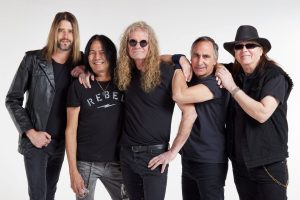
Photo by Alex Cihanowic
How did your recent show on the Monsters of Rock Cruise go, and what were some of the highlights?
First off, we love playing on the cruise. It’s just so much fun. It really is a joy because everybody there is so happy to be there, and it’s just a great setting. We absolutely love it.
We’ve been doing it for a while now. That might have been our fifth or sixth cruise since we got back together, so it’s a ton of fun for us.
The thing I really like about it is that you get to do more than one set. I think last time we did three. We’ve always been that kind of band. When we were coming up, we played regularly every single week. We didn’t play once a month. I remember playing 75 Friday nights in a row at one bar called The Galaxy.
When you get to play that regularly, you get to work things out. Even on the cruise, when we plan our sets, we’ll put together three different ones. We don’t just play the same set two or three times. It gives us a chance to try different things and play songs we haven’t played in a while.
If people are going to see us on the boat, it gives them a reason to come and see us more than once. We don’t want people to see us once and say, “Okay, I’ve seen that already. That’s it.” We try to make each show really unique, different, and interesting.
Another highlight from this cruise was that we filmed a lot of extra footage. At the time, I didn’t know what we were going to do with it. I just thought, “Let’s film these shows.” We had an idea that we were going to do something for one of the new songs on the album, but I wasn’t really sure what.
When I was looking at ideas for the new video for the song “Definite Maybe,” I went through the footage we had compiled on the cruise and thought, “Well, there’s some good stuff here.”
Even though we didn’t play the song, there was a lot of slow-motion footage, and you can always work that footage in to make it look cool.
I actually gave it to my daughter, who’s a film editor, and she put the video together. That’s all footage from the last Monsters of Rock Cruise. It’s a lot of fun!
The last time I saw you out here in Los Angeles, you guys played at The Whisky. What was it like playing there, and how many times have you played that venue?
Believe it or not, that was our first time at The Whisky!
Really?
Yeah, yeah! I know, it’s crazy, right?
We’ve played LA so many times, especially back during our first go-around. We were there constantly. Not just LA, but San Diego and up the coast, too.
But we hadn’t been to LA in 25 or 30 years, or whatever it was, so we had the opportunity to go back.
The Whisky was definitely the right place for us. It felt like a great return. I’ve been to the place countless times in my life, so it was really great to be on that stage where all the legendary bands have played over the years. It was a real honor for us. It felt very rock and roll.
Not only that, but because we hadn’t played in Los Angeles so long, there were just so many people who came out to see us that I was nervous. I haven’t been nervous like that in a long time.
A lot of my friends in the music business were there. There were other bands, band managers, and agents. It just felt like, “Holy crap, we better be good!” I was a wreck!
But once we counted in and started the show, it turned into one of the most fun shows we’ve played in a long, long time. It was just a great time.
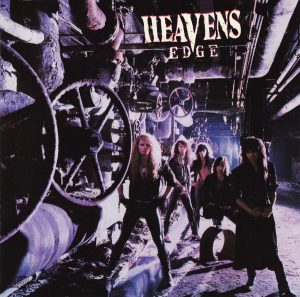
Heavens Edge Self-Titled album
When you look back on that self-titled album from 1990, what do you think of it now in retrospect?
At the time, to be perfectly honest, I didn’t really love the way it sounded. I had a lot of problems with the way it was mixed, and I just wasn’t really happy with it.
I felt like it didn’t really capture a lot of our live component. It sounded like a studio album, and I always felt the band was a lot rawer and more emotional live. I thought the album lacked a lot of that.
Moving forward almost 40 years later, I find that the album really holds up sonically. A lot of the things I didn’t like about it back then are the things I like about it now, if that makes sense.
Neil Kernon, the producer, was ahead of his time as far as the sonics go. A lot of modern rock and metal sounds a lot like that. It’s very clean and very deliberate.
Bands take more advantage of the studio now than they maybe used to. So, when you put the album on today, it still holds up sonically. Everything is really powerful. It’s not that it’s perfect, but it’s as perfect as records are in this day and age.
Back then, that wasn’t really what I was into for Heavens Edge. But when I listen to it now, I think, “Yeah, you know what? Sonically, it can hold its own in 2026.”
Now, you definitely have a life outside of Heavens Edge. You worked for, I believe, 21 years at Roadrunner Records. First of all, what was that experience like, working in A&R for Roadrunner and working with bands such as Slipknot and Korn?
When we were signed to Columbia Records back in the ’80s, one of the things that bothered me most was that I felt like I had no access to the label. They were behind this ivory tower. Actually, it was a black tower. They used to call the CBS building Black Rock, and that’s what it felt like. You just couldn’t get any dialogue going with anybody there.
On top of that, the employee turnover was so frequent that the minute you got into a groove with somebody, they would either quit or get fired. That included our A&R guy and even the president of the company. I think the president changed two or three times in the relatively short time we were there.
When new people come in, they flip the desks over. They want things done their way, and they get rid of all the bands they didn’t sign.
My experience as an artist signed to a major label really shaped how I functioned afterward as an A&R person. One of my main principles was to be available. The best thing you can do for any artist is listen to them. I don’t mean just listen to their music, although obviously that goes without saying. I mean listen to their concerns and make yourself available.
I tried to treat the bands at Roadrunner the way I wanted to be treated as an artist. Sometimes, simply getting on the phone and hashing out ideas can save years of animosity and discontent with an artist. If they feel like they’re being heard, and you are truly listening to them, it makes all the difference in the world.
That was the main thing for me. I really tried to make sure I was available to every single artist. And not just the singer, the guitar player, or the main songwriter, but everybody in the band.
Maybe that’s because I’m a drummer, and I always felt like nobody ever listens to the drummer! But I really tried to listen to everybody and build relationships with every single person in the band, no matter how large or small their contribution was.
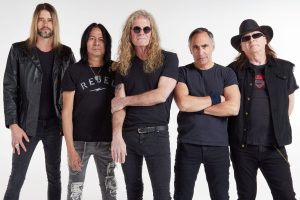
Photo by Alex Cihanowic
Well, currently you’re with Blue Grape Records, and you’ve been signing a lot of really cool modern bands. Tell me about working with Blue Grape and what that experience has been like.
My time at Roadrunner eventually came to an end. When I started there, Roadrunner was an independent label. Our biggest bands included Sepultura and Type O Negative, and this was just as Slipknot was starting to blow up.
I loved the attitude of the label. We were kind of the black sheep, with an us-against-the-world mentality. It was really reflective of the music, right? The ethos of heavy metal and rock has always been anti-establishment.
But when Roadrunner was sold to Warner Music Group, we suddenly became part of the establishment. It started to feel very corporate. They would put people in charge of the label who had no idea what heavy metal was all about, or what real heavy metal was all about.
Over time, it became increasingly difficult for me to find and develop new bands. While I have great love for many of the people I worked with at Atlantic and Warner, it’s a different business model. There’s an expectation of instant success, and it’s very difficult to develop artists.
Finding and developing new talent was what initially attracted me to the business side of the music industry. Eventually, I felt that part of Roadrunner was no longer the right fit for me.
So I started Blue Grape myself with Cees Wessels, the original founder of Roadrunner Records.
The name Blue Grape comes from the merchandise company Cees started as a sister company to Roadrunner Records. The name actually means a lot in the heavy metal, hardcore, and rock communities because those original Blue Grape shirts are still circulating out there. If you can find one with the original tag, they’re prized possessions and worth quite a bit of money.
I liked the name because it meant something to the community. But I also wanted a name that didn’t scream heavy metal. I wanted something that would give me the freedom to sign a wide variety of rock music.
The difference now is that all the decisions fall on me, which can be a little stressful, but it also gives me a lot of freedom to do what I want to do. Sometimes it works, and sometimes it doesn’t, but that’s on me.
One of the bands you’ve signed that I recently interviewed is a band called Bike Routes.
No way!
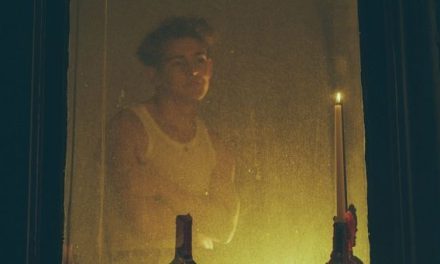
Bike Routes – Photo Credit: Bellamy Brewster
Tell me about that signing. Bike Routes is so far removed from your world in Heavens Edge!
Well, most of the things I’ve signed have been nothing like Heavens Edge, including during my entire time at Roadrunner. There are obvious reasons for that.
Here’s the thing about the music scene right now, particularly in Philadelphia. Hardcore music has an incredible community and culture. It’s a truly anti-establishment culture that has existed for, what, 40 years? Maybe almost 50 years now.
As it’s grown over the years, a lot of other music has developed alongside it. These days, the buzzword is that it’s “adjacent” to hardcore.
The music itself may not sound like hardcore, but a lot of these bands tap into that community. The fan base and the ethos are still the same. The culture is still connected to the hardcore community, even if the music isn’t.
At the same time, the fans are so open-minded that they accept all kinds of different music.
Somebody like Dave from Bike Routes is loosely associated with that community, even though the music sounds nothing like hardcore.
That’s why I think the music business right now is perhaps the most exciting it’s ever been in the rock world. There’s such an open-minded fan base out there now, something that didn’t exist when we were coming up.
When I was coming up, if I didn’t listen to metal, everybody would make fun of me. If I got caught listening to U2 or something, I’d hear about it!
Nowadays, people are encouraged to be diverse in their musical tastes.
So, although Bike Routes isn’t a heavy act, and Dave isn’t either, they’re part of the Philadelphia community that propels so much music forward.
That’s what initially interested me. Dave came out of a community that I’m closely associated with and pay a lot of attention to. Right away, I was interested because I felt he was part of a scene that I respected.
On top of that, he’s immensely gifted. He’s one of the best lyricists I’ve ever worked with in my entire life, and he’s got a fantastic attitude. He’s a hard worker and has been regularly on the road ever since we signed him.
Every single time he writes and records a piece of music, it practically brings me to tears. He’s incredible. I’m so proud to have him on our label.

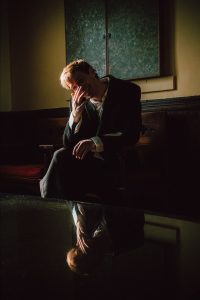
Dave Rath of Heavens Edge – Photo by Alex Cihanowic
It’s pretty rare that I get to interview an A&R representative, especially since we deal with a lot of young bands. What advice would you give to a band looking to get signed in this day and age?
It’s the same thing that most A&R guys will tell you: Get out there and play! Don’t worry about getting signed. If you’re good, we’ll find you.
Go out and play the best shows you possibly can, as often as you possibly can. Write the best songs you can, get your act together, be organized, be professional, and be committed and dedicated.
If you can put all those things together with some genuine talent, the A&R people will find you.
Once you start drawing people into clubs and your music starts streaming, trust me, every single label has people scouring the DSPs (digital service providers). They’re looking at YouTube, searching the internet, checking out the clubs, and keeping their eyes open. They’re out there looking.
As a matter of fact, I think bands are getting signed too early these days. Rock music feels so good right now, and it’s become incredibly competitive. In my opinion, some bands are getting signed before they’ve gone out and done the hard work on the road. You need to find out whether you’re really equipped to handle a life in the music business.
My advice sounds ridiculous, but it’s true: Just be the best you can be. If you’re great and people like you, we’ll find you.
It’s pointless to cold-send your music to an A&R person when you have nothing going on and expect a miracle to happen. It can happen, but it’s very rare. That’s not a wise course of action.
You want to be in control of your own destiny as much as possible. If your band is doing well, you’re generating streams because you’ve released your own music, people are paying attention, and you’re out on the road playing shows and drawing a crowd, that’s going to give you a lot more leverage to get signed to the company you want and negotiate the kind of deal you want.

Dave Rath of Heavens Edge – Photo by Alex Cihanowic
Do you have any messages for Heaven’s Edge fans who are reading this right now?
First, I’d like to say thank you so much for continuing to support us. And to the fans who are just discovering us now, which I believe is happening, I’d say welcome to the party!
We’re really proud of the new music we’re making, and we consider it a real honor and a thrill to have the opportunity to do it. We take it very seriously. We’re not just going through the motions.
Everything we do, every song we write, and every time we play, we treat it like it’s the last time we’re ever going to do something.
The support we’ve been getting from the community has been tremendous, and our numbers are actually going up, which is kind of nuts!
I see that kind of thing because I guess that’s what I do for a living. I’m always looking at the numbers. But it’s not just about the numbers; it’s also about the vibe surrounding the band. It’s been so positive. The way we interact with the people who come to see us has made this a really positive experience for all of us.
It gives us a lot to be thankful for because the band has had a tough road.
We were around at a time when musical tastes were changing, and we had George in our band, who, as I’m sure you may know, was shot at a club. That delayed everything and pushed us back by almost a calendar year because we waited for him to recover.
Unfortunately, George passed away a few years ago. We also had problems with the record company, and there were just all kinds of things that happened along the way.
We never felt like we really got the full opportunity that we thought we’d worked for. I’m not saying we deserved it, because nobody deserves anything in this business. You’ve got to work for it. We worked really hard, and we thought things would turn out differently.
But when I look at where we are right now, I think, “Holy crap, we’re all still here! We’re still getting the opportunity to make the music we want to make and play the shows we want to play.”
So, in a way, we came out on top. And it’s the support of the people who come to see us and listen to our music that has made that possible.
In Conclusion
After spending time talking with David Rath, one thing becomes clear: Heavens Edge is far from finished. There’s a renewed excitement surrounding the band, a genuine appreciation for the fans who have stuck with them, and a determination to make every song and every performance count.
With Philadelphia, Heavens Edge isn’t simply revisiting its past. They’re adding another chapter to a story that has had its share of twists and turns, but one that continues to move forward.
And perhaps that’s the biggest takeaway from this conversation. Whether it’s making music with Heavens Edge, discovering new talent through Blue Grape Records, or encouraging the next generation of bands to get out there and make their own noise, David Rath remains every bit as passionate about rock and roll as ever.
The road hasn’t always been easy, but Heaven’s Edge is still standing, still creating, and still giving fans plenty of reasons to turn up the volume.
(Interview by Ken Morton)
Heavens Edge on Instagram