



Serving Eternity: WitcheR on Solitude, Legacy, and the World of Öröklét
 Serving Eternity: WitcheR on Solitude, Legacy, and the World of Öröklét
 Serving Eternity: WitcheR on Solitude, Legacy, and the World of Öröklét
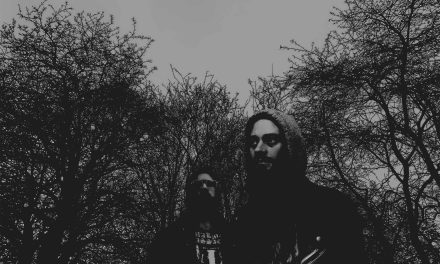
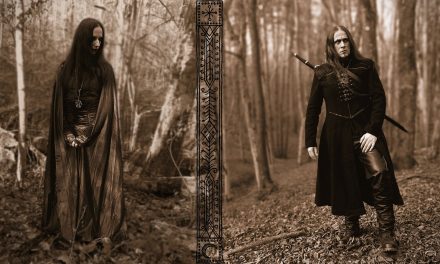
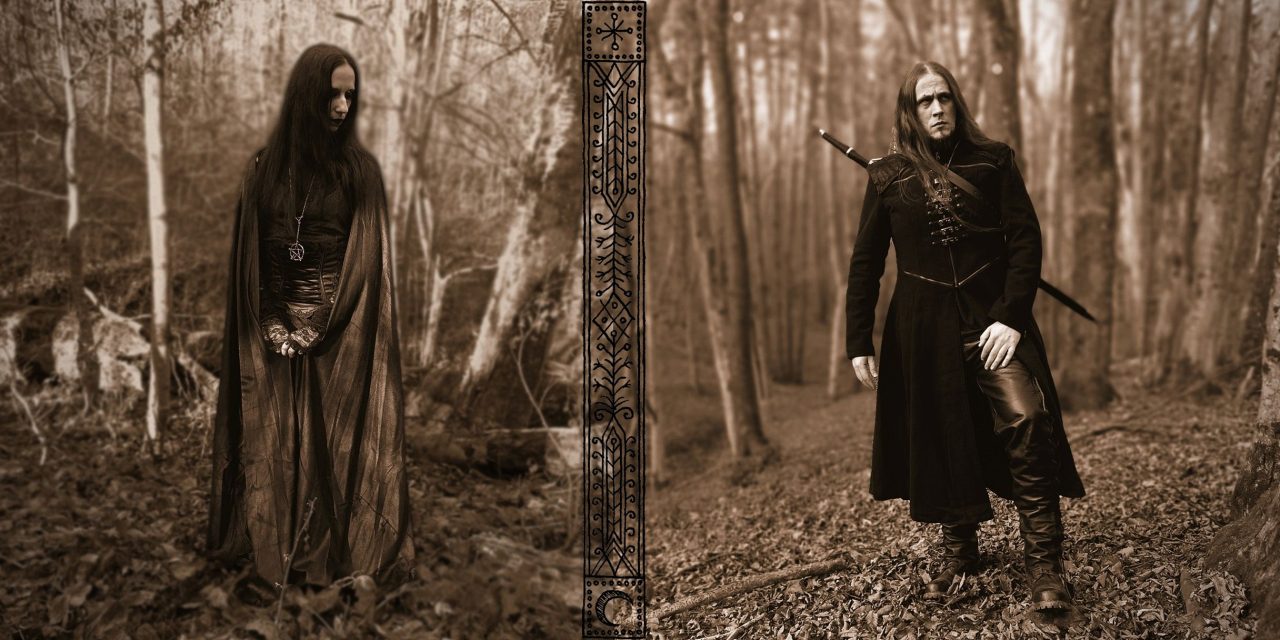
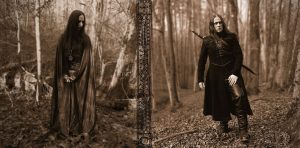
WitcheR has always existed slightly outside the world — geographically, musically, and spiritually. Emerging from a small Hungarian village near the western border, the duo has spent fifteen years crafting a sound that blends neoclassical melancholy with the rawness of black metal, creating a refuge both for themselves and for listeners seeking escape from modern noise. For this interview, the questions were answered by Neubauer Roland, the band’s guitarist, drummer, and vocalist, whose vision has shaped WitcheR’s evolving identity since its earliest days. With Öröklét, the band’s newest album, Roland and Karola dive deeper into themes of timelessness, ancestry, and the eternal cycle that guides their art. In this conversation, Roland reflects on the emotional weight behind the record, the evolution of their sound, and the defining moments that have carried WitcheR from Csendes Domb to the present — and into the future.
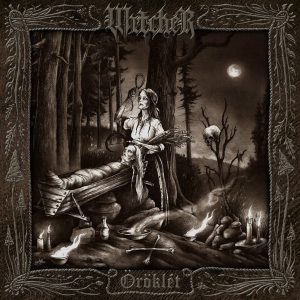
Öröklét carries a powerful emotional and atmospheric weight — what core idea or feeling shaped the album’s creation?
We wanted to create an album that can transport the listener into another world, into another era, one that offers a sense of peace and serves as an escape from the modern world. We ourselves often feel overwhelmed and disillusioned with the way things are today, and music provides us with a kind of refuge. That feeling of escape and solace is something we truly wanted to share with others.
How did the writing and recording process for Öröklét differ from your earlier releases?
Fundamentally, there was no real difference in the way we approached the writing and recording process. However, I would highlight two key aspects. First, I spent a significant amount of time on sound design, as I wanted to give the songs a distinctive and individual character. Second, Karola’s clean vocals played a much more prominent role than ever before. I would very much like to see her voice become even more central in future WitcheR songs as well.
 WitcheR blends neoclassical and black metal elements in a unique way — did you explore any new influences or techniques on this album?
We didn’t deliberately set out to seek new influences or techniques. However, we listen to a lot of music and are constantly exposed to various inspirations in our daily lives, and these inevitably find their way, indirectly, into the new album. That said, I couldn’t point to any one specific influence in particular.
The title Öröklét (“Eternity”) suggests a deep theme. What does that concept represent for you as artists?
The term holds a very deep meaning for us, which is why we chose it as the album’s title. We believe that everything you do in life should serve eternity. No action, no song you write, no life should be meaningless – everything is part of an eternal cycle. Only by understanding this can someone truly be worthy of eternity.
For listeners discovering you now, how would you describe where WitcheR comes from, both geographically and musically?
Geographically, we come from Hungary, from a very small village near the western border, where we can retreat from the world every day. Musically, WitcheR’s roots are nourished by bands like Summoning and early Dimmu Borgir. Strong melodies and an immersive atmosphere are very important to us. WitcheR is a bit like blending classical music with black metal.
How has your Hungarian background influenced the atmosphere, themes, or aesthetics of your music?
Although we identify as Hungarian, I personally have German and Slavic ancestry, and those roots are very important to me. Naturally, Hungarian folk music, traditions, and folklore have also had a huge influence on me – and even more so on Karola – but none of this takes priority in WitcheR. We’ve created our own world, and we try to make the most out of it.
What is your perspective on the current Hungarian black metal scene, and how has it evolved since you formed the band 15 years ago?
There are a few really good bands in Hungary, but I’ve noticed that nowadays everyone tends to follow their own path. Fifteen years ago, it was a bit different. Back then, there were more active bands, and there was an effort to maintain connections between everyone. Today, apart from a few exceptions, that mostly happens only in the bigger cities, especially Budapest. We, for example, are complete outsiders – bands don’t really reach out to us, and we don’t seek out others – but we approach everyone with respect.
 Are there any Hungarian metal bands you feel deserve more international recognition?
I believe that nowadays it’s actually easier to gain recognition and acclaim abroad than in Hungary. So, my diplomatic answer would be that anyone who wants it and works for it can achieve proper recognition internationally.
Looking back on the 10-year anniversary of Csendes Domb, what stands out to you most about that album today?
That’s a tough question. Like with any debut album, I tend to notice its flaws more than anything else. But if I had to highlight one thing, it would definitely be our cover of Ralph Vaughan Williams. Taking that on shaped a lot of what came after — since then, every album has included a classical music adaptation, and we even dedicated an entire EP to this concept (Boszorkányszimfóniák).
How do you feel your sound and artistic vision have evolved since Csendes Domb and across your 15-year journey as WitcheR?
I believe we’ve managed to achieve a very clear and beautiful trajectory of growth with each album. We’ve developed not only as musicians and songwriters, but also in terms of production. Many people point out that when they hear a WitcheR song or see an album cover, they immediately recognize it as ours. We’ve worked very hard to make that happen, and our friend Balázs Pénzes has played a huge role in our visual identity – with his covers and artwork, even our smallest pins or stickers are instantly recognizable.
What have been some defining or transformative moments for the band over the past decade and a half?
There have been many, but the first would definitely be the release of A gyertyák csonkig égnek. That’s when we truly stood on our own feet – the album was self-released, we finally had proper promotion and marketing, and it marked the moment we really opened up to international audiences. I would also highlight the release of Lélekharang, because it opened entirely new paths for us that shaped everything that came after. Both of these moments were truly defining for us.
 After Öröklét, what direction do you see WitcheR heading next — musically, creatively, or in terms of upcoming projects?
Öröklét made us realize that with just Karola and me, we’ve already achieved everything we can with this project on our own. That’s why the next album will most likely be released through a larger label, so we can take our music and production to a whole new level. The new record is already in the works, and if all goes well, it could be out in 2027!
IN CONCLUSION
WitcheR’s world is one built slowly, deliberately, and with a devotion to atmosphere that feels increasingly rare. Their reflections on Öröklét reveal a band grounded in solitude yet connected to something vast — ancestry, eternity, and the quiet places where music becomes refuge. As they look toward a new chapter with a larger label and an album already taking shape for 2027, their path remains unmistakably their own. For listeners old and new, WitcheR continues to offer not just songs, but an escape into a world shaped by melody, memory, and the pursuit of something eternal.
(Interview by Ken Morton)
Thank you to Markus Eck of Metal Message ᴳᴸᴼᴮᴬᴸ • 𝐸𝓈𝓉. 2001 for setting this up!
Witcher on Facebook