




Sailing Through the Years: John Ford Coley on Music, Memory, and the Magic of the Stage
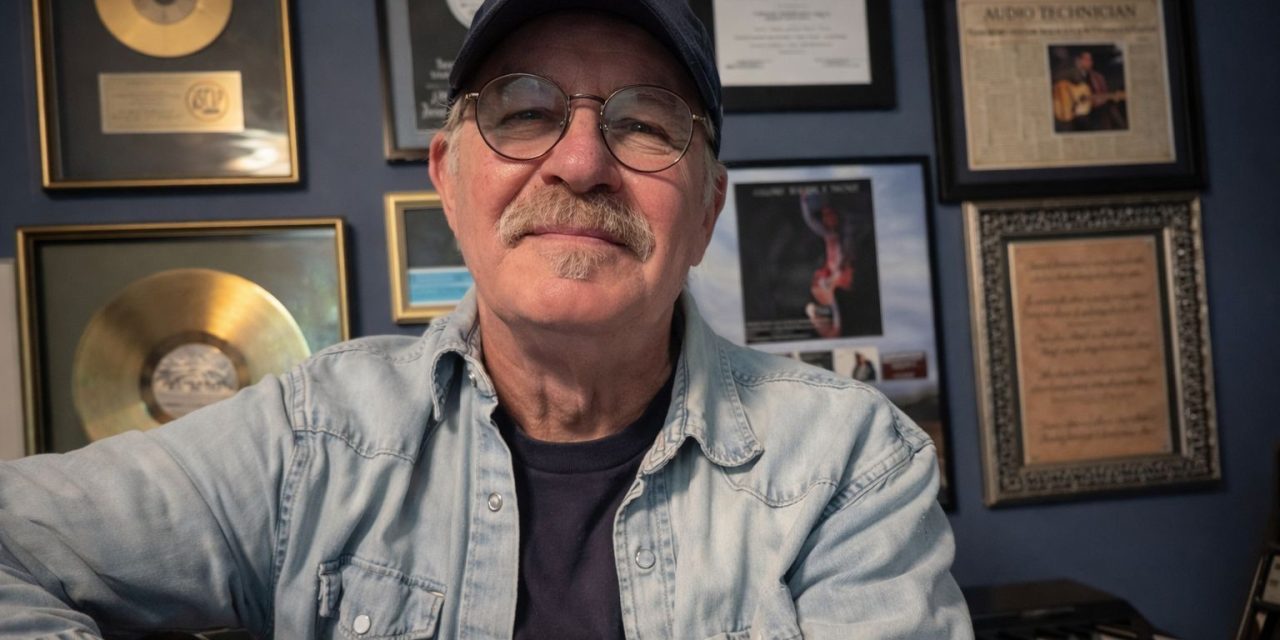
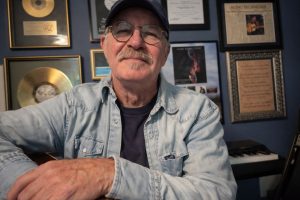
John Ford Coley via Zoom!
Sailing Through the Years: John Ford Coley on Music, Memory, and the Magic of the Stage
There’s a certain kind of magic that happens when John Ford Coley starts telling stories. One moment he’s laughing about opening for Led Zeppelin as a teenager; the next, he’s reflecting on the emotional weight of singing a song that defined an entire generation. As he prepares to join Ambrosia, Elliot Lurie, Peter Beckett, amd Walter Egan for the Yacht Rock the Dock show at the Downey Theatre on June 6th, Coley remains as sharp, funny, and heartfelt as ever — a man who has lived the music, survived the eras, and still finds joy in every melody that brings people together. This conversation is a journey through fifty years of songs, friendships, memories, and the unexpected moments that shaped a lifetime onstage.
We’re here with John Ford Coley, and we’re going to ask a few questions. First off: What are you looking forward to the most about the Yacht Rock the Dock show at the Downey Theatre?
I always look forward to watching people jump up and down and sing the songs. That’s always a surprise to me. You expect audiences to be a little more subdued and reserved, but man — when we get up and play and they hear some of those melodies and old songs, they just get into it.
What do you think of the term “yacht rock”?
They could call it Billy Bob and the Runaways Music for all I care. We just like to play. I thought it was interesting years ago — long before the yacht rock phenomenon became a thing — I was talking with Mark and Brian over at KLOS Radio. They said, “Yeah, man, we take your music out on the boat. We get out on the ocean and play it really loud.” I started laughing. “You play my music really loud?” So that was actually the first time I ever had any inclination of the whole yacht connection. They were literally out on a yacht blasting the songs.
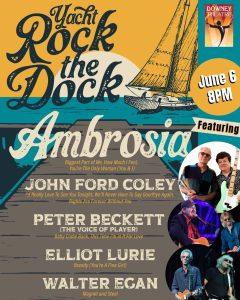
Yacht Rock The Dock
What collaborations have you done with Ambrosia in the past?
Man, I’ve been playing with Ambrosia since Moses came down from Mount Sinai, it seems like. I started off with those guys in the Philippines in 2000. We played our first concert together, kind of hooked up, became friends. They began to understand my Southern accent, and we got to be good friends. We probably play forty or fifty shows a year together.
And on this particular show, we’ve also got Elliot Lurie from Looking Glass — he was responsible for a song called Brandy. We’ve got Peter Beckett from Player — he had Baby Come Back. And then I’ve got the England Dan & John Ford Coley songs. Ambrosia has a bunch of hits. So we pretty much take you down memory lane. That’s the whole point. You’re very seldom going to hear anything new — it’s about giving people what they came to hear.
Let’s talk about a few anniversaries you have coming up. First, we’ll go back ten years to the Eclectic album in 2016. When you look back on that album now, what comes to mind?
It’s been ten years? Really? Man… time gets out of here in a hurry. No wonder I hurt so much all the time. I had a great time doing that record. It was a labor of love — and it literally wore me out. I had never done a double album before, so there are twenty‑six songs on that recording.
I had some of the best people in the world come in and play. Vince Gill and I wrote a song; he came in and played on it. I asked him to play, not sing, because everybody wants him to sing — but I’m such a fan of his guitar abilities. Colin Raye, T. Graham Brown, Lydia Salnikova, Georgia Middleman… all these people I’ve loved working with over the years contributed. It was really about finally getting all these songs I’d written over the years recorded the way I wanted. That’s how it all came about.
We’re going back fifty years now. You recorded two albums in 1976, and I wanted to revisit both of them. First, I Hear the Music. When you look back on that album, what comes to mind?
You know, the ironic part about that album is that I Hear the Music was on A&M, and they actually took part of our very first album — the one we did as England Dan & John Ford Coley — and combined it with some songs from an unreleased record. They pulled a couple of tracks together, packaged it, and put it out in response to us releasing I’d Really Love to See You Tonight.
It was fun for me because I got to revisit all of that. Herb Alpert — you might remember him from the Tijuana Brass — he was my first boss at A&M Records. I love that man. Him and Dick Clark were so supportive of us. They really helped us along. Herb was the one responsible for the I Hear the Music album coming together.
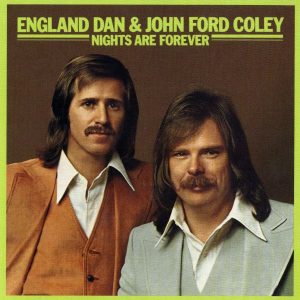
Nights Are Forever by England Dan and John Ford Coley
And then, of course, the other album from that year: Nights Are Forever. When you look back on that one, what do you think of it now?
You know, all those days kind of blur together now. I look back and it just goes phew. And I think, “I would’ve done this different… I would’ve done that different.” But you know what? We didn’t — and that’s the way it is, and that’s the way it’s going to be.
I enjoy playing the songs from that album. And when we go out on the road — like when I play with Ambrosia — they use a slideshow. It’s got all these photographs of us from those time periods: growing up, playing music. It’s a history. It shows that you were always doing something. You weren’t sitting on your hands waiting for someone to discover you. You were out there working, playing, enjoying yourself, getting experiences.
So I have no regrets about any of that. I just look at it and go, “I had a good time.”
Now, I’d Really Love to See You Tonight is turning 50 — and it has 196 million plays on Spotify. When you see a number like that, what does it mean to you?
I think it means people enjoy the melodies. That’s what I think of. During that time period, there were melodies you could sing — and memories attached to those melodies. People think, “I went to the prom to this song,” or “This happened during that song.”
I’ll tell you the truth — I had an experience that really brought that home. I was playing on a cruise, and Peter Asher — from Peter & Gordon — was there. I’d actually played with Gordon in the Philippines. Peter’s been responsible for Linda Ronstadt, James Taylor, so many great artists. He asked me to come over and play a song during his set.
Afterward, they grabbed me and said, “Would you get up and play World Without Love?” And I said, “Yeah, sure… quick, how’s it go?” They started humming it and I went, “Okay, I know it.”
So I got up on stage with Susan Cowsill — she and I go way back — and I’m singing this song word for word, not missing anything. And suddenly I got this overwhelming feeling. I kind of glazed over. Susan looked at me and said, “Are you okay?” And I said, “I’m great.”
What happened was: I started envisioning Dan and me, driving in the car to gigs, singing Peter & Gordon, Chad & Jeremy, the Everly Brothers, the Righteous Brothers… all those songs. Suddenly I was back in the car with Dan. And it hit me.
People come up to me all the time and say, “This happened during that song,” or “That song was playing when…” And I realized — is that what it feels like? I had never known that feeling from the listener’s side. And I got very overwhelmed emotionally.
So when you listen to those songs from that time period, it brings up this emotion or that emotion. You were doing this then, you were doing that there. And it’s very gratifying because you realize: we did stuff.
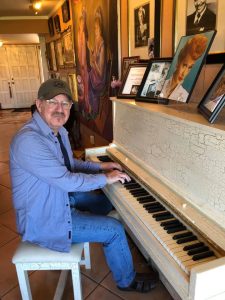
John Ford Coley
Your songs mean so much to so many people across generations. How does that make you feel?
It makes me feel like it wasn’t a wasted time period. We weren’t just out there flitting around. At one point, sure, we were out there for the money — I was just trying to pay my doggone rent and do something I loved.
When I was in high school, I was out playing on weekends. Everybody else was going to football games or working at the grocery store. I was out experiencing life. It was the most exciting time I can remember. There’s life out there — you just have to look for it. We weren’t stuck doing what we thought we were “supposed” to do. We were creating something, building something… and we didn’t even know it. We were so involved in it, we didn’t have time to think about it.
You and Dan were in a band called Theze Few, and you actually played on stage with Led Zeppelin. What was that experience like?
The funny thing is, we had changed the name from Theze Few to Southwest F.O.B. We recorded a song called Smell of Incense, written by the West Coast Pop Art Experimental Band — we’d played with them at a club in Dallas called Lou Ann’s. The song took off and became a regional hit.
So when big groups came into town — Three Dog Night, Vanilla Fudge, Poco, Johnny Rivers, Paul Revere & the Raiders — they’d slot us in as the opening act because we had a draw. People came to see us.
We ended up opening for Led Zeppelin in Houston and Dallas. I didn’t even meet the guys — they were so sequestered, so wrapped up in their own world, nobody could get near them. But I remember watching them.
The next morning, we looked in the newspaper. There were two reviews — one from the Times Herald, one from the Dallas Morning News. One of them said, “Southwest F.O.B. flies over Led Zeppelin,” and it listed our names.
Years later, I did my first film, Scenes from the Goldmine. Timothy B. Schmit was the bass player in the band, I was the drummer, and we had all these musicians on set. Musicians can be such snobs — “You play that kind of music? That’s wuss music.” I finally said, “Well, I played with Led Zeppelin.” You should’ve heard the laughter. “No you didn’t. They’d never play with you.” They gave me all kinds of grief.
I didn’t care — I didn’t have to prove anything. But I went home, pulled out the articles, and brought them back the next morning. Put them down and said, “Guys, I don’t have to lie. My name’s right there.” I gained more respect on that set than you can imagine. You’d have thought I said I had lunch with the Queen. It was great.
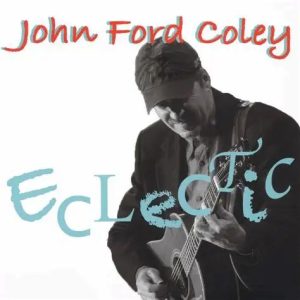
Eclectic by John Ford Coley
I interviewed Eddie Money at Rock For Ronnie a few years before his passing, and he was such a cool guy. You worked with him — what’s your Eddie Money story?
Eddie and I were like flour and water when we first got together. I was producing some sides on him with Tom Wurth. Eddie was a character — a force of nature. I thought that man was going to give me a heart attack.
We fought the whole time. One day during mixing, he looked at me and said, “Hey Coley… I was about to throw your ass out of here yesterday.” I said, “Eddie, if I wasn’t a Southern boy, I’d have quit on you yesterday.” We ended up being good friends.
I played with him on stage in Nashville. Tom and I got up there with him. Eddie gets on the mic and introduces me: “Hey everybody, this next guy — John Fraud Coley. Summer Breeze, remember him?” I looked at him like, “Eddie, you asshole.” We just had a good time. Eddie was a good guy.
After the split of England Dan and John Ford Coley, did you stay in touch with Dan Seals?
JA little bit. We didn’t have the relationship we used to. Dan went off into country, and I’m the type of person that when I’m done, I’m done. I’m not going to go back and try to revitalize something.
Dan and I had a great run. I loved Dan — he was like my brother. It was hard not having that communication anymore, but he went where he needed to go. Honestly, he should’ve been in country the whole time. I didn’t want to interfere with what he was doing. I just went off and did my own thing.
What I miss most is that Dan and I were both problem solvers. Very solution‑oriented. I don’t want to argue for two hours. Let’s pretend we argued and I won — now I’m hungry. Let’s solve this and go eat. Dan was the same way. We never fought. We just solved the problem and moved on. I miss that.
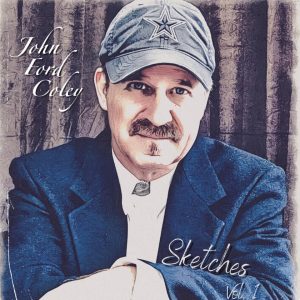
Sketches Vil 1 by John Ford Coley
You recently released Sketches, Vol. 1. Is there a chance of a Volume 2?
We’ve been thinking about it. Tom Wurth — the guy I worked with on Eddie’s stuff and all the other records — came over one day while I was reviewing some old material. I played him something and he said, “Whoa, when’d you do that?” I said, “A while back.” He asked what I was doing with it. I said, “Nothing. It’s in the drawer.”
I played him another one. He said, “Man, you’ve got to put these songs on a record. I know they’re demos, but we don’t have time to redo everything. Just put them out.” So that’s what we did.
We’ve thought about a Volume 2 — it’s just a matter of finding the time to collect all the songs. Going through everything we’ve written over the years is a challenge.
Last question: Do you have any messages for your longtime fans — and for new fans just discovering your music?
I’m so appreciative that people have stuck with us all these years. I love hearing their stories. I go to the back after shows because I like meeting people, talking to them, hearing what’s gone on in their lives. I’ve heard some incredible stories.
I’ve also discovered there are a lot of children out there who bear my name — which is ironic and funny. But I love that people have stayed with me and appreciated the music. I value you. I really do.
So keep coming. Keep coming to the shows. Keep coming up and telling me the stories. I like to hear them.
In Conclusion
Half a century after “I’d Really Love to See You Tonight” first hit the airwaves, John Ford Coley continues to carry the stories, humor, and heart that made his music timeless. Whether he’s reminiscing about the early days with Dan Seals, trading jabs with Eddie Money, or rediscovering the emotional power of a song onstage, Coley remains grounded in gratitude — grateful for the fans, the memories, and the life music allowed him to live. As he steps onto the Downey Theatre stage with Ambrosia and friends, he isn’t just performing the hits. He’s celebrating a legacy built on melodies, moments, and the people who’ve carried those songs with them through the years.
(Interview by Ken Morton)
John Ford Coley Official Homepage