



The Sovereign Sound: Rob Moratti Reflects on His Reign in Rock
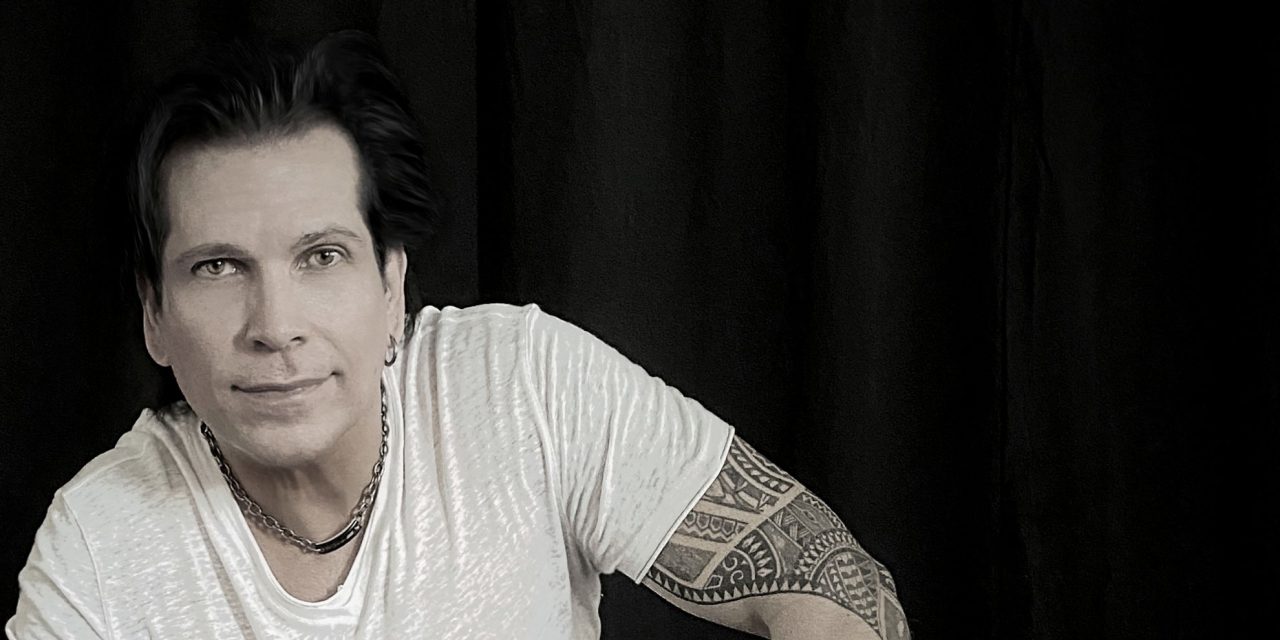
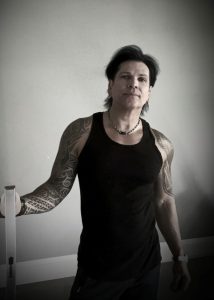
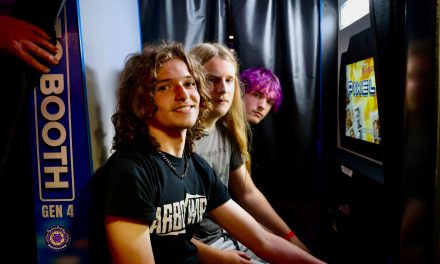
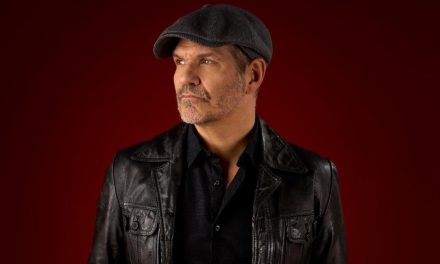
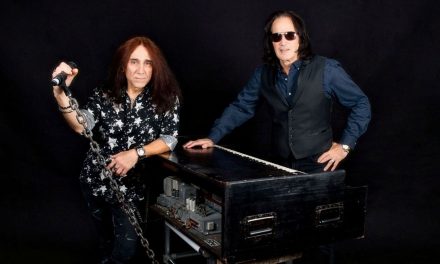
Photo by Surge Audio and Visual
The Sovereign Sound: Rob Moratti Reflects on His Reign in Rock
Few voices in melodic rock carry the unmistakable blend of power, precision, and heart quite like Rob Moratti. From his early days with Final Frontier to his celebrated tenure fronting Saga, Moratti has carved out a career defined by soaring vocals and unwavering passion. Now, with the release of his latest solo album Sovereign on Frontiers Music Srl, he returns with one of his most confident and emotionally charged records to date.
In this exclusive interview, Moratti reflects on the creative spark behind Sovereign, revisits milestone moments from across his three‑decade career, and shares candid stories about working with world‑class musicians like Joel Hoekstra and Tony Franklin. Whether he’s looking back at the early days of Desolation or discussing the progressive fire of The Human Condition, Moratti speaks with the same sincerity and enthusiasm that have made him a beloved figure in the melodic rock world.
What follows is a deep dive into the past, present, and future of an artist who continues to evolve while staying true to the sound that fans around the world have come to cherish.
We are here with Rob Moratti. First of all, let’s talk about your new album, Sovereign. Is there an overall story or concept behind the title?
You know, over the years I thought, why not go with something that feels a little royal? It still blends with everything I’ve done before, but this one had a ring to it. After all these years, there’s a bit of “royalty” in every song and every track. The performances—like every album, thank God—came together beautifully. But this one is really special to me. Sovereign just felt right. And like always, I try to keep it simple: one word, three syllables. I wasn’t about to break that streak. So I went with it, and here we are.
Let’s talk about two of the songs I’ve heard so far. First, “Don’t Give Up on Love.” What inspired that one?
“Don’t Give Up on Love” is really about something everyone goes through. We’ve all been there. We can all relate to love and relationships—some people find it early, some later, and some give up entirely. The song is about not giving up, learning from the experience, picking up the pieces, and moving forward.
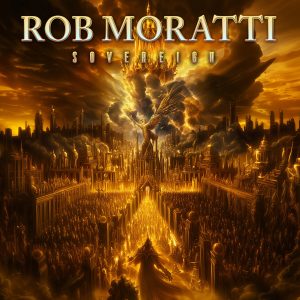
Sovereign by Rob Moratti
And the second single, “Can’t Let You Go.”
Absolutely. That one is about the reality of relationships—those that work and those that don’t—and how, for some reason, we still hold on. That’s the essence of this genre. It lets you live in that happy and sad place at the same time, without getting political. This is the only genre that can take you there without going off track.
Yeah, these days, who even wants to get political anymore?
Exactly. I never have—not on any of my past albums. I feel like people want to enjoy those three and a half minutes, or the whole record, and just laugh, smile, be happy, maybe even feel like they’re back 20 or 30 years ago. And that’s cool. It doesn’t have to send a dark message. There’s enough of that online and in the world. But that’s a whole other interview, right?
Absolutely. So let’s jump to the end of the album. “This Is Forever.” Tell me about that track.
It’s a happy place in love—“this is forever.” It’s bold, it’s in your face, and it’s as classic and energetic as it gets. Funny thing is, I had this one ready for the last record, but I decided to let it sit for a bit. Eventually I thought, no, this one has to see the light this time. It’s a great track. “This Is Forever.”
Joel Hoekstra of Whitesnake has played on several of your albums now. What has it been like working with him?
This is our fourth album together. He’s a gentleman, and honestly, he’s the god of guitars. He’s one of the best in both caliber and style. There are many great players out there—he’s easily in the top tier. And beyond his talent, his personality makes him even better. Same with Tony Franklin. They’re both great guys. Working with them has been amazing. That’s why I’m still here, and that’s why they’re still here. No egos—just gratitude for being able to keep making this kind of music. It keeps us happy and keeps us going.
When did you first meet Joel?
I approached him online in the middle of COVID. Timing was everything. His response felt like reconnecting with one of my best friends. I thought, “Wow, what a guy.”
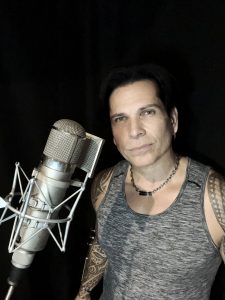
Photo by Surge Audio and Visual
And talk a little about Tony Franklin. What’s it like working with him?
Tony’s been with me from the beginning of my solo albums. That’s Tony—just like Joel, he knows exactly what to do and where it feels right. They don’t overplay or overstep. Joel’s harmonics are crazy, and Tony’s groove is unreal. Believe me, I’ve been doing this a long time. I could have used almost anyone on bass or guitar. But these guys show up and deliver, and I’m always shocked—in the best way—when the full production comes back. There’s a reason I keep going back to them. They’ve spoiled me.
We’re going to go over a few Rob Moratti anniversaries. There are actually several, and this should be pretty cool. Let’s go back five years to Paragon. What was it like releasing that album right at the cusp of the pandemic?
Well, I kind of felt the impact, but at the same time I didn’t. I was hoping it wouldn’t affect things too much. The good thing was that everyone was around—nobody was touring—so making the album happen wasn’t difficult. Paragon was actually the album where I first reached out to Joel, and he ended up playing on it. I think he performed on six tracks. That was the beginning of our working relationship. It was comfortable because everyone was available and looking for work, if that makes sense. Did the pandemic affect me? No. If anything, it brought me to where I am now, still working with Joel and Tony. These guys are monsters.
Let’s go back 10 years to your Tribute to Journey. Tell me about that album and what Journey has meant to you over the years.
That one was really special. Journey has always been one of my biggest influences—between them, Styx, Survivor, Toto… all of them. And of course, Steve Perry was always the god of all singers for me. Him and Brad Delp—those guys are unreal.
I hadn’t actually planned on making a tribute album. I was just jamming and started recording some Journey songs for fun. I played around with tracks like “Lovin’, Touchin’, Squeezin’,” songs I used to perform live back in the day. My wife walked by the studio and said, “What is that? Is that you doing Journey?” I said yeah, and she told me it sounded great and that I should try releasing it.
So I reached out to the label at the time—Escape—and asked if they’d be interested. They said yes. That was the beginning. We recorded 12 tracks. Then the label asked me for one request: “Would you mind doing ‘Mother, Father’?” And I thought, you’re kidding, right? Out of all the songs! But I did it, and I’m grateful I did. I never would’ve pushed myself to go that route otherwise. It was a lot of work, but fun work. I didn’t stress over it. It’s Journey—you do it for the love.
Now let’s go back 20 years—the 20th anniversary of High Tension Wire by Final Frontier. When you look at that album and your time with Final Frontier, what comes to mind now?
I’m proud of all those records. High Tension Wire was sick—a crazy album. The chemistry was great. Working with Mladen was a blessing, and it taught me a lot. Those years shaped who I am today. The only thing I notice now is that the production might sound a little dated, but the songs themselves will live forever. The performances still make you go, “Wow, that’s cool.”
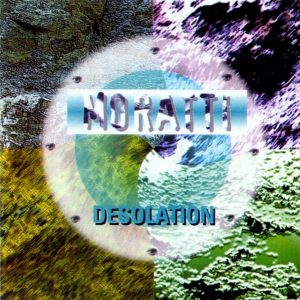
Desolation by Moratti
Let’s go back even further—to 1995–1996 and the Desolation album.
Wow… the beginning. The beginning of it all.
Yes—30 years. That’s the 30th anniversary.
Ken, that’s amazing, bro. Wow.
Congratulations.
Thank you so much. When I look back, that album was recorded on digital 8‑track. Remember those? Before hard drives, everything was on a VHS‑style tape. That’s what we used for that album.
When you look back on Desolation—the fact that it’s been 30 years—what do you think of that album and that time in your career?
I’m always proud of everything I’ve done. Desolation was where I got my toes wet. I was just starting out, and I was so proud. I thought, “What a way to go down in rock and roll—here’s our first album.” Hopefully we’d get to make a second one, which we did. It was the beginning, and it was great.
What would I change? Nothing. It brings me back to a time with great guys, and rock was going through a transformation between the ’80s and ’90s. There was a bit of darkness creeping in, which you hear even more on the next album. We tried to keep some of that classic rock vibe, but grunge took over and buried a lot of the ’80s bands. But I thought, I’m not going down in flames. I’m going to keep doing what I do, and eventually I’ll get picked up somewhere and keep going. And that’s what happened. Later I decided to do my own thing. With Final Frontier, we did four albums and stayed true to our classic sound.
You were in Saga from 2008 to 2011. Do you still keep in touch with any of the members?
Yeah, of course—Ian. Ian reaches out to me, I reach out to him. We share thoughts on musical ideas we’re both working on, and every once in a while we’ll tap into something together. He’s a great guy. Respectfully, they’re all great guys. They’re busy, so I’m not going to bother anyone, but with Ian, there’s always something there.
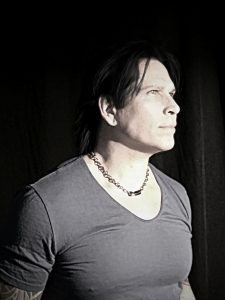
Photo by Surge Audio and Visual
Do you miss touring? Is that something you’d like to do in support of Sovereign?
Do I miss touring? Yes. Do I miss Europe? Yes. Did I ever make my way out to the States? No—well, I did with Saga. That was with Saga, and those guys toured like royalty. They had the double‑decker tour bus. It was great—we went everywhere.
Would I do that again? I’d love to. I don’t know if it would be at that same financial caliber, but it’s a different world now. I’d love to go back for a few gigs, maybe a few festivals, just to make it worthwhile. Things have changed a lot over the years.
I have one more Saga question—mostly a comment. I interviewed Ian a few years ago and asked if he still kept in touch with you and what he thought of The Human Condition. He said he still speaks with you, he loved the album, and he thought you did a fantastic job. What do you think about that?
The album was great. We had a good time recording it, writing it, producing it. Every track had something special. Those guys are great players—it’s progressive and melodic at the same time, and I tapped into that. We fit. There’s a thing that Saga does, and it worked.
As for Ian’s opinion, I appreciate everything he thinks of me. He already knows what I think of him. He knows I love him, and I’m very grateful for ever being part of the band. Saga’s great. I grew up doing Saga covers with my old bands. Playing with them was so much fun. Like all the other rockers growing up, we’d hear their stuff on the radio and crank it up.
And I respect that Michael came out of retirement. He wanted to give it another run, and absolutely—that’s a decision the band has to make within themselves.
Are you currently involved with any other bands or projects? Any surprises coming up?
Not really. I’m trying not to take on too much because time is always tight. The production, writing, and performances for my solo stuff take a lot out of me—and I love it, because it’s my own. When it comes to other projects, I branched out a bit. A couple of guys approached me and I thought, “Okay, maybe…” but then I realized, no, this isn’t going to work unless it’s a bigger band.
Did I ever tell you I came close to something else? They told me to take it to the grave. So yeah—an American band, believe it or not.
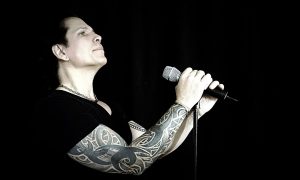
Photo by Surge Audio and Visual
Do you have any message for your fans who are reading this right now?
I hope to be back soon. I miss all of you. And wait till you hear this new record—you’re gonna shit. It really rocks, and the production is next level. Good luck to all of you. I look forward to seeing you and hearing from you.
In Conclusion
Rob Moratti’s career has never been defined by a single band, era, or sound—it’s been shaped by an unwavering commitment to melody, emotion, and craftsmanship. Whether he’s reflecting on early milestones, celebrating the legacy of Final Frontier, or revisiting his time with Saga, Moratti speaks with the same sincerity that fuels his music. With Sovereign, he steps forward once again, delivering a record that captures both the fire of his past and the confidence of an artist fully in command of his voice.
As fans gear up to experience the new album, one thing is clear: Rob Moratti isn’t just looking back—he’s still pushing ahead, still evolving, and still proving why his place in melodic rock remains as strong as ever. And if his enthusiasm is any indication, Sovereign is only the beginning of another powerful chapter.
(Interview by Ken Morton)
Rob Moratti on Instagram