








Becoming Joshua Benard: A First Show, A First Love, and the Art of Starting Over
 Becoming Joshua Benard: A First Show, A First Love, and the Art of Starting Over
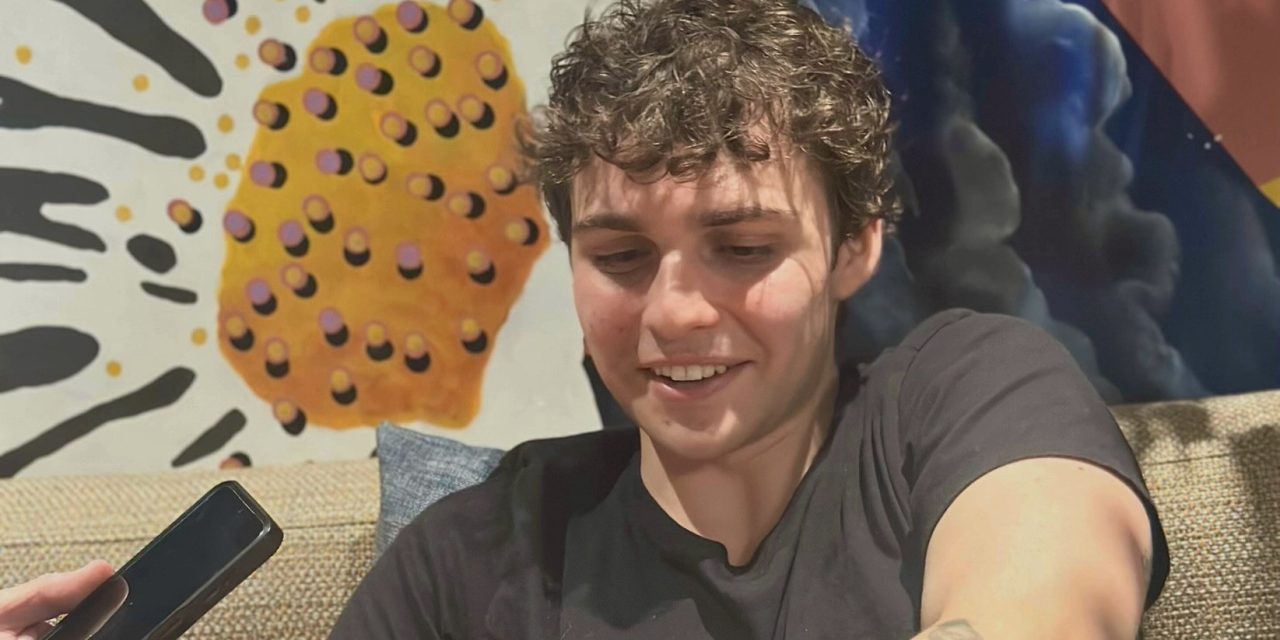
There’s a particular kind of electricity that fills a room when an artist steps onstage for the very first time—equal parts nerves, adrenaline, and the quiet hope that everything they’ve worked for will finally make sense. At Hotel Ziggy for We Found New Music in West Hollywood, that spark belonged to Joshua Benard. Known to many from his work on General Hospital, the 21‑year‑old actor is now carving out a new lane as a singer‑songwriter with a deeply personal, emotionally charged sound.
Fresh off his debut performance, Benard sat down with us to talk about the LA music scene, the heartbreaks that shaped his songs, the wisdom he hopes to gain with age, and how he plans to merge his acting and music careers into one evolving artistic identity. What follows is a candid conversation with an artist at the very beginning of something big.
We’re here with Joshua Benard at Hotel Ziggy. Tonight is your first show ever. What was going through your mind right before you went on stage?
Honestly, I was thinking, “I hope I don’t mess this up.” That was the first thing in my head. But once I got up there, I actually had a lot of fun. I was surprised I wasn’t as nervous as I expected to be. I was way more nervous during rehearsals leading up to this. Right before going on, I just kept thinking, “I want to have fun, and hopefully I don’t mess up on the guitar.”
What do you think of our local Los Angeles music scene?
I’m still pretty new to the music scene. I started acting at 13—my dad’s an actor—and I didn’t really get into music until I was about 17. I’ve been lucky to work with an amazing group of people, like Julian Bunetta and his father, Peter Bunetta. They really took me under their wing.
They showed me how tough this business is. It’s hard, it’s grueling, and you have to keep pushing because no one hands you opportunities. You have to fight for them. And there are so many incredible musicians here. I feel like a novice watching everyone, even the people in my own band—they’re amazing. I just hope I can keep up and sound good with them.
The LA music scene is wild. It’s different from New York, where I go a lot, but I love LA. I definitely need to perform more.
 Let’s talk about a few of the songs you played tonight. “Ladybug,” your single—what inspired it?
“Ladybug” was inspired by my first real girlfriend—the first person I truly fell in love with. Before we broke up, she got a tattoo of a ladybug. She loved ladybugs, and she got the tattoo the same day I got one. We broke up months later.
One day I was messing around, trying to write a song, and my mom called. I told her I was writing, and she said, “Sorry, I just thought of your ex today because a ladybug flew by.” I was still fresh off the breakup, so I was like, “Okay, Mom… thanks.” But right after that, the line “There she goes, ladybug walking down the road” came out instantly—melody and lyrics all at once.
Lyrically, the song is basically me saying: I hope she doesn’t hate me. I hope she finds the love she needs, even if it isn’t with me. And even if it’s not me, I’ll still love her. That’s what the song is about.
“In My 70s”—tell me about that one and what inspired it.
I was listening to “In My Life” by The Beatles—one of my favorite songs. John Lennon wrote it when he was in his early to mid‑20s, and the lyrics are so reflective. At the time, I was going through a rough patch with my best friend, and I had just broken up with my “Ladybug” girlfriend.
I looked up Paul McCartney’s age—he was in his 80s—and I started wondering: When I’m older, how will I look back on the people I loved, hated, or struggled with at this age? Will I see them differently?
I’m fascinated by people who are wiser and older, who know so much more than I do. I love the 70s, so I used that as the framing—being 70 years old and reflecting on life. That’s where the song came from.
Let’s talk about the final song you played tonight—the one on piano that you dragged onto the stage. What’s it called, and what inspired it?
It’s called “Defined.” I’ve never experienced the death of someone very close to me, thankfully. But it made me think: I can write about heartbreak, but I’ve never written about loss in that deeper sense.
When you love someone and they’re suddenly gone from your life—whether it’s a breakup or something else—it can feel like a kind of death. You can’t talk to them anymore. That’s where the song came from.
There’s a line, “You said you won’t go, but you never know,” and that’s the feeling. My mom always jokes that she’s never going to die, and I can’t imagine that moment. I wrote from that emotional place.
I didn’t want to use literal imagery like “six feet under” because I wanted the song to be universal. Whether someone lost a person, a relationship, or even a job they really wanted—loss is loss. That’s what the song is about.
 What was it like being on General Hospital?
Joshua: My dad has been on General Hospital for 30 years. I went on as a kid and played the younger version of his character, Sonny Corinthos. It was a really cool experience. The show moves fast—you get one take, maybe two if you’re lucky. It’s intense.
I prefer the film style of acting where you get more time and more takes, but General Hospital made me a better actor. It taught me discipline. It was a fun time.
What do you hope the rest of 2026 brings for you—acting‑wise and music‑wise?
Joshua: I hope my acting and music careers collide and complement each other. I don’t want people to see me as “just a musician” or “just an actor.” I’m a person, and people don’t only like one thing.
I hope I get a job, I hope to release more music—and actually, I am releasing more music. “Defined” is coming out sometime in March. I don’t like thinking too far ahead; I focus on right now and maybe tomorrow. I just hope good things come, and that my music and acting continue to merge.
Do you have any message for music fans reading this?
I always love hearing struggle stories from the musicians I look up to—it makes me feel better about my own. This business, both music and acting, is so hard. With social media, you have to be a content creator, and sometimes the art doesn’t get to speak for itself. You have to play the game a little.
But I’ve realized that while you might have to do the TikToks you don’t want to do, ultimately the music matters most. Rick Rubin said something like: you can try to make what other people want to hear and maybe get a little success, but you won’t change the world unless you make art that resonates with you. Then hopefully it resonates with others.
That’s what I’m trying to remember: as long as I’m making art that feels true to me, it doesn’t matter if it’s a pop song or not. That’s what I’d tell anyone.
 In Conclusion
As the crowd filtered out of Hotel Ziggy and the last notes of his debut set lingered in the air, it was clear that Joshua Benard is stepping into a new chapter with intention and heart. He’s an artist still discovering the edges of his voice, yet already unafraid to dig deep—into love, loss, family, and the kind of questions most people don’t ask until much later in life.
What makes Benard compelling isn’t just his talent, but his honesty. He’s navigating two demanding industries at once, learning to balance vulnerability with ambition, and figuring out how to let the art lead even when the world demands content. If tonight was any indication, he’s well on his way to building something meaningful—something that resonates.
This is only the beginning for Joshua Benard, and watching him grow from here is going to be one hell of a ride.
(Interview by Ken Morton – Photos by Karyn Burleigh of Rock Edge Photography)