
Stonebreed’s Young Gun: Cross Tinoco Steps Into the Spotlight
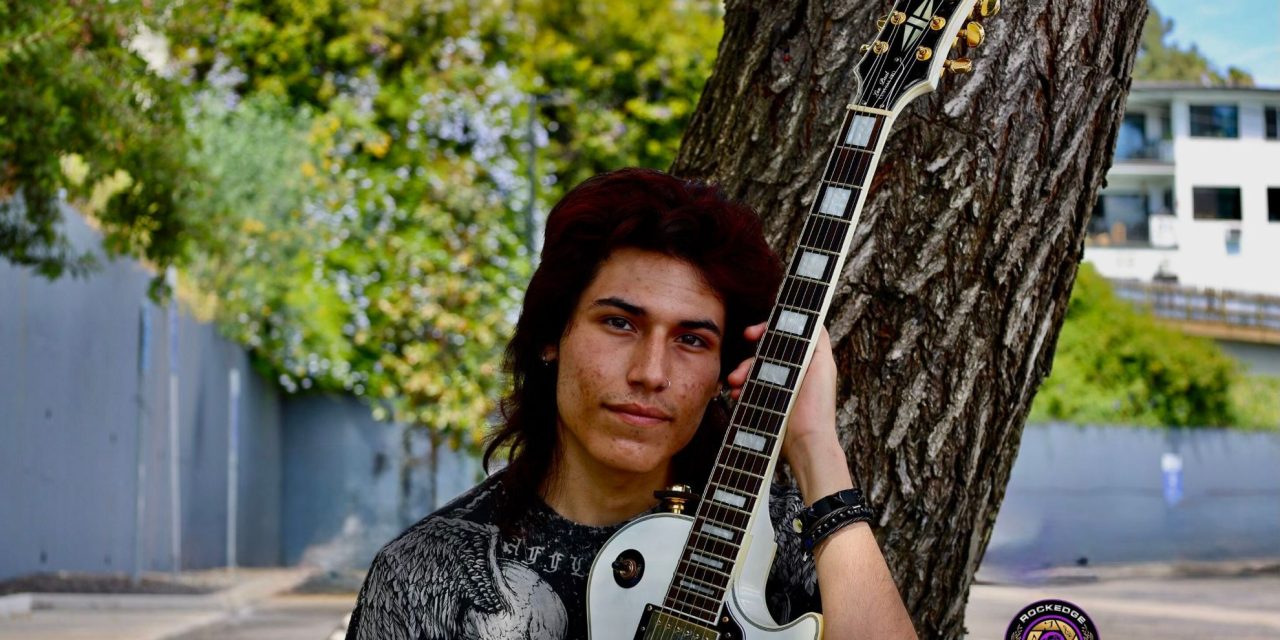
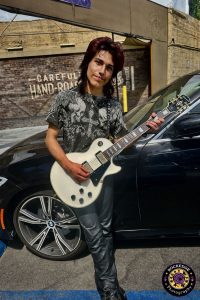 Stonebreed’s Young Gun: Cross Tinoco Steps Into the Spotlight
The Sunset Strip has always had a way of choosing its own heroes. Some arrive polished, some arrive reckless, and some—like guitarist Cross Tinoco—arrive young, hungry, and ready to learn from anyone willing to show them the ropes. At just 20 years old, Cross has already carved out a place in the lineage of Strip musicians, earning respect from veterans twice his age while stepping into the guitar slot for Stonebreed, one of Hollywood’s longest‑running rock acts.
We met up with Cross at the Coffee Bean on Sunset, just a few blocks from the stages that shaped him. Over iced drinks and the late‑afternoon buzz of the Strip, he opened up about his early inspirations, his time at MI, his bond with Al Bane for Leather, the gear that fuels his sound, and the grind of building a career in a genre people keep trying—and failing—to declare dead. What emerges is a portrait of a young musician who works hard, listens harder, and carries the spirit of old‑school rock with the energy of a new generation.
When did you first start playing guitar, and who were some of your early inspirations?
I started playing guitar when I was 16. Some of my earliest inspirations were Randy Rhoads, Eddie Van Halen, Vito Bratta from White Lion, and Eric Johnson. Those were my main guitar heroes—absolute legends in my eyes. I’m 20 now.
You started playing the Sunset Strip at a really young age. What was it like being a young guitarist in bands with older musicians?
Honestly, it was better than I imagined. I thought people would be like, “Who’s this punk kid?” But instead, it was very family‑oriented. They took me in, showed me around, guided me. I learned so much from the older cats—they have so much experience and knowledge. They helped shape who I am and who I’m becoming. And they keep you grounded. They always said, “Work for what you want, but respect where you came from.”
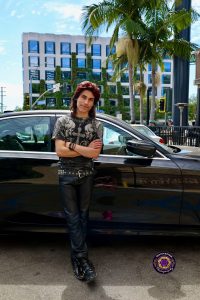 Stonebreed has been around almost as long as you’ve been alive. How did you end up joining the band?
Through my old bands—Astra, Villanova, Cryolith, Negative Output—we played with Stonebreed at least once at places like the Last Call, the Rainbow, or the Whisky. They saw me progress over the years. Eventually I was doing sound at TM Productions for Tony Muela, who used to be the sound guy at the Whisky.
One day Stonebreed came in and asked, “Hey Cross, you ever think about joining Stonebreed?” They were auditioning their new drummer, Miah—killer drummer, teaches at MI. I said, “Dude, let’s do it. Just tell me what I need to learn.”
What was your first show with Stonebreed like?
I think it was at the Whisky. It was mentally intense—not because of the band, but because of other things going on at the time. I had to switch into that mindset of, “I’m a musician. This is what I do.” Once the first song kicked in, then the second, everything clicked. I found my groove.
You’re about to go on tour. What are you most excited about?
I love everyone’s humor. Miah cracks a joke, then we’re making fun of Davey, then Davey fires back. That family vibe is what excites me. And of course, playing shows and seeing different places—that’s always what I enjoy most.
What was the experience like going to MI?
I love MI. In my opinion, it’s the best music school in Hollywood. I went for the connections, the students, the environment, and the teachers. They have an incredible team.
But juggling MI with jobs and band commitments got tough. Parking, food, traffic—it added up. I’d get home at seven every night. It became exhausting. So I switched to online classes, and it’s been smooth sailing since.
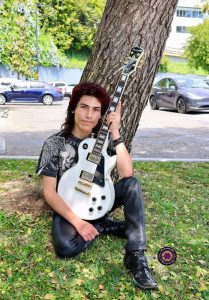 Tell me about the Al Bane for Leather connection.
I absolutely love Al Bane for Leather—best guitar straps you can get. I met Al when I was in Villanova. We talked in the dressing room and hit it off. After he had some health issues, I went to check on him. Later, when he moved his shop, I helped move the whole thing.
I asked if I could help out and maybe get a job. Now I work with him making straps, learning the craft, and learning about the music business. He’s been a killer mentor. I’ve got all the love for Al Bane.
What guitar equipment do you like using live?
I love the EVH EL34s or EL36s. They’re bright, warm, heavy—perfect for this music. If I’m not using those, I use my 6L6s, which are heavier and monstrous, but sometimes too heavy for classic or ’80s rock tones.
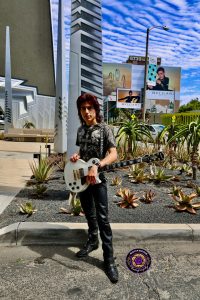
For cabs, I use whatever’s at the venue, but at home I use my Peavey cab. For guitars, I love my Fender EVH model—the black‑and‑white 1979 replica. I have a Frankenstrat I built from scratch. I’ve tried the Wolfgang Standard series. Lately I’ve been using a white Epiphone Les Paul Custom Pro for my band Wild Snake Experience.
Are you involved with any other bands or projects?
Yeah. I’m in Stonebreed and Wild Snake Experience. I’m starting two original projects—one has a name, but we’re keeping it quiet until next year. The music is done; we’re working on PR.
I’m also in a band put together by Al Bane. When artists come to town and need a band ready to go, we’re the ones they call. And I sub for a few bands like Brittney’s Rage. I worked on a song with them, and they’ll have me come in and play it sometimes. I love those guys.
 Why do you think rock music is still so multi‑generational?
It’s like reading a book. A book can be passed down through generations, and each person relates to it differently. Rock is the same. It’s about how the listener connects with what the artist is saying. A good songwriter can make anyone feel something—whether it reminds them of their grandma, their dad, their partner, whoever. Rock stays generational because people can relate to it in any era.
What do you hope the rest of the year brings for you?
I want to release my original music before the end of the year. I want Wild Snake Experience to play more shows—casinos, hotels, different venues. I want to be in more music videos coming out soon. And I want to build my social media presence to where it should be.
Any message for young guitarists trying to break out on the Strip?
I ask myself before every show, “Do I really want to be doing this?” And the answer is always either “Hell yeah,” or “Man, this is a hard industry.” It’s demanding. You have to push yourself past your limits.
My biggest struggle was hitting a plateau. Getting past that barrier is tough. So my advice is: work hard, believe in yourself more than anyone else does, and keep moving forward. Don’t let one mistake ruin your night. Don’t let exhaustion stop you from giving the audience the show they deserve. If you want it badly enough, you’ll find a way. Nothing comes easy.
 In Conclusion
As the sun dipped behind the billboards on Sunset and the evening crowd began to spill onto the Strip, Cross Tinoco headed off to another rehearsal, another gig, another step in the long climb he’s chosen. What’s striking about him isn’t just the talent—though that’s undeniable—it’s the mix of humility, hunger, and old‑school work ethic that feels increasingly rare. He listens, he learns, he shows up, and he keeps showing up, even when the grind hits hard.
In a scene built on legends, Cross isn’t trying to imitate anyone. He’s carving out his own lane, guided by mentors, fueled by passion, and grounded by the belief that rock still matters because people still need something real to hold onto. If the future of the Sunset Strip has a face, it looks a lot like his—focused, determined, and ready to carry the torch forward one show at a time.
(Interview by Ken Morton – Photos by Karyn Burleigh of Rock Edge Photography)
Cross Tinoco on Instagram
Stonebreed on Instagram
Al Bane For Leather on Instagram