








Spellbound: The Ever‑Evolving Journey of Judy Collins
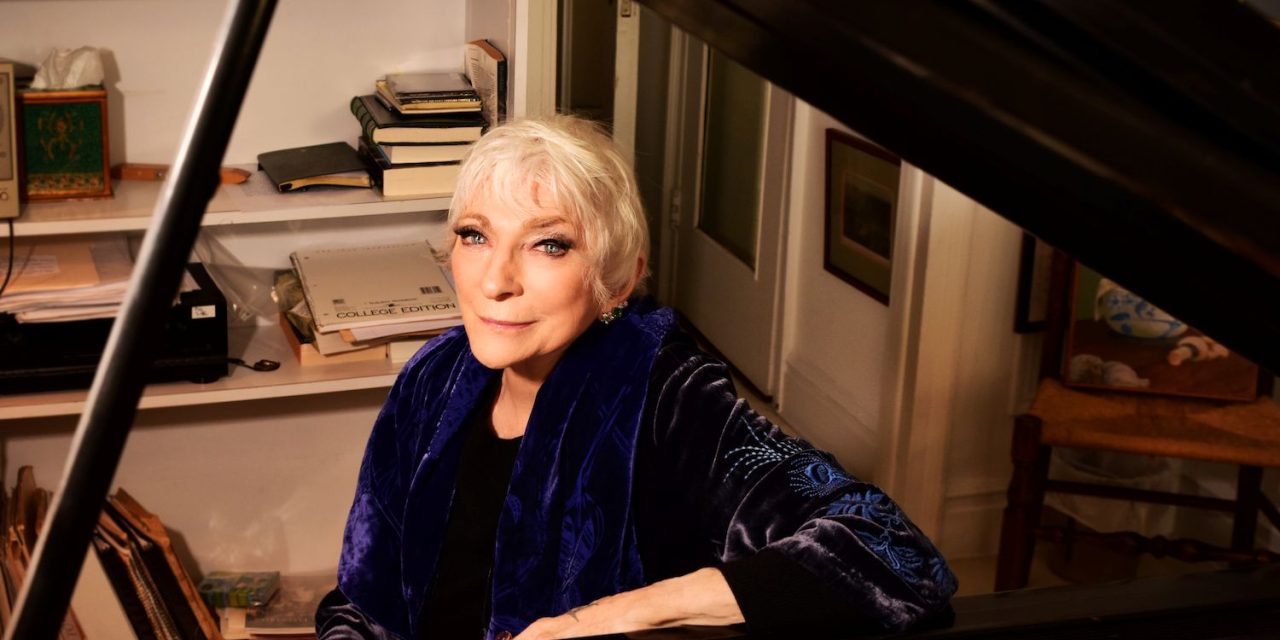
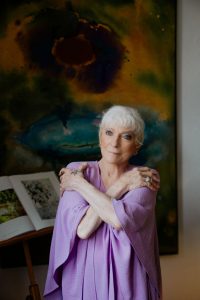
Photo Credit: Patrick Donovan
Spellbound: The Ever‑Evolving Journey of Judy Collins
For more than six decades, Judy Collins has been a guiding light in American music — a voice of crystalline beauty, fearless storytelling, and unshakable artistic curiosity. From championing the early works of Leonard Cohen and Joni Mitchell to crafting her own timeless catalog, Collins has shaped the soundtrack of generations. On the eve of her Sweet Judy Blue Eyes Tour, the legendary singer‑songwriter reflects on the milestones, friendships, losses, and miracles that have defined her extraordinary journey. What follows is a candid, funny, and deeply moving conversation with an artist who continues to evolve, inspire, and astonish.
We are here with the legendary Judy Collins. How does it feel when those two words — legendary and Judy Collins — get paired together?
It’ll do.
You have the Sweet Judy Blue Eyes Tour coming up. What are you looking forward to the most about this very epic run?
It’s going to be wonderful. There are a lot of places I haven’t been to in a while — big outdoor venues like Ravinia and the one up in Lenox, Massachusetts. I’ll also have some special guests joining me. It’s all very exciting. It always is.
The tour kicks off July 4th in Virginia. What stands out to you about performing on Independence Day?
That show will be interesting because the venue has a 250‑year history, which matches the history of the country. I’ll be singing my song Beyond the Sky, which I wrote for Eileen Collins — the first woman to captain a shuttle mission. She’s retired now, but that was about 25 years ago. Performing Beyond the Sky in that setting, during their 250‑year celebration, will be very special.
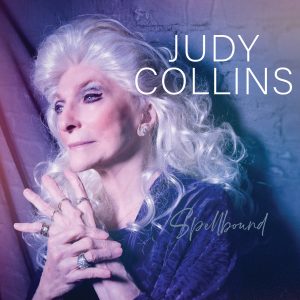
Spellbound by Judy Collins
You’ll also be performing locally at the Lobero Theatre in Santa Barbara on September 27th. What are you looking forward to most about that date?
My sister recently moved to Santa Barbara, so I’m very excited to see her — and other friends I have in the area. I love that theater. I’m always happy to be there.
You recently released a collection of poems, Sometimes It’s Heaven: Poems of Love, Loss, and Redemption. How did that project come together?
My husband — who sadly passed away at the end of 2024 — and I were together for 46 years, which is a long stretch for an old hippie like me. Back in 2007, I told him I wanted to start working daily on writing songs, aiming for 90 songs in 90 days if I could. He said, “Why don’t you do 365 poems? Then you’ll have a whole book at the end of the year.” So I did.
I harvested twelve of those poems and shaped them into songs, which became the album Spellbound — and that album was nominated for a Grammy, which was very nice. My book agent heard about the full collection of 365 poems and said, “We have to publish this.” I chose a title from one of the poems, and Sometimes It’s Heaven was born.
The book came out last year, and I’ve been reading some of the poems at my concerts. They’re often available after the show. Recently I read several poems I’d never performed publicly before. It’s been an exciting journey.
You mentioned Spellbound. Is there a story behind that title?
I wrote the poem in Hawaii and turned it into a song. It references what my life was like when I used to go to Hawaii while I was still drinking — and how different it’s been since I got sober. I’ve been sober for 47 years now.
Congratulations — that’s incredible.
Sometimes your life turns on a dime and you wind up somewhere you never expected.
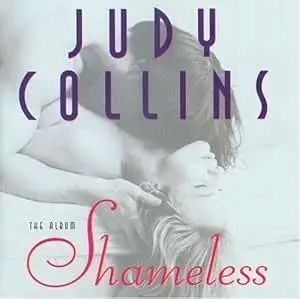
Shameless by Judy Collins
Let’s talk about a few album anniversaries — starting with one people don’t always bring up. In 1995, Shameless hit its 30‑year anniversary last year. Looking back, what comes to mind about that album and the book connected to it?
I think you’re lucky if, in every decade, you manage to write or create a few things that matter. Shameless was one of those. The book was my attempt at a sexy rock‑and‑roll novel, and it went very well. It made people in certain parts of the world happy. I had a lot of fun writing it. And the song “Shameless” fit perfectly with the album.
Going back even further — 35 years to 1990 — Fires of Eden featured one of your best songs, “The Blizzard.” What do you think of that album now?
I do think “The Blizzard” is one of my best songs, and I still sing it often. It’s a wild song. I wrote it one night when I had a pair of concerts scheduled in Aspen at the Wheeler Opera House with Kris Kristofferson. It was going to be a Christmas show, and all my family was coming — everyone was living in Colorado or coming to join me.
I suddenly realized I didn’t have a song about Colorado. So I sat down at the piano in my old country house — the one Louis and I had before we sold it — and the snow was falling outside. I wrote “The Blizzard” that night. It was a whole story about a part of my life I had never written about before.
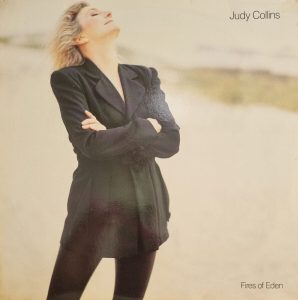
Fires of Eden by Judy Collins
I actually saw you perform “The Blizzard” at the Troubadours of Folk Festival in Westwood. That was quite a night — Joni Mitchell performed that day as well. Let’s go even further back. This year marks the 60th anniversary of In My Life, which featured two Leonard Cohen songs. What comes to mind when you look back on that album six decades later?
My God — you’re right, sixty years. In My Life takes me right back. First of all, the title song had been created by the Beatles. I loved it immediately and knew I had to record it. So we went to England because I wanted to be in the milieu of where the Beatles were. We got a wonderful production of it there.
I also found songs by some remarkable German writers, and I recorded those as well. It was quite an adventure. “Tom Thumb’s Blues” — so different when I did it — and “Hard Lovin’ Loser,” which came from my friend Dick Fariña. Dick and I were very close. He was funny, mischievous — he once threw a Thanksgiving turkey out a window in Boston because he thought it was hilarious. It wasn’t. But that was Dick.
He died in 1966, and I went to his funeral and spent time with Mimi and her sisters. It was heartbreaking. I’m glad I recorded “Hard Lovin’ Loser” when I did.
And then there were the Jacques Brel songs. I had been listening to him for a couple of years, and in ’66 he came to New York to perform at Carnegie Hall. My manager produced shows there all the time, so I got to know Brel’s work more deeply. I fell in love with his writing and decided to start recording his songs. “La Colombe” made it onto that album.
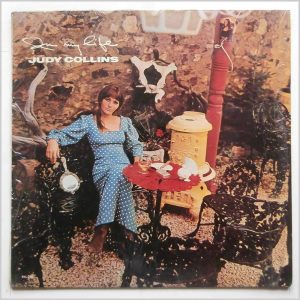
In My Life by Judy Collins
And of course, In My Life also featured two Leonard Cohen songs — “Suzanne” and “Dress Rehearsal Rag.”
Yes — those were the first songs he ever sang to me. His childhood friend Mary Martin — not the one who flies — had moved to New York and was working in the music business. She and I became friends. One day she called and said, “Leonard would like to come sing you his songs.”
I asked, “Are they obscure?” She said, “Absolutely.”
He came to my house and sang “Suzanne,” “Dress Rehearsal Rag,” and another long, fascinating song — maybe “The Master Song.” I recorded “Suzanne” the next day, and it went viral.
After that, he said to me, “I don’t know why you’re not writing your own songs.” I walked into the next room where my Steinway was and wrote “Since You’ve Asked.” That was the beginning. I’ve never stopped writing since.
And I did him a favor too — I pushed him onstage at a big fundraiser in New York. He had always said he would never sing his own songs. I told him he had a wonderful voice. He said, “It’s not wonderful.” I said, “Maybe it’s a little obscure, but it’s great.” He finally sang, the audience went crazy, and he understood how powerful it was.
You also have a lifelong connection to Joni Mitchell, especially through “Both Sides Now.” What’s the best — and maybe strangest — part of that long connection?
The way we met was so peculiar. One night in 1967, I was drunk and passed out. The phone rang at three in the morning. It was my friend Al Kooper. I said, “What’s the matter? Should I call an ambulance?” He said, “No, no — I’m at a Blood, Sweat & Tears show, and there’s this young woman here who writes songs. She’s good-looking, and she played me some songs. They’re good. You’re recording next week, so I thought of you.”
Then he put Joni Mitchell on the phone. She sang me “Both Sides Now.” When she finished, I said, “My God, I’ll be right over.” The next morning, as soon as I could wake up, I went to her place — with Jac Holzman, the president of Elektra — because I had decided we were going to record that song that day.

Judy Collins via Zoom!
Do artists like you ever truly retire? Can you retire?
No. And this tour — the Sweet Judy Blue Eyes Tour — is something a lot of people do. I’m one of the gang. I’m always going to go out. I’m always going to sing. I’ll always be there. This is the first farewell tour… and then there will be others.
Do you have any messages for fans who have followed you all these years — and for newer fans just discovering your work?
Come to my shows — we have a good time. I always get the audience to sing. I usually close with “Where Have All the Flowers Gone?” or “Danny Boy.” I make you laugh. I love to tell jokes. My father, on his radio show for 30 years, always told a story — sometimes a Mae West story. It’s fun. It’s uplifting. It’s political. It’s sociable. It’s musical. And it’s me.
In Conclusion
Judy Collins has never stopped moving forward. Even as she looks back across sixty years of songs, friendships, and reinventions, her eyes are fixed firmly on what comes next. The Sweet Judy Blue Eyes Tour may be framed as a farewell, but nothing about her spirit suggests an ending. If anything, Collins remains a reminder that art — real art — grows deeper with time. And as long as she keeps singing, the world will keep listening.