

Still Standing: Jim Babjak and the Enduring Heart of The Smithereens
 Still Standing: Jim Babjak and the Enduring Heart of The Smithereens
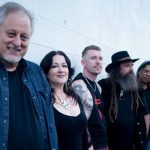
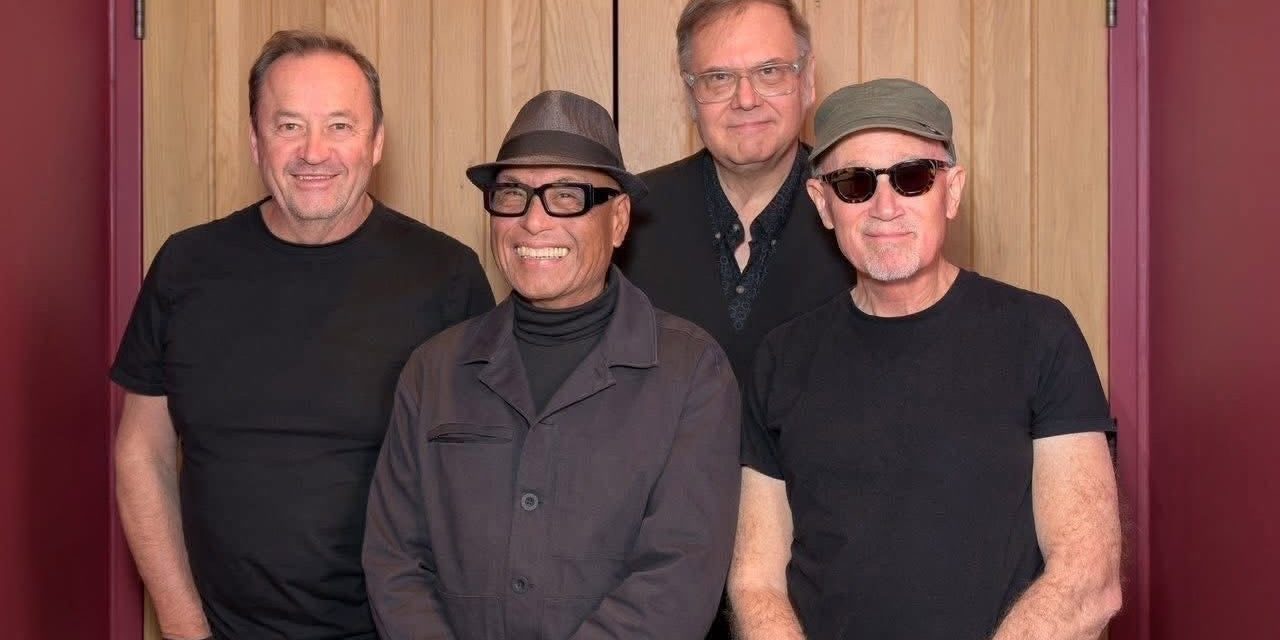
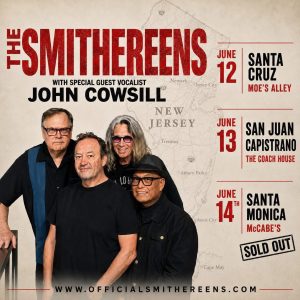
For more than four decades, Jim Babjak has been the melodic engine behind The Smithereens, a band whose blend of power‑pop punch and emotional grit continues to resonate across generations. With the group set to bring a rare, intimate performance to McCabe’s Guitar Shop on June 14th in Santa Monica, Jim reflects on the band’s history, their evolving live shows, the legacy of Pat DiNizio, and the unexpected twists that shaped his own life — including a twenty‑year detour into the world of banking.
In this candid conversation, Jim opens up about new music, old memories, the joys of unplugged performance, and why The Smithereens are still giving 100% every night. What emerges is a portrait of an artist who never stopped creating, never stopped playing, and never stopped finding purpose in the songs that shaped his life — and ours.
We’re here with Jim from The Smithereens. Jim, what are you looking forward to the most about your upcoming show at McCabe’s Guitar Shop in Santa Monica?
It’s going to be a very different kind of show for us. We’re doing an unplugged segment, and we’re also pulling out songs we haven’t played in ages — plus a few we’ve never done live before. So I’ve been practicing those because, honestly, we don’t rehearse. We just show up and everyone’s expected to know their parts.
We’re basically going to wing it, but that’s part of the fun. We haven’t done this kind of thing in a long time. We were actually on the very first MTV Unplugged back in ’89 or ’90 — we were the guinea pigs for MTV. So this feels like coming full circle.
I kind of wish we were playing two nights so we could hang out in the area more.
McCabe’s is going to be the perfect place for that. Have you ever been there?
No, never. I’m excited.
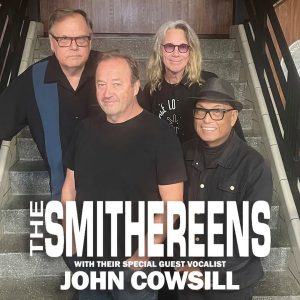 Let’s talk about John Cowsill. How did he become involved with The Smithereens? I know he played with you at the Canyon Club.
We’ve been friends for a long time. Back around 1990 or ’91, we were in L.A. recording Blow Up. Dennis and I saw that The Cowsills were playing a show with Screaming Trees, Red Cross — a wild lineup — and we went. I was blown away.
I had just written “Now and Then,” and I turned to Dennis and said, “I can hear them singing the background vocals on this.” After their set, we went backstage, introduced ourselves, and asked them to sing on the record — and they did.
We’ve stayed friends ever since. Even when John was drumming with The Beach Boys, we’d visit him or go see the band. Dennis would even sit in for a song sometimes. We’re close with all the Cowsills.
When John left The Beach Boys, he told us, “If you ever need another singer — if Marshall Crenshaw can’t make it, or Robin Wilson, or John Wesley Harding — I’m available.” And he was perfect. Great singer, great hang, knows the songs, and treats them like his own.
That’s what I love about all our singers. They bring their own personality. We never wanted a Pat DiNizio copy. That wouldn’t feel right.
It definitely keeps things exciting. Now, let’s talk anniversaries. Next year marks the 20th anniversary of Meet the Smithereens. Looking back, what does that album mean to you now?
I can’t believe it’s been 20 years. That album actually revived our career for a lot of people who didn’t realize we were still together. We never broke up — we were always playing — but gigs were sparse at the time.
We didn’t even have a publicist, but someone wrote a major two‑page feature in the New York Times weekend section about the album. After that, everything exploded.
At first, I didn’t want to do it. I thought, Record a Beatles album? Are you kidding? But we grew up with that music, and we played it from the heart. We didn’t try to sound exactly like The Beatles — we did it in our own style. That’s the only way I can play. I could never be in a cover band.
People love that record, and we might even do a couple of those songs at McCabe’s.
 Let’s go back even further — to your appearance on Saturday Night Live. What was that experience like?
It was great, but at the time it felt like just another day. We were on tour. We rehearsed Thursday, had Friday off, did the show Saturday, and the next day we were off to Canada. It was just part of the schedule.
Looking back, it was exciting, but it’s funny how something as major as Saturday Night Live was just another line on the calendar that week.
I ran into Jon Lovitz recently on a plane and reminded him we were on the show with him. Corbin Bernsen from L.A. Law was the host. Everyone was friendly. And the after‑party? I remember leaving at five in the morning.
Let’s talk about Class of Nuke ’Em High, which turns 40 this year. What do you remember about filming that?
Our scene was filmed in what was supposed to be a frat house, but it was really a big club. We were lip‑syncing one of our songs, and suddenly these girls came up and started dancing with us. Then they took their tops off. So now I’ve got naked women dancing next to me while I’m pretending to play guitar.
I didn’t tell my wife at the time. She asked how the shoot went, and I said, “Fine. Did the song, had a tuna fish sandwich, came home.” I don’t think she ever saw it.
It was a B‑movie — entertaining, let’s put it that way. And there were naked women. So there you go.
Another 40‑year anniversary: Especially for You. What does that album mean to you now?
It blows my mind. I think the album holds up really well. We made it without any record‑company interference. Later on, labels would tell us what was “radio‑friendly,” what beat we needed, whether to use a click track. But Especially for You was just the best songs we had at the time.
Six of those songs — including “Blood and Roses” and “Behind the Wall of Sleep” — were recorded before we were even signed. We sent them to every label and got rejected by all of them. Nobody liked those songs.
Then we got signed, and suddenly they were hits. It was surreal.
Once the album took off, everything happened at once — radio, MTV, touring. We toured the U.S. three times and Europe twice. Sixteen or eighteen months straight. Then we had to go right back in and record Green Thoughts. Total whirlwind.
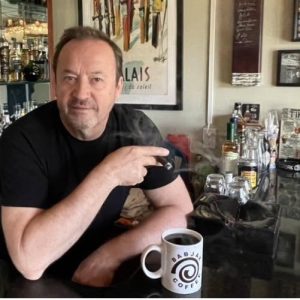 Let’s switch gears and talk about Babjax Coffee. What made you decide to create it?
I didn’t drink coffee for 30 years. Then a friend of mine — a longtime fan — started a coffee company. I tried his coffee, and it didn’t bother me. Coffee used to be too acidic for me.
I asked him to make something with bourbon. It wasn’t great. Then he tried rum, and that was great. That’s when I thought, “Why don’t I start a company?” He roasts the beans, packages them, and I sell them online.
We roast 30 bags at a time, always fresh. It’s not acidic or bitter. A lot of people enjoy it.
One flavor that stood out to me is the Birthday Blend — the chocolate‑infused roast. How did that come about?
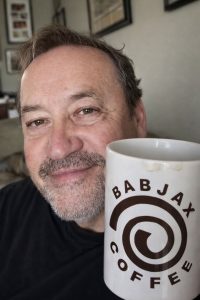
That’s what I’m drinking right now. Chocolate and coffee just go together. But it’s subtle — not one of those overpowering flavored coffees. Just a hint of chocolate.
Back to The Smithereens — is there new music on the horizon?
Absolutely. We’re working on two projects. I’m writing brand‑new songs, and we also found about sixteen tracks of Pat singing with just an acoustic guitar.
Mike added bass. Dennis added drums. I added guitar back in the ’90s. Now I’ll add more guitars and vocals. We’re assembling these tracks kind of like The Beatles did with “Now and Then.”
So yes — at least two albums are in the works.
Pat DiNizio’s This Is Pat DiNizio turns 20 this year. What did you think of his solo work?
I’m not on that one. It’s mostly acoustic or piano. I actually don’t have a copy.
From 2001 until COVID, I had to get a day job because we didn’t have enough shows to make a living. I had three young boys. A neighbor who survived the World Trade Center attack helped me get a job at a Japanese bank. I stayed there twenty years.
During that time, we still recorded six albums. When Meet the Smithereens came out, our career picked up again, so I was balancing a full‑time job with touring and recording.
Sometimes we’d play a show in California, I’d take the red‑eye home, land at 6 AM, change in the parking lot, and go straight to work. My coworkers had no idea I was in a band.
When Pat died, my boss said, “What are you doing here?” She thought we were famous. But I needed health insurance, a paycheck, and I had a mortgage and kids. That job kept me in my house and kept food on the table.
 Do you have any messages for your fans in Los Angeles?
Just that it’s an honor and a thrill to still be playing our songs. After Pat died, we realized we still need to play — and we still want to play.
I can’t just sit home eating cheese doodles and watching TV. Our music makes people happy, and it makes us happy. Dennis and I have been playing together since 1971. We give 100% at every show.
It’s an honor to play for people, and it’s still so much fun. We’re going to keep going as long as we can. And when you come to one of our shows, you’re almost guaranteed a good time.
In Conclusion
Jim Babjak’s journey — from chart‑topping tours to cubicle life to roasting small‑batch coffee — is a reminder that the heart of a musician never stops beating. Through loss, reinvention, and decades of change, The Smithereens remain a band driven by purpose, passion, and the simple joy of plugging in and playing.
As they bring their music to McCabe’s, Jim carries with him the legacy of Pat DiNizio, the brotherhood of a band that never quit, and the belief that great songs still matter. For fans in Los Angeles, this show isn’t just a concert — it’s a celebration of resilience, friendship, and the enduring power of rock and roll.
(Interview by Ken Morton)
The Smithereens Official Home Page
Babjax Coffee Official Home Page