

Tall Tales & Midnight Myths: Inside Osukaru’s New Era
 Tall Tales & Midnight Myths: Inside Osukaru’s New Era
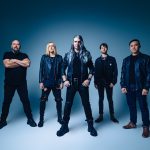
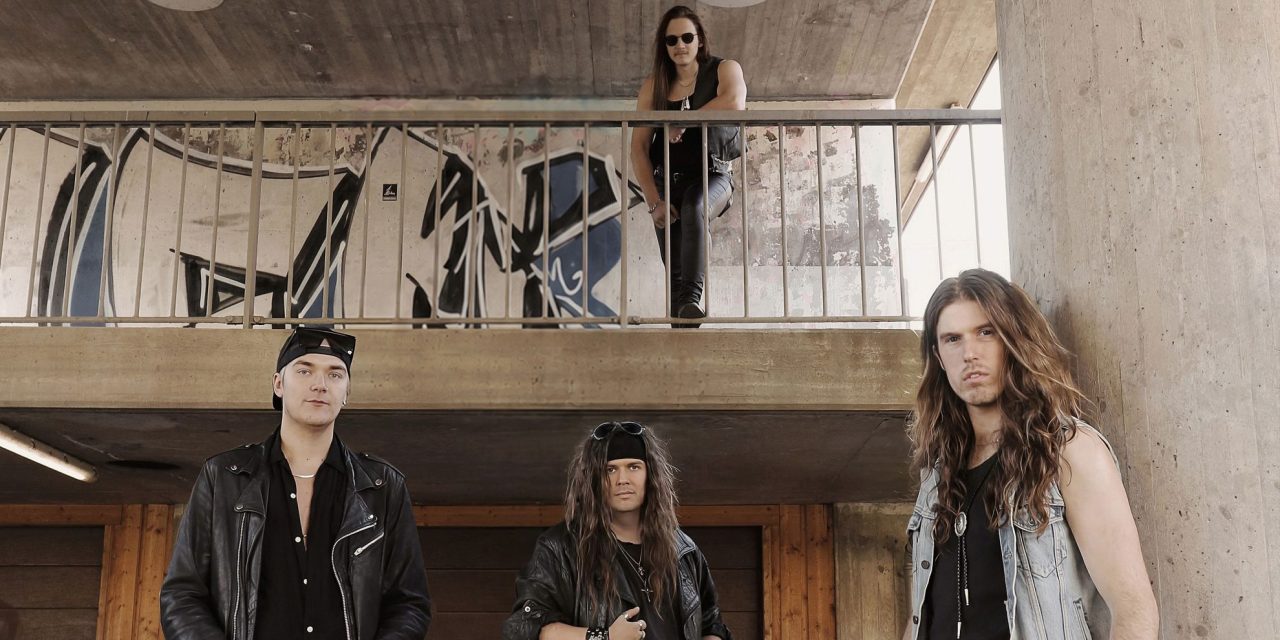
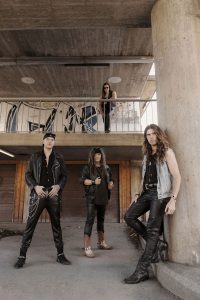
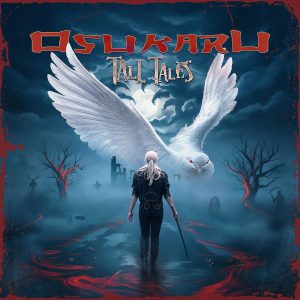
Osukaru have always walked the razor’s edge between melody, myth, and full‑throttle rock ’n’ roll, but with Tall Tales (out now via Pride & Joy Music), mastermind Oz Hawe Petersson pushes the band into their most cinematic chapter yet. Inspired by legends, monsters, late‑night horror binges, and the strange truths hiding inside folklore, the new album is a wild ride through the shadows — all delivered with the band’s signature AOR‑infused swagger. Catching up with Oz just after a run of Nordic Noise warm‑up shows, we dive deep into the stories behind Tall Tales, the evolution of Osukaru, Fredrik Werner’s journey into the band, the future of Oz Hawe Petersson’s Rendezvous, and the dream of finally bringing their music to U.S. soil.
Where are you based, and what is your local music scene like these days?
We’re based in Gothenburg on the west coast of Sweden — not all the way south, but down there a bit. The scene here is pretty good. Gothenburg is mostly known for its death metal: Soilwork, In Flames, Dark Tranquillity, and now The Halo Effect all operate from here.
But we also have bands like Art Nation and Hardcore Superstar, which are closer to what we do. The scene has struggled a bit over the years — venues closed, things slowed down — but it’s coming back. And that goes for all of Sweden. It’s definitely on the upswing again.
Gothenburg is legendary — we hear about it all the time here in the States. Let’s talk about the new album, Tall Tales. Is there an overall story or concept behind the title?
The idea for the album came around the time we released Starbound — maybe right before, maybe right after. It was during the COVID years. My wife and I were watching a lot of TV shows and movies, and we’re both huge horror buffs. She had been nagging me forever to watch Supernatural, so I finally agreed. Now I love it. We binge‑watched the whole thing.
When we got to the first‑season episode “Wendigo,” I thought, I want to write a song about that myth — the Native American legend. That sparked something. At the same time, we were watching The X‑Files, Tales from the Crypt, Creepshow… all that stuff. I started thinking: What if we made a record that’s loosely inspired by legends, myths, monsters — but interpreted through real stories or real people?
It’s not a concept album, but it’s loosely conceptual. For example, the song “Wendigo” isn’t literally about the creature. It’s about a man transforming from the inside out — metaphorically becoming a monster. We use Wendigo references, like the cannibalistic nature and the idea that the more it feeds on ego, the more monstrous it becomes.
When we were trying to figure out a title, Tall Tales just fit. These are exaggerated stories — things that may or may not have happened exactly the way they’re told, but you amplify them to make them more interesting. We all agreed it was perfect.
 Let’s talk about a few of the songs. You just released “Who Do You Love?” Tell me about that one and the inspiration behind it.
That song is a cover — originally by Bo Diddley, the ’50s blues‑rock pioneer. The idea came from Fredrik, our singer, who also plays a lot of the lead guitars on the album.
He sent me a rough idea with just vocals and guitar. First he asked if I recognized the song — I didn’t. Then he told me it was “Who Do You Love?” by Bo Diddley. I checked out the original and thought, This doesn’t sound remotely similar. He said, “I had another idea for the riff, and somehow the lyrics just worked perfectly.”
So we kept the melody and lyrics, but rearranged everything else. He had the verse and chorus on guitar, and I rebuilt the bass and drums to make it more of a Motley Crüe‑meets‑Mr. Big kind of track — that locomotive snare beat, like “Kickstart My Heart” or “Daddy, Brother, Lover, Little Boy.”
I sent it to our drummer C.D, and he immediately got what I was going for. He added some cool touches — mixing in the hi‑hat, changing things up in the second verse — and it all came together. It’s our first officially released cover, and even though it’s heavily rearranged, the lyrics and melody remain true to the original.
“Blood on the Rocks” was the first single. Tell me about that one.
Musically, that was the song I struggled with the most. I’ve always wanted to write a track you could dance to — like “Pour Some Sugar on Me,” “Cherry Pie,” “Love in an Elevator,” “I Love Rock ’n’ Roll.” But I didn’t want the lyrics to go in that direction.
I wanted a dirty, bluesy, mid‑tempo, danceable track. I had seven, eight, maybe nine versions of the riff. It was outside my comfort zone, but I really wanted to nail it. Eventually Marcus Zerath, our bass player, came up with a small part of the riff, and Fredrik said, “If you go back to this version and combine it with what Marcus did — plus this other part you wrote — then we have the riff.”
Thankfully, that worked. It ended up really tasteful, and I’m super grateful for their input.
Lyrically, I told Fredrik that when I wrote the music, all I could picture was the movie From Dusk Till Dawn. He said, “I can work with that.” And he did — he came up with a killer story. The song is loosely based on blowing up vampires in a bar. It fits perfectly.
We struggled with the title too — it had a lot of different working titles. But since the story takes place in a bar, with whiskey on the rocks and vampire blood… Blood on the Rocks was the obvious choice.
Let’s go to the first song on the album, “Exceeder.” Tell me about that one.
“Exceeder” was meant to be a fist‑in‑the‑air rock song. I wanted to open the album with something different, because we’ve had three albums in a row that start with a song in a major key. This time I wanted something in minor — different tempo, more aggressive, but still positive.
The title came early. I knew I wanted it to be called “Exceeder.” Our songwriting process usually goes like this: I get an idea musically, write it down, and then a title or image pops into my head. I send it to Fredrik, and either he keeps the title or comes up with a new one, but he always continues the theme I give him.
With this one, I told him: “I don’t know exactly what the song should be about, except that it’s called ‘Exceeder’ and it’s about someone pushing past their limits.” He came back with a racing‑themed story, which works great as an album opener.
This one doesn’t really tie into the myths or monsters — unless you want it to. You could interpret it as Mad Max: Fury Road if you wanted. But really, it’s about racing through obstacles and coming out on top. It fits perfectly as the first track.
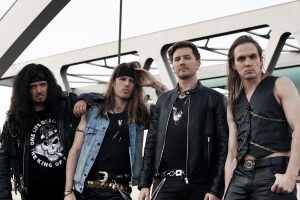 I always like to jump to the last track on the album — “ C’est Dans Ta Tête,” which translates roughly to “It’s in Your Head.” Tell me about the inspiration behind the final song.
The main riff came from Marcus, our bass player. He threw a bunch of riffs at us, and I immediately said, “That one is ours — I want to use that.” So I started building the song around his riff.
Originally, I imagined it as a “ride into the sunset” kind of track — a send‑off song, since it closes the album. But Fredrik heard something different. He said, “No, this should be about the monsters under your bed… unless they’re in your head.” That sparked the whole concept.
We realized we could interpret the entire record as a series of bedtime stories, and this track becomes the conclusion. Once we leaned into that idea, everything clicked. Musically and lyrically, it fits perfectly as the final song. It didn’t end up being a sunset moment — the lyrics are much darker — but it still works beautifully as the closer. What Fredrik wrote is terrifying, but it’s so effective. I love how it turned out.
Let’s talk about Fredrik. He’s in two other bands — Daytona, who just released a fantastic album, and the equally amazing Air Raid, which is very different from Osukaru. How did he become involved with the band?
We met back in 2012. At the time, I was in a band called Panorama — I still had Osukaru, but Panorama was my theatrical project. We wore makeup, played Broadway‑meets‑hard‑rock music, and each of us had characters telling a story on stage. Very interesting band.
Fredrik was in a band called Mr. Artist, and we played the same night. They went on after us, so I watched their set from the balcony. I noticed they had a saxophone player, and I was already planning the follow‑up to Salvation, our first full‑length. I wanted saxophone on the next record.
After their set, I approached the sax player and talked about the project. He was into it and asked what kind of music we were talking about. I said, “Survivor, Journey, Toto, Foreigner…” and the moment I said Foreigner, Fredrik literally popped his head around the corner like a cartoon character. He said, “Did I hear Foreigner?”
We started talking. He wasn’t the singer in that band — he was the guitar player and did backing vocals — so I hadn’t heard his lead vocals yet. But he said the project sounded interesting and wanted to be involved. I invited both of them to my home studio. Fredrik sent me a version of “Urgent” he had recorded, and I thought, All right, this dude can sing.
That’s how he joined Osukaru. The show was early 2012, and he officially joined by the end of that year. We spent a few months trying things out, and it all fell into place.
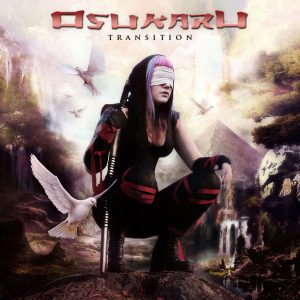 Pride & Joy recently re‑released three of your albums, and I wanted to talk about one of them — Transition, which is celebrating its ten‑year anniversary. Looking back now, what do you think of that album in retrospect?
Transition is a very special record for me. The way we see it, the Osukaru of today really started with Labyrinth, but fully came into focus with House of Mirrors. Everything before that was more experimental — no album sounded like the previous one.
Transition wasn’t even meant to be an album. It was supposed to be an EP, but the label at the time didn’t want to release an EP, so we had to expand it. We came up with the idea of re‑recording older songs from our catalog, but now with two lead singers — Fredrik and Cecilia Camuii. It became a fun experiment.
I hold that album very dear because it’s the moment, I realized the band could go places. It felt different — not just another melodic rock band. Something was happening. It was evolving from a project into a real band. We had tried that before, of course, but I was younger and tended to run things more like a solo project while others wanted it to be more collaborative.
By the time Transition came out — and the title says it all — I felt the shift. There was a transition within the band, within the concept, within everything. That album marks the moment where Osukaru truly became a band.
Let’s jump back to the present. You recently played Nordic Noise. What was that experience like, and how did it feel to play live?
We did a bunch of warm‑up shows — two in Sweden, four in the UK — and then finished in Copenhagen at Nordic Noise. It was awesome. We’ve wanted to play Denmark for a long time. The scene isn’t nonexistent, but it’s very different from Sweden, and it’s hard to get your foot in the door.
Thankfully, our friend Robert Majd from Captain Black Beard and Nighthawk wrote me one day and said, “Hey, would you be up for playing Nordic Noise? There’s a spot left, and the festival owner would love to have you.” I didn’t need to be asked twice.
He brought our name to their attention, they liked what they heard and saw, and they wanted us on board. It was the perfect show to end the spring run. So much fun — great bands, new connections, new friends. And the festival team was amazing. Nothing but love.
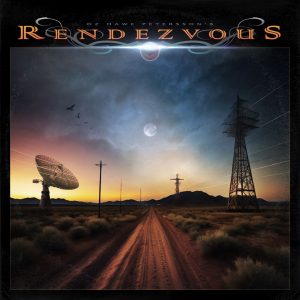 Is anything happening with your other band, Rendezvous?
Yes. Funny enough, the first — and so far only — Rendezvous album took about fourteen years to make, in a sense. We used a lot of songs from my previous band with Mathias Rosén, the project called Eye — not “I” as in me, but “Eye” as in what you have above your nose.
We had been writing songs on and off for more than a decade, with no idea where they belonged. When the pandemic hit, we said, “If we don’t do this now, there will never be another time like this.” So we reached out to a bunch of friends and said, “Let’s try to make the most authentic classic rock album we can. Would you like to be part of it?” And we got so many yeses I couldn’t even count them.
There were twenty‑one, twenty‑two, maybe twenty‑three musicians on the album, and everyone brought something cool. It was originally meant to be a one‑off — I’d release it and then go back to Osukaru. But it was so much fun. Working with Mathias daily, shaping these songs, working with all the musicians who came in… it was a fantastic experience.
So we decided to continue. We’re working on new material. It won’t take another fourteen years, I promise. I can’t say when we’ll release something new, but it will happen.
Do you have any messages for your fans here in the States who’ve been following your career?
What I see from the algorithms and Spotify for Artists is that a lot of people in the States are listening to us. It’s mind‑blowing, really, because we’ve never played there. Not because we don’t want to — believe me, we really do. I can’t say much, but we’re talking with a band about making that a reality at some point. I don’t know how far into the future, but we’re trying. It won’t be next year, maybe not the year after, but it will happen eventually. We’re doing our very best to get our behinds over there.
All I can say is thank you. There are people in the U.S. I’ve never met — some I’ve met at festivals here — but so many I haven’t. People all over the world who have one, two, three, or more albums with songs I wrote in my bedroom, or in my old apartments, or wherever. And those songs speak to them. That’s everything. Everything else is just sprinkles on top.
I cannot be more thankful for the people in the U.S. who listen to the songs, watch the videos, follow us even though we haven’t set foot on U.S. soil as a band yet. And for the Americans who come over here to see us at festivals, who buy the albums and merch — I have no words. Just thank you, thank you, thank you. It means everything.
America isn’t exactly a neighboring country, but having people over there listening to what we do… when you think about it, it’s mind‑blowing. So thank you. We’re honestly doing our very best to make something happen in the U.S. We can’t say when, can’t say if it will definitely happen, but we’re working harder now than ever. It’s more realistic now than it’s ever been.
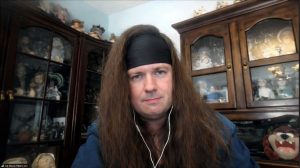
Oz Hawe Petersson via Zoom!
Well, we’ll cross our fingers. I’m in Los Angeles, and seeing Osukaru at a place like the Whisky would be amazing.
It would be — that would be a childhood dream come true. Playing the Whisky, playing the Strip at all… absolutely. We would love to come over. It’s just that it costs a penny. It’s not the cheapest thing. Like we’ve said in other interviews, if we do something like that, we’d need to book a festival or two on either end of the tour to make it financially possible.
But like I said, it’s more realistic now than ever. There are wheels in motion. I can’t say if it will happen, but I would really, really, really love to do this.
In Conclusion
With Tall Tales, Osukaru prove once again that their blend of melodic rock, theatrical storytelling, and pure heart is something truly unique in today’s scene. Whether channeling urban legends, racing through adversity, or blowing up vampires in a bar, Oz Hawe Petersson continues to shape a world where imagination and rock ’n’ roll collide. And while the band has yet to make their long‑awaited debut in the United States, the passion of American fans hasn’t gone unnoticed. If Oz’s determination is any indication, it’s only a matter of time before Osukaru step onto a U.S. stage — maybe even the Whisky — and bring these Tall Tales to life. Until then, the stories, the riffs, and the legends continue.
(Interview by Ken Morton)
Osukaru on Instagram