

Hatesphere: The Guillotine Falls – Three Decades of Thrash Metal Fury
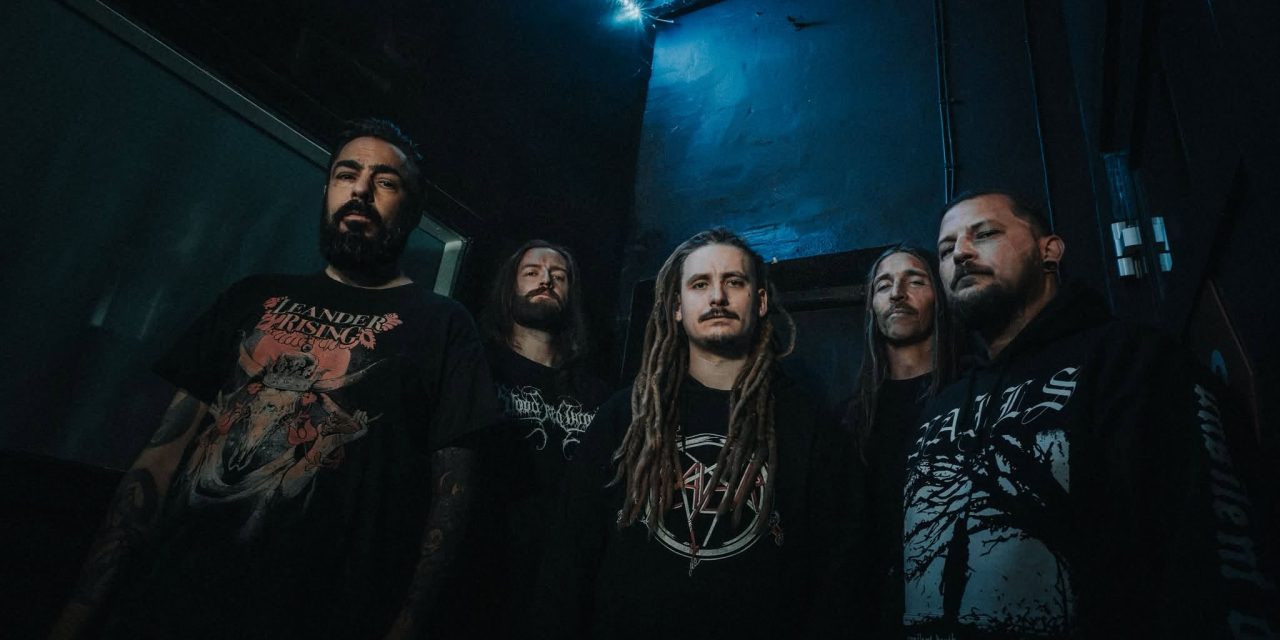
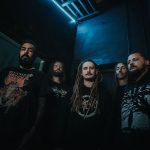
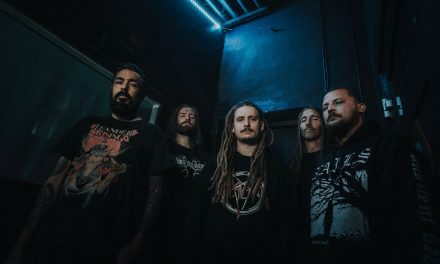
Photo Credit: Marika Hyldmar
Hatesphere: The Guillotine Falls – Three Decades of Thrash Metal Fury
For more than three decades, Danish thrash metal veterans Hatesphere have unleashed their own relentless brand of sonic aggression upon the world. With their latest album, Guillotine (on Scarlet Records), the band continues to deliver a devastating combination of speed, melody, and uncompromising intensity. At the center of it all is founding guitarist Peter Lyse Karmark, better known as Pepe, whose musical journey stretches back to the band’s earliest incarnation as Necrosis. Highwire Daze recently caught up with Pepe to discuss Guillotine, working with longtime producer Tue Madsen, milestone album anniversaries, his experiences with Dark Tranquillity, and the possibility of returning to American shores.
Let’s start with the new album. Is there an overall story or concept behind the title Guillotine and the title track?
The lyrical concept is something Mathias handles. He’s responsible for all of that. But the idea behind Guillotine is that the guillotine is the ultimate killing machine. When you use it, it’s over quickly and swiftly.
In that sense, it’s a symbol of what happens when people become fed up with the way things are. Think about the French Revolution. People were fed up with those in power, and the guillotine became a way of getting rid of them. Off with their heads, and hopefully things would get better, right?
So, in that sense, the guillotine represents getting rid of things you don’t like, and doing it rather quickly.
I know you don’t write the lyrics, but I’d like to ask about a few songs and what they mean to you musically. Let’s start with “Dogma.”
Musically, I think “Dogma” is the ultimate opening track because of the fast riffing. It has everything Hatesphere stands for.
It’s super fast right from the beginning, but it’s also really groovy. There’s a lot of melody in the middle section, some cool solo work, and it sounds quite fresh.
After the “Chapter XII” intro, I think it’s the perfect track to kick off the album. It really gets everything going.
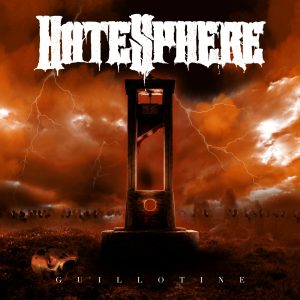
Guillotine by Hatesphere
Let’s jump to the closing track, “Heresy.” Tell me about that song and what it means to you.
I had this idea in my head, and I started by writing the chorus riff. I wanted to have this eerie melody playing in the background, and I think it turned out really, really well.
To my ears, it sounds a little bit like At The Gates. The chorus is very atmospheric, while the rest of the song is quite in-your-face.
The main thing for me is that chorus. When I first imagined how it would sound, I had a very specific idea in mind, and the finished version came out almost exactly as I envisioned it.
I’m really happy with how it turned out. Because of that atmospheric element, I think it’s a really cool way to end the album.
What has made the working relationship between Hatesphere and producer Tue Madsen so successful over so many albums?
I think we have a similar approach to recording and how we want the music to sound. We’ve known him for many, many years.
He was already involved with the band back in 1997 when we recorded our second demo tape. That was a Tue Madsen production as well.
We had a little break from working with him, but he came back in 2003 for our first EP. Since then, we’ve worked together on many albums. He’s done at least our last five albums, maybe six. He also helped co-produce The Sickness Within and mixed Serpent Smiles and Killer Eyes.
So he’s been involved with Hatesphere for more than 20 years, and we know him really well.
Before we go into the studio, he’ll usually call me and ask, “Do you have any ideas about how the new album should sound?“
He doesn’t necessarily know the songs yet, but we’re talking about the overall sound. We always agree to try something a little different. Maybe we want a dirtier sound or something more brutal.
We always have some kind of idea about how the new album should differ from the previous one.
It’s really cool working with him because he has his own ideas, and the atmosphere is always very relaxed. When you can go into the studio, have a good time, and work with some great songs, hopefully the results are going to be really good.
He’s almost like the sixth member of the band in a way.
Yeah, absolutely. He’s done so many of our albums that he’s definitely become a big part of what we do.
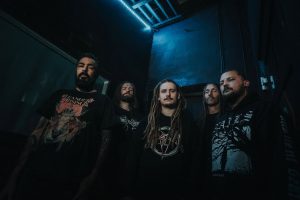
Photo Credit: Marika Hyldmar
You have a new member in the band, Franz Aleksander Posch, who is also in Livløs. How did Franz become involved with Hatesphere?
Our previous guitar player had some other commitments he needed to take care of, so we needed a stand-in guitarist.
We already knew Franz because we had toured with his other band here in Denmark. He’s also a big Hatesphere fan, so he knew our songs really well.
When we asked him if he was interested in filling in for some shows, he was immediately like, “Yes, hell yes!“
He already knew most of the songs, so it was really easy to teach him the remaining parts. I barely had to sit down with him because he was already so familiar with the material.
He also brought some new energy into the band.
When we eventually decided who should become our permanent guitar player, Franz was an easy choice. He knew the songs, we’d already played shows together, and everything was working really well.
You’ve been playing quite a few live shows lately, including one just yesterday. How have the shows been going, and what have been some of the highlights?
They’ve been really, really good!
Most of the shows have been in Denmark, but that’s our home country, and we usually have some great concerts here.
We’ve played eight shows so far, and we still have one coming up in Copenhagen, our capital city. I’m sure that one is going to be really good.
We’ve also played some cool festivals, and I guess those have been among the highlights.
But the club shows have been great as well. There’s something different about playing a big festival stage compared to a smaller club. Both experiences are cool in their own way.
Overall, it’s been really good. We have more Danish shows coming up in the spring, and hopefully we’ll be playing abroad as well.
Is there any chance of Hatesphere returning to the United States for some shows?
I really hope so!
The problem right now is that it’s super expensive. Between the travel costs, visas, and everything else, it’s difficult.
But I really hope we’ll be back. Maybe we can get on one of the American festivals or play the 70,000 Tons of Metal cruise again. Who knows?
Obviously, if we could do a full US tour, that would be super cool.
For now, I think festivals and the cruise would probably be our best options.
When Hatesphere toured the United States, did you make it out to Los Angeles or Southern California? If so, what did you think of the area?
Yeah! We toured the US twice back in 2010, and we also played the 70,000 Tons of Metal cruise in 2014, I think.
We were in Los Angeles on both of those tours in 2010, and it was super cool.
I remember we had a day off in LA, which was really nice. The weather was great, the food was great, and I really enjoyed being there.
I’ve also played Los Angeles a couple of times with Dark Tranquillity, so I’m quite familiar with the area. I really like it!
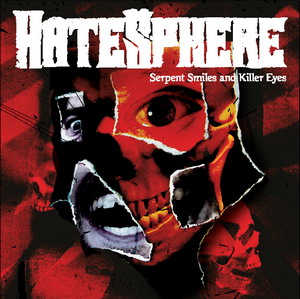
Serpent Smiles and Killer Eyes by Hatesphere
I didn’t realize you’d played out here with Dark Tranquillity! What was that experience like?
It was super cool as well! I played with them in April, and it was a really nice experience. And again, the weather was great!
Let’s talk about a few anniversaries coming up for Hatesphere. Serpent Smiles and Killer Eyes was released in 2007, meaning 2027 will mark its 20th anniversary. Looking back on that album now, what are your thoughts?
I really like that album!
One of the cool things about Serpent Smiles and Killer Eyes is that the songs work really well live. We still play a lot of those songs at our concerts.
In fact, we could probably play almost the entire album live, which is a really cool thing.
Hatesphere has always been a band that loves playing live. Some bands are really focused on studio work, and I’m beginning to enjoy that side of things more as well, but for us, playing live has always been incredibly important.
That’s one of the reasons we make albums in the first place!
So the fact that Serpent Smiles and Killer Eyes is such a live-friendly album makes it special to me.
It was also a bit different from The Sickness Within. The sound was dirtier and a little more rock-oriented, whereas The Sickness Within had a sharper production.
But I think it worked out really well.
Let’s go back another five years to Bloodred Hatred, released in 2002. That album celebrates its 25th anniversary in 2027. How do you feel about it today?
Again, I really like it!
There was a big difference between our first album and Bloodred Hatred, both in terms of the sound and the songwriting.
With Bloodred Hatred, we turned up the speed quite a bit. The music became more melodic, but it also became faster.
I think that was the album where we really started developing what people would recognize as the typical Hatesphere sound.
We evolved quite a bit with that record and moved closer to the style we’re playing today.
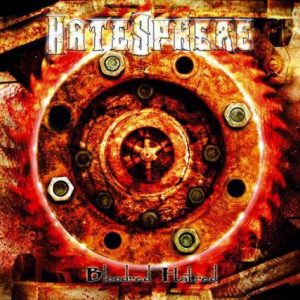
Bloodred Hatred by Hatesphere
You’ve been involved with Hatesphere since its earliest days, and your musical journey goes all the way back to 1993. What has kept you so passionate about the band and its music after all these years?
Actually, the band I was in before Hatesphere was the predecessor to Hatesphere!
It was called Necrosis, and I joined that band in 1993. So, in a way, I’ve been doing this for more than 30 years!
When I started out, I could play guitar, but I didn’t really know how to write songs.
Slowly, I began learning how to do that, and I developed as a songwriter. Eventually, we started creating a style that we really liked, something we thought was a little different from what we’d heard before.
It was faster and more thrashy.
Back then, I never really imagined that we’d be releasing albums or touring around the world. But suddenly, those things became possible.
What keeps me going is that I always want to do better. I want to write cool songs and keep creating music that I’m proud of.
And it’s also incredibly satisfying to know that our music affects people around the world.
Whether it’s people in the United States like you, people in South America, or people here in Denmark, it’s really cool knowing that they enjoy what we do.
That means a lot to me.
Even though we’re not the biggest band in the world, it’s still incredibly satisfying to know that other people appreciate the music we’re making.
I think that’s what keeps me going. I want to keep writing great songs, and it’s wonderful knowing there are people out there who want to hear them.
Looking ahead, what’s coming up for Hatesphere in the New Year?
We have quite a few Danish shows lined up, and we’ve also got some European shows confirmed.
We’re working on booking more dates, so hopefully we’ll be playing even more shows around Europe.
And as you mentioned earlier, it would be super cool to return to the United States at some point.
So, if there are any American promoters or booking agents out there who want to bring Hatesphere over, please get in touch!
For now, we’ve got the Danish shows and some European dates, and we’ll see what else comes along.
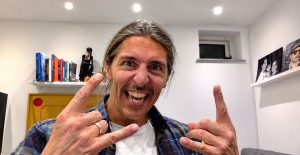
Pepe of Hatesphere via Zoom!
Do you have any messages for Hatesphere fans here in the States, whether they’re longtime supporters or people who might be discovering the band for the first time?
First of all, thank you for the support. It really means a lot!
When I’ve been over there playing with Dark Tranquillity, for example, it’s been a pleasure meeting Hatesphere fans as well.
I know we have a lot of fans in the United States, and it means so much to us that you enjoy what we’re doing and continue supporting the band.
And for the new guys and girls discovering us, dig in!
We’ve got twelve full-length albums, so there’s plenty of music for you to explore. Hopefully, you’ll find something you really like.
And hopefully, we’ll be back in the States soon!
In Conclusion
After more than three decades of uncompromising metal, Pepe and Hatesphere show absolutely no signs of slowing down. From their formative days as Necrosis to the crushing intensity of Guillotine, the Danish metal veterans continue to evolve while remaining true to the relentless sound that has earned them fans around the globe. With more European performances on the horizon and hopes of returning to American stages, Hatesphere’s musical journey is far from over. One thing is certain: as long as Pepe continues finding inspiration in writing powerful songs and connecting with audiences, the Hatesphere legacy will continue to thrive.
(Interview by Ken Morton)
Hatesphere on Instagram