


After the Storm: Andreas Gullstrand on Creye’s Rebirth and IV: Aftermath
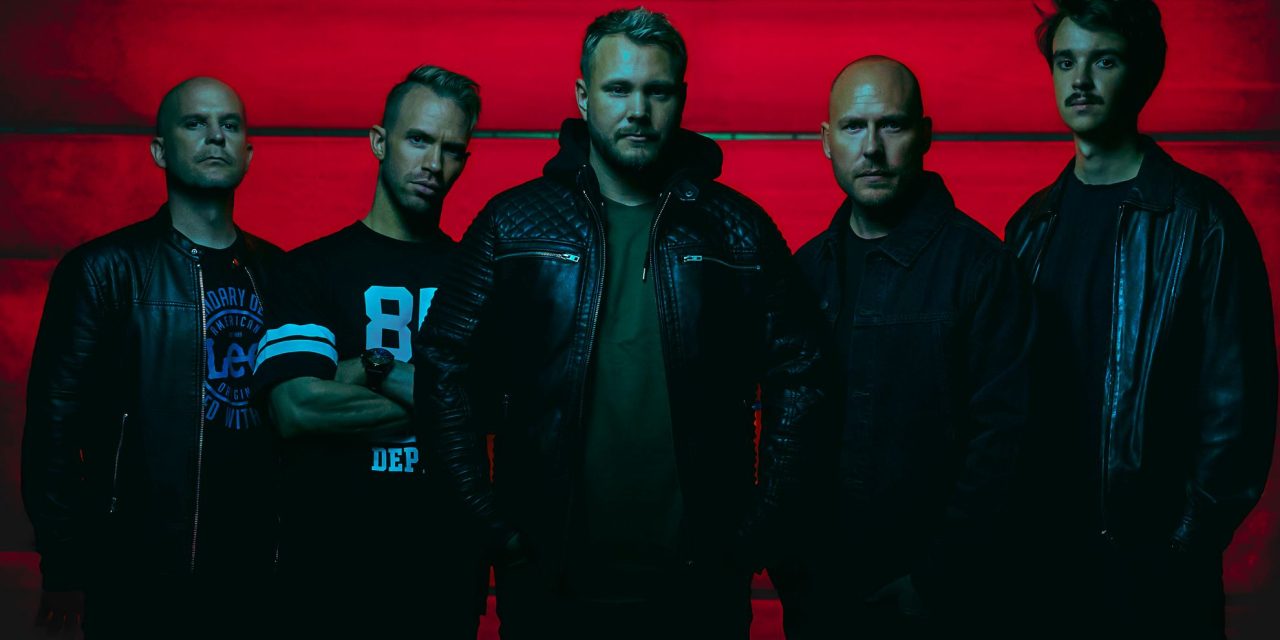
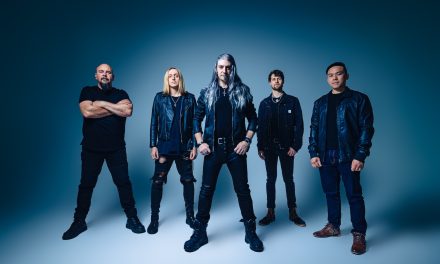
Photo by Andreas Ungré
After the Storm: Andreas Gullstrand on Creye’s Rebirth and IV: Aftermath
Creye has always been a band defined by melody, precision, and heart — but with IV: Aftermath (now out on Frontiers Music srl), guitarist and band architect Andreas Gullstrand steps into a new era with a renewed sense of purpose. After years of lineup changes, personal upheaval, and a long pause that nearly ended the band entirely, Creye has returned with their most dynamic and emotionally charged album yet.
Speaking with Andreas, it becomes clear that Aftermath isn’t just a title — it’s a statement of survival, reinvention, and creative rebirth. From the arrival of powerhouse vocalist Simon Böös to the band’s triumphant return to the stage at Frontiers Rock Festival, this chapter marks both a reckoning and a resurgence.
In this candid conversation, Andreas reflects on the decade‑long journey from the breakout single “Never Too Late” to the present day, the lessons learned from past bands, and the unwavering support of fans around the world — especially in the U.S., where Creye hopes to take the stage next.
This is Creye in 2026: sharpened, redefined, and ready for what comes after the aftermath.
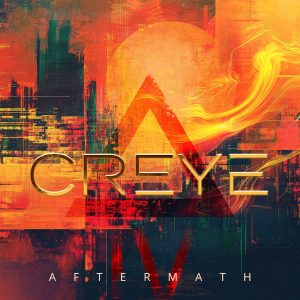
CREYE IV: Aftermath
We’re here with Andreas from Creye. Let’s talk about the new album first. Is there an overall story or concept behind the title Aftermath?
There’s definitely a theme. As many of our followers know, the band has gone through a major transition with the lineup changes, and that’s a big part of the “aftermath” idea. But there’s also been a lot happening in my personal life. Our albums often reflect what I’m going through, especially lyrically, so the title ties into that as well.
It also represents the beginning of something new. We’ve finally found a direction for the band that we intend to follow. On the last album, Creye III: Weightless, we discovered a heavier, more modern route. Aftermath continues down that path and expands on it. That’s really where the title came from — the aftermath of everything that’s happened, and the start of what comes next.
Give me some background on your new vocalist, Simon Böös. Where did he come from, and what other bands has he been in? He’s absolutely amazing.
It’s actually a long story. I first met Simon back in 2011 at a friend’s wedding party. He got up and sang “Livin’ on a Prayer,” and I was blown away. I added him on Facebook thinking, Maybe I’ll need a great vocalist someday.
Years later, when Robin left the band in 2018, we asked Simon if he wanted to step in. He didn’t feel ready at the time — he didn’t think he could pull it off. Then in 2021, I did a video project with him, and we started talking about writing together. By the end of 2022, the band was on pause, and I began recording with Simon. It just felt more and more right. Our partnership and friendship are so strong that asking him to join the band felt completely natural.
He’s incredibly talented, has a strong work ethic, and is extremely driven. And he’s not just a great vocalist — he’s a great band member. So much of being in a band today isn’t just about the music. He’s the kind of person you want beside you in every part of it.
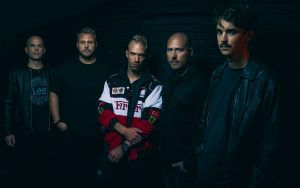
Photo by Andreas Ungré
Let’s talk about a few songs on the album. Starting with the first single, “Left in Silence.” What inspired that one?
Lyrically, it’s about reaching that point in a relationship — whether personal or political — where you can’t argue anymore. You can’t find common ground, so you just go silent because it’s not worth the fight. That’s the emotional core of the song.
Musically, I love the dynamics: the quiet, low‑key verses contrasted with the huge, powerful choruses and those epic choir parts. Lately I’ve been using the word “gospel‑like” to describe that kind of sound. We combined that with heavier, post‑hardcore elements, and I’m really proud of how epic it turned out.
Let’s go to the opening track, “Something Missing.” What inspired that one?
That one started as an idea from Fredrik Joakimsson. We had just listened to a new Dirty Loops song — I think it was “Runaway” — and were really inspired by the theme. Fredrik wrote the initial idea, and I handled the arranging and top‑line melodies.
Lyrically, it’s about that feeling when something is wrong, but you can’t pinpoint what it is. Things don’t feel the way they used to, but you don’t know how to fix it because you don’t know what’s broken.
It also became one of the songs that shaped the direction of the entire album. The first song written for Aftermath was “Bad Romance,” and “Something Missing” became the balance to that. Once we had those two tracks, we knew what the album was supposed to feel like — the blend of strong ’80s synths with heavier parts. It was a very important song for defining the album’s identity.
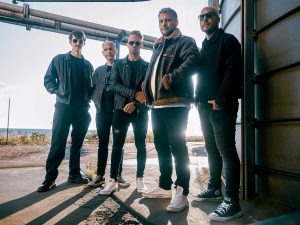
Photo by Andreas Ungré
Let’s jump to the final track, “Clay.” Why did that one close the album?
Well, one of the songs has to end the album, right? But “Clay” is definitely a different kind of track. It was the second song I wrote entirely on my own. “Bad Romance” was the first song I’d written in years, and after finishing it, I thought, Okay, now I have to write another one. That’s always the hardest — the first song uses up a lot of your ideas.
“Clay” ended up being a bit out there, but in a good way. It’s musically simple in terms of chords, but lyrically it was built around the idea that a human being is like a piece of clay — something that can be shaped and reshaped. I found that concept really interesting and philosophical, and I built the song around it.
It’s a track you need to be prepared for. It works best when you’ve listened to the whole album and reached that emotional point. It keeps rising and rising, then ends very quietly, which I think makes for a powerful final moment.
You just played Frontiers Rock Festival last weekend. How did the set go with the new lineup, and what were some highlights of the festival for you?
It was an amazing weekend. It was our first show in something like 1,300 days. Honestly, after we put the band on pause, I didn’t think I’d ever play another show again. So it was a huge milestone.
I had forgotten how incredible it feels to be onstage. And the fans — wow. We were greeted at the hotel, signing autographs, taking photos. I couldn’t believe people were waiting for us.
Festivals are always stressful — hectic changeovers, tight schedules — and we had to fly with all our gear, which made things even trickier. But considering it was our first show with the new lineup, I think it went really well. The crowd was great, and even though there were a few hiccups, we gave it everything.
We also played our release show last night in Trelleborg here in Sweden. Smaller crowd, but the same warm welcome. And the hiccups from Italy were gone. With a new lineup, you need time to learn each other onstage, but I’m very proud of both shows. It’s a strong start for this new era of Creye.
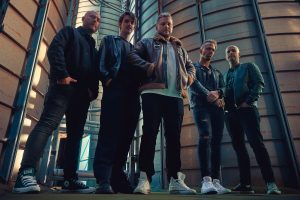
Photo by Andreas Ungré
Has Creye ever played in the States, or is that something you’d like to do in the future?
Sadly, we’ve never played outside of Europe — unless you count England, which was still part of Europe at the time. But no, we haven’t made it to the States yet. It would be a dream come true. The U.S. is actually the second‑biggest consumer of our music, so getting the chance to play there someday would be incredible. I’d love to experience that.
Your first single, “Never Too Late,” came out 10 years ago in 2016. Looking back now, what do you think of that song and everything that followed?
First of all, I can hardly believe it’s been 10 years. So much has happened in such a short time — writing that first single, the response it got, the offers from record labels, signing the contract, releasing the debut, building the full lineup, the second and third albums, the touring… it’s all been such a high‑paced, hectic period. Those 10 years flew by in the blink of an eye.
Before Creye, I was in my previous band, Grand Slam, which was more of a studio project. It was a stepping stone for me as a guitar player, but I wanted to create something of my own with no compromises — in quality, songwriting, image, everything. So I decided to work with studio musicians and wrote “Never Too Late.” I started thinking about the project in 2015, we recorded that year, and released the song in 2016.
For me, it was something I needed to do — something I could be proud of. I never imagined it would lead to what it did. The day after the release, I had something like a hundred messages. It felt like overnight success — not worldwide, but personally. The EP sold out immediately, and I spent months shipping everything from my bedroom, signing copies, handling orders 24 hours a day.
Then came the pressure: Can I do it again? Was that first song a fluke? The next single, “Straight to the Top,” ended up doing even better. That’s when I realized I needed a full lineup to play live. After that, we signed with Frontiers and got the chance to make our debut album.
“Never Too Late” will always be special to me. It started this entire journey and pushed me to follow my dreams. And I still stand by the message — it’s never too late to do what you love.
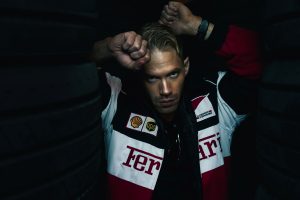
Andreas of Creye – Photo by Andreas Ungré
You mentioned Grand Slam, which leads to my next question. Looking back on your time in that band, what do you think of it now?
It was a huge learning experience — especially in understanding band dynamics and, honestly, learning what I didn’t want to do.
This might sound strange, but I don’t think a fully democratic approach works for a band’s creative direction. When everyone has different opinions about songwriting, arrangements, genres… it often leads to the band never getting anything done. That was the case with Grand Slam. We spent so much time arguing over pointless things — someone wanted to cut the chorus, someone else wanted to play blues, another wanted to play death metal. It was chaos.
I handled all the pre‑production, tried to make everyone happy, and still got criticized for it. I was putting in 10 hours a day, and in the end, the work was presented as a group effort, even though it wasn’t. It didn’t feel fair, and it wasn’t sustainable.
We also had issues with professionalism — people not learning the songs, not taking things seriously. Some of the guys were talented, but I don’t think they were willing to make the sacrifices needed for a band to succeed.
But there were positives. I gained experience, contacts, confidence in my writing, and learned how to produce. I learned how to perform live and experiment. It set me up for what Creye would become. But it was definitely a stressful period.
Do you have a message for U.S. fans who have followed your career all this time?
Absolutely. Like I said, the U.S. is the second‑biggest country listening to our music, and we’re incredibly thankful for that support. When I started this band, I didn’t think our music would reach past my bedroom walls. Now it’s being heard all over the world — including the States.
I’m humbled by how well the U.S. has received us and how much people appreciate what we do. So to all our American fans: thank you. Truly. Your support means everything.

Andreas of Creye – Photo by Andreas Ungré
In Conclusion
As Creye steps boldly into their next chapter, IV: Aftermath stands as both a declaration and a promise — a testament to resilience, reinvention, and the power of refusing to let go of what matters. For Andreas Gullstrand, the journey has been anything but linear, yet every twist has shaped the band into what it is today: focused, revitalized, and more creatively aligned than ever.
With a new lineup, a renewed sense of purpose, and a fanbase that continues to grow across the world — especially in the United States — Creye’s story feels far from finished. If anything, Aftermath marks the beginning of a new ascent.
Whether they’re shaping songs like clay, rediscovering their spark onstage, or dreaming of the day they finally bring their music to American soil, one thing is clear: Creye is a band built to endure, evolve, and inspire. And as Andreas reminds us through every chapter of his journey — it’s never too late to chase the life you were meant to live.
(Interview by Ken Morton)
Creye on Instagram