


From Single Gun Theory to Desiderium: The Evolution of Jacqui Hunt
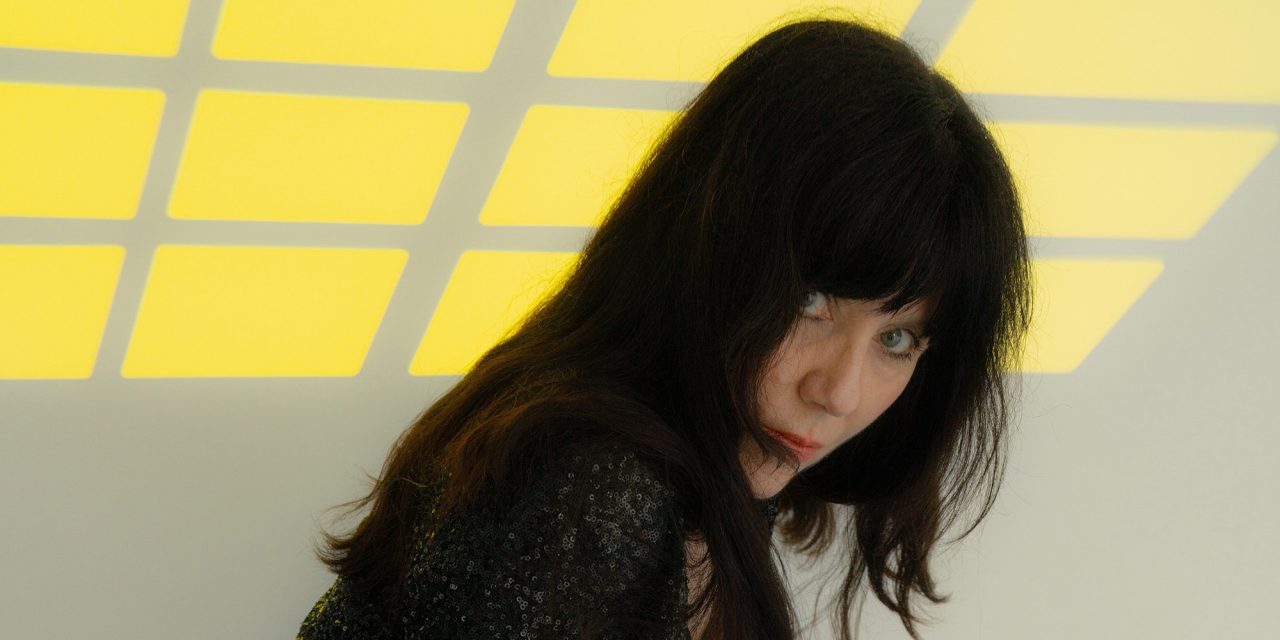
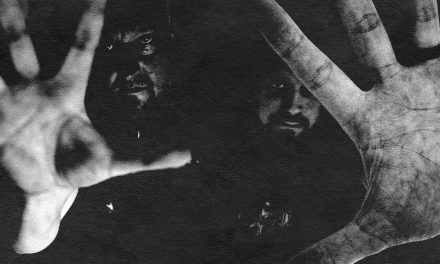
photo by Brian Conolly
From Single Gun Theory to Desiderium: The Evolution of Jacqui Hunt
Four decades after first emerging with the groundbreaking Australian collective Single Gun Theory, vocalist Jacqui Hunt returns with Desiderium — a solo album shaped by loss, longing, and the quiet resilience that comes from rebuilding a life. Speaking with Highwire Daze, Jacqui opens up about grief, creativity, memory, and the unexpected cycles that continue to shape her artistic world. What unfolds is a conversation both intimate and expansive, tracing her journey from the industrial pulse of the late ’80s to the atmospheric introspection of her newest work.
Let’s start with the basics. Where are you based these days, and what is your local music scene like?
I’m based in Sydney, and we actually have a very healthy music scene here. The live scene has really been growing again since COVID. We unfortunately lost a number of venues during that time, but things are rebuilding. There’s a lot happening, and I’m often out at gigs. It feels alive again.
Let’s talk about the new album — Desiderium. What’s the story or concept behind the title and the song?
Desiderium is the title, and that word came to me right at the end of the process. The whole album was shaped by a very personal period — I lost both of my parents within just under two years. That was a huge shift in my life, and the grieving process naturally found its way into the writing.
Desiderium means “longing,” and that really captured what I was feeling — longing for things to be different than they were, longing for what had been. The album is very much about moving through grief, acknowledging those emotions, and allowing yourself to feel them even when they’re painful.
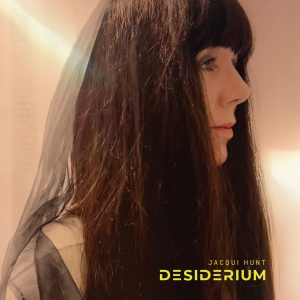
Desiderium by Jacqui Hunt
Let’s talk about a few of the songs. First up: “Cycles.” What inspired that one?
J “Cycles” was written on the piano, and my father played piano, so that instrument is tied very deeply to him for me. I grew up with piano music in the house, and that was something I loved about him. One day I sat down at the piano and the song just came.
It’s also a very performance‑driven track in a theatrical sense. Both of my parents were involved in amateur theatre, so while I was thinking about one of them, I was thinking about the other as well. They’re both in the song.
I nursed my father through the last year of his life while he had terminal cancer. There’s a line — “You can’t save me, but if anyone could, you’d be on the front line.” That’s about how we receive help from the people around us, and how beautiful that is, but ultimately some parts of the journey are ours alone.
And then the line “The show is over and I want to see again” — that’s the cycle. Things end, but they begin again in a new way.
With both of your parents involved in theatre, that’s fascinating. Was that something you ever did yourself?
I was pretty much born at the theatre. They had me in a bassinet backstage when I was just a few weeks old. I did a little bit of theatre as a kid, and I loved being there — the sound, the lights, the staging, the costumes.
As a teenager I dabbled a bit, but I remember being about twelve in a drama class where we had to pretend to be potatoes. And I thought, “You know what? I’m aspiring to more than this.” So I didn’t pursue theatre seriously after that. But the atmosphere of it — the aesthetics, the emotion, the storytelling — all of that definitely influences my creativity.
The video for “Cycles” was directed by Kade Stenders, whose parents (famed film director Kriv Stenders and photographer Lisa Stonham) worked on some of the early Single Gun Theory videos. What was it like working with someone connected to your past through another generation?
It felt incredibly fitting for a song called “Cycles.” That’s why I wanted to go with it. It was a bit of a risk, but I believed in Kade, and I loved the emotional connection. It aligned perfectly with the theme.
There’s a lot of symbolism in the clip. I’m holding old photographs — real photos from my parents’ theatre days. One shows my mother in a school uniform performing in A Taste of Honey, her favorite play. She was nineteen when she had me, and Kade was nineteen when he made the video. So again, the cycles — beginnings, connections, generations.
These are things no one else would necessarily know, but they matter to me. The song comes from the heart, and the video reflects that.
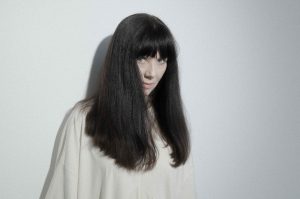
photo by Brian Conolly
Let’s move on to another song — “Planet.” Tell me about that one.
“Planet” was written a long time ago. The lyrics are actually a poem by Brian Connolly. It’s a bit of a personal love story. Brian sent me the poem while he was overseas — we’d been working together, and feelings had started to develop. Yes, I know, workplace romance, very politically incorrect!
I sent him back a sketch of a musical idea, and he received it while he was at the airport in Kuala Lumpur. That whole sense of being in different places but still connected — “I’ll take your sky with me” — that’s where the song comes from.
We tried to finish that track many times over the years and kept shelving it because it never felt quite right. But now, finally, it does. It doesn’t tie directly into the themes of my parents or the grief behind Desiderium, but there was a longing to finally release it. And now it’s out in the world.
Let’s go to the end of the album — “Alice Magic.” Tell me about that one.
That one was inspired by an artwork my mother gave me — an etching by Australian artist Charles Blackman. It was one of the first pieces she ever bought, and she gave it to me shortly before she died. It’s incredibly precious.
The song is also about doing what’s right from the heart. Sometimes you have to make decisions that don’t align with everyone else’s expectations, but you still have to follow what feels true to you. That’s really what “Alice Magic” is about.
Would you like to tour or play shows in support of the new album? And what are the chances of you coming back to the States?
Oh, it would be absolutely brilliant to come back to the States. Let’s see if that happens. Playing live is something I’d really love to do — it’s been a long time. It is on the cards, but I’m not quite ready yet. Realistically, I think next year is more likely.
I might start with some gigs in Sydney, but I haven’t mapped it out fully. It feels like the natural next step for me. And if I do put a set together, it won’t be just Desiderium. It’ll be a mix of things I love from across my repertoire.
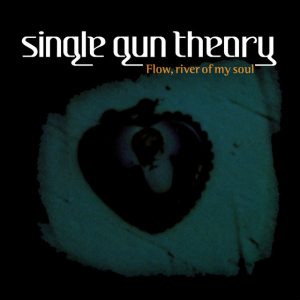
Flow, River of My Soul by Single Gun Theory
You toured the U.S. with Single Gun Theory supporting Sarah McLachlan, including a stop at the Wiltern in Los Angeles. What do you remember most?
When you mentioned the Wiltern, I had to Google it because I didn’t immediately remember playing there. And then I saw the photos and thought, “Oh my God, it’s so beautiful.” I vaguely remember the exterior being a sort of minty green.
That whole tour was a whirlwind. Playing with Sarah was fantastic. Single Gun Theory hadn’t really played live much — we were predominantly a studio band. Not by my intention — that’s just how things unfolded.
Suddenly we were playing incredible venues to substantial audiences. I remember getting onto those tour buses — we don’t really have that kind of setup in Australia — and thinking, “How are we going to cope?” It felt like climbing into a little coffin at first. But you get used to it.
I have very fond memories of that time. Sarah was doing extremely well — still is — and her crew was incredibly professional. It was a wonderful experience.
Looking back on Flow, River of My Soul, what do you think of it now?
I’m really proud of that album. As time goes on, I find myself thinking, “Wow, we actually did that.” We used so many samples, and we cleared every one of them properly. It was a nightmare, honestly, but we did it legitimately.
I was always proud of the work, but I was also very critical of myself back then. With age, I’m trying to be less self‑critical because it doesn’t help anything.

Exorcise This Wasteland by Single Gun Theory
Let’s go back even further — to 1987 and Exorcise This Wasteland. What do you think of that album now?
I feel like I was a kid when we made that album. “Exorcise This Wasteland” still has appeal for me — I loved the hardcore industrial sound we were exploring. Some of the other tracks don’t hold up for me personally, but I don’t want to be critical. It was groundbreaking work, especially Pete’s production and the cut‑ups. I was fortunate to be the vocalist in something so exciting.
According to Wikipedia, Single Gun Theory formed in 1986 — which makes this your 40th anniversary. What goes through your mind?
It’s wild. I feel like after forty years I’m allowed to forget a few things! But honestly, it’s really cool. I have this timeline of music behind me, and that’s a beautiful thing.
I’ve always been passionate about making records, singing, writing music. Even though I haven’t been hugely prolific, that passion has never diminished. The forty years just confirm what I’ve always felt — that music has been a constant, defining part of my life.
When Single Gun Theory concluded, did you stay in touch with Kath or Pete?
Yes — more with Kath, but I spoke to Pete recently and it was lovely. Kath is a close friend. And with Pete… band relationships can be complex, but any differences are long in the past. We’re all proud of what we created.
Would you ever want to get back together with them again?
I’ve been hopeful in the past. And because we never officially broke up, who knows? It would probably take a small miracle — maybe a large one — but you never say never.
What do you hope the rest of the year brings?
I’ve got a few remixes to sign off on, and I want to do more writing — I’m feeling very inspired. And I need to get live shows happening. That will keep me pretty busy.
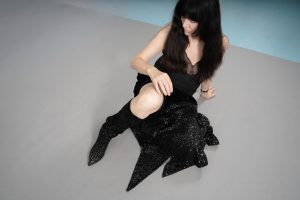
photo by Brian Conolly
Any messages for your fans in the States?
I’m blown away by the people who have followed me for so long. As an artist, you make music because you have to — it’s a need inside you. But if you release it, you hope it resonates with someone.
I’m grateful to anyone who even knows who I am. It’s a big world with a lot of noise. So to the people who’ve been paying attention — especially those who’ve been there since the beginning — I’m incredibly thankful.
In Conclusion
From the early days of Single Gun Theory to the emotional depth of Desiderium, Jacqui Hunt has carved out a singular place in electronic and atmospheric music. Her stories are rich, her perspective grounded, and her passion unmistakable. As she prepares for new writing, remixes, and the possibility of live shows, one thing is certain — Jacqui’s journey is far from over, and the next chapter promises to be just as compelling as the last.
(Interview by Ken Morton)
Jacqui Hunt on Instagram