

Deadbeat Nightlife: Butter, Pancakes, and the Return of Metalcore
 Deadbeat Nightlife: Butter, Pancakes, and the Return of Metalcore
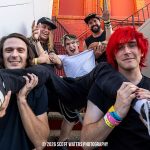
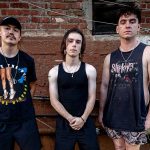
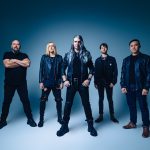
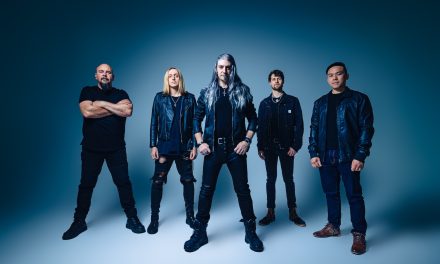
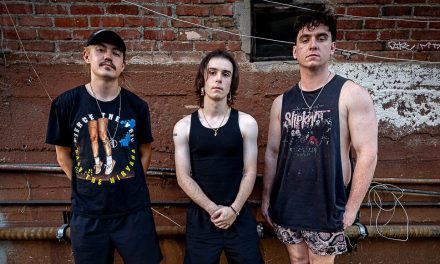
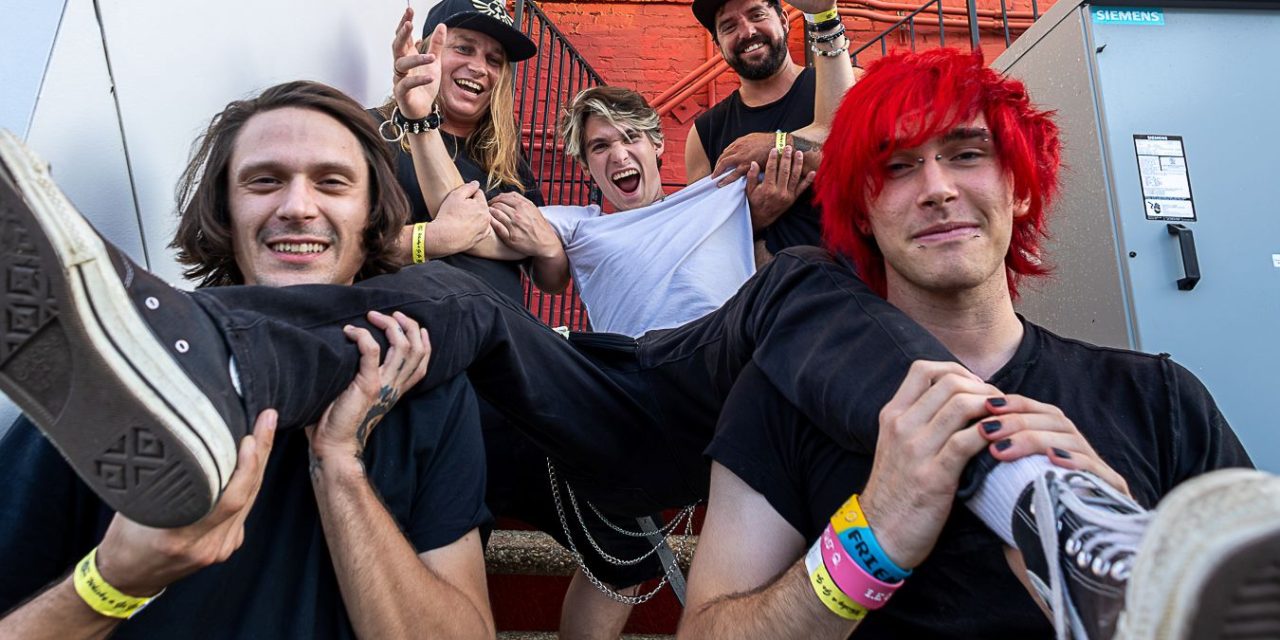
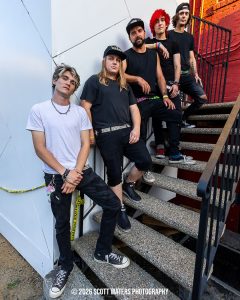
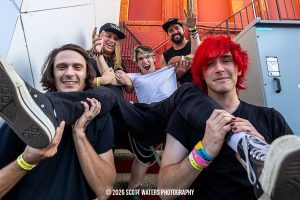
The back alley behind the Whisky A Go Go has long been a gathering place for musicians preparing to take one of the most legendary stages on the Sunset Strip. Just moments before Deadbeat Nightlife was set to perform, I caught up with vocalist William, bassist Christian, guitarists Matt and Robert, and drummer/founding member Johnny for a candid conversation about the band’s beginnings, the challenges of modern social media, their tongue-in-cheek song titles, and the unexpected resurgence of metalcore and its many subgenres.
What followed was equal parts insightful, nostalgic, and hilarious. From MySpace memories to TikTok frustrations, from lessons learned over two decades of making music to the unlikely origins of songs titled “Everything Is Better with Butter on It” and “Pancakes,” Deadbeat Nightlife proved they don’t take themselves too seriously while remaining fully committed to their craft.
We’re here with Deadbeat Nightlife. Introduce yourselves and tell me what you do in the band.
William: My name is William Shrike, and I’m the vocalist.
Christian: I’m Christian. I play bass.
Matt: I’m Matt. I play guitar.
Johnny: I’m Johnny. I play drums.
Robert: I’m Robert. I play guitar.
 Give me a little background on the band. You guys have been around for a while.
Johnny: I’m one of the founding members. We started back in high school around 2006. Fun fact, that’s the same year some of these guys were born.
At first, it was just a fun thing, but it started taking off a little bit. Then everybody moved away to college, and that’s when Matt joined the band. We kept it going for a while. I moved out of state for about ten years, then came back, and we started playing music again just for fun.
Eventually, we decided we wanted to take it seriously, so here we are.
Some people describe that era as the Wild West of music because of MySpace and everything surrounding it. What are your thoughts on that?
Johnny: Honestly, I think MySpace was the best platform for being in a band. It was completely music-focused and music-centric.
The cool thing to do was set up your Top 8 with your favorite bands, use your favorite album cover as your background, and showcase songs that you discovered before anyone else did. That culture really helped push more obscure bands to the forefront.
 How does social media today affect you guys? What are the good parts and the not-so-good parts?
Matt: It affects us a lot because we have to do everything on it. You can’t just put flyers on poles anymore or tell your friends about a show and expect people to show up.
Suddenly, I have to make videos. Suddenly, I have to be an actor. It’s a lot more work than it used to be. Honestly, it’s draining, but it’s something you have to do.
Johnny: People’s attention spans have changed. Everybody has great content now, so you’re competing with a lot more.
Back when social media was just starting out, you could throw almost anything online and it would get visibility. I don’t even think there was an algorithm. I used to find bands by looking through the Top 8 lists of my favorite bands. Now it’s just whatever comes up next in your feed.
It’s hard to break through, but it seems like a snowball effect. Once you do start breaking through the algorithm, the engagement keeps building and the platform keeps pushing your content. It’s a game we have to play now, and that’s why I make Matt play it.
William: Christian and I work together on the TikTok account, while Matt runs Instagram. We post a lot more on TikTok.
Honestly, a lot of it can feel a little embarrassing. Some of the videos are really dumb, especially the ones that end up going viral. You rely on people filming you and then sending the footage afterward. To me, a lot of it feels forced, but it’s also one of the only platforms where you can really reach people now.
Like Matt said, you can’t really put things up on bulletin boards anymore. You have to make a video that catches people’s attention, and sometimes it feels like you have to make a clown out of yourself to do it. It kind of sucks.
Christian: The thing that’s kind of awesome about TikTok is that sometimes you can post something completely stupid and it blows up.
At the very least, it doesn’t always take a ton of effort. It can feel silly and a little humiliating, like Will said, but every once in a while something breaks through and suddenly you’ve got tens of thousands of views and maybe a hundred new listeners discovering your music.
Sometimes people just find your music because you posted literally anything with it attached. That can be pretty nice.
 Let’s talk about the music. You put out an EP or album recently, right?
Johnny: We have a series of singles that we’ve released. If you come to our shows, we actually have physical copies packaged together as an EP featuring five new singles.
About a year ago, we put out an album with our previous vocalist, and there are probably plans to revisit that material and re-record it. We’ve recently started self-producing all of our newer music, and I’d like to go back and self-produce that album as well.
Select two songs you’re playing tonight and tell me what inspired the lyrics.
Johnny: One of them is a newer song from those singles called Everything Is Better with Butter on It. The title has absolutely nothing to do with the song.
All of our song titles come from real-life situations. In this case, I mentioned that I don’t like mayonnaise. Somebody asked if I just eat dry sandwiches, and I said, “No, I put butter on them.” Then I said, “Honestly, everything mayonnaise does, butter does better. Everything is better with butter on it.”
I usually write the music first using notation software, so I have to name the file before I know what the song is actually about. That’s where the titles come from.
The lyrics are really about self-reflection. If you’re not happy with where you are in life, everything around you is ultimately the sum of the decisions you’ve made. You have to look in the mirror, evaluate yourself, and maybe start making different choices to achieve the outcome you want.
Another song we’re playing tonight is Pancakes.
That title came from the original lineup. We were driving somewhere looking for an IHOP or something and talking like pirates. Somebody said, “Aye, Captain Darby, pancakes!” and it just stuck.
As far as the lyrics go, I have to give credit to our original vocalist Dylan. He wrote them, and honestly, Will probably knows them better than I do at this point.
William: Coming into the band, a lot of the songs and lyrics were already written. I only joined on August 25 of last year.
What’s interesting is being able to attach my own personal meaning to the songs. That helps them mean as much to me as they do to the people listening.
For Everything Is Better with Butter on It, I had a best friend who hurt me in a significant way. When I sing the song, I almost feel like I’m speaking directly to that person. It becomes a conversation about betrayal and disappointment, about being hurt by someone you thought would always be there.
As for Pancakes, it starts with the line, “Fate has burned me with the most unfortunate turn of events.” The song is very self-reflective. A lot of those older songs have strong emo influences, both lyrically and emotionally.
The meaning I take from it is that karma is real. If you put negativity out into the world, it’ll eventually come back to you. But if you approach life with positivity and good intentions, that comes back too.
That’s kind of how I look at this band. We have five positive guys who genuinely enjoy what we’re doing. We’ve already toured together, and I haven’t even been in the band for a full year yet. Having that positive energy has helped us grow and move forward.
So for me, that’s the meaning behind the song. It’s really about karma and perspective.
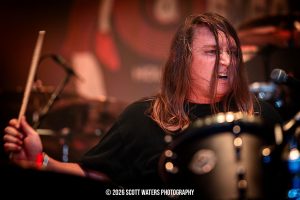 Your one-year anniversary with the band is coming up, right?
William: Yeah, it is. The first show I ever played with these guys was actually here at the Whisky. They gave me a two-week notice to learn six songs for the setlist.
Robert: It’s already been a year.
Johnny: The days are long, but the years are short.
That’s the truth. For people who are missing tonight’s show, what can they expect from a Deadbeat Nightlife live performance?
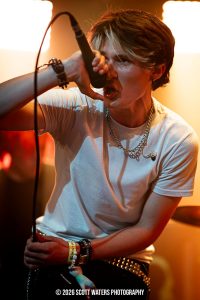
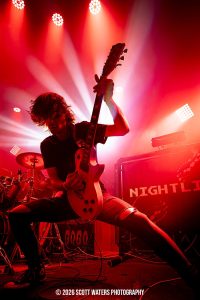
Johnny: Over the last year, we really focused on our playing, our sound, and tightening everything up. Once we felt confident that the music was locked in, we started focusing more on the visual side of things.
We’ve been working on our stage presence and, for lack of a better word, a little bit of choreography. Recently we’ve also invested in a lighting rig, so we have a pre-programmed light show that I designed for the set.
The combination of the lights, the music, and the energy creates an all-out experience. We’re trying to hit every sense except smell, although it’s pretty hot onstage, so you can probably smell us too.
Are you guys originally from Los Angeles?
Johnny: Originally, the band is from San Diego, but these days we’re based in Orange County.
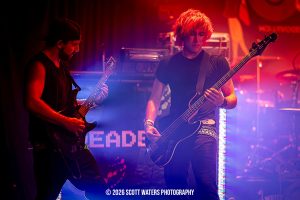 What’s it like being a metalcore, crabcore, or whatever-the-hell-you-want-to-call-it band in Orange County and Los Angeles in this day and age?
Robert: It’s pretty crazy because I didn’t join the band expecting any of this. It was just another band I was joining, and then all of a sudden we started climbing in Spotify numbers.
It’s exciting because it feels like there’s a comeback happening. It seems like we’re riding the beginning of a new wave, which has been really cool to experience.
I was in high school when the original metalcore wave was taking off, and at the time I thought, “Yeah, I don’t want to be doing that.” Now I’m thirty and here I am.
Christian: Like Rob said, there’s been this huge resurgence of all these different “core” styles: metalcore, crabcore, deathcore, post-hardcore, all of it.
A lot of people like to clown on the Southern California scene, but realistically there’s just a lot happening, and that’s the best thing a scene can have.
For me personally, I was born the same year this band was founded. As someone who discovered a love for this music through these guys, it’s been really cool hearing stories and getting insight from people who were actually around during that original wave.
Being around this music and these people has genuinely changed my life for the better.
Johnny: After the COVID shutdowns, people were itching to get back out and be part of something again.
This new wave feels a lot more DIY and community-driven. It’s exciting seeing younger people discover and celebrate this style of music. Watching someone like Christian experience it for the first time reminds me of when I first got into it myself.
For a while it felt like the genre had run its course, but now it’s back. I guess everything comes around again after twenty years.
William: I moved here from upstate New York because I wanted to find people who were as passionate about music as I am.
Before moving out here, I connected with a musician named Jordan through a Facebook group for Los Angeles musicians. We started working together in a studio in Silver Lake, and that’s where I first met Johnny, who was producing for us at the time.
Months later, Jordan called me and said Deadbeat Nightlife was looking for a vocalist. I contacted Johnny, and eventually it clicked that we already knew each other from those studio sessions.
Johnny: I remembered his vocal takes. He really stood out to me. We were suddenly in a position where we needed a vocalist quickly, so I told Will, “You’ve got two weeks. Here are the songs.”
He stepped up and did a great job.
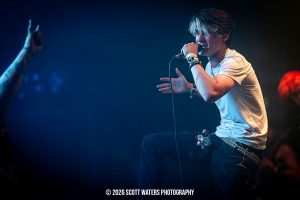 In Conclusion
Unfortunately, our conversation had to come to an abrupt end as Deadbeat Nightlife was being called to the stage. Even in the short time we had together, the band’s chemistry was impossible to miss. Whether discussing the early MySpace era, navigating the realities of modern social media, embracing a new generation of metalcore fans, or explaining the surprisingly deep meanings behind songs named after butter and pancakes, Deadbeat Nightlife came across as a group fueled by both passion and genuine friendship.
With a renewed lineup, a growing audience, and a live show designed to immerse fans in both sound and spectacle, Deadbeat Nightlife appears poised to ride the latest wave of metalcore resurgence into exciting new territory. If their enthusiasm backstage is any indication, they’re only getting started.
For more information on Deadbeat Nightlife, including upcoming shows and new music, visit their social media pages and streaming platforms. As the band headed inside the Whisky A Go Go and the crowd prepared for another night on the Sunset Strip, one thing was clear: Deadbeat Nightlife is making the most of its second chapter.
Be sure to catch Deadbeat Nightlife back at The Whisky on October 1st, opening for the legendary Alesana!
(Interview by Ken Morton – Photos by Scott Waters)
Deadbeat Nightlife on Instagram