



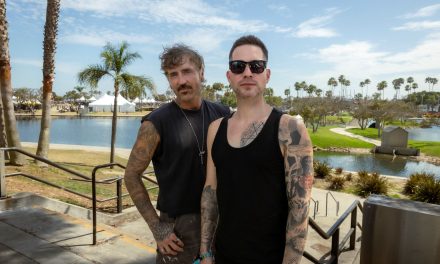



Brandy’s Legacy: A Conversation with Elliot Lurie of Looking Glass
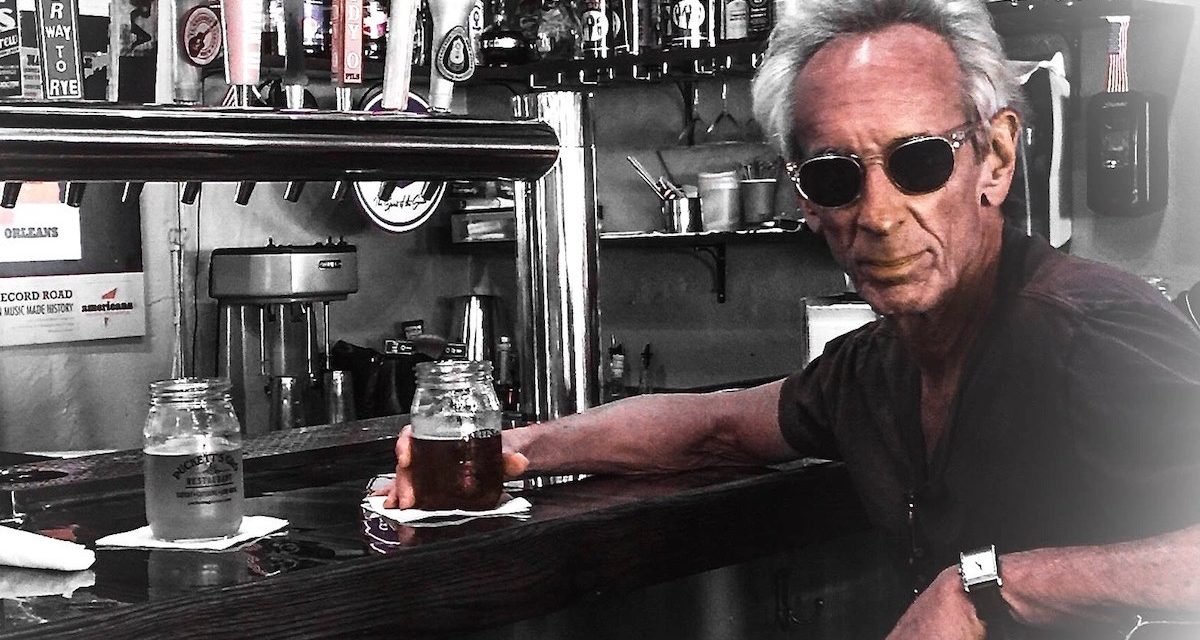
 Brandy’s Legacy: A Conversation with Elliot Lurie of Looking Glass
There are songs that define a moment, and then there are songs that define a lifetime. For Elliot Lurie, the unmistakable voice behind Looking Glass and their timeless 1972 classic “Brandy (You’re a Fine Girl),” the journey has been one of unexpected longevity, reinvention, and a return to the stage he once stepped away from for three decades. With more than 600 million streams and a new generation discovering the song through films, playlists, and the ever‑growing yacht rock revival, Lurie stands today as both a storyteller and a survivor of one of pop’s most unpredictable eras.
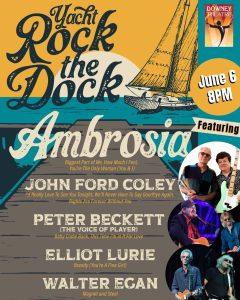
As he prepares to join Ambrosia and an all‑star lineup for Yacht Rock the Dock at the Downey Theatre on June 6th, Lurie reflects on the origins of his hits, the breakup of Looking Glass, his slick and soulful 1975 solo album, and the unlikely path that brought him back to performing. What emerges is a portrait of an artist who never stopped writing, never stopped listening, and never stopped appreciating the strange, beautiful afterlife of a song that refuses to fade.
What are you looking forward to the most about these upcoming Yacht Rock the Dock shows?
We’ve been doing a bunch of them, and they’re all really fun. I’m especially looking forward to the one in Downey because, first of all, I don’t have to fly to it. And we don’t get to play in Southern California that much, so it’s going to be great to be close to home.
Let’s go back to the beginning. What are the origins of the hit song “Brandy (You’re a Fine Girl)”? And is Brandy based on anyone or anything real?
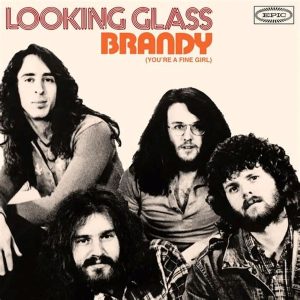
“Brandy” was written in an old farmhouse in northwestern New Jersey that Looking Glass had rented so we could put together enough demos to get a record deal. I wrote it in that farmhouse, and it’s not based on anyone real.
I wrote it the way I usually do: I’ll strum the guitar until I find a chord progression that feels good, and I’ll sing nonsense lyrics while I’m working on it. I had dated a girl in high school—her name was Randy—and I started singing her name in certain places. But as the story came together, I realized “Randy” could be male or female, and since the story was about a barmaid, she should be Brandy. That’s how the title and the name came about. The story itself was invented.
Are you surprised that the song is still so revered today?
I am a little surprised—pleased and surprised. There were songs that were bigger hits at the time that haven’t sustained the way “Brandy” has. It’s a wonderful thing, and yes, a little surprising how it’s hung in there.
 What do you think of the term “yacht rock”?
If I had named it, I would have called it “smooth rock.” But I think the term has come to adequately define a certain genre of music. I don’t particularly care for the name, but it works because people know what it is.
Red Hot Chili Peppers did an amazing cover of “Brandy.” You’ve worked with them—what do you think of their version, and what was it like working with them?
I didn’t work with them on the cover. I worked with them incidentally when I was in the film and TV music business—they did an on‑camera performance in a movie that probably no one has ever heard of or seen. But I didn’t work with them on the cover.
I was surprised they were doing it. I love it. It sounds a lot like how Looking Glass used to do it when we were a really good bar band—no horns, stripped down, no keyboards. Very raw, very high‑energy, and totally Chili Peppers. I love it.
Give me a little background on the other Looking Glass hit, “Jimmy Loves Mary-Anne,” and the inspiration behind it.
That one was on our second album and produced by the wonderful Arif Mardin, who worked with everyone from Aretha to the Rascals to the Bee Gees. A great producer and a wonderful man—unfortunately gone now. We had a great time recording with him.
The song itself was written during the period when we were making the first album. I’m from Brooklyn, and we recorded the first album in Manhattan while living out in northwestern New Jersey. It was quite a trek back and forth in the middle of the night. My parents still had an apartment in Brooklyn, so the drummer—Doobie—and I would stay there between sessions.
It was summertime, and I went out on the fire escape and remembered all the teenage kids who used to run around that neighborhood—boyfriends, girlfriends. It wasn’t a rough neighborhood, but it was a little edgy. Those were the kinds of characters I envisioned living there at that time.
I have to confess—the first time I ever heard “Jimmy Loves Mary-Anne” was Josie Cotton’s version. What do you think of her take on the song?
I like it. It was very of‑the‑time when she recorded it. Wasn’t it produced by one of the guys from Fleetwood Mac? I think it was. It’s a cool record. I think Josie is a really cool person and performer. I liked her version a lot.
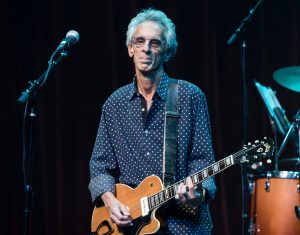 Looking Glass was discovered by Clive Davis at the Whisky and signed to Epic Records—if Wikipedia is correct, which it usually never is. Tell me about that. What was Clive Davis like, and what was playing the Whisky like in the early ’70s?
It’s a little reversed, Ken. Clive actually signed us in New York. We played at the Café Au Go Go in Greenwich Village. It was set up specifically as a showcase for Clive. We opened for Buddy Guy, of all people, which was quite an experience.
Clive came in and sat alone at a table in the back. We knew we were auditioning for him—he’d already told our manager he liked our demos. We did our set, went backstage, and weren’t sure whether he liked it or not. He came back and said hello, but didn’t say much. As soon as he left, our manager said, “He loved it. We’re going to get the deal.”
We did play the Whisky, but that was after “Brandy” came out.
Looking back on the two Looking Glass albums, what do you think of them now in retrospect?
The first one I find kind of hard to listen to. We co‑produced it ourselves, and it was what I call “hunt‑and‑peck producing”—like hunting and pecking on a typewriter. We experimented a lot. Sometimes we got it right, like on “Brandy,” and sometimes we got it terribly wrong. We also didn’t have enough strong material to make a full album at that time, so I’m not that happy with it.
The second one, though—because of Arif’s contributions and because we had more material—there are quite a lot of things I still like on that album.
Before we go to the solo album, what caused Looking Glass to fall apart?
Well, it became clear—after the huge success of “Brandy” and then the more modest but still Top 40 success of “Jimmy Loves Mary-Anne”—that what people expected from Looking Glass was my vocal sound and that kind of pop presentation. But live, we were a four‑piece band. We’d grown up as a bar band, and we were much harder‑edged in person than we were on record.
We had difficulty on the road because people were disappointed—we didn’t sound like the records. We sounded more like a four‑piece rock band. It was hard to get traction that way.
So it became clear there were really two sounds happening: the rock sound of Looking Glass, more represented by the other writer in the band, Peter Sweval, and then my vocal sound—the pop side. It just seemed like the two would never successfully coexist, especially not on the road. So we went our separate ways.
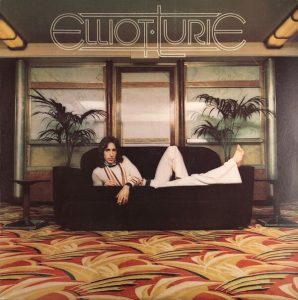
 Let’s go to the solo album you recorded in 1975. When you look back at it now, what do you think of it?
I like a lot of it. The session musicians on that record—talk about yacht rock—are basically half of Toto and half of the Jazz Crusaders. You’ve got David Paich, Larry Carlton, Wilton Felder… incredible players. It’s very slick. Very, very slick.
There are a couple of songs I might have replaced, but overall I like a lot of it.
One of the songs on there is “Disco (Where You Gonna Go).” That was around the time disco was either huge or starting to fade. What do you think of that song now?
Actually, I think it predated the real disco boom, because the album came out in 1975. And if you listen closely—and if you’re a disco fan, which I am—you’ll notice the drums aren’t really playing a disco beat. The drummer was Ed Greene, so he’s not doing the four‑on‑the‑floor kick drum that you hear on all disco songs. He’s playing a more syncopated rhythm. So it’s a song about disco that’s not really in a disco groove.
At what point did you decide to start performing again—and decide, yes, I’m going to sing “Brandy” again?
I had a whole second career. I was fortunate enough to get into film and TV music supervision, and I even worked as an executive in music at one of the film studios in L.A. I went about thirty years without performing at all.
When I retired from that job, I asked myself, “What do I want to do now?” I was still kicking around, and I thought, I’d love to go out and play live again.
Then I got a call from a guy named Peter Olson—and by the way, it’s Peter Olson’s birthday today, so happy birthday to Peter. He was with a band called Yacht Rock Revue. Great band. One of the great yacht rock bands out there.
He called and said, “We do yacht rock, and we’d like to have some of the guys who sang the original hits come down and join us in Atlanta.” I had never heard the term “yacht rock.” But I wanted to perform, so I said yes.
I went down to Atlanta—they were playing in a park—and I show up and there are like 3,500 younger people, twenties to forties, wearing captain’s hats, drunk as skunks, having a crazy party, loving the band. And the band was great. I said, “Okay, if this is yacht rock, I like it.” That’s how I got back into it. I played with them a number of times, and that kicked me back into performing.
 Have you thought about writing or recording new songs? Any projects on the horizon?
I have. If you look for me on the streaming services, you’ll find some things. I write all the time. If you’re a writer, you write—not necessarily to have a hit, but because that’s what you do.
I’ll write maybe fifteen songs a year. I’ll throw ten of them out. Then I’ll record five in my home studio. Then I’ll throw two of those out. And three will make their way onto Spotify and iTunes. If you look under my name, you’ll find a couple of things, and I’m going to release a couple more next month.
I’m looking at Spotify right now, and I see that “Brandy” has 600 million streams. What does a number like that mean to you?
I think it’s great that people listen to it that much. I wish Spotify offered a little better compensation to artists and writers. But it’s wonderful that people keep listening to it that often.
Do you have any messages for your fans—those who’ve followed you for years, or new fans discovering “Brandy” and yacht rock for the first time?
I’d say that if you’re a “Brandy” fan, you can find me. I’m not hard to find. I’m on the streaming services, I’m on YouTube, I’m on Facebook, and I check it often. I’m easy to get in touch with.
And the shows we do—Yacht Rock the Dock—it’s always hard for me to say that—those shows with Ambrosia are total fun. Ambrosia, who are great, act as the house band. They back up me, Peter Beckett of Player, John Ford Coley, Walter Egan… we come on and off the stage. If you like that kind of music, I encourage you to come out. I don’t think you’ll be disappointed.
 In Conclusion
Elliot Lurie’s story is one of endurance — not just of a career, but of a song that continues to echo across generations, playlists, and packed concert halls. Whether he’s reminiscing about the New Jersey farmhouse where “Brandy” was born, the gritty Brooklyn fire escapes that inspired “Jimmy Loves Mary-Anne,” or the 3,500 captain‑hat‑wearing fans who welcomed him back to the stage decades later, Lurie speaks with the gratitude of someone who knows exactly how rare this kind of second act can be.
And now, with Ambrosia serving as the house band and a lineup of yacht rock icons sharing the stage, Lurie is ready to bring those stories — and that unmistakable voice — to Southern California. On June 6th at the Downey Theatre, fans old and new will get the chance to hear the songs that shaped an era, performed by the man who lived them. If smooth melodies, warm nostalgia, and a little ocean breeze in the soul are your thing, Yacht Rock the Dock is where you’ll want to be.
(Interview by Ken Morton)
Elliot Lurie on Facebook
Yacht Rock The Dock Official Page